
In the 2nd arrondissement's Sentier district, The Hoxton, Paris occupies a pair of 18th-century Haussmann buildings that have become a reference point for design-conscious travellers who prefer neighbourhood immersion over palace-hotel formality. Its lobbies function as genuine all-day social spaces, drawing a mix of local creatives and international visitors who return precisely because the hotel feels more like a Parisian address than a transit stop.
Pearl is the En Primeur Club membership app — saves, bookings, and concierge access live there. Same editors, same standards.
- Address
- 30-32 Rue du Sentier, 75002 Paris, France
- Phone
- +33 1 85 65 75 00
- Website
- thehoxton.com
- Directions
- Get directions
 Saves & bookings on Pearl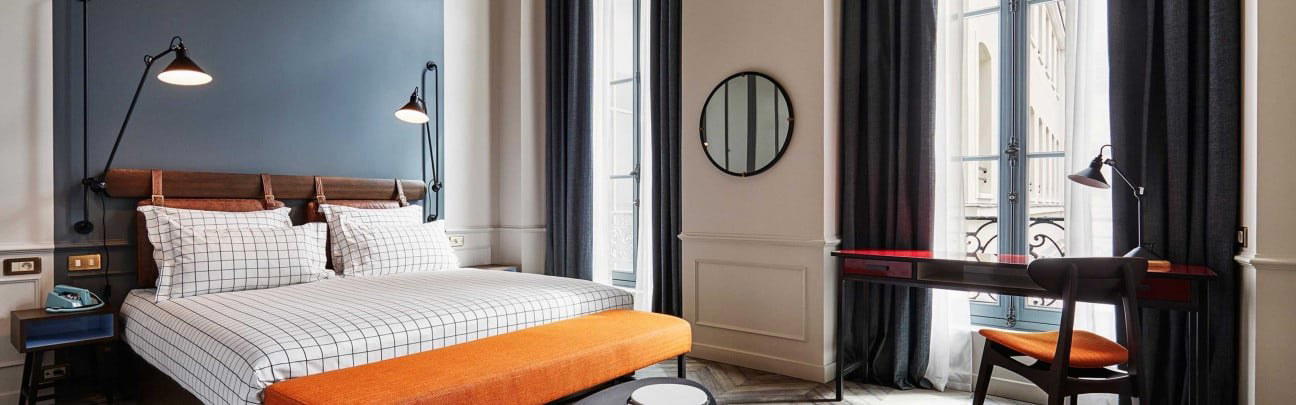
Where the 2nd Arrondissement Does Its Work
Sentier has undergone a sharper identity shift than almost any other quarter in central Paris over the past decade. Once defined by the wholesale textile trade, the district now houses a dense concentration of start-ups, independent studios, and the kind of low-key restaurants that locals actually eat at rather than curate for visitors. The Hoxton arrived at 30-32 Rue du Sentier as that transition was consolidating, and the timing mattered. Hotels that open into a neighbourhood in flux tend to absorb its character more readily than those that arrive after the area has calcified into a tourist circuit. That absorption is what regulars come back for.
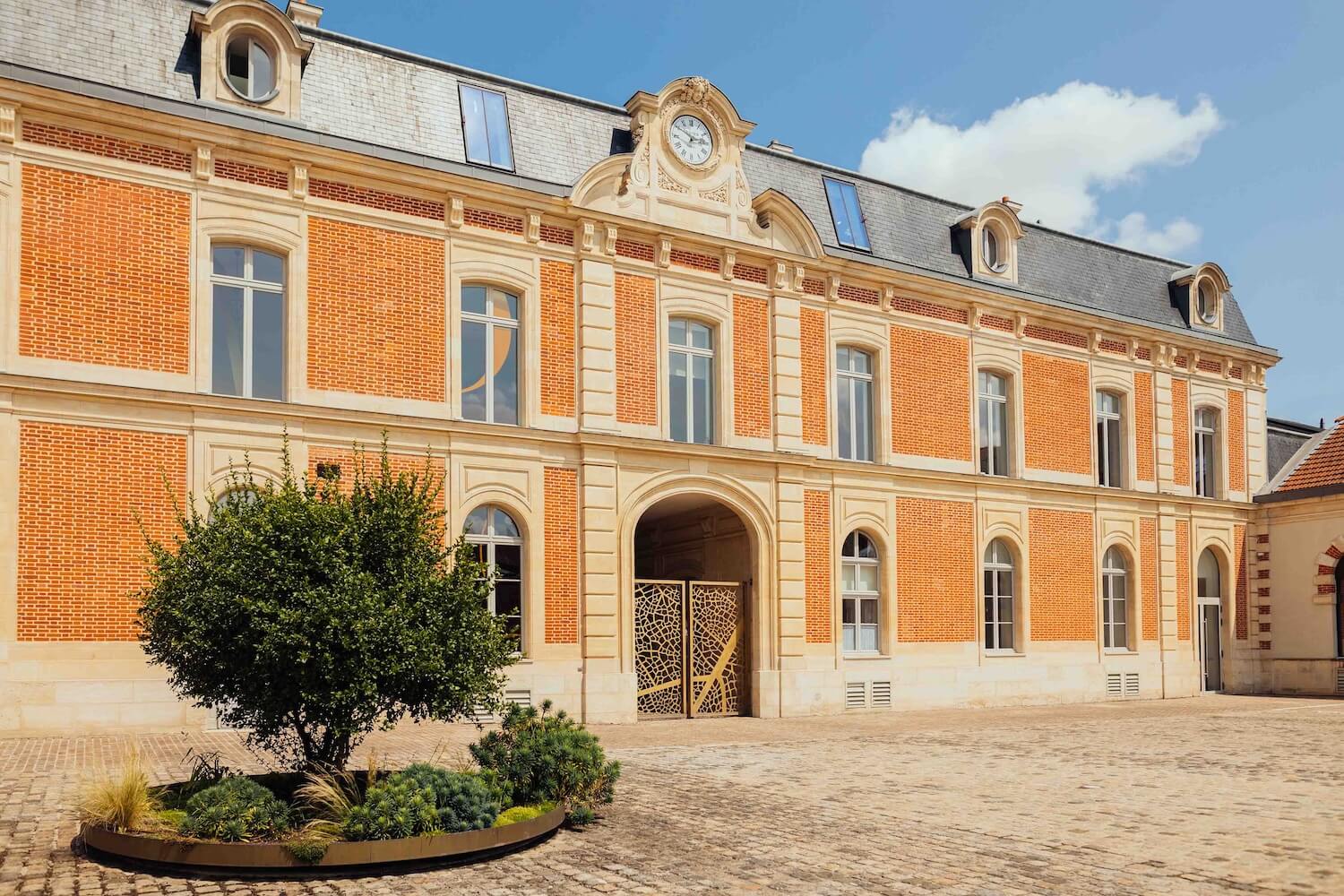
The property spans two adjoining 18th-century Haussmann buildings, and the decision to retain much of their original architecture rather than gut them for a uniform interior gives the place a spatial quality that newer-build hotels in the city struggle to replicate. High ceilings, original staircases, and a central courtyard create a physical environment that reads as Parisian first and hotel-branded second. For guests who have stayed repeatedly, that hierarchy matters. The Hoxton brand operates across London, Amsterdam, New York, and several other cities, but the Paris address has a distinctly local register that sets it apart from the group's more uniform properties.
The Lobby as a Neighbourhood Living Room
The lobby-as-social-hub format has become something of a brand signature across the Hoxton group, but in Paris it connects to a wider shift in how mid-to-upper-boutique hotels are positioning themselves against the palace tier. Properties like Cheval Blanc Paris, Le Meurice, and Hôtel de Crillon occupy a different tier entirely, one defined by formal service protocols, grand public spaces, and price points that reflect both real estate and legacy. The Hoxton operates on a different logic: the lobby should function as a workspace and meeting point that generates footfall from non-guests, which in turn makes the building feel inhabited rather than sealed.
In practice, this means the ground-floor spaces fill up well before check-in time with people who have no room key. That mix of residents and non-residents is the point. Regulars tend to treat the lobby and adjoining restaurant and bar areas as an extension of their working day, arriving mid-morning and staying through lunch. For returning guests, the familiarity of that scene is part of the draw. The hotel does not feel like it resets between visits. It feels continuous.
What Keeps People Returning
The regulars' attachment to this property rarely centres on room specifics. What surfaces consistently is the quality of the neighbourhood connection: proximity to some of the better natural wine bars and bistros in the 2nd, walkability to the Marais, and the sense that Sentier itself is still evolving rather than fixed. Hotels in areas that have finished gentrifying tend to attract a visitor profile that is more transient. Sentier still rewards the curious, and the Hoxton's position within it means regulars feel they are tracking the neighbourhood's development across stays rather than arriving at a static destination.
The Hoxton group's positioning across European cities has generally tracked design-led, culturally adjacent travellers: those who would not self-identify as tourists in the conventional sense, who prefer to eat at local counters over hotel dining rooms, and who treat accommodation as a base rather than an attraction. Paris draws that same profile, and the Sentier location reinforces it. The arrondissement is not an obvious first-time-visitor choice in the way that the 1st or the 7th might be, which filters the guest mix toward repeat visitors and those who research beyond the standard tourist circuit.
Rooms, Configuration, and the Design Approach
Hoxton's room typology in Paris follows the group's standard tiered naming convention, moving from compact entry-level configurations up to larger suite formats. Across the portfolio, the brand's design approach leans on warm materials, curated vintage pieces, and a deliberate avoidance of the clinical minimalism that characterised boutique hotel interiors in the mid-2000s. In Paris, the Haussmann bones of the building do much of the work: the proportions are already generous where the building's original layout allows, and the design layers in rather than strips back.
Guests who return specifically for room quality tend to gravitate toward the larger configurations that make the most of ceiling height and, where available, courtyard orientation. The interior courtyard is a meaningful differentiator in a dense urban block, providing both light and a degree of acoustic separation from Rue du Sentier, which carries pedestrian and delivery traffic through the working day.
For context on the broader Paris luxury hotel market, properties such as Hotel Plaza Athénée, La Réserve Paris, and Le Bristol Paris operate at a substantially higher price point with corresponding service-to-guest ratios and amenity depth. The Hoxton does not compete in that segment. Four Seasons George V and Airelles Château de Versailles represent the opposite end of that spectrum. Understanding where the Hoxton sits relative to those alternatives makes the booking decision cleaner.
Beyond Paris, the broader French hotel market shows how geography shapes property character just as much as brand. Coastal and regional addresses such as Hotel Du Cap-Eden-Roc in Cap d'Antibes, La Réserve Ramatuelle in Ramatuelle, and Les Sources de Caudalie in Bordeaux all deliver experiences rooted in landscape and culinary terroir that an urban Parisian address structurally cannot replicate. The Hoxton's answer to that gap is density: cultural access, neighbourhood energy, and the specific texture of a working Parisian arrondissement that is impossible to reproduce outside a city centre. See our full Paris guide for broader context on the city's hotel and dining options across all districts.
Know Before You Go
- Address: 30-32 Rue du Sentier, 75002 Paris, France
- District: Sentier, 2nd arrondissement
- Nearest Metro: Bonne Nouvelle (lines 8 and 9) or Sentier (line 3), both within a short walk
- Booking: Reservations available through the Hoxton website; lobby and restaurant areas are open to non-guests
- Peer context: Design-led boutique tier; not in the same segment as Paris palace hotels
- Leading for: Design-conscious travellers prioritising neighbourhood access and social atmosphere over formal hotel services
Recognition history
Dated appearances from independent guides and award organizations, with the underlying list record or original source where available.
Mr & Mrs Smith Smith Seal of Approval
Mr & Mrs Smith
Michelin Selected
Michelin
Continue exploring
More in Paris
Hotels in Paris
Browse all →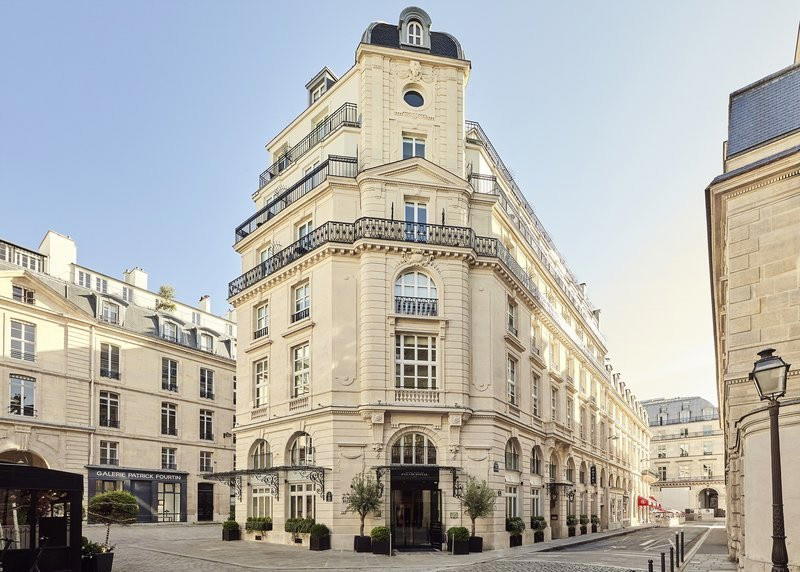
Bars in Paris
Browse all →
Restaurants in Paris
Browse all →

At a Glance
- Trendy
- Modern
- Sophisticated
- Elegant
- Cozy
- Romantic Getaway
- Business Trip
- Weekend Escape
- Terrace
- Historic Building
- Design Destination
- Wi Fi
- Room Service
- Concierge
- Street Scene
- Wi Fi
- Room Service
- Concierge
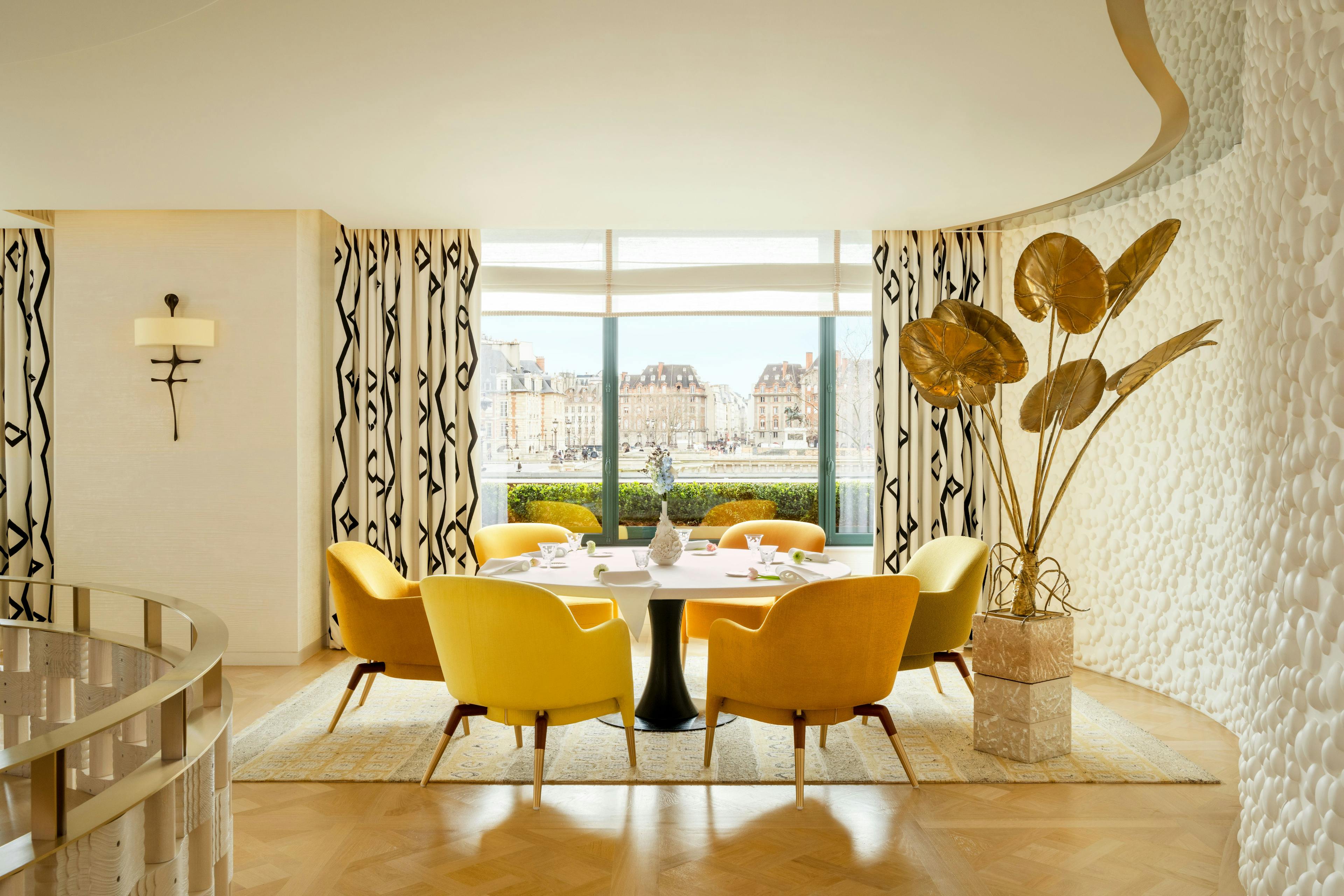
Warm and inviting with natural light flooding the double-height lobby, jewel-toned palettes, plush furniture, and a homely yet stylish atmosphere.
Know Before You Go
- Getting there
- 30-32 Rue du Sentier, 75002 Paris, France