The Academy

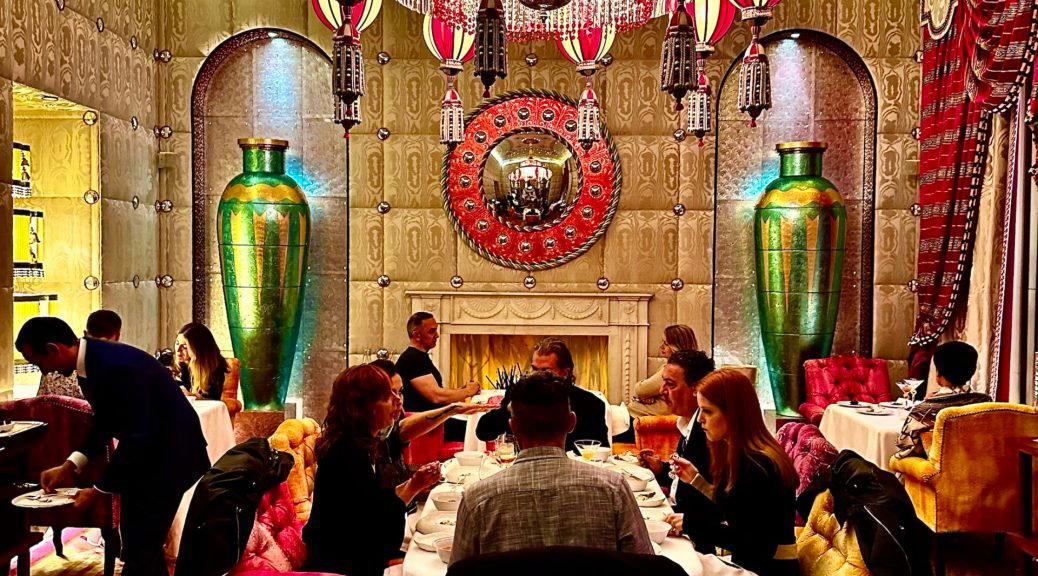
A Grade II-listed Georgian townhouse on Gower Street, The Academy sits in Bloomsbury's literary quarter with interiors by New York-based Champalimaud Design. The contrast between the period facade and the considered contemporary fit-out places it in a distinct niche among London's independent boutique hotels, appealing to travellers who want neighbourhood character over branded scale.
Pearl is the En Primeur Club membership app — saves, bookings, and concierge access live there. Same editors, same standards.
- Address
- 21 Gower St, London WC1E 6HG
- Phone
- +44 20 7631 4115
- Website
- theacademyhotel.co.uk
- Directions
- Get directions
 Saves & bookings on Pearl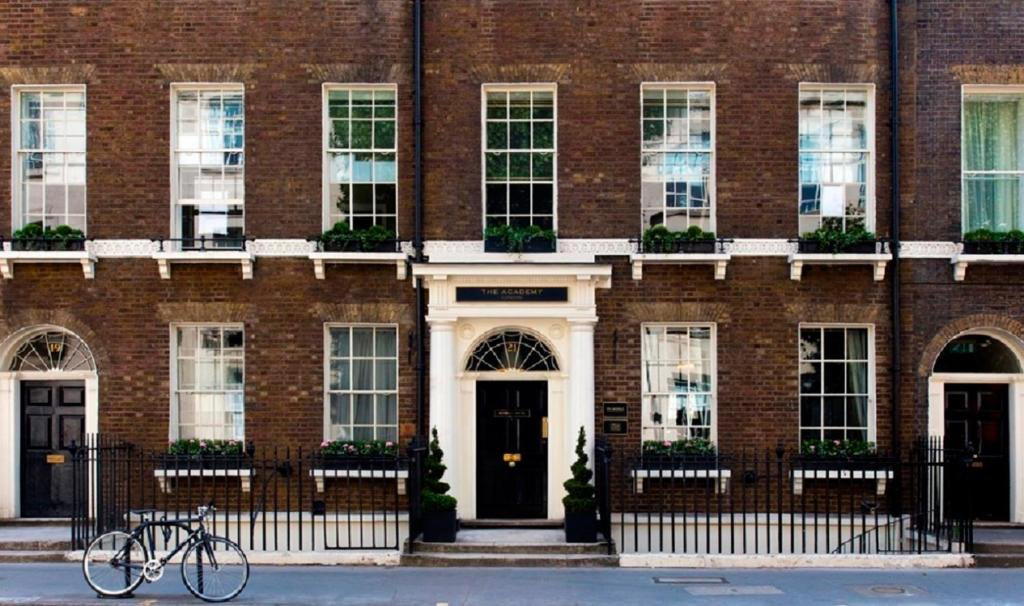
Where Georgian Facades Meet Contemporary Interiors
Bloomsbury has long defined itself against the grain of London's hotel market. While Claridge's and The Connaught anchor the luxury tier in Mayfair, and newer arrivals like NoMad London and Raffles London at The OWO compete for the high-spend traveller further west, Bloomsbury has cultivated a quieter, more literary register. The streets around Gower Street and Russell Square draw a different kind of visitor: one more interested in the British Museum a short walk away or the publishing houses that gave this neighbourhood its identity than in proximity to Mayfair boutiques.
The Academy occupies a Grade II-listed Georgian townhouse at 21 Gower St, WC1E 6HG, and the exterior reads precisely as you would expect: symmetrical sash windows, pale stock brick, a restrained front door that gives nothing away. From the street, it slots convincingly into the neighbourhood's period architecture, the kind of facade that fills out the background of every costume drama set in early nineteenth-century London. That visual coherence with the surrounding streetscape is part of what makes the interior contrast so deliberate.
The Champalimaud Effect: Tension as Design Strategy
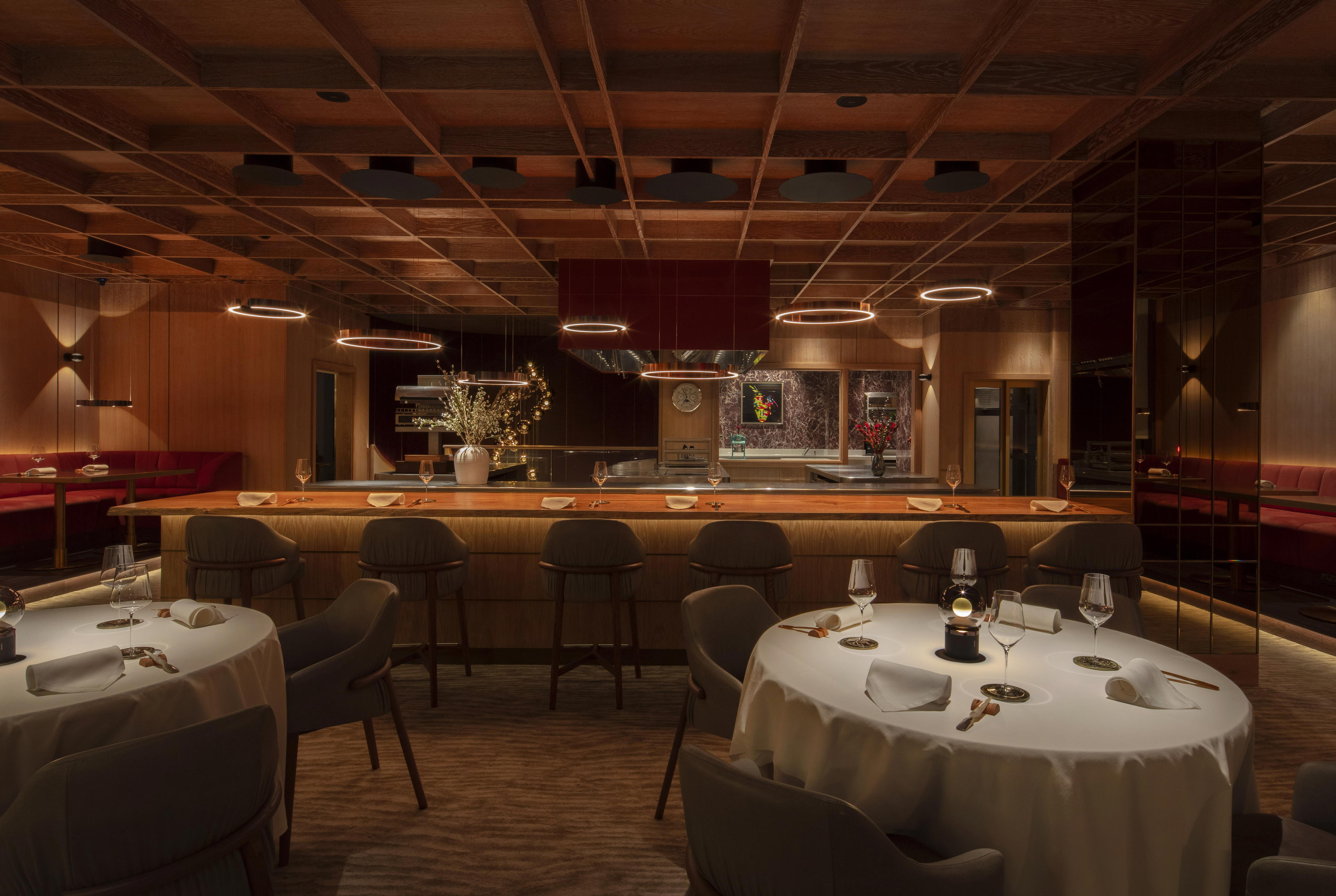
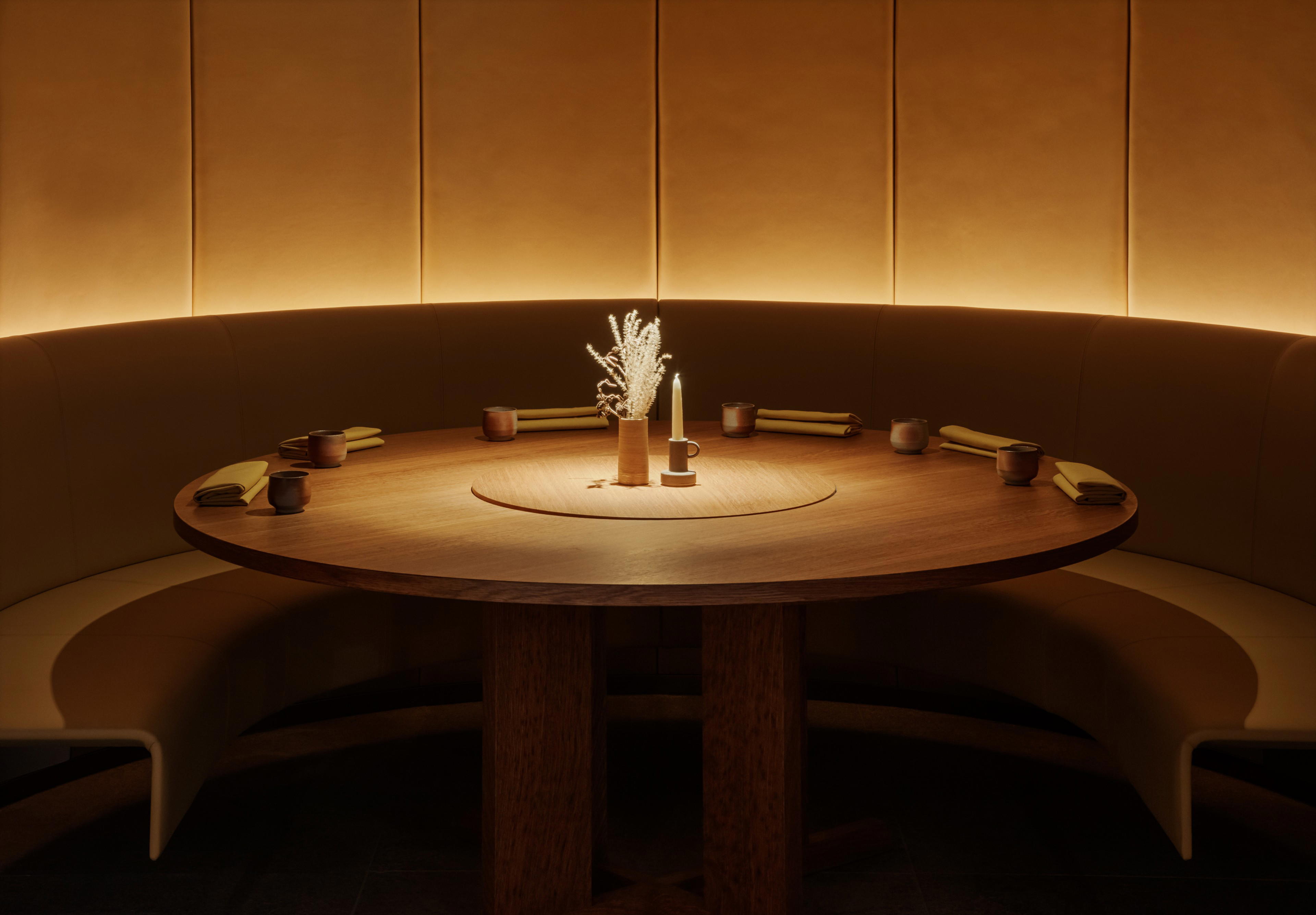
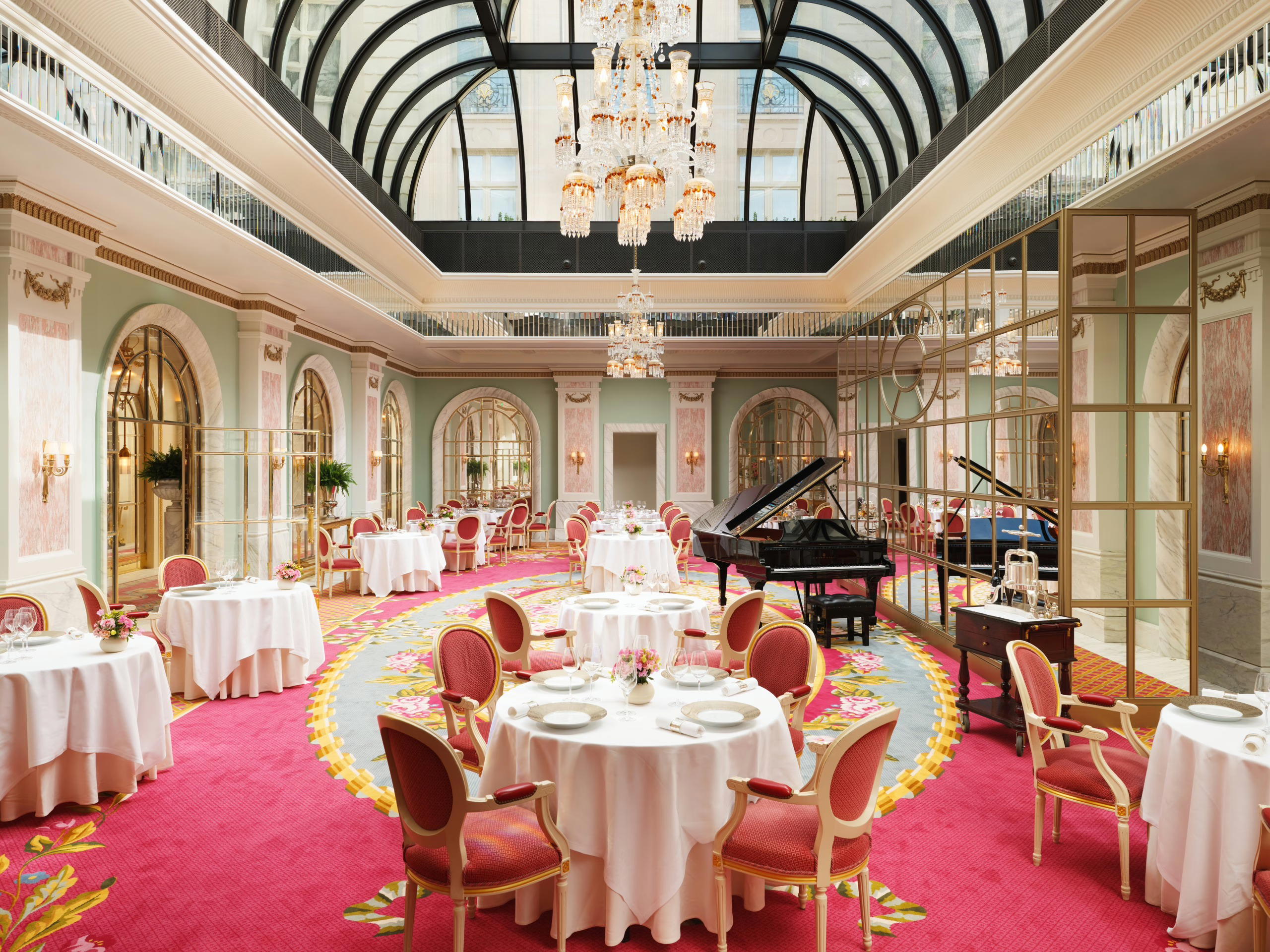
Step through the front door and the register shifts. The interiors were designed by Champalimaud Design, a New York-based practice with a body of work across luxury hotels and private clubs. In the broader context of London's boutique hotel market, the choice of an American firm for a Georgian London property is itself an editorial statement: the building's history is acknowledged but not fetishised. Champalimaud's approach typically involves layering contemporary materials and considered colour against period bones, and the effect here is of controlled contrast rather than seamless continuity. The architecture holds the past; the interiors push against it.
This tension between historic shell and contemporary fit-out is a pattern that has emerged across a specific tier of London's independent hotel market. Properties that commit to one or the other direction, either full period restoration or wholesale modernisation, tend to read more predictably. The more interesting properties, and the Academy sits in this category, use the contrast itself as the experience. The guest is always aware of the building's age, even when the furnishings around them are firmly of the present.
Location as Context: Bloomsbury's Intellectual Geography
Gower Street runs through the heart of what London's literary and academic community has claimed for two centuries. University College London is immediately adjacent. The British Museum is a short walk east. The publishing trade's historic presence in the area has faded commercially, but the neighbourhood's identity as a place of ideas persists in its independent bookshops, academic cafes, and the particular pedestrian tempo of a district built around institutions rather than retail.
For a traveller arriving from properties like The Savoy or The Emory, the contrast is immediate and intentional. Bloomsbury does not perform in the way that Strand or Knightsbridge hotels perform. The neighbourhood asks for engagement on its own terms: slower, more textured, more contingent on what the guest brings to it. The Academy's address on Gower Street places it inside that expectation.
For those also considering broader UK travel, comparisons with townhouse and character properties in other cities are instructive. Hope Street Hotel in Liverpool and King Street Townhouse Hotel in Manchester pursue a similar model of inserting contemporary interiors into period urban fabric, as does Estelle Manor in North Leigh at a rural scale.
The Sensory Register of a Bloomsbury Townhouse
The physical experience of a Georgian townhouse hotel differs structurally from that of a purpose-built luxury property. Rooms sit within original proportions, which means ceiling heights and room footprints vary by floor in ways that a built-to-spec hotel cannot replicate. The acoustic quality of thick original walls, the particular quality of light through deep-set sash windows, the slight unevenness of period floors beneath contemporary finishes: these are details that no renovation fully erases, and in the leading instances they become the most memorable sensory features of a stay. Whether the Academy's rooms fully capitalise on these inherited characteristics is a question that current verified data does not answer with specificity, but the building type creates conditions that a traveller attuned to period architecture will recognise immediately.
The street itself contributes to the sensory picture. Gower Street is relatively quiet by central London standards, a mainly residential and institutional road rather than a thoroughfare. The ambient sound profile at night will differ markedly from anything near the Strand or around 1 Hotel Mayfair, which is a legitimate consideration for light sleepers choosing between central locations.
Where It Sits in the London Independent Market
London's independent boutique hotel market has fragmented into several distinct sub-tiers. At the high end sit properties like 11 Cadogan Gardens, which compete on service depth and appointment quality. Below that sits a mid-tier of character-led independents where the building, the neighbourhood, and the design concept do more work than the service programme. The Academy's positioning, a Grade II-listed building with a design-credentialled interior in an intellectually charged neighbourhood, places it in that middle tier of the independent market, appealing to guests for whom the address and the atmosphere carry more weight than room size or F&B ambition.
For travellers whose frame of reference extends to Gleneagles in Auchterarder or The Newt in Somerset in Castle Cary, the Academy will read as a different kind of proposition entirely: urban, compact, neighbourhood-specific, without resort amenities or extensive grounds. That is not a limitation so much as a category clarification. The Academy is a city hotel in the fullest sense, which means its value is inseparable from Bloomsbury itself. See our full London restaurants guide for further context on what the surrounding area offers.
Know Before You Go
- Address: 21 Gower St, London WC1E 6HG
- Neighbourhood: Bloomsbury, WC1 — adjacent to University College London and walking distance from the British Museum
- Building Status: Grade II listed Georgian townhouse
- Interior Design: Champalimaud Design (New York)
- Website: Confirm directly for current rates, availability, and room categories
- Nearest Tube: Goodge Street (Northern line) or Euston Square (Circle/Metropolitan/Hammersmith & City lines)
How The Academy London compares with similar nearby venues.
| Venue | Awards |
|---|---|
| The Academy | Small Luxury Hotels of the World Member (2025) |
Recognition history
Dated appearances from independent guides and award organizations, with the underlying list record or original source where available.
Small Luxury Hotels of the World Member
Small Luxury Hotels of the World
Continue exploring
More in London
Hotels in London
Browse all →
Bars in London
Browse all →
Restaurants in London
Browse all →



At a Glance
- Cozy
- Elegant
- Intimate
- Historic
- Romantic Getaway
- Weekend Escape
- Garden
- Historic Building
- Terrace
- Wi Fi
- Room Service
- Concierge
- Wi Fi
- Room Service
- Concierge
Cozy and charming with beautifully decorated common spaces, a pleasant outdoor garden for drinks, and a welcoming, home-like atmosphere.
Know Before You Go
- Getting there
- 21 Gower St, London WC1E 6HG