

World Luxury Hotel Awards WLHA Continent Winner · Small Luxury Hotels of the World Member
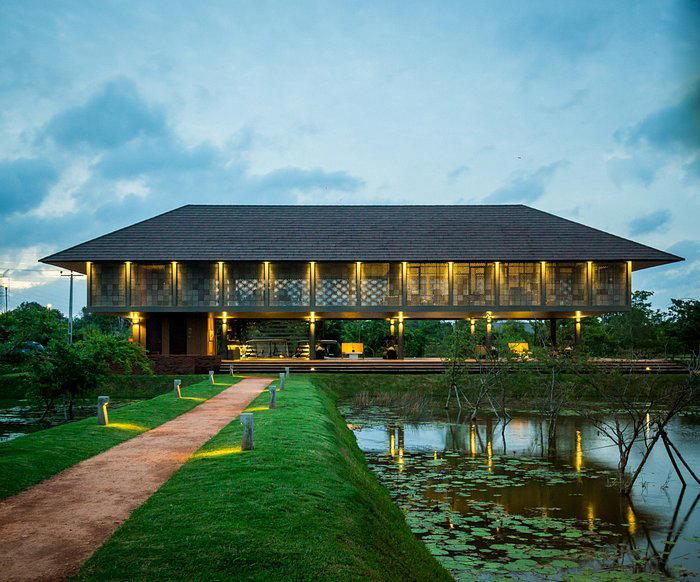
A Continental Award winner for architectural design, Taru Villas Maia sits along the Kekirawa road in Habarana where paddy fields and forest edge meet without ceremony. The property applies a disciplined 'less is more' reading of old-world Sri Lankan architecture, threading timber, water, and plantation greenery into a boutique format that sits closer to a private residence than a resort.

Pearl is the En Primeur Club membership app — saves, bookings, and concierge access live there. Same editors, same standards.
- Address
- Kekirawa road Laksirigama, Habarana
- Phone
- +94 76 846 1461
- Website
- taruvillas.com
- Directions
- Get directions
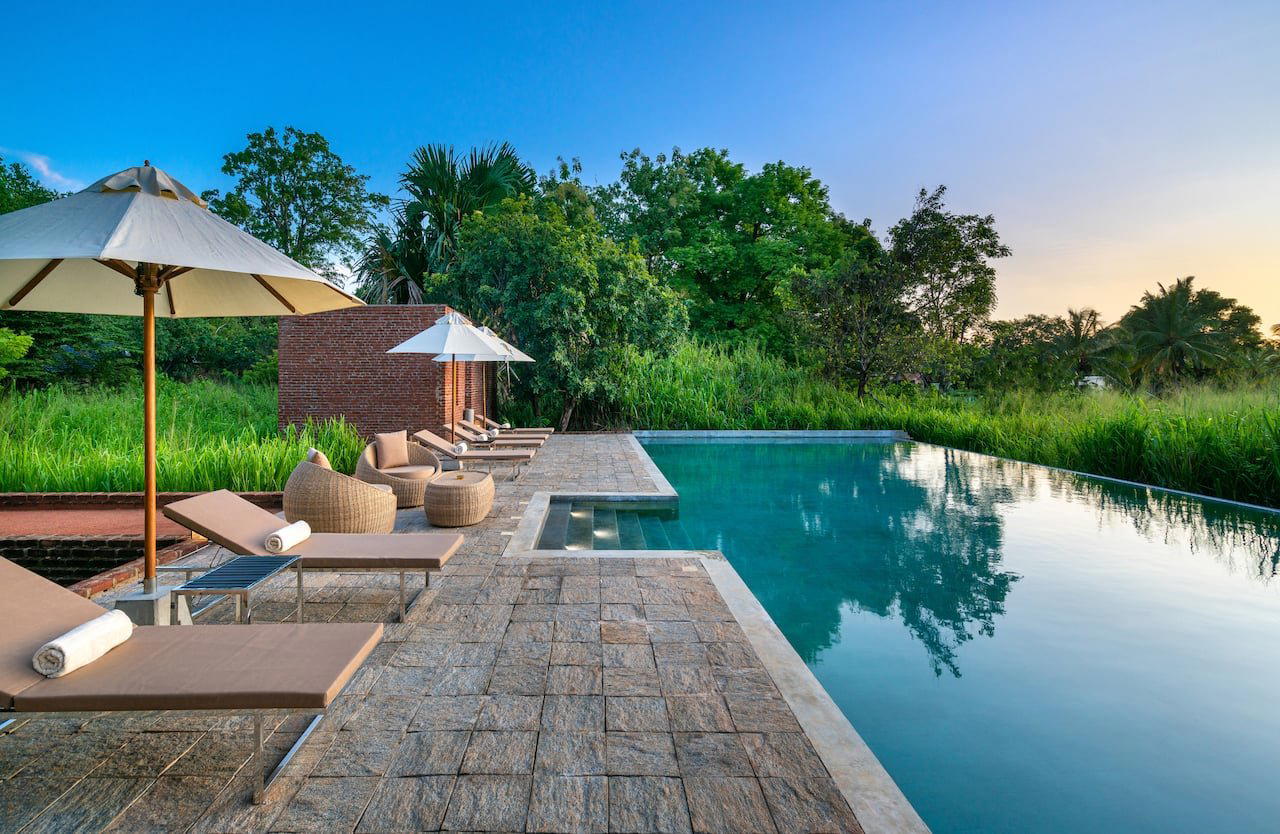
Where the Architecture Disappears Into the Landscape
In the North Central Province of Sri Lanka, the area around Habarana operates as a transit node for safaris, ancient rock fortresses, and cave temple circuits. What it has rarely offered is accommodation that makes an architectural argument in its own right. That positioning is where Taru Villas Maia earns its place in the conversation. A Continental Award winner for Leading Architectural Design and a Regional Winner in the Luxury Design Boutique Hotel category, the property on the Kekirawa road at Laksirigama is less interested in announcing itself than in receding into the paddy fields, plantation groves, and forest that frame it on all sides.
The dominant tradition in Sri Lankan luxury hospitality has long sat between two poles: the grand colonial property (see Amangalla in Galle or the Galle Face Hotel in Colombo) and the coastal resort that treats the beach as its primary architectural statement. Inland properties have historically struggled to construct a compelling spatial identity without a shoreline to do the heavy lifting. Taru Villas Maia takes a different route, drawing on the vernacular forms of old-world Sri Lankan architecture and pairing them with a contemporary boutique sensibility that keeps the structure from reading as pastiche.
The Design Logic: Old-World Forms, Edited Down
The awards the property has accumulated point to a specific design philosophy rather than general luxury positioning. Continental recognition for architectural design is not awarded for volume of amenities or size of pool — it signals that the spatial decisions themselves are considered worth studying. At Taru Villas Maia, those decisions are organised around a principle of subtraction. The brief that the architecture answers appears to be: remove anything that competes with the setting.
Timber is the primary material vocabulary here. A wooden bridge crosses water between public and private zones, functioning as both a threshold and a signal of intent. Water, in traditional Sri Lankan compound architecture, has always operated as a boundary marker and a cooling agent — the bridge above it frames the approach to the villa spaces and slows arrival down to the pace the landscape demands. This is a design move borrowed from historical precedent rather than invented for the boutique hotel market, which is precisely why it reads as grounded rather than decorative.
The relationship between the built structure and the surrounding paddy fields is the property's most consistent spatial commitment. Sri Lanka's rice cultivation landscape produces a particular horizontal quality of light, especially at low sun angles in the early morning and at dusk, and architecture that sits correctly within it needs to prioritise low profiles, natural materials, and openings calibrated to frame rather than block. The Continental Award for Leading Architectural Design suggests the design team understood that constraint and worked with it rather than against it.
Properties like Water Garden Sigiriya and Nine Skies in Demodara occupy a similar niche: inland, design-conscious, operating at boutique scale, and making a case for interiors architecture as a reason to visit in itself. Kahanda Kanda near Galle operates on comparable principles in the south. The common thread is a resistance to the maximalist resort template, a format that has also shaped properties like Kumu Beach in Balapitiya and Malabar Hill in Weligama Bay, though both of those work in coastal registers.
Habarana as a Base: What the Location Offers
The address on the Kekirawa road places the property within reach of Habarana's central draws. The Minneriya and Kaudulla national parks, both accessible from here, are where Sri Lanka's celebrated elephant gatherings occur during the dry season, typically from July through September, when hundreds of elephants converge on the reservoir edges as water levels drop. Sigiriya Rock Fortress is within comfortable striking distance, as is the Dambulla cave temple complex. These are not quiet, off-the-beaten-path destinations. They attract substantial visitor volumes. The argument for staying at a property like Taru Villas Maia rather than one of the larger chain hotels in the area is partly logistical (fewer rooms means more flexibility in how the day is structured) and partly atmospheric: returning to a space built around timber, water, and vegetation recalibrates the sensory register after a morning in the parks in a way that a large resort corridor cannot.
For the wider Sri Lanka itinerary, Habarana sits roughly between the Cultural Triangle in the north-central zone and the hill country further south. Travellers routing through to Heritance Tea Factory in Kandapola or Ceylon Tea Trails in Hatton often pass through or near Habarana. Those heading to the south coast toward Amanwella in Tangalle or Cape Weligama will typically route through Colombo, but Habarana remains a sensible mid-point stop for itineraries spending meaningful time in the north-central cultural zone.
Our full Habarana guide covers the broader context of what this part of the Cultural Triangle offers and how to structure time across the parks, temples, and rock fortress circuit. For wildlife-anchored itineraries further south, Gal Oya Lodge and Wild Coast Tented Lodge in Yala represent design-led alternatives in different ecosystems.
Planning Your Stay
The property sits on the Kekirawa road at Laksirigama in Habarana, North Central Province. Given the boutique scale implied by its design awards and category positioning, availability is best confirmed well ahead during the dry season months of July through September, when elephant gathering season drives the highest visitor concentration in the area. The 'switch off' character of the property, referenced explicitly in its own presentation, is reinforced by its physical structure: timber, water, and natural materials rather than the amenity-stacked infrastructure of larger hotel formats.
Fast Comparison
Comparable venues nearby, for context on price, style, and recognition.
| Venue | Cuisine | Price | Awards | Notes |
|---|---|---|---|---|
| Taru Villas Maia - HabaranaThis venue — the venue you are viewing | rustic luxury villas with old-world Sri Lankan charm | Not listed | World Luxury Hotel Awards WLHA Continent Winner · Small Luxury Hotels of the World Member | Not listed |
| Taru Villas Levita - Kandy | Eco-luxury boutique villa retreat | Not listed | Small Luxury Hotels of the World Member | Digana |
| Uga Ulagalla | Restored heritage walawwa estate with contemporary eco-luxury villas | Not listed | Michelin Selected | Thirappane |
| Anantara Peace Haven Tangalle Resort | Luxury beachside resort blending contemporary comforts with Sri Lankan heritage. | Not listed | Michelin Guide New Hotels New Hotel · Michelin Selected | Tangalle |
| Heritance Ahungalla | Heritage beach resort with modernist architecture by Geoffrey Bawa | Not listed | World Travel Awards | Ahungalla |
| Uga Bay | Contemporary tropical-Mediterranean resort | $300–500 | Michelin Selected | Passikudah |
Recognition history
Dated appearances from independent guides and award organizations, with the underlying list record or original source where available.
Small Luxury Hotels of the World Member
Small Luxury Hotels of the World
World Luxury Hotel Awards WLHA Continent Winner
World Luxury Hotel Awards
Full recognition history (3 entries)
World Luxury Hotel Awards WLHA Regional Winner
World Luxury Hotel Awards
Continue exploring
More in Habarana
Hotels in Habarana
Browse all →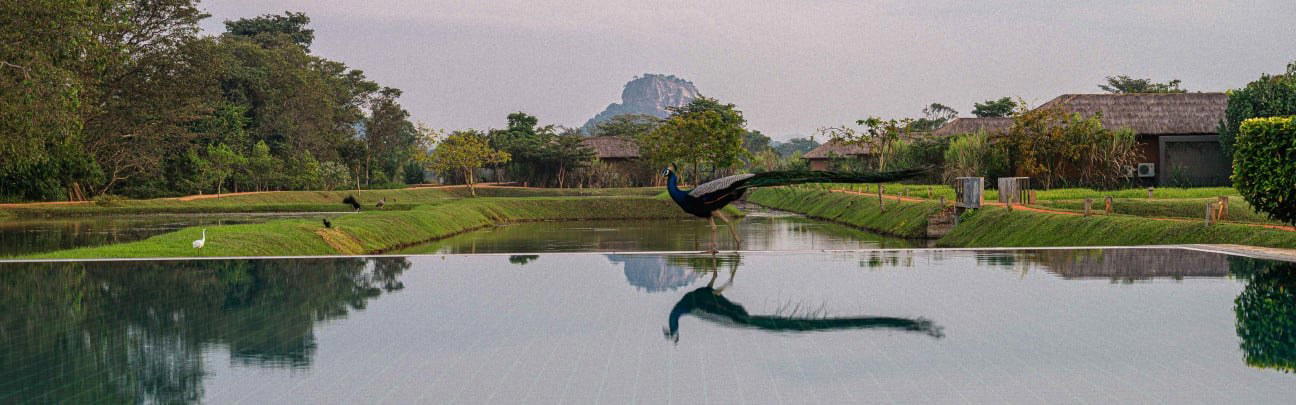
Details
- Quiet
- Elegant
- Rustic
- Scenic
- Intimate
- Sophisticated
- Romantic Getaway
- Honeymoon
- Wellness Retreat
- Weekend Escape
- Infinity Pool
- Private Villa
- Garden
- Panoramic View
- Wi Fi
- Pool
- Spa
- Room Service
- Concierge
- Bicycle Rental
- Garden
Serene and tranquil atmosphere with lush gardens, jungle surroundings, and relaxing infinity pool overlooking fields, praised for its peaceful oasis-like feel.