
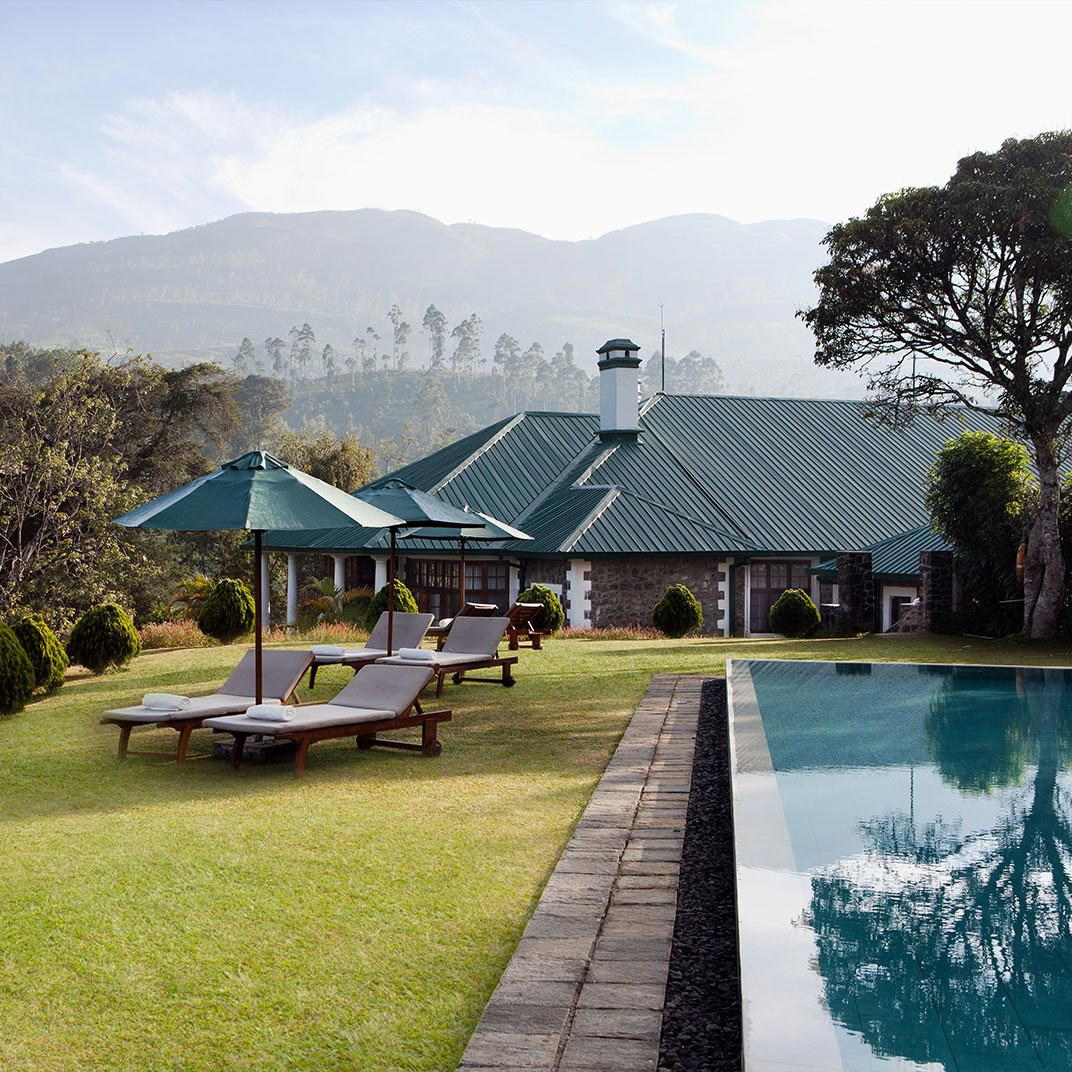
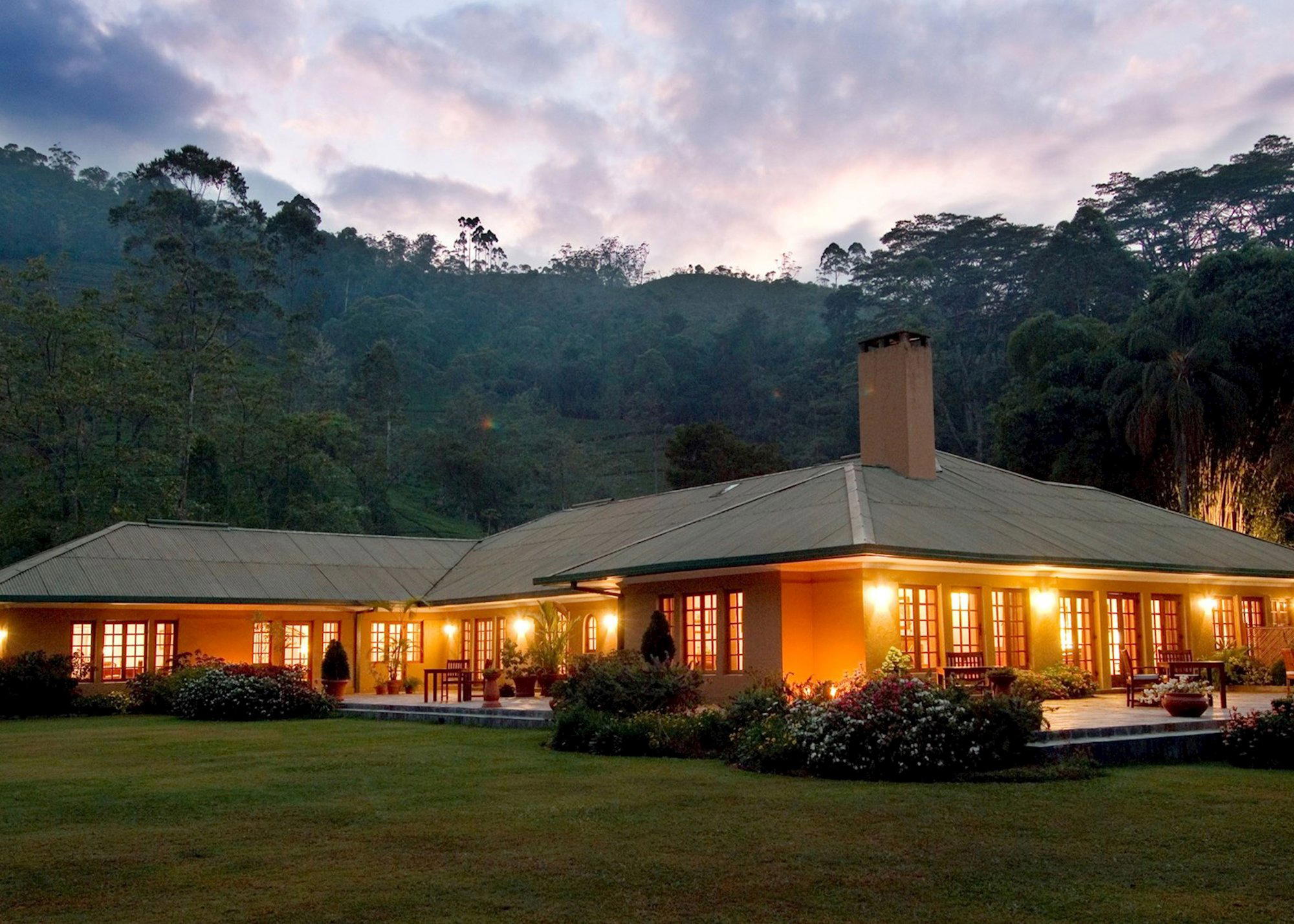
A colonial-era planter's bungalow in Sri Lanka's hill country, Nine Skies earned 94 points in the 2026 La Liste Top Hotels ranking, placing it among a small tier of low-key, high-credential retreats that trade scale for atmosphere. Positioned above the Demodara valley, the property belongs to a tradition of converted estate bungalows that define Sri Lanka's most considered form of upland accommodation.
Pearl is the En Primeur Club membership app — saves, bookings, and concierge access live there. Same editors, same standards.
- Address
- Nine Skies Bungalow, Demodara 90080
- Directions
- Get directions
 Saves & bookings on Pearl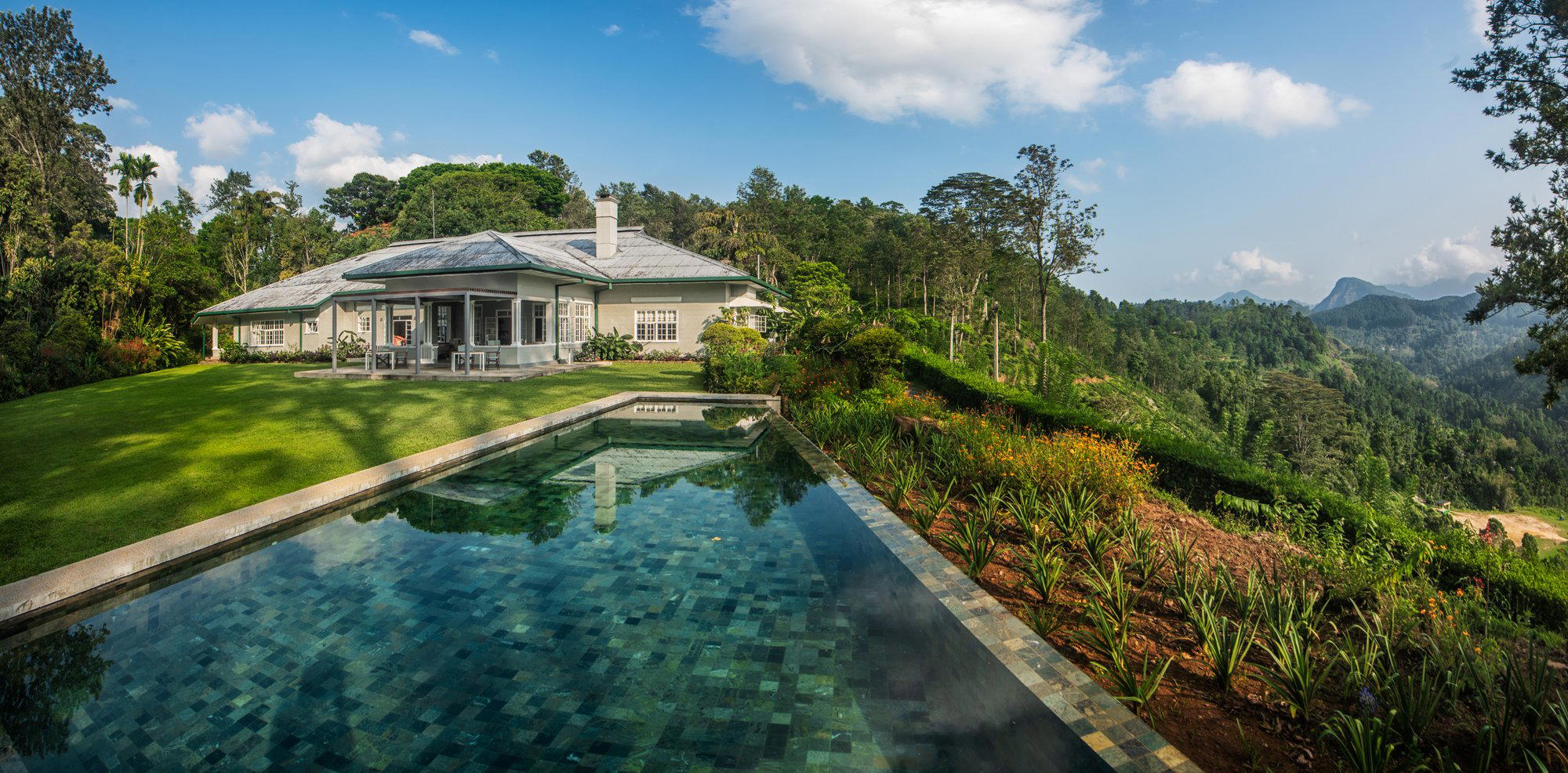
Above the Valley: What Nine Skies Tells You About Sri Lanka's Bungalow Tradition
The approach to Demodara already does the work before any building comes into view. The road climbs through tea estates where the gradient is steep enough that the B67 rail line below, famous for its loop, a feat of colonial engineering where the track passes beneath itself, becomes visible in fragments between the eucalyptus. By the time Nine Skies Bungalow materialises, the elevation has done something to the light: it arrives flatter, cooler, filtered through mist that the valley generates every afternoon without much seasonal variation. This is the physical grammar of Sri Lanka's hill-country bungalow tradition, and Nine Skies inhabits it without apology.
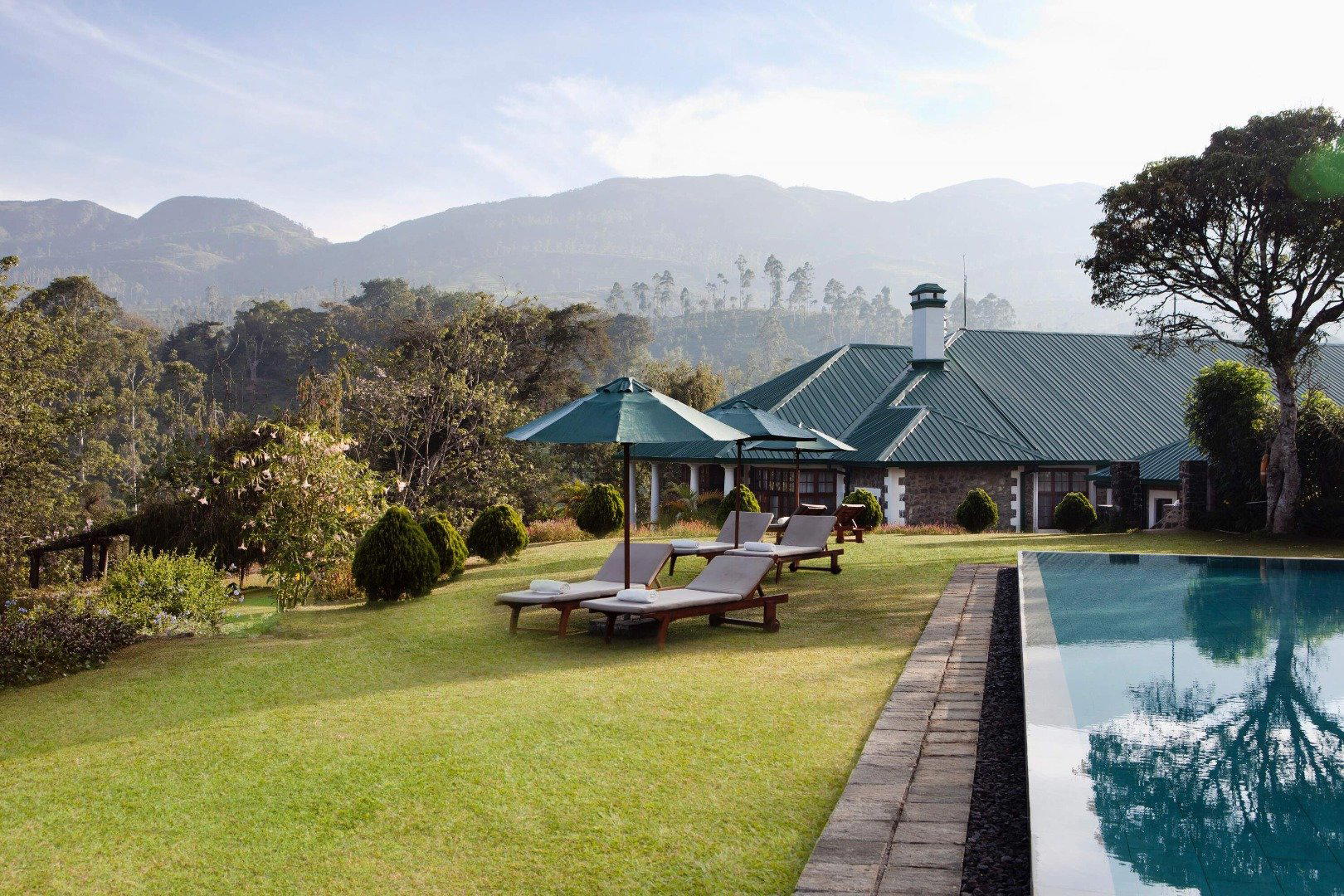
That tradition has a specific origin. British colonial planters, managing tea estates across what is now Badulla and Nuwara Eliya districts, built modest but well-proportioned residences that were designed less for grandeur than for functional comfort at altitude: wide verandahs to catch prevailing winds, pitched roofs to manage heavy monsoon rainfall, thick walls that held cool air through the afternoon heat. The architecture was never meant to impress visitors; it was built for people who lived and worked in the landscape. That functional intelligence is exactly what makes these buildings so appealing to a contemporary traveller who has grown tired of resort-scale anonymity.
The Physical Space: Architecture as Argument
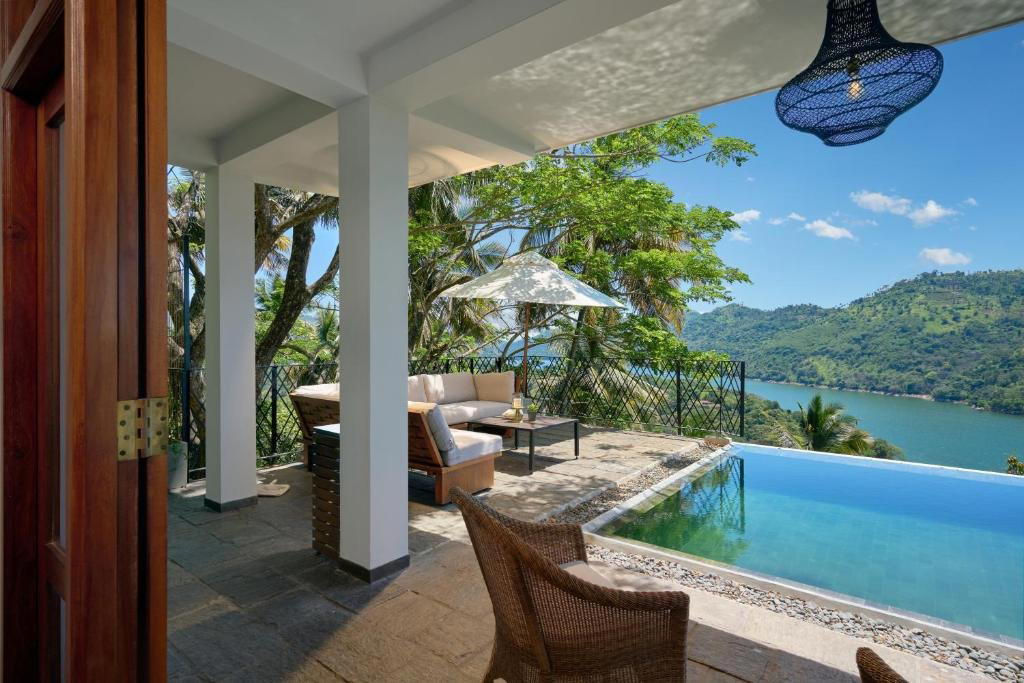
The colonial planter's bungalow format is architecturally conservative by design, which is both its constraint and its discipline. At properties like Nine Skies, the logic runs through the verandah: a covered outdoor room wide enough to serve as the primary living space for much of the year, oriented to capture the view down the valley rather than turned inward toward a lobby or atrium. This is a fundamentally different spatial proposition from the international resort model, where arrival sequences are choreographed and common spaces scaled to impress. Here the architecture assumes you already know where you are and why you came.
Ceylon Tea Trails operates several estate bungalows across the Bogawantalawa and Bogawantalawa valleys, each restored to a standard that retains period detail while adding discreet modern infrastructure. Ceylon Tea Trails' Norwood Bungalow in Hatton sits at a comparable altitude tier and similarly sources its identity from working-estate heritage rather than from designed spectacle. The hotel, with its 2026 La Liste score of 94 points, positions itself within this small, credential-heavy cohort of estate-conversion properties that compete not on room count or facilities breadth, but on atmosphere, setting, and the quality of stillness they can deliver.
A score of 94 places the hotel in the upper segment of that assessment, alongside properties that are typically either much larger in infrastructure or operating in more accessible destinations. For a hill-country bungalow in Demodara, that rating carries a specific implication: the property is performing against a global standard, not just a regional one.
Demodara in Context: Why This Location Is Not Incidental
Sri Lanka's upland accommodation market has historically concentrated around Nuwara Eliya and, to a lesser extent, Ella. Ella in particular has seen a sharp rise in boutique hotel supply over the past decade, driven by its position on the Kandy-to-Badulla rail route and the visibility of the Nine Arch Bridge as a travel photograph. Properties like 9 Arch View Rest Inn in Ella illustrate the lower end of that market's expansion. Demodara sits four kilometres from Ella by rail, close enough to access the same landscape but positioned outside the immediate tourist concentration. This distinction matters architecturally: properties in busier hill-country nodes face pressure to expand facilities or add amenity layers to compete on a features basis, while Demodara's quieter position allows a bungalow-format property to hold its design logic without compromise.
The broader Sri Lanka luxury tier has split in a direction that favours the hotel' format. On the coast, large-footprint resorts dominate: Cape Weligama on the southern coast, Amanwella in Tangalle, and Heritance Ahungalla all operate at a scale and with an infrastructure investment that positions them toward a different traveller. Inland, the picture is more varied: Water Garden Sigiriya draws on cultural-site adjacency, Gal Oya Lodge on wilderness positioning, and Wild Coast Tented Lodge in Yala on safari-format immersion. The hotel occupies a position that none of these hold: a formally recognised, high-scoring hill-country bungalow at altitude, in a location defined by agricultural landscape rather than wildlife or cultural monument. That is a genuinely narrow niche.
Amangalla in Galle and Galle Face Hotel in Colombo represent the historic-urban tier at either end of such a circuit; Kahanda Kanda near Galle and Kumu Beach in Balapitiya offer design-led coastal alternatives. The hill country sits between these poles and demands a different pace. The hotel, at Demodara's elevation and with its bungalow scale, is built for that middle register.
Planning Your Stay
Demodara is most directly reached via the scenic Kandy-to-Badulla rail line, among the more architecturally dramatic rail journeys in South Asia: the train passes through the Demodara Loop, descending through a spiral tunnel before crossing the valley. For those arriving by road from Ella, the transfer is short. The hill country's leading visiting window sits between the two monsoon seasons, generally from January through March and again from July through September, when mist is present but sustained rain less likely. For comparable estate properties in the region, advance booking of four to eight weeks is standard during peak season. Karpaha Sands in Kalkudah or W15 Hanthana Estate in Kandy as part of a wider circuit.
At-a-Glance Comparison
Comparable venues nearby, for context on price, style, and recognition.
| Venue | Cuisine | Price | Awards | Notes |
|---|---|---|---|---|
| Nine SkiesThis venue — the venue you are viewing | Restored colonial tea bungalow with contemporary luxury | $$$$ | 5-Star | Not listed |
| Hilton Yala Resort | Modern luxury safari resort harmoniously blended with jungle wilderness | $$$$ | 5-Star | Palatupana |
| The Cavern | luxury cave villa in tropical forest | $$$$ | 5-Star | Agrapatana |
| DoubleTree by Hilton Weerawila Rajawarna Resort | Lakefront resort with lush grounds and modern luxury amenities | $$$ | 5-Star | Weerawila |
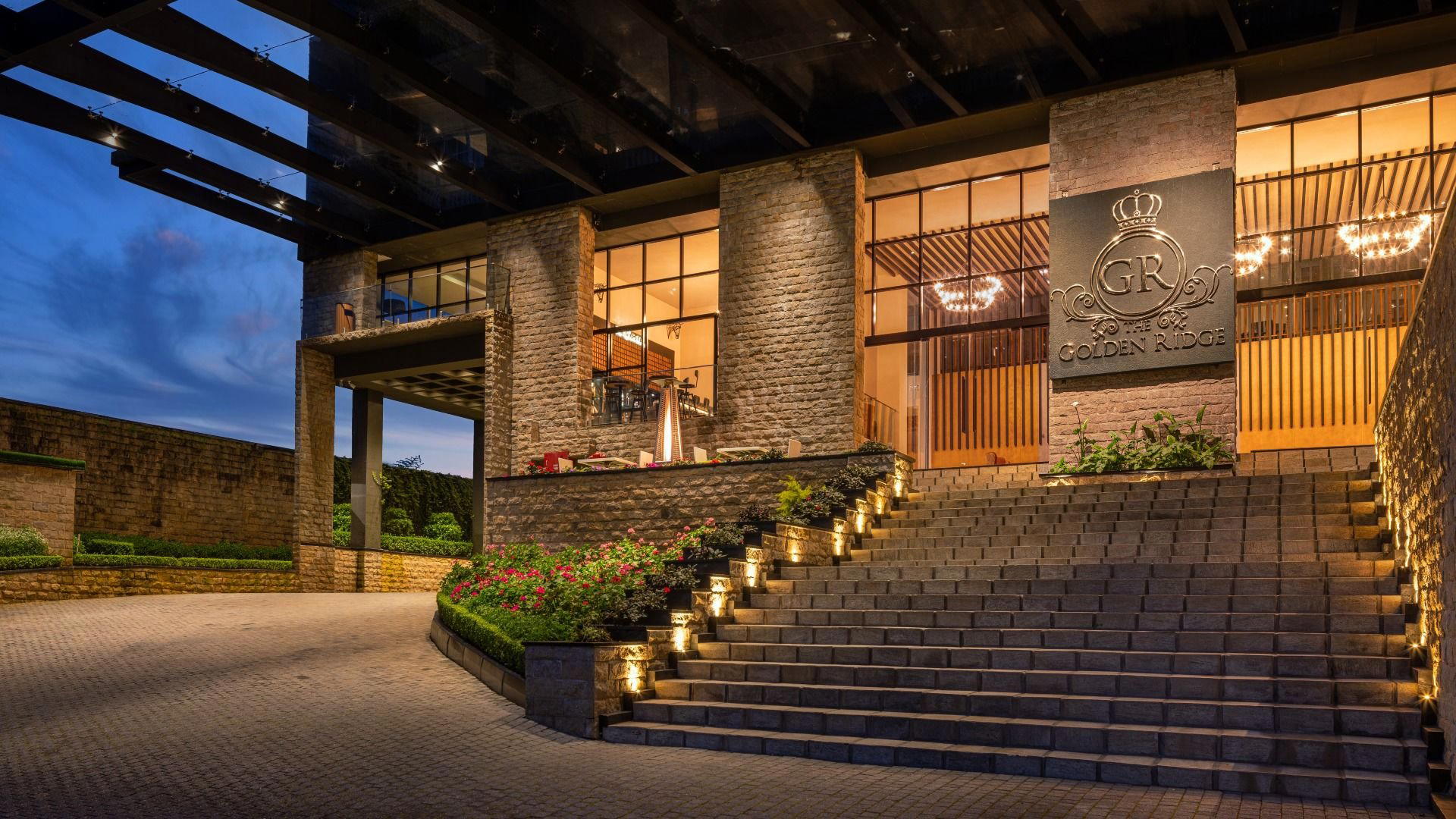
| The Golden Ridge | Polished luxury mountain resort blending modern comfort with hill country serenity. | $$$$ | 5-Star | Nuwara Eliya |
| Amanwella | Contemporary coastal resort inspired by Geoffrey Bawa | $$$$ | 5-Star | Tangalle |
Recognition history
Dated appearances from independent guides and award organizations, with the underlying list record or original source where available.
La Liste Top Hotels
La Liste
At a Glance
- Scenic
- Cozy
- Rustic
- Romantic
- Intimate
- Elegant
- Romantic Getaway
- Honeymoon
- Weekend Escape
- Panoramic View
- Infinity Pool
- Private Villa
- Butler Service
- Garden
- Terrace
- Historic Building
- Pool
- Wi Fi
- Room Service
- Concierge
- Mountain
- Garden
- Pool
- Wi Fi
- Room Service
- Concierge
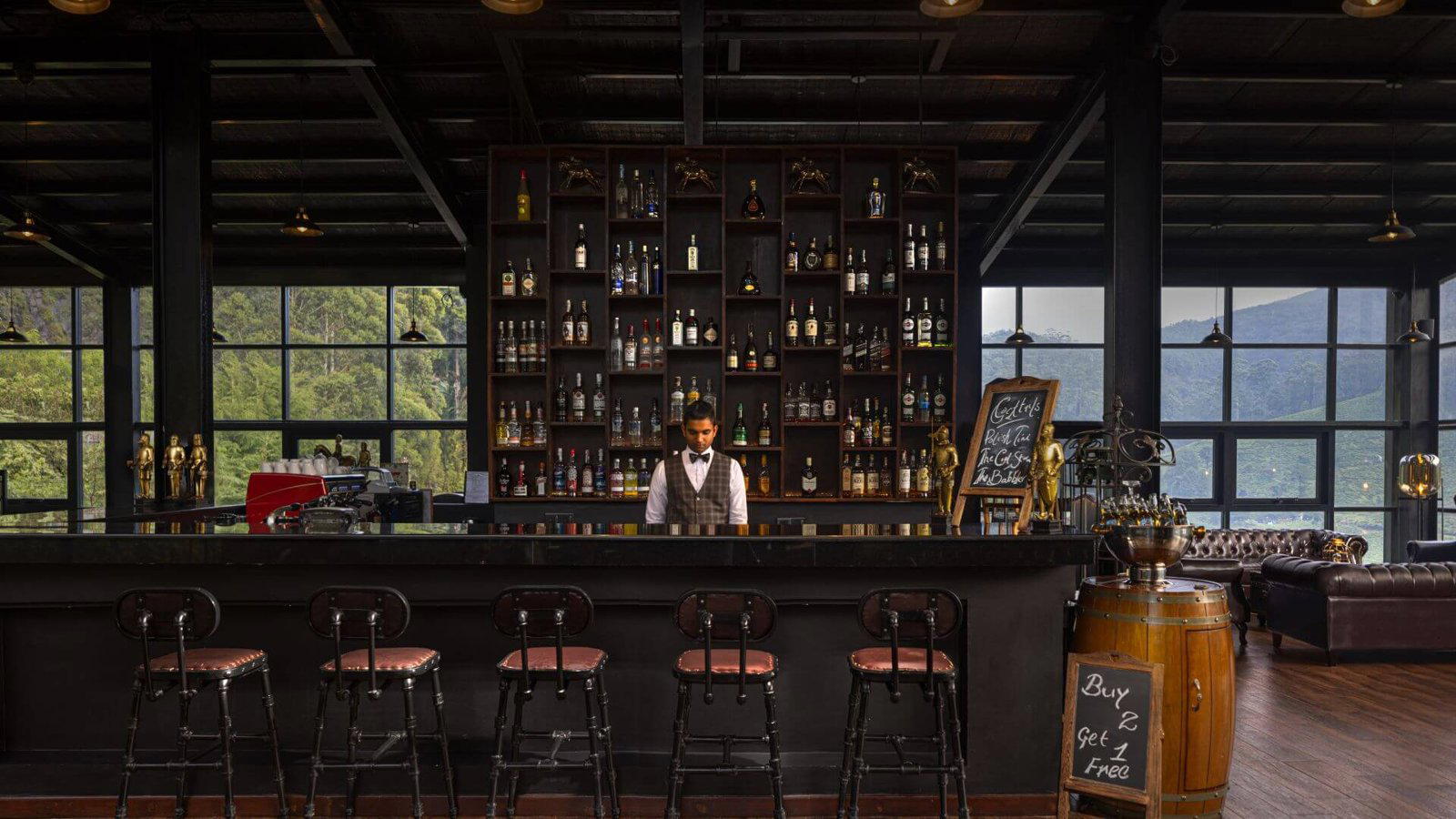
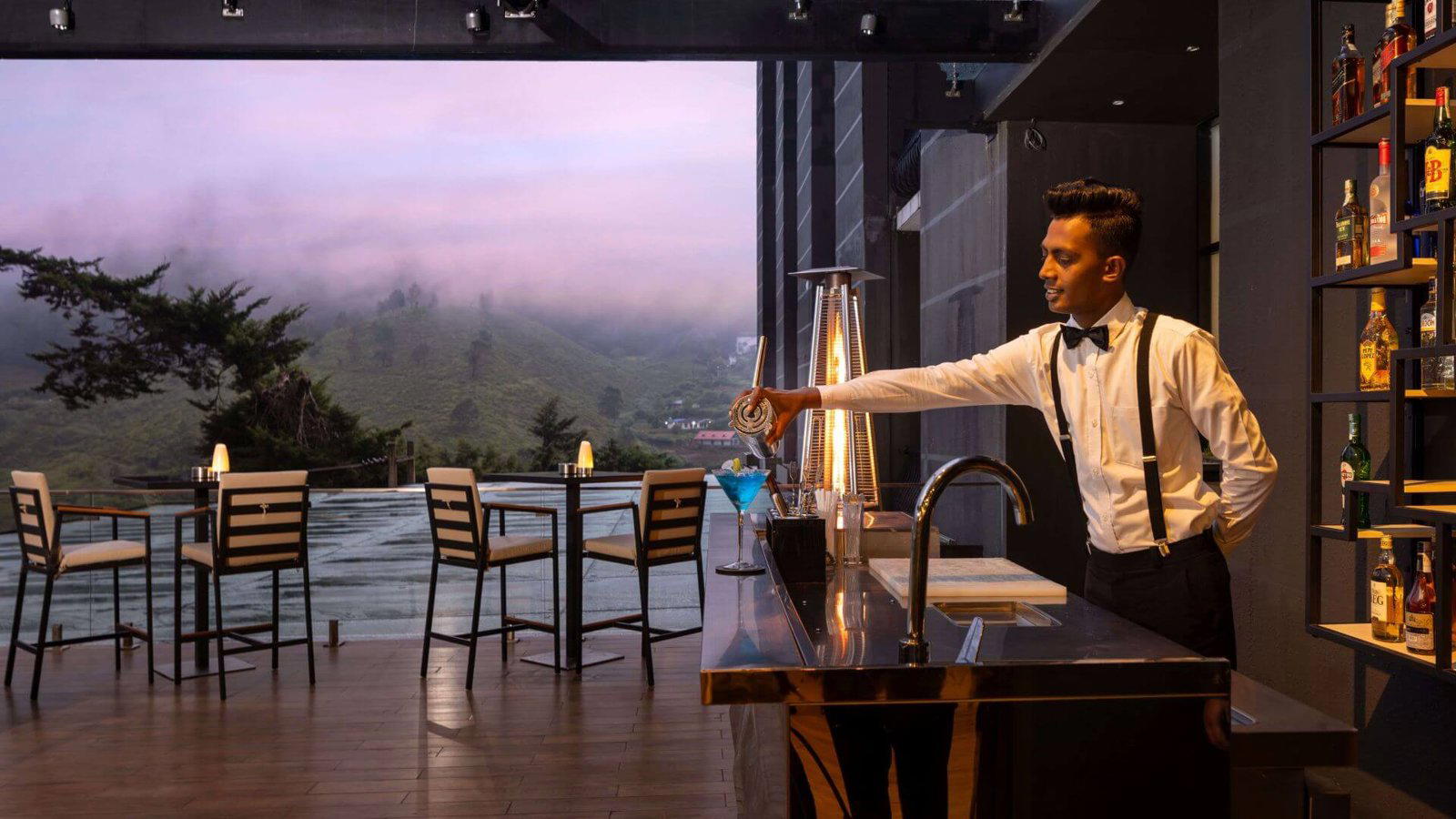
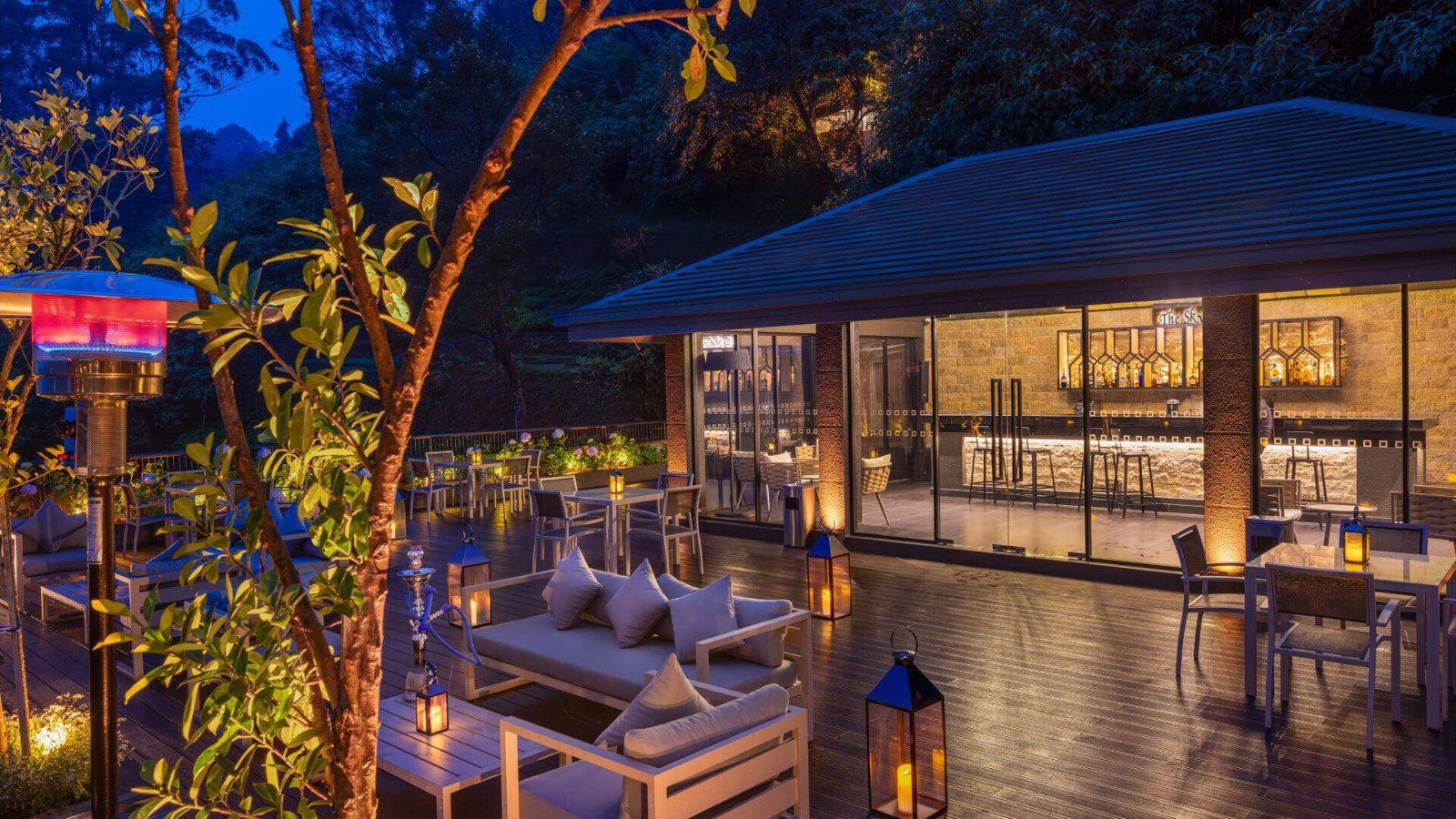
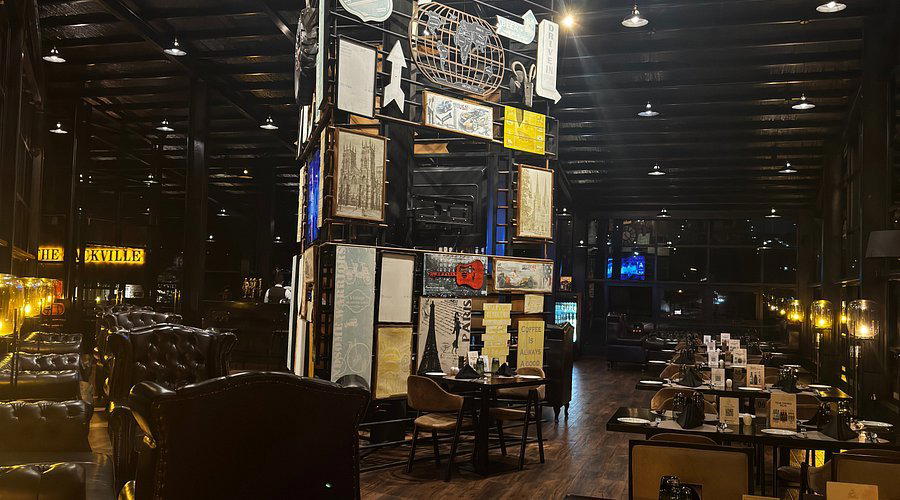
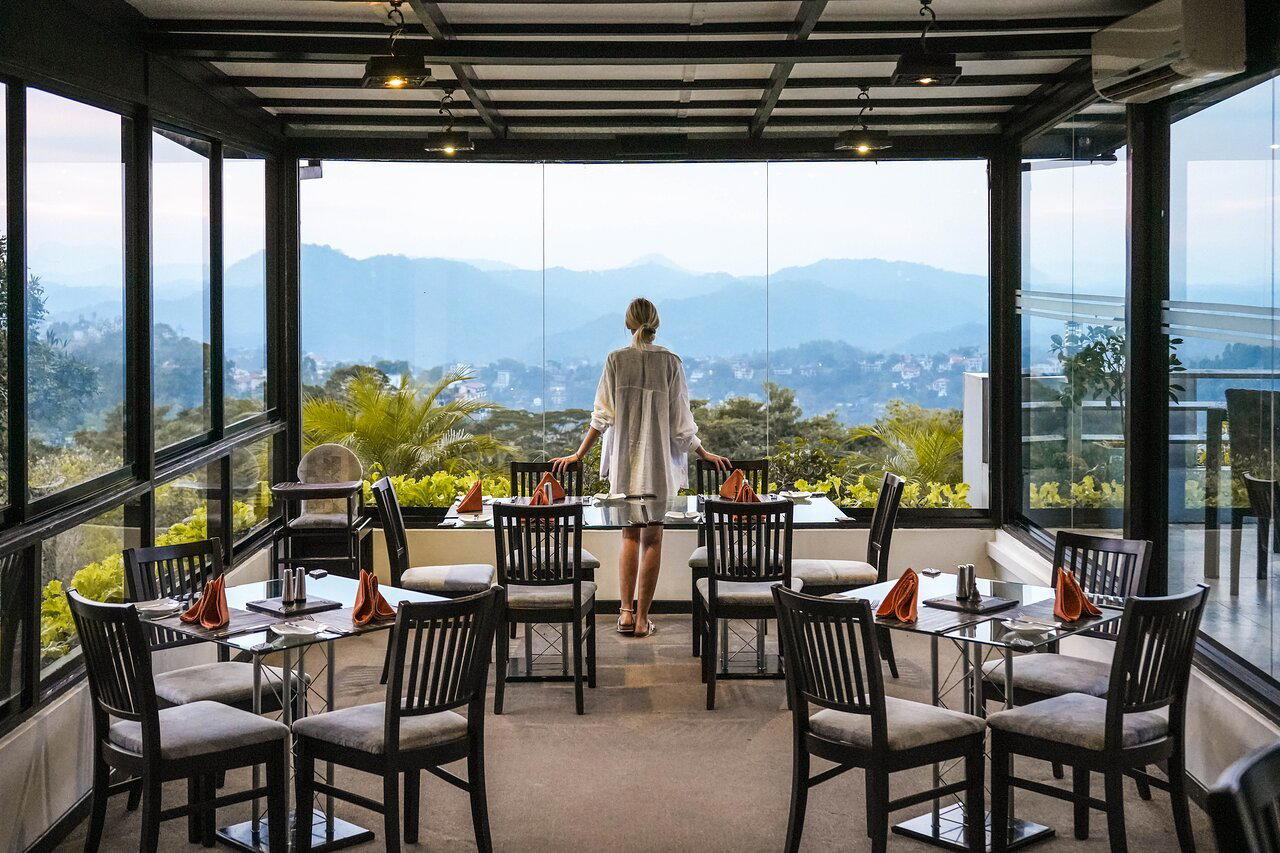
Serene and relaxing colonial charm with contemporary interiors, cozy living room fires, and peaceful tea plantation surroundings.