
A working tea factory converted into a heritage hotel in the hill country above Nuwara Eliya, Heritance Tea Factory sits at around 2,200 metres in Kandapola and won Sri Lanka's Leading Heritage Hotel at the 2025 World Travel Awards. The property occupies original factory machinery alongside guest rooms, placing the industrial architecture of colonial-era tea production at the centre of the guest experience rather than behind museum glass.
Pearl is the En Primeur Club membership app — saves, bookings, and concierge access live there. Same editors, same standards.
- Address
- Kandapola, Sri Lanka
- Website
- heritancehotels.com
 Saves & bookings on Pearl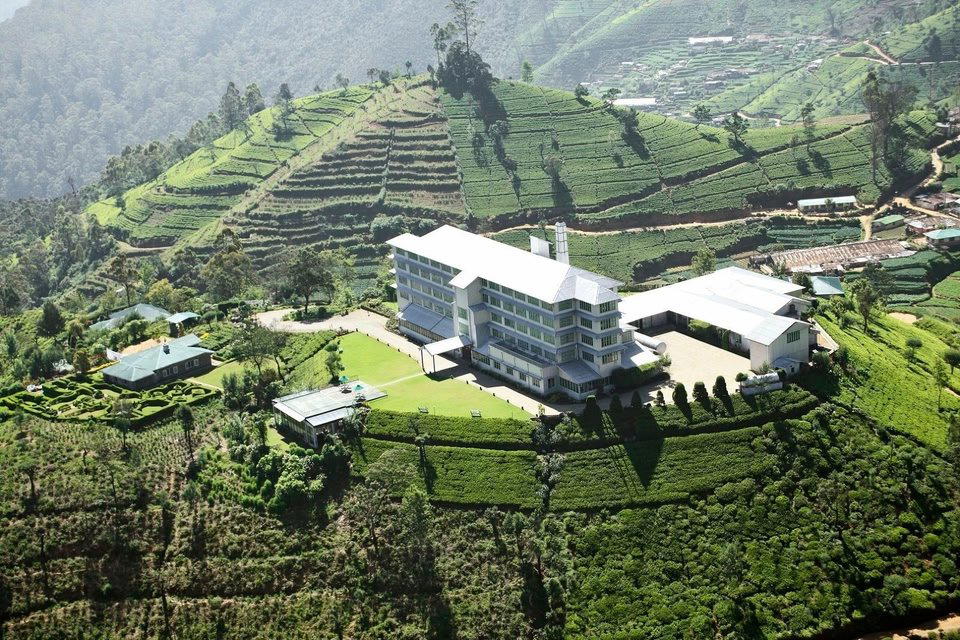
Where the Factory Floor Becomes the Hotel
Sri Lanka's hill country has developed a particular category of heritage accommodation over the past two decades: the converted tea estate. These properties occupy a specific tension between industrial preservation and hospitality comfort, and how each one resolves that tension defines its character. Heritance Tea Factory, set at approximately 2,200 metres in Kandapola above Nuwara Eliya, sits at the more architecturally committed end of that spectrum. The original factory machinery remains in place, not as decorative backdrop but as structural presence, shaping corridors, lobbies, and communal spaces in ways that would be impossible to replicate from scratch. The 2025 World Travel Awards named it Sri Lanka's Leading Heritage Hotel, a designation that reflects this particular approach to adaptive reuse rather than conventional luxury hotel metrics.
The altitude matters here. Kandapola sits higher than Nuwara Eliya, which itself reads cool by Sri Lankan standards. Mist moves through the surrounding tea terraces at a pace that changes the property's visual character hour by hour. This is not coastal Sri Lanka, where the luxury hotel conversation tends toward infinity pools and Indian Ocean sight lines. The relevant comparable set is properties like Ceylon Tea Trails in Interior and Ceylon Tea Trails - Norwood Bungalow in Hatton, both of which also occupy former estate infrastructure. What distinguishes Heritance Tea Factory within that set is scale and the factory typology specifically: bungalow conversions read domestic; a working factory reads industrial, and the spatial logic is different.
The Architecture of Production
Colonial-era tea factories in this region were built for function, not atmosphere. Withering lofts required long, ventilated floor plates. Fermentation and drying rooms needed specific ceiling heights and airflow. The rolling machines and dryers that processed leaf into marketable tea were fixed, heavy, and floor-penetrating. Converting this kind of structure into hotel accommodation means either removing that industrial fabric entirely, which defeats the heritage premise, or working with it, which constrains room sizes, corridor geometry, and service logistics in ways that demand genuine architectural imagination.
At Heritance Tea Factory, the decision to retain original machinery as spatial anchors rather than museum pieces gives the public areas a material honesty that distinguishes them from properties that gesture at heritage through decorative props. Exposed metal, original timber, and the muted colour palette of a functional industrial building sit alongside guest accommodation rather than being cordoned off from it. This is the architectural argument the property makes, and it is a coherent one. Heritage hotel design across Asia frequently defaults to decorative nostalgia; the factory approach here is structurally different.
For guests arriving from Colombo or the coast, the ascent to Kandapola is itself a reorientation. The road through the hill country from Nuwara Eliya gains elevation quickly, and the temperature drop is noticeable enough to shift expectations before arrival. Properties in this altitude band, including Nine Skies in Demodara and W15 Hanthana Estate Kandy in Kandy, draw a traveller specifically interested in hill country character rather than beach proximity.
Placing It in the Sri Lanka Heritage Conversation
Sri Lanka's heritage hotel category has expanded considerably since the early 2000s. Properties like Amangalla in Galle and the Galle Face Hotel in Colombo represent the colonial civic end of the spectrum: grand buildings originally constructed for administrative or social purposes, converted with period-appropriate detailing. The tea estate category is younger in hospitality terms but draws on an equally specific architectural and social history. The estates were commercial infrastructure, and the factory was the economic engine of each one. Treating that infrastructure as the basis of a hotel experience rather than demolishing it for generic new build is a conservation argument as much as a design one.
The 2025 World Travel Awards recognition for Sri Lanka's Leading Heritage Hotel positions the hotel above a competitive field that includes properties appealing to quite different heritage readings. Coastal heritage, Kandyan heritage, Dutch colonial heritage: Sri Lanka's history is layered enough that the category spans radically different architectural vocabularies. The factory typology is specific, and the Kandapola location places it within the hill country tea narrative that is among the country's most internationally recognisable cultural exports.
Travellers building a broader Sri Lanka itinerary around heritage and landscape often combine the hill country with the south coast, where Amanwella in Tangalle and Cape Weligama in Weligama occupy a different register entirely. The contrast between factory-altitude cool and Indian Ocean warmth is one that structures many two-week itineraries through the country. Other combinations pull north toward Water Garden Sigiriya in Sigiriya or east toward Karpaha Sands in Kalkudah Beach, using the hill country as a midpoint reset in temperature and pace. Wildlife-focused stays at properties like Wild Coast Tented Lodge in Yala or Gal Oya Lodge in Gal Oya National Park round out a circuit that uses the hotel as the elevation anchor.
Planning a Stay
The hill country's leading visiting window runs broadly from January through March and again from August through September, when the southwest monsoon has cleared from the region and cloud cover is intermittent rather than persistent. Outside these windows the mist and rain can be considerable, which suits some travellers who find the atmosphere adds to the industrial character of the factory setting, but limits outdoor exploration of the tea terraces. Booking well ahead of the peak January to March window is advisable given the property's recognition at the 2025 World Travel Awards, which typically accelerates demand in the months following.
How It Stacks Up
Comparable venues nearby, for context on price, style, and recognition.
| Venue | Cuisine | Price | Awards | Notes |
|---|---|---|---|---|
| Heritance Tea FactoryThis venue — the venue you are viewing | Heritage conversion of a 100-year-old colonial-era tea factory preserving original industrial character with polished timber and vintage machinery integrated into luxury hospitality. | $$$ | 4-Star | Not listed |
| PALM Hotel Sri Lanka | Contemporary tropical lifestyle retreat blending Brutalist industrial design with Sri Lankan minimalism and sustainable architecture. | $$$ | 4-Star | Ahangama |
| Tekanda Lodge | Handcrafted eco-lodge blending traditional iluk-thatched architecture with modern luxury on a restored tea and coconut plantation | $$$$ | 5-Star | Kathaluwa |
| Kahanda Kanda | Contemporary boutique on tea plantation | $$$$ | 5-Star | Angulugaha |
| Kayaam House | Tropical modernist luxury villa with Bawa-inspired architecture and wellness focus | $$$$ | 5-Star | Tangalle |
| The Cavern | luxury cave villa in tropical forest | $$$$ | 5-Star | Agrapatana |
Recognition history
Dated appearances from independent guides and award organizations, with the underlying list record or original source where available.
World Travel Awards
World Travel Awards
At a Glance
- Romantic
- Quiet
- Classic
- Scenic
- Elegant
- Historic
- Romantic Getaway
- Wellness Retreat
- Family Vacation
- Weekend Escape
- Historic Building
- Garden
- Terrace
- Panoramic View
- Destination Spa
- Wi Fi
- Spa
- Fitness Center
- Restaurant
- Bar
- Garden
- Concierge
- Room Service
- Valet Parking
- Mountain
- Garden
- Wi Fi
- Spa
- Fitness Center
- Restaurant
- Bar
- Garden
- Concierge
- Room Service
- Valet Parking
Warm, tranquil, and immersive with colonial-era charm; soft lighting in restored factory spaces with polished timber and vintage machinery; cool mountain air and misty hillside views create a serene, contemplative atmosphere.