
Michelin Selected
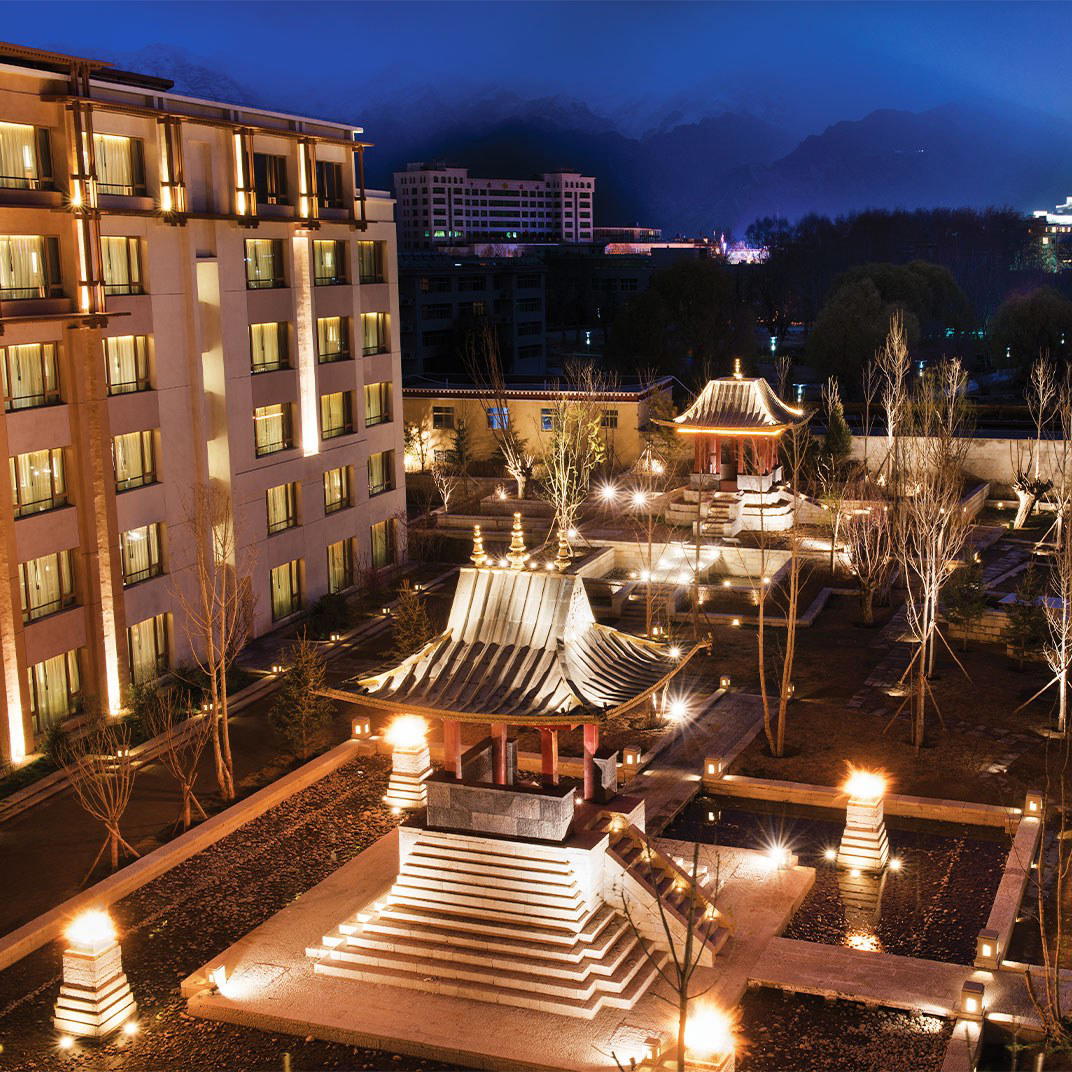
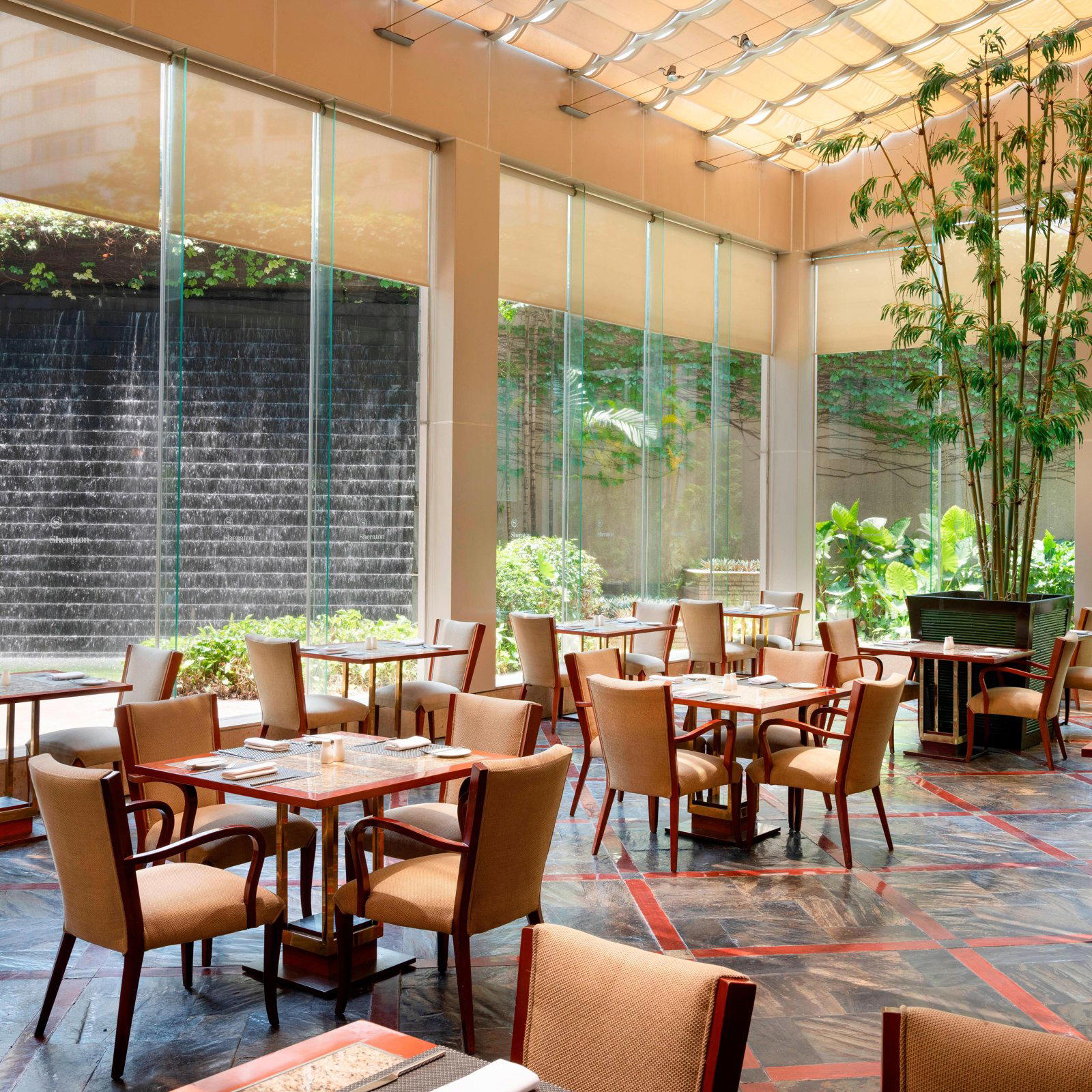
The Hotel, Lhasa sits on Norbulingka Road, metres from one of Tibet's most significant palace gardens, and carries a 2025 Michelin Selected recognition that positions it firmly within the upper tier of accommodation available on the plateau. For travellers arriving at altitude and in need of a considered, full-service base, it offers a scale and design coherence that smaller boutique retreats cannot match.

Pearl is the En Primeur Club membership app — saves, bookings, and concierge access live there. Same editors, same standards.
- Address
- China, Tibet, Lhasa, 罗布林卡路19号 邮政编码: 850015
- Phone
- +86 891 655 8888
- Website
- shangri-la.com
- Directions
- Get directions
Arriving at Altitude: What Lhasa's Hotel Infrastructure Actually Offers
Lhasa sits at approximately 3,650 metres above sea level, and that fact shapes every hospitality decision in the city in ways that no other Chinese destination requires. Acclimatisation facilities, oxygen-supplemented rooms, and proximity to the sites travellers have come vast distances to reach are not incidentals here — they are the functional core of the guest experience. Against that backdrop, Lhasa's upper-tier hotels divide into two broad categories: larger, internationally affiliated properties with the infrastructure to absorb the logistical demands of plateau travel, and smaller, design-led retreats that prioritise intimacy and local material character over breadth of service.
The address itself carries weight. Norbulingka Road places the hotel adjacent to the Norbulingka Palace grounds, the summer residence of the Dalai Lamas and a UNESCO World Heritage Site. In a city where proximity to pilgrimage routes and heritage sites is one of the primary logistical considerations for travellers, that location is not incidental. It anchors the property in the western part of the city, at a navigable remove from the old Barkhor circuit while remaining within reach of both the Potala Palace and the broader monastic network that most visitors structure their itineraries around.
The Architecture and the Altitude: Design in Context
Large-scale hotel architecture in Tibet operates under pressures that don't apply in mainland Chinese cities. The design vocabulary of traditional Tibetan building — thick-walled, fortress-like, low to the ground, with deep-set windows to manage the intensity of plateau light, sits in genuine tension with the requirements of an international full-service hotel. How a property negotiates that tension is one of the clearest indicators of whether it reads as a considered response to place or simply a transplanted urban hotel with decorative gestures toward local culture.
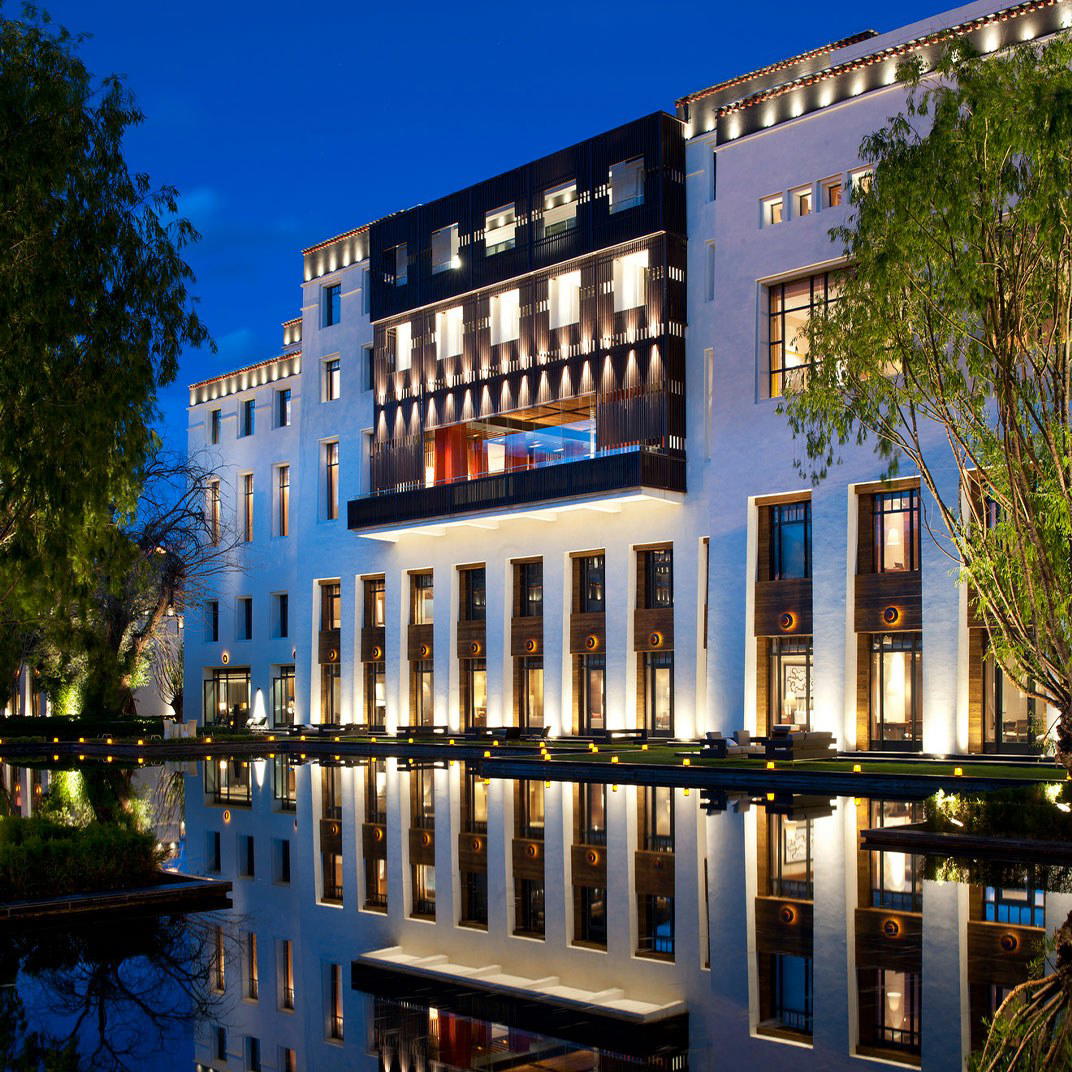
Properties at this tier in Lhasa typically work in Tibetan architectural references through massing, facade treatment, and interior material choices rather than through superficial ornament. The brand's regional portfolio, which includes properties in Bhutan and across Southwest China, has developed a body of experience with high-altitude and culturally sensitive contexts that informs how these spaces are conceived. The result at its finest is a building that sits in dialogue with the surrounding landscape rather than imposing against it, with interior volumes calibrated for the particular quality of Tibetan light: sharp, high-UV, and intensely clear at altitude.
In the context of Chinese hotel development more broadly, the Lhasa property sits in an interesting position. Compare it to the urban register of something like the Mandarin Oriental Qianmen in Beijing or the JW Marriott Hotel Shanghai at Tomorrow Square, and the architectural brief is almost entirely different. Those properties answer to density, skyline, and urban prestige. The Lhasa hotel answers to landscape, heritage regulation, and the physical demands of altitude on a guest's body. That distinction makes it a different kind of hospitality achievement, even within the same country.
Where It Sits Among Lhasa's Options
Lhasa's accommodation offer at the premium end has matured considerably over the past decade, though it remains a small field by the standards of any major Chinese city. The The St. Regis Lhasa Resort occupies the upper bracket of the market and competes on a different price tier and format. The Songtsam Linka Retreat Lhasa represents the design-led boutique alternative, with a more intimate scale and a stronger emphasis on local integration. The occupies the middle ground: international brand reliability, full-service infrastructure including dining, fitness, and wellness facilities designed for guests managing altitude, and a physical scale that suits groups and those who want the confidence of a known operational standard in an unfamiliar and physically demanding environment.
That middle position is not a criticism. For a significant portion of travellers arriving in Lhasa, particularly those on structured itineraries, first-time visitors to Tibet, or anyone with health considerations that make altitude management a priority, the infrastructure of a full-service international hotel is precisely what the trip requires. It is a signal that the property meets a threshold, not just a local one.
For broader context on what Lhasa offers beyond accommodation, the EP Club Lhasa restaurants and city guide covers the dining and cultural infrastructure around these hotels in more detail.
Practical Considerations for Plateau Travel
Reaching Lhasa requires either the Lhasa Gonggar Airport (approximately 60 kilometres from the city centre, with transfer times that vary significantly depending on traffic and road conditions) or the Qinghai-Tibet Railway, which arrives at Lhasa Railway Station and is itself an acclimatisation aid for travellers coming from lower elevations. A Tibet Travel Permit is mandatory for all foreign visitors and must be arranged before arrival, this is a non-negotiable logistical reality that no hotel, regardless of category, can circumvent. Most organised tours include permit handling as part of their service, but independent travellers need to factor in the processing time and the requirement to enter Tibet as part of a guided group.
Norbulingka Road's western location means the hotel is reasonably positioned for access to the Norbulingka Palace grounds (a short walk), while the Potala Palace and Jokhang Temple require a vehicle transfer. The Barkhor circuit, which most visitors prioritise for its combination of temple access and market character, is typically 20 to 30 minutes by road depending on conditions. For travellers using the hotel as a base for day excursions to Shigatse, Gyantse, or Namtso Lake, an early-morning departure is standard and the hotel's location on the western edge of the city marginally reduces outbound travel time on routes heading in that direction.
Those planning travel to other high-altitude or architecturally distinctive properties in western China might also consider the Hylla Vintage Hotel in Lijiang or the Songtsam Meili Lodge in the Diqing Tibetan Autonomous Prefecture as part of a broader Southwest China itinerary that moves through culturally contiguous regions at varying elevations.
Comparable Spots, Quickly
Comparable venues nearby, for context on price, style, and recognition.
| Venue | Cuisine | Price | Awards | Notes |
|---|---|---|---|---|
| Shangri-la Hotel, LhasaThis venue — the venue you are viewing | Blends modern conveniences with traditional Tibetan architecture and ornate decor. | $100–200 | Michelin Selected | Not listed |
| The St. Regis Lhasa Resort | Luxury resort blending modern comforts with traditional Tibetan charm | Not listed | Michelin Selected | Chengguan District |
| Songtsam Linka Retreat Lhasa | Luxury boutique hotel blending traditional Tibetan architecture with contemporary design, positioned as an authentic cultural retreat in the Himalayan region. | Not listed | Virtuoso Luxury Hotel Partner | West Bank of Lhasa River |
| W Changsha | Futuristic luxury hotel inspired by stars and galaxy | Not listed | Michelin Selected | Yuhua District |
| Songtsam Tacheng Lodge (松赞塔城山居) | Traditional Tibetan architectural marvel blending heritage with modern comforts. | $200–300 | Not listed | Tacheng |
| Regent Chongqing | Blends modern elegance with traditional Chinese elements inspired by courtyards and cultural heritage. | Not listed | 1 Michelin Key | Jiangbeizui |
Recognition history
Dated appearances from independent guides and award organizations, with the underlying list record or original source where available.
Michelin Selected
Michelin
Continue exploring
More in Lhasa
Details
- Elegant
- Sophisticated
- Scenic
- Romantic Getaway
- Family Vacation
- Business Trip
- Panoramic View
- Historic Building
- Wi Fi
- Pool
- Spa
- Fitness Center
- Room Service
- Concierge
- Business Center
- Mountain
- Garden
- Wheelchair Accessible
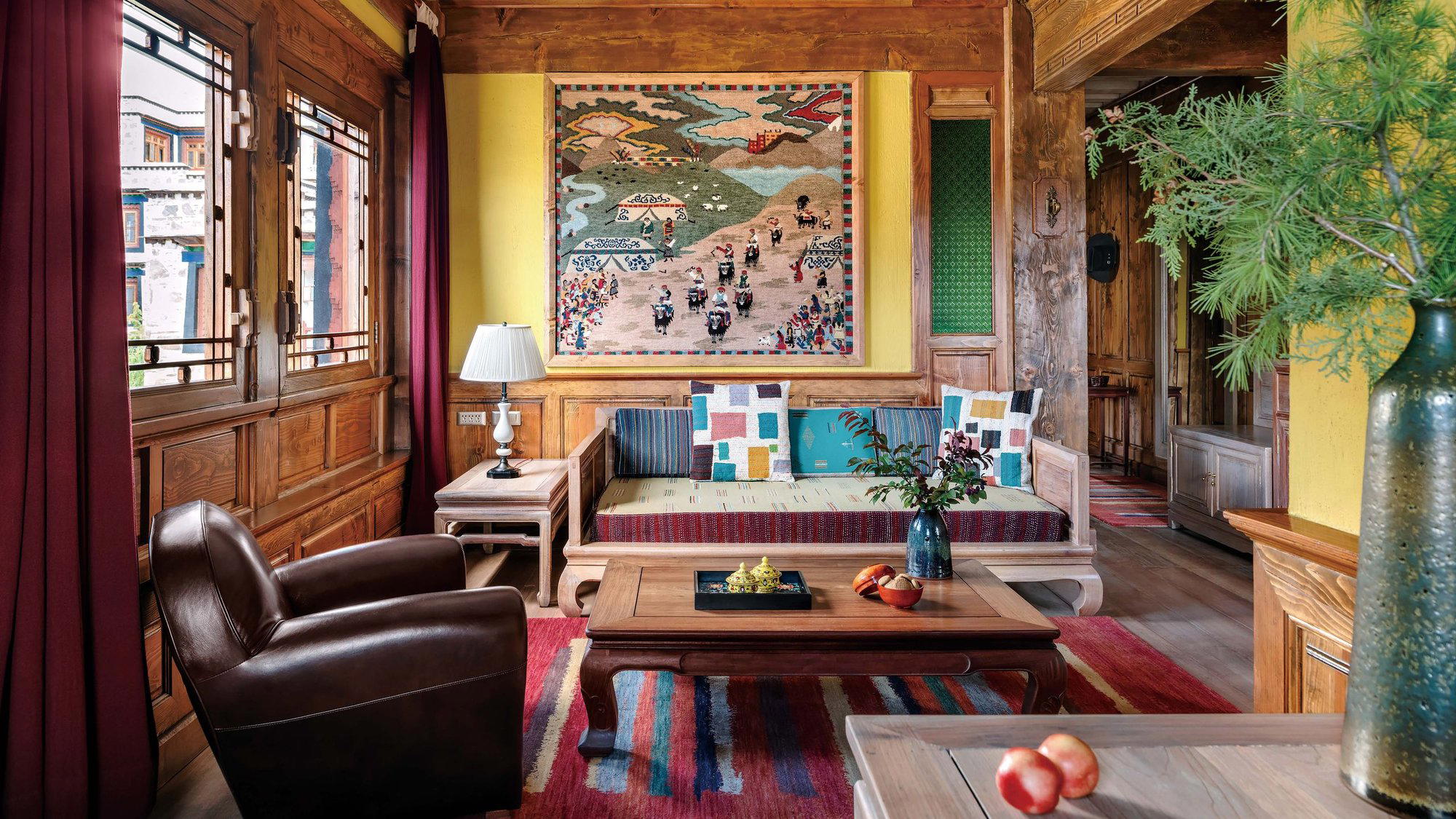
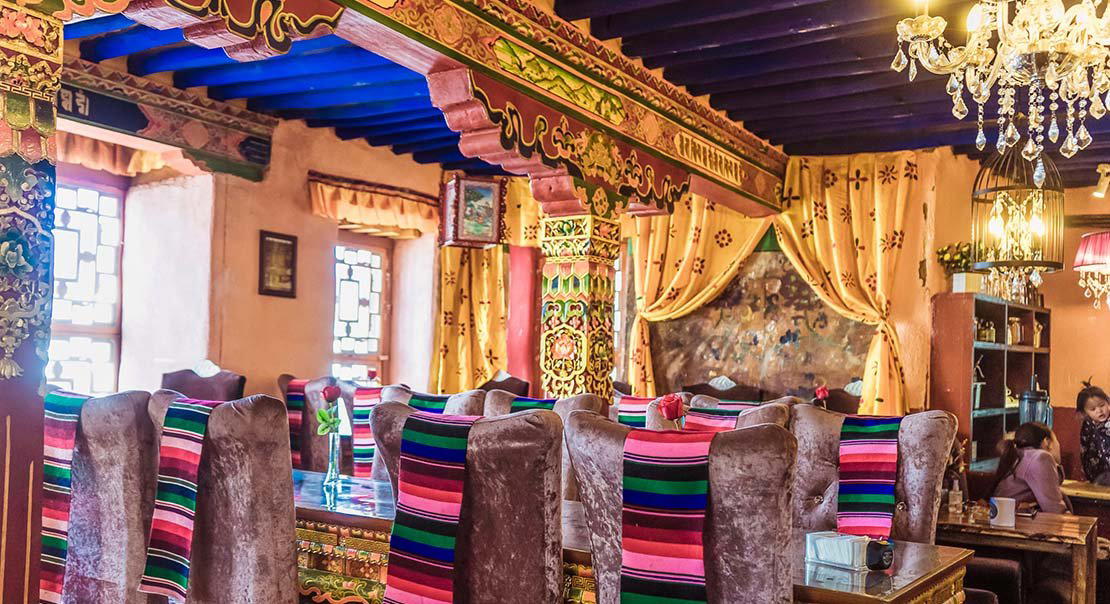
Ornate interiors with Tibetan-inspired decor, warmly lit corridors, colorful carpets, and romantic dim lighting.