Sir Devonshire Square Hotel London

Design Hotels Member
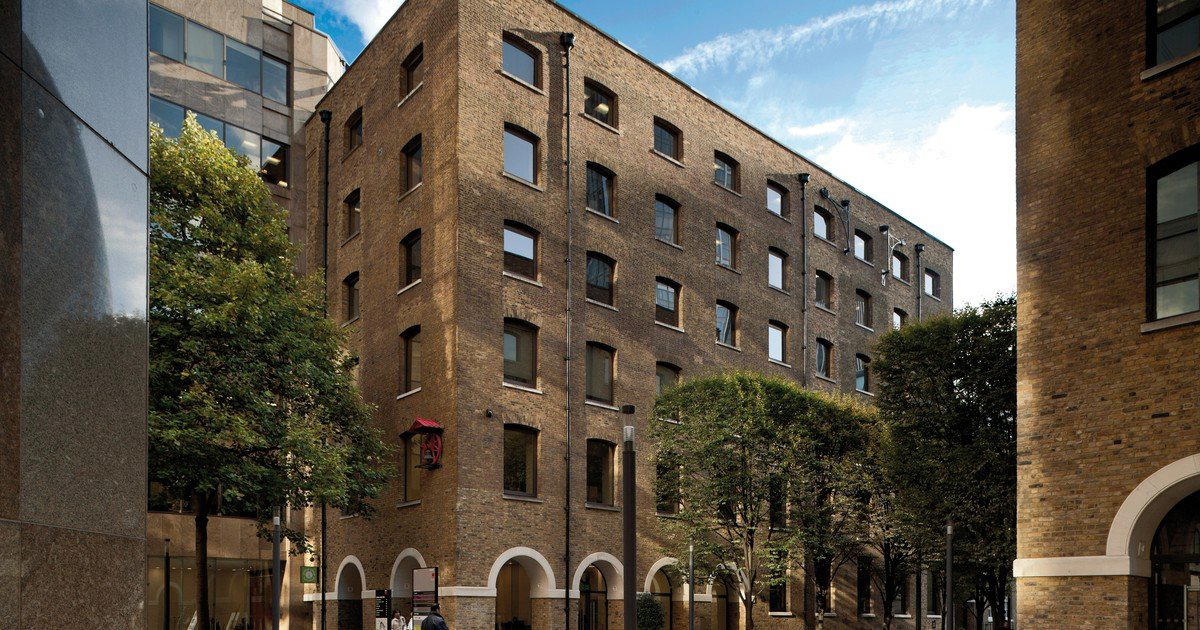
A redbrick Georgian property dating to 1768, Sir Devonshire Square sits at the intersection of the City of London and Shoreditch, positioning it differently from the Mayfair establishment that defines most premium London hotel stays. For travellers who want proximity to both financial-district meetings and east London's restaurant and gallery circuit, the address is a practical one with genuine historic fabric beneath it.

Pearl is the En Primeur Club membership app, where members save venues, book tables and use the concierge.
Where the City Meets Shoreditch: The Devonshire Square Position
London's premium hotel market has long been anchored in Mayfair and Knightsbridge, where Claridge's, The Connaught, and The Savoy set the traditional register for luxury accommodation. The eastern fringe of the City operates on different coordinates. Devonshire Square, EC2M, sits in that transitional zone where the old financial district bleeds into the creative density of Shoreditch, producing a guest profile that tends to be less interested in drawing-room formality and more focused on access to the tech and finance corridors of the Square Mile alongside east London's restaurant circuit.
Sir Devonshire Square Hotel occupies a redbrick Georgian building that dates to 1768, giving it one of the more credible historic foundations of any hotel operating in this part of the city. That kind of structural longevity is not common in this neighbourhood, where most of the accommodation stock is either converted office space or purpose-built contemporary product. The bones here predate the surrounding financial district's modern build-out by well over a century, and that read comes through in the materiality of the building's exterior.
A Building With Two Centuries Behind It
The significance of 1768 as a founding date is worth holding in context. That year predates the major Georgian residential expansion of Mayfair, the construction of Regent Street, and virtually the entire modern fabric of central London as it now stands. Properties with that depth of documented history in active hotel use occupy a distinct position: they carry a kind of temporal authority that newer openings, regardless of design investment, cannot replicate.
In the broader conversation about responsible stewardship of historic built fabric, this matters. Across the United Kingdom, the question of how Georgian and Victorian structures are adapted for contemporary hospitality use has become increasingly consequential. Properties that retain and restore original structural elements rather than gut-converting them serve a preservation function alongside their commercial one. Hotels in converted listed buildings in other parts of the country, from Estelle Manor in North Leigh to The Newt in Somerset, have demonstrated that historic fabric and contemporary comfort are not in tension when the conversion work is done with care. Sir Devonshire Square sits in that same tradition of adaptive reuse, applying it within an urban City context rather than a rural estate one.
The Sustainability Question in Urban Hotel Conversions
The hospitality sector's relationship with sustainability has shifted significantly over the past decade. Where the conversation once focused almost exclusively on operational metrics, such as energy consumption and single-use plastics, the more substantive discussion now encompasses embodied carbon and the environmental cost of construction itself. Retaining and repurposing an existing Georgian structure rather than demolishing and rebuilding carries a measurable advantage in embodied-carbon terms that new-build properties, however BREEAM-certified, cannot claim at opening.
This framing applies across the UK's heritage hotel sector. Properties like Gleneagles in Auchterarder and Hope Street Hotel in Liverpool operate within historic or architecturally significant structures, and that choice carries sustainability implications that go beyond green-certification checklists. In London specifically, where development pressure on historic streetscapes is constant, a hotel that commits to an eighteenth-century building at 5 Devonshire Square is participating, whether explicitly or not, in the preservation of a street-level urban environment that would otherwise be vulnerable to replacement.
The neighbourhood itself reinforces this reading. Devonshire Square as a precinct has been subject to significant commercial redevelopment in recent decades, with glass-and-steel office blocks now framing much of its perimeter. The persistence of the redbrick Georgian building within that context is not incidental: it provides a visual counterpoint to the surrounding financial architecture and a sense of human scale that the newer structures around it do not offer.
The East London Location as a Practical Argument
For travellers whose London itinerary is centred on the City of London, Shoreditch, or Spitalfields, an EC2M address resolves a problem that Mayfair hotels cannot. The distance from Claridge's or Raffles London at The OWO to the Square Mile at peak hours is a meaningful friction. From Devonshire Square, the major City offices are walkable, Liverpool Street station is minutes away, and the restaurant and gallery circuit of Shoreditch begins effectively at the property's eastern edge.
NoMad London and The Emory serve different geographic logics; neither addresses the specific duality of City-adjacent and east-London-adjacent that Devonshire Square covers. Travellers who want access to both sides of that divide without commuting between them will find the location argument compelling.
Liverpool Street's transport connectivity is also worth noting for travellers arriving from Stansted Airport or from the east of England more broadly, as the Elizabeth line, National Rail, and Underground interchange at the station makes Devonshire Square among the more logistically efficient addresses in central London for that specific journey profile.
Contextualising the Property Within the UK Hotel Scene
Across the wider United Kingdom, the market for characterful, historically grounded urban hotels has grown as travellers have looked for alternatives to the formula of the major international groups. Properties like King Street Townhouse Hotel in Manchester and Glasgow Grosvenor Hotel in Glasgow represent the same broad category: city-centre hotels where the building itself carries meaning, and where the character of the neighbourhood shapes the guest experience as much as the room design does.
In rural and coastal settings, the same instinct drives choices toward properties like Burts Hotel in Melrose, Lifeboat Inn, St Ives, or Langass Lodge in Na H-Eileanan An Iar: places where the specificity of location and the integrity of the structure read as assets rather than incidentals. Sir Devonshire Square fits that sensibility applied to an urban financial district address, which remains a less crowded space than either the West End luxury corridor or the Shoreditch design-hotel tier. For further context on London's wider hotel and restaurant scene, see our full London restaurants guide.
Other properties worth considering for international comparison, particularly for travellers moving between London and the United States, include The Fifth Avenue Hotel in New York City and Aman New York, both of which occupy similar territory at the intersection of historic urban fabric and contemporary hospitality ambition.
Know Before You Go
- Address: 5 Devonshire Square, London EC2M 4YE
- Nearest station: Liverpool Street (Elizabeth line, Central, Circle, Hammersmith & City, Metropolitan lines; National Rail)
- Area character: Transitional zone between the City of London and Shoreditch; walkable to major financial district offices and east London's restaurant belt
- Building date: 1768 (Georgian redbrick)
- Star rating, price range, and booking method:; check directly with the property
- Stansted Airport access: Direct National Rail service to Liverpool Street, approximately 30 minutes
Price and Positioning
Comparable venues nearby, for context on price, style, and recognition.
| Venue | Price | Awards | Notes |
|---|---|---|---|
| Sir Devonshire Square Hotel LondonThis venue (the venue you are viewing) | Not listed | Design Hotels Member | Not listed |
| Park Hyatt London River Thames | Not listed | Michelin Selected · Esquire Best New Hotels | Nine Elms, Luxury urban riverside sanctuary with contemporary art and wellness focus |
| The Guardsman | $300–500 | Michelin Selected | Westminster, Contemporary luxury townhouse with members'-club aesthetic; discreet and distinctive with 21st-century London club sensibility. |
| ME London | $300–500 | Michelin Selected | Aldwych, Contemporary architectural landmark blending bold design with central London luxury. |
| The Trafalgar St. James London, Curio Collection by Hilton | Not listed | Not listed | St. James's, Contemporary boutique in historic Art Deco building |
| The Academy | $300–500 | Small Luxury Hotels of the World Member | Fitzrovia, Georgian townhouses with modern boutique charm |
Recognition history
Dated appearances from independent guides and award organizations, with the underlying list record or original source where available.
Design Hotels Member
Design Hotels
Continue exploring
More in London
Hotels in London
All hotels in London →
Bars in London
All bars in London →
Restaurants in London
All restaurants in London →



Details
- Elegant
- Modern
- Cozy
- Sophisticated
- Business Trip
- Weekend Escape
- Historic Building
- Terrace
- Wi Fi
- Restaurant
- Bar
- Room Service
- Concierge
- Air Conditioning
- Skyline
- Street Scene
- Wheelchair Accessible
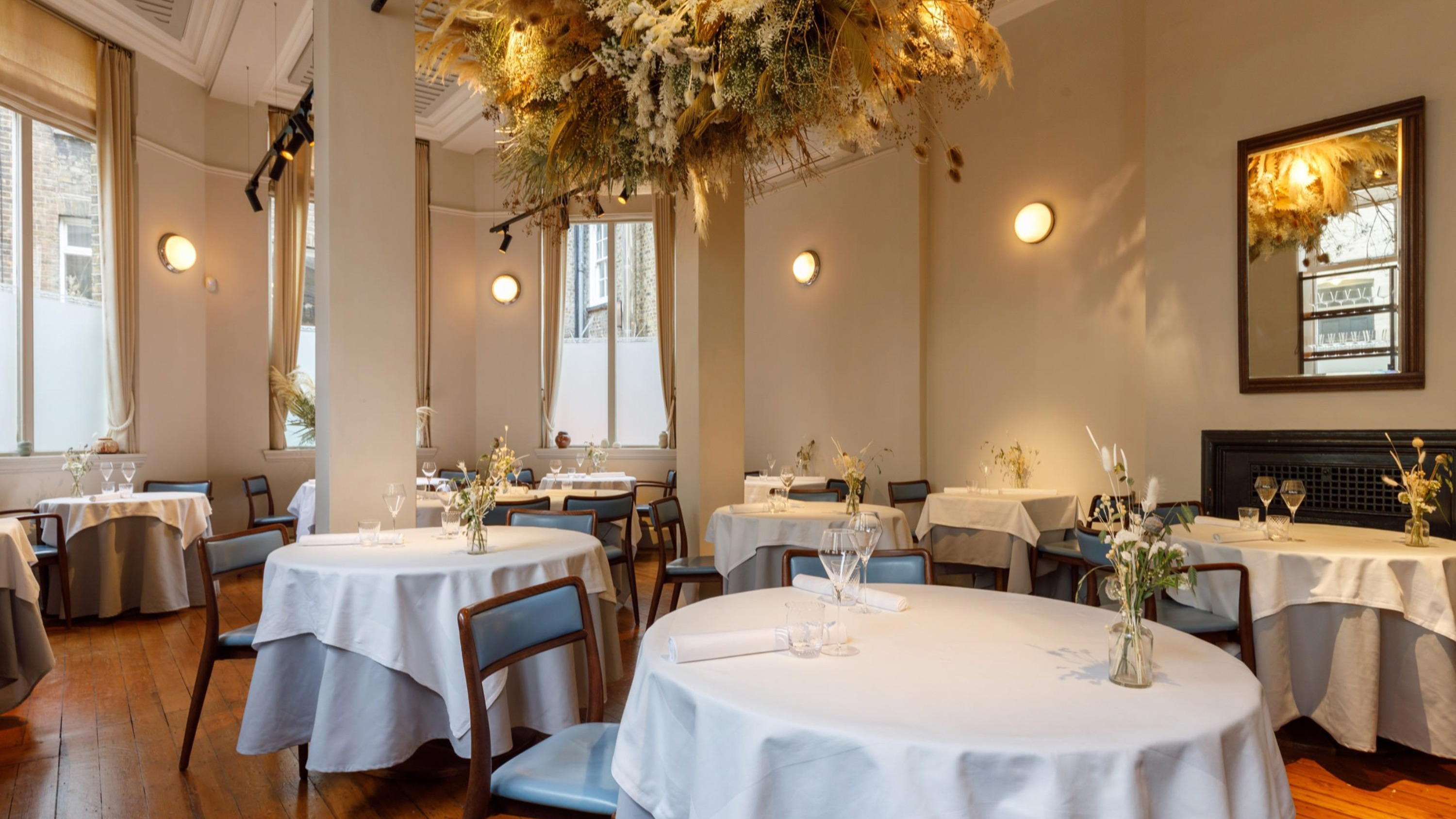
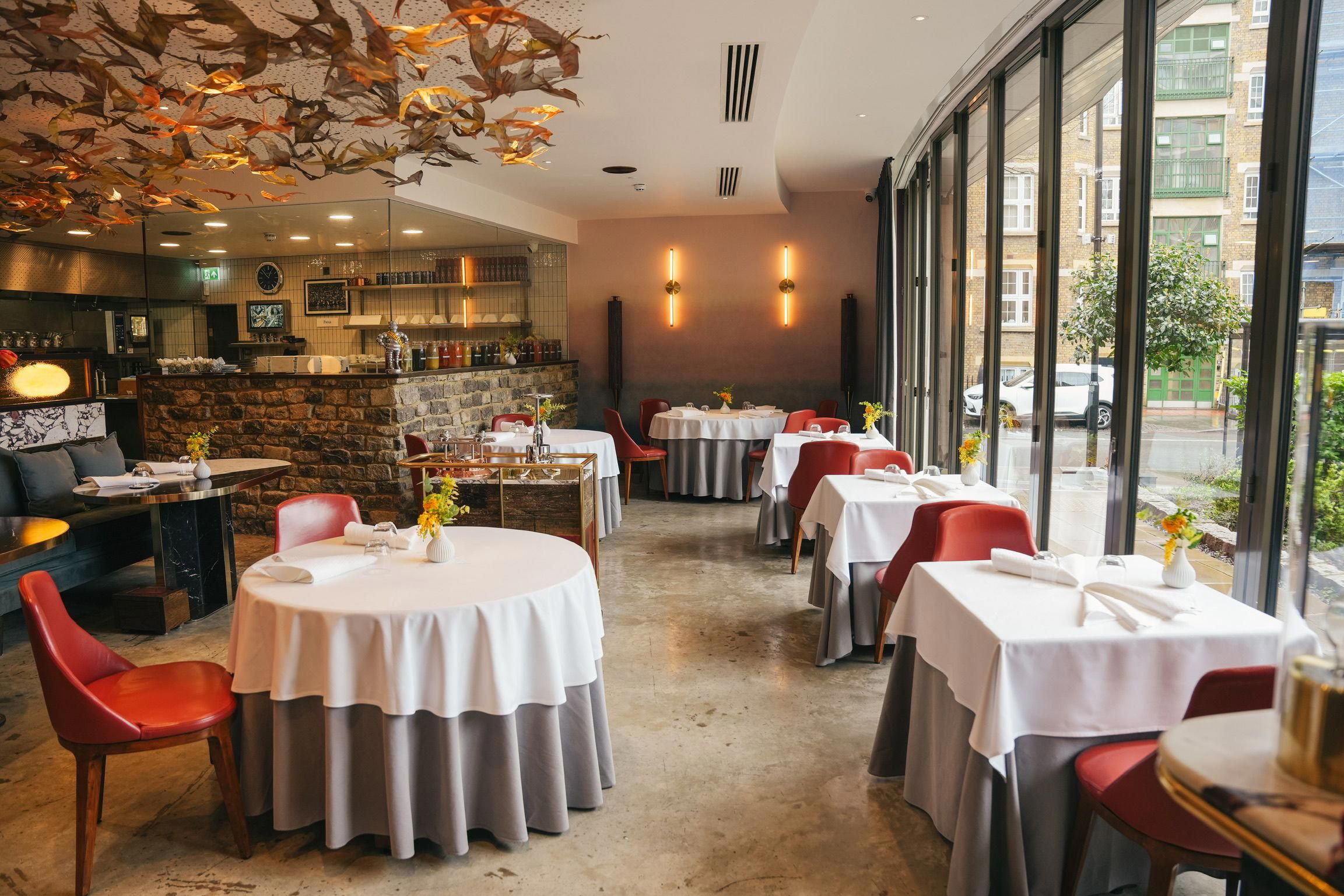
Peaceful and stylish with blush-toned interiors, plants, cozy fireplaces, and retro chic design featuring large windows framing city views.