Sierra Resort Hakuba

Michelin Selected
A Michelin Selected property in the Hakuba Valley, Sierra Resort sits in one of Japan's most demanding alpine environments, where the architecture reads as a direct response to heavy snowfall, steep terrain, and the particular quality of Nagano mountain light. It occupies a position between international ski resort hospitality and the quieter, design-attentive tier that has come to define premium mountain stays in Japan.

Pearl is the En Primeur Club membership app — saves, bookings, and concierge access live there. Same editors, same standards.
- Address
- 14863-6 Hokujo, Hakubamura, Kitazumino-gun, Japan
- Phone
- (81) 261-72-3250
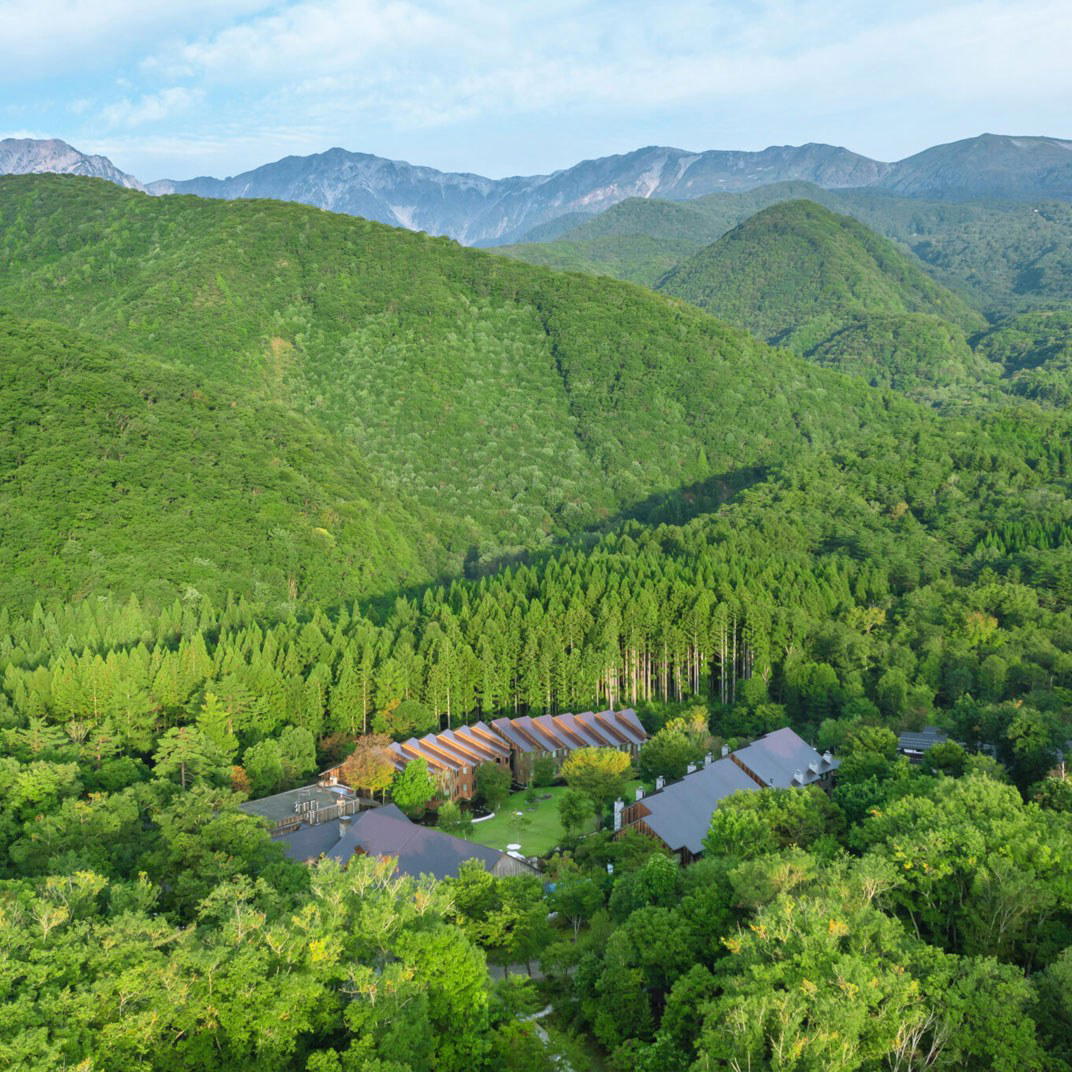
Where the Building Answers the Mountain
Hakuba Valley receives some of the deepest snowfall in Japan, regularly accumulating several metres across a season that stretches from December into late March or early April. That meteorological reality shapes everything built here: roof pitches, structural load tolerances, the proportion of glass to solid wall, and the relationship between interior warmth and the near-constant white outside. The resort properties that have attracted sustained critical attention in Hakuba are the ones whose architecture treats snow as a design partner rather than a hazard to be managed, and Sierra Resort Hakuba reads as a property conceived with that logic in mind.
The resort carries a Michelin Selected distinction in the 2025 Michelin Hotels guide, a classification that places it within a curated tier of properties judged to offer a consistent, characterful experience.
The Spatial Logic of a High-Altitude Resort
Mountain resort architecture in Japan has followed a recognisable split over the past two decades. One branch has moved toward the international grand-hotel format, with large lobbies, multiple dining outlets, and spa facilities scaled for high occupancy. The other branch, smaller and more deliberate, favours contained footprints, materials sourced from the immediate region, and interior volumes calibrated to the scale of a private house rather than a hotel. Sierra Resort Hakuba occupies the latter category, and the physical address in Hokujo, on the northern end of Hakuba Village, places it in a quieter zone away from the most commercially active part of the resort cluster.
Hokujo sits adjacent to the Hakuba47 and Goryu ski areas, which together form one of the two main ski access points in the valley alongside the Happo-One area further south. The positioning means the resort draws from a guest profile that skews toward returning visitors and those with a specific preference for the terrain on the valley's western slope, rather than the broader tourist mix that moves through Happo-One's higher-volume infrastructure. That geography reinforces the architectural logic: a contained property in a quieter sub-area, where the experience is defined by the immediate environment rather than proximity to retail or resort services.
Hakuba Within Japan's Mountain Hospitality Tier
Japan's premium mountain stay category has developed a recognisable grammar over the past fifteen years. Properties like Zaborin in Kutchan and Higashiyama Niseko Village, a Ritz-Carlton Reserve in Niseko have established Hokkaido as the dominant reference point for ski-adjacent luxury, while Nagano's alpine corridor has historically been measured against onsen ryokan traditions rather than the international ski resort model. Hakuba represents an interesting middle ground: it hosted the 1998 Winter Olympics and carries the international name recognition that entails, but its accommodation tier has matured more slowly than Niseko's, which means properties with genuine design ambition occupy a less crowded competitive field.
Sierra Resort's Michelin Selected status places it in a comparable recognition tier to properties across Japan that have earned the same distinction, from coastal ryokan to urban design hotels. For a point of comparison within the broader Japan luxury hotel set, properties like Gora Kadan in Hakone, Amanemu in Mie, and Fufu Nikko in Nikko have each built reputations around a specific landscape response, using architecture and interior material choices to make the physical setting legible from inside the property. Sierra Resort's position in Hakuba positions it within that same design-aware conversation, even as it operates in a ski-resort context that differs sharply from hot-spring or coastal formats.
Travellers who have already experienced Fufu Kawaguchiko in Fujikawaguchiko or Fufu Kyu-Karuizawa Restful Forest in Karuizawa will find Hakuba's seasonal character more extreme: the snow volume is heavier, the activity orientation stronger, and the shoulder seasons more pronounced. The resort model in Hakuba is built around a core winter window, which concentrates the guest experience in a way that differs from year-round mountain properties.
Seasonal Timing and Planning
The Hakuba season runs from roughly late November through late March, with January and February delivering the most reliable powder conditions. The valley's elevation and north-facing aspect tend to hold snow quality better than lower Nagano resorts, and the Goryu and Hakuba47 areas accessible from Hokujo have a terrain mix that draws both intermediate skiers and those seeking off-piste access when conditions permit. For stays at Sierra Resort, the peak weeks around the Japanese winter holidays and the February powder season book earliest; visitors with flexibility in timing find better availability in December or late March, when conditions are variable but the property is quieter.
Hakuba Village is served by the JR Oito Line from Matsumoto, with the main access station at Hakuba. Direct bus services operate from Nagano Shinkansen station during the winter season, making the transfer from Tokyo a three-to-four hour journey depending on connection timing. The Hokujo area requires either a shuttle or vehicle from the main village, which is a practical consideration for guests without ski-day transport already arranged. For those comparing Hakuba to other Japanese mountain contexts, our full Hakubamura guide covers the valley's accommodation and dining options in broader detail.
Where Sierra Resort Sits in the Wider Japan Luxury Hotel Picture
For travellers assembling a Japan itinerary that moves between urban and rural settings, Sierra Resort Hakuba represents a specific type of property: design-attentive, externally recognised, and anchored in a landscape that is as demanding as it is distinctive. The urban end of Japan's luxury hotel set, from Bvlgari Hotel Tokyo to HOTEL THE MITSUI KYOTO in Kyoto, operates within a different register entirely, where the architecture answers a city block rather than a mountain gradient. The shift to a Hakuba property asks guests to recalibrate expectations toward seasonal specificity, weather dependency, and the particular rewards of a resort that has been designed to hold its own against the scale of the Japanese Alps.
Other Michelin Selected properties across Japan that sit in comparable landscape-response categories include Asaba in Izu, Kamenoi Besso in Yufu, Nishimuraya Honkan in Kinosaki-cho, and Satoyama-Jujo in Niigata. Each has been selected for a coherent hospitality identity that connects physical setting to guest experience in a specific, measurable way. Sierra Resort's inclusion in that group, in a ski-resort context, signals that its design and service approach meets a threshold that not all Hakuba properties have reached.
Fast Comparison
Comparable venues nearby, for context on price, style, and recognition.
| Venue | Cuisine | Price | Awards | Notes |
|---|---|---|---|---|
| Sierra Resort HakubaThis venue — the venue you are viewing | Western-style luxury mountain resort blending contemporary comfort with traditional Japanese architecture and natural hot spring heritage. | $300–500 | Michelin Selected | Not listed |
| Node Hotel | Contemporary boutique hotel inspired by a private art collector's residence, blending hospitality with curated contemporary art. | $100–200 | Michelin Selected | Shijo Nishinotoin, Nakagyo-ku |
| Candeo Hotels Osaka Shinsaibashi | Modern high-rise blending contemporary design with traditional Japanese temple elements | $100–200 | Michelin Selected | Chūō |
| Hotel Sunroute Plaza Shinjuku | Contemporary upper-middle-range urban hotel blending modern design with Japanese hospitality in Tokyo's lively Shinjuku district. | $100–200 | Not listed | Shibuya |
| Kawana Hotel & Golf Course | Historic oceanfront resort blending imperial art deco with modern comforts and natural hot springs. | Not listed | Small Luxury Hotels of the World Member | Ito |
| KUMU Kanazawa by THE SHARE HOTELS | Design-led boutique hotel in renovated former office building emphasizing communal harmony and local connectivity. | $100–200 | Michelin Selected | Kamitsutsumicho |
Recognition history
Dated appearances from independent guides and award organizations, with the underlying list record or original source where available.
Michelin Selected
Michelin
Details
- Scenic
- Quiet
- Elegant
- Cozy
- Family Vacation
- Wellness Retreat
- Weekend Escape
- Ski In Ski Out
- Destination Spa
- Garden
- Panoramic View
- Historic Building
- Wi Fi
- Pool
- Spa
- Fitness Center
- Room Service
- Restaurant
- Mountain
- Garden
Serene and tranquil with modern comfort; large windows frame spectacular mountain and forest views; warm, welcoming atmosphere enhanced by traditional architectural elements and natural surroundings.