

REVĪVŌ Wellness Resort in Nusa Dua sits at the serious end of Bali's wellness spectrum: 16 suites and villas, a state-of-the-art spa, and a fitness programme spanning yoga, Pilates, boxing, and two-week boot camps. The restaurant serves Balinese and international fare calibrated to nutritional goals, making this one of the island's few properties where the food programme is as considered as the spa. Rooms from $296 per night.
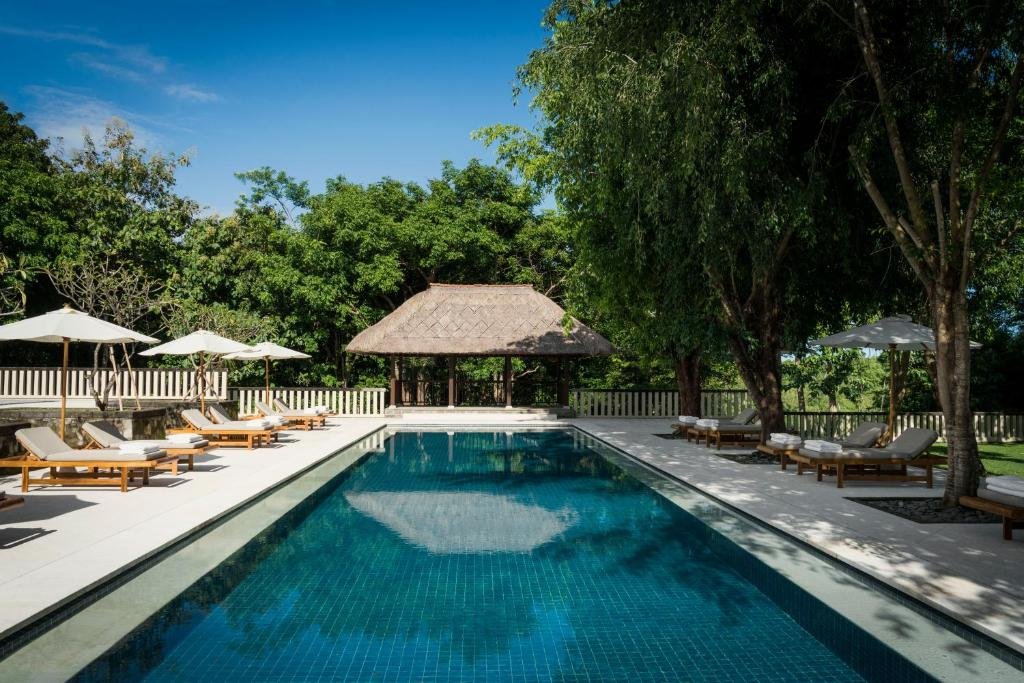
Bali's Wellness Hotel Tier, and Where REVĪVŌ Sits Within It
Most boutique hotels on the island offer some version of wellness: a spa treatment menu, a pool deck with morning yoga, perhaps a juice bar. What Bali has fewer of are properties where the wellness infrastructure is the primary architectural and operational commitment, not an amenity added to a room product. REVĪVŌ Wellness Resort, positioned on the southern fringe of Nusa Dua in Badung, belongs to that smaller cohort. With 16 keys, a spa built to clinical rather than decorative standards, and a fitness programme that runs from drop-in classes to fourteen-day residential boot camps, it operates in a different register from the standard boutique offering. For context on the broader Badung accommodation market, see our full Badung hotels guide.
The Food Programme: Nutrition as Editorial Statement
Wellness-focused hotels across Southeast Asia have long struggled with the tension between nutrition and pleasure at the table. Many resolve it by keeping the kitchen separate from the wellness proposition: the restaurant serves food, the spa treats the body, and neither talks to the other. REVĪVŌ takes a different position. The restaurant, bar, and poolside lounge are framed as part of the restoration programme rather than a counterweight to it, with Balinese and international dishes designed around nutritional intent alongside flavour. This is a more integrated model, and it shapes how the dining experience reads: the menu is not a concession to guests who want something other than treatment, but an extension of the same logic that drives the spa and the fitness schedule.
Bali has developed a credible track record in health-conscious cooking, partly through the concentration of plant-based and raw-food restaurants in Ubud, partly through the influence of the island's own ingredient culture, which includes aromatic roots, fermented preparations, and a vegetable vocabulary that supports low-intervention cooking. Properties that draw on this local larder tend to produce more coherent wellness menus than those that import a generic international health-food framework. REVĪVŌ's Balinese-international format suggests it works within that tradition, though the specifics of the menu are better confirmed directly with the property. For dining options across the wider area, our full Badung restaurants guide covers the broader scene.
Room Configuration and Scale
The 16-key count places REVĪVŌ firmly in the small-footprint tier of Bali luxury, a category that has grown in prestige as larger resort compounds have become harder to differentiate. The suite configuration includes rooms with private gardens or courtyards, others with pools reaching around 25 feet in length. At the upper end, two villas each comprise four suites on approximately 4,000 square metres of private land, with full-size swimming pools. The physical scale of those villas makes them a coherent choice for small groups travelling together for a structured wellness stay, where shared space and private grounds matter as much as individual room quality.
Interior language is contemporary Balinese: traditional architectural forms paired with modern finishes, a combination that the better properties in this category handle as a genuine synthesis rather than surface decoration. The style places REVĪVŌ alongside properties like Blue Karma Village in the design-conscious local-materials tier, though REVĪVŌ's emphasis on wellness infrastructure distinguishes the two in terms of operational identity. Comparable properties elsewhere in Indonesia with different geographic positioning include Mandapa, a Ritz-Carlton Reserve in Ubud and Buahan, a Banyan Tree Escape in Payangan, both of which pursue immersive-environment positioning but within larger groups and with different programme emphases.
The Fitness and Spa Infrastructure
The fitness offering at REVĪVŌ runs across a yoga barn, a Pilates studio, boxing facilities, TRX equipment, and a conventional gym. The range is notable because it covers both the meditative end of the wellness spectrum and the more physically demanding end within a single programme, allowing the property to serve guests arriving for restoration through stillness and those arriving for structured physical training under the same roof. Programme depth extends from single drop-in classes to two-week residential formats, which is a meaningful range: most boutique wellness properties offer classes without the infrastructure to support multi-week stays oriented around measurable physical progress.
The spa is described in the property's own materials as state-of-the-art, with treatments that combine contemporary clinical modalities with older therapeutic traditions. Bali has been one of Southeast Asia's most concentrated markets for this integration, and properties that execute it well, rather than selecting one register or the other, tend to serve a more varied international guest base. For those evaluating REVĪVŌ against other Indonesian options at the high end of the wellness and luxury spectrum, Nihi Sumba offers a different model at the remote-island extreme, while Alila Villas Uluwatu represents the clifftop design-hotel approach within Bali itself. For Nusa Dua specifically, Aman Villas at Nusa Dua occupies the ultra-luxury tier in the same geography.
Nusa Dua as a Context
Nusa Dua occupies a specific position within Bali's accommodation geography. It is a planned resort zone on the southern peninsula, historically associated with large international hotel brands and conference infrastructure, quieter and more controlled in character than Seminyak or Canggu, and closer to the airport than Ubud. For wellness-oriented stays, that context has practical advantages: lower ambient noise and disruption, easier logistics on arrival, and proximity to the sea without the crowds of the more commercially developed southern beaches. Properties like Alila Seminyak and COMO Uma Canggu serve a different guest profile in busier neighbourhoods; REVĪVŌ's Nusa Dua address suits those for whom minimising external distraction is part of the programme logic.
Badung's bar and experience scenes are covered separately for those extending their stay: see our full Badung bars guide and our full Badung experiences guide for broader context. For wine-oriented travellers curious about the Indonesian market, our full Badung wineries guide covers what is available locally.
Planning a Stay
Rates start at $296 per night, positioning REVĪVŌ below the Aman tier but above the standard boutique market, consistent with the cost of maintaining a serious wellness infrastructure at small scale. The 16-room count means availability at peak periods, particularly the July-August dry season and the December holiday window, requires forward planning. Guests considering a programme-length stay of a week or more should communicate that intent at booking to ensure the full fitness and treatment schedule can be configured around their dates. The two villas, given their scale at 4,000 square metres each with shared pools, are suited to groups rather than solo travellers and are worth pricing separately from the standard suite rate.
For comparison across other Indonesia properties in different categories and geographies, the EP Club database covers options from Amanjiwo in Magelang to Camaya Bamboo Houses in Selat, Cempedak Island in Bintan Regency, and Garrya Bianti Yogyakarta, among others. For those whose travel extends beyond Indonesia, Desa Potato Head in Denpasar represents a markedly different model of design-led hospitality within the same island, while Amankila in Manggis and Amanwana on Moyo Island offer the Aman approach across different Balinese and Indonesian settings.
Frequently Asked Questions
Which room category should I book at REVĪVŌ Wellness Resort Nusa Dua Bali?
The answer depends primarily on group size and programme length. Solo travellers and couples on a standard wellness stay are well served by the suites, which include private gardens, courtyards, or pools depending on configuration, with rates from $296 per night. The two villas, each comprising four suites on 4,000 square metres with a full-size pool, make most sense for groups of four to eight travelling together for a structured multi-day programme, where the cost per person compares more favourably and the shared private grounds support a group schedule. If a specific room feature, such as a private pool or outdoor space orientation, matters to your stay, confirm availability and configuration directly with the property at booking.
What should I know about REVĪVŌ Wellness Resort Nusa Dua Bali before I go?
REVĪVŌ sits in Badung's Nusa Dua zone, a planned resort area on Bali's southern peninsula, roughly 30 to 40 minutes from Ngurah Rai International Airport depending on traffic. The property's identity is built around a full wellness programme rather than accommodation alone: guests arriving without a plan for how to use the spa, fitness facilities, and nutritional dining are likely to underuse what they are paying for. The fitness programme runs from drop-in classes to two-week boot camps, so arriving with at least a rough sense of how much time you want to spend in structured activity versus rest will help the property configure your schedule effectively. The Nusa Dua location is quieter and more self-contained than Seminyak or Canggu, which suits the restoration model but means less spontaneous access to Bali's restaurant and nightlife scenes. Those wanting to combine an active wellness stay with significant off-property dining should factor in transport logistics when planning.
Preferential Rates?
Our members enjoy concierge-led booking support and priority upgrades at the world's finest hotels.
Access the Concierge