<strong>REM Hotel</strong> sits in a Macau market where hotels are judged as much by their dining programmes as by their rooms. With no published EP Club record for star rating, price, awards, chef, website, phone, or <strong>booking</strong> method, it should be assessed against the city’s casino-resort and design-hotel peers with extra pre-arrival verification.
 Discover on Pearl
Pearl is the En Primeur Club membership app — saves, bookings, and concierge access live there. Same editors, same standards.
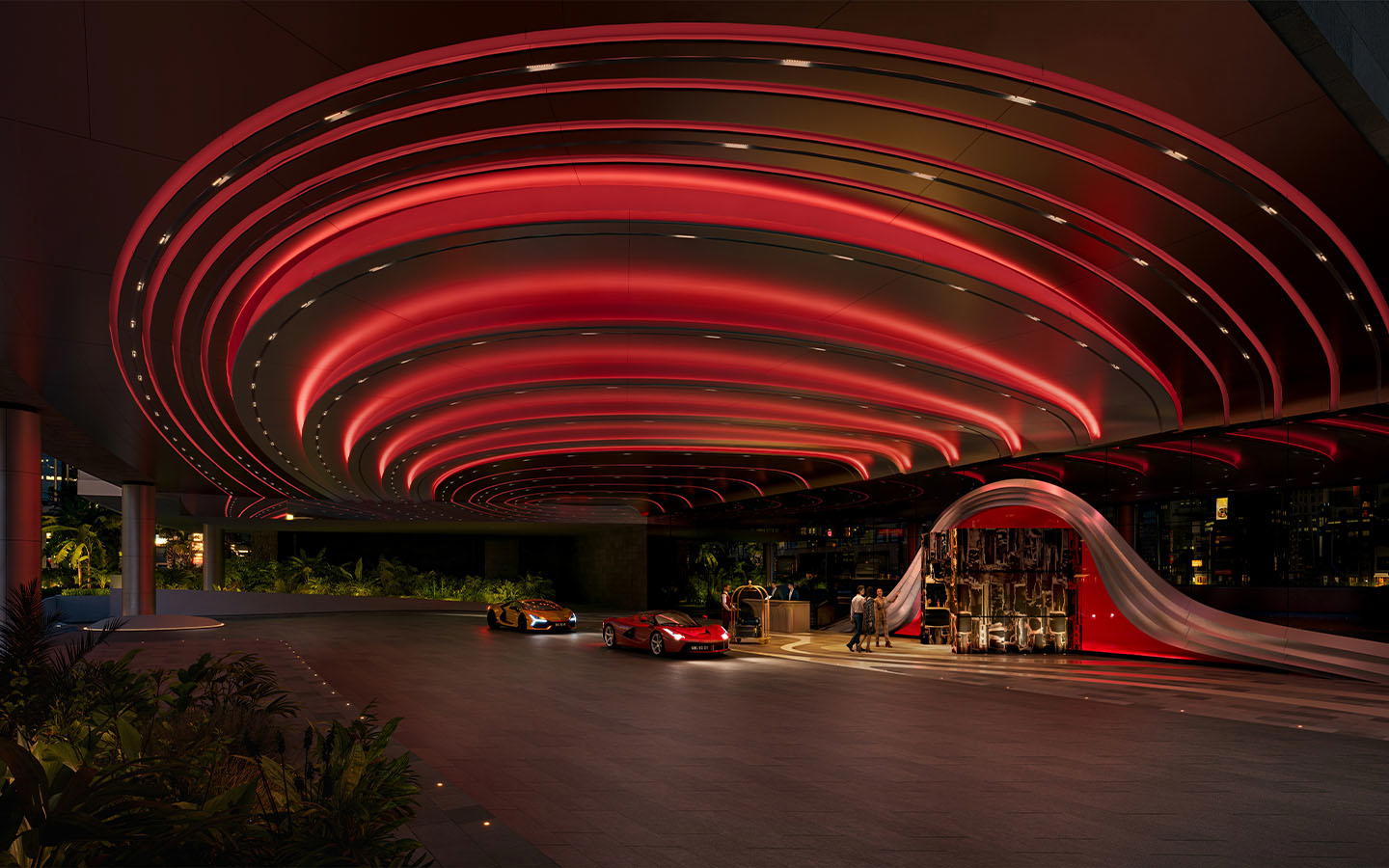
Macau hotels are dining machines first, bedrooms second
Approach a serious Macau hotel and the first impression is rarely a quiet lobby. It is the compression of marble, escalators, restaurant entrances, bar lighting, retail corridors, and the soft choreography of guests moving between dinner reservations and late tables. In this city, the hotel has become a complete dining district under one roof. That matters for REM Hotel because the available record gives no confirmed star rating, restaurant list, chef, awards, price range, website, phone number, address, booking method, or dress code. The absence of those details changes the way an informed traveller should read the property: not through unsupported claims, but through Macau’s wider hotel-dining culture and the questions that need answering before arrival.
Macau’s premium hotel scene is unusually food-led for a compact city. The casino-resort model brought in international chefs, Cantonese dining rooms, tasting-menu restaurants, whisky bars, pastry counters, and late-night lounges, then trained travellers to treat a hotel stay as a sequence of reservations rather than a room with breakfast. Michelin’s Macau coverage has reinforced that habit, particularly around Cantonese fine dining and ambitious hotel restaurants. The practical consequence is clear: a hotel without transparent dining information asks more of the guest. The room category may matter, but the sharper question is whether the property can place dinner, drinks, breakfast, and late arrivals into a coherent stay.
That is the lens for REM Hotel in Macau. With the database silent on cuisine type, chef name, awards, price, style, and hotel group, the property cannot be described as a proven restaurant-led address from the record alone. It can, however, be placed in a city where hotels compete through food and beverage depth. Travellers comparing it with established Macau stays should measure it against properties whose positioning is clearer, including Altira Macau, Andaz Macau, Artyzen Grand Lapa Macau, and Banyan Tree Macau. Those comparisons are not decorative; they are how a visitor avoids mistaking a hotel name for a fully formed dining proposition.
The dining programme is the test
In Macau, a hotel’s food programme usually falls into one of three patterns. The first is the integrated resort model, where restaurants cover several price tiers and cuisines, often supported by recognizable chefs or award language. The second is the lifestyle-hotel model, where the bar, all-day restaurant, and design language carry the stay more than a formal tasting room. The third is the quieter urban hotel model, useful for access and value, but less likely to anchor a trip built around restaurants. The REM Hotel record does not confirm which pattern applies, so the editorial position has to be disciplined: treat the dining programme as unverified until the property supplies current restaurant names, menus, reservation channels, and operating hours.
That caution is not pedantry. Macau dining is reservation-sensitive, particularly around weekends, public holidays, Lunar New Year, Golden Week periods, and major entertainment dates. A hotel with several in-house restaurants can absorb scheduling pressure; a hotel with limited dining means guests must build the trip around external tables. For a food-focused stay, this distinction affects taxis, dress planning, late arrivals, and breakfast timing. It also affects budget, since Macau’s upper-tier hotel restaurants can sit far above casual neighbourhood dining. Without a confirmed price range for REM Hotel, travellers should avoid assuming either value or luxury pricing from the name alone.
The better comparison set includes Cotai’s resort-heavy hotels and Macau Peninsula addresses with established dining reputations. Conrad Macao, Emerald Tower at MGM COTAI, Encore Macau, and Epic Tower at Studio City Macau sit inside a market where restaurants, entertainment, shopping, and gaming infrastructure shape the whole stay. The question is not whether a hotel sounds upscale; it is whether its food and beverage offer reduces friction once the guest is on the ground.
Macau's hotel food culture rewards clarity
Macau is not a city where dining identity can be treated as an afterthought. Cantonese banquet culture, Portuguese-Macanese history, casino-resort capital, and mainland Chinese weekend demand all intersect inside the hotel sector. A strong hotel dining programme does not need every category, but it does need a legible point of view: Cantonese authority, a serious bar, a strong breakfast room, regional Chinese cooking, a credible Western room, or access to a wider resort complex. When those signals are absent from public data, the traveller has to supply the diligence.
For REM Hotel, the confirmed facts are limited to name, city, and country. There is no database entry for awards, no listed chef, no cuisine type, and no booking method. In editorial terms, that places it outside the award-led hotel-restaurant conversation until further evidence appears. That does not make the property unsuitable; it means the decision should be made on logistics, current rates, direct confirmation of dining facilities, and proximity to the restaurants a traveller already plans to use. The city itself can supply the culinary depth, but only if the hotel location and operating details cooperate.
Macau also has a split personality that affects dining strategy. Cotai is built for large-scale resort movement: indoor connections, entertainment venues, high-capacity restaurants, and branded luxury. The Macau Peninsula has a different rhythm, with older streets, heritage references, casinos, local bakeries, and historic hotel dining rooms closer together. Because the REM Hotel address is not available in the record, it cannot be placed confidently in either pattern. That single missing field has consequences. A Cotai base suits resort dinners and entertainment. A peninsula base can suit heritage walks and cross-town restaurant hopping. A poorly located or poorly connected address can turn a short stay into a taxi exercise.
How to compare it with Macau peers
The serious comparison starts with transparency. Does the hotel publish current restaurant names? Are menus dated? Is there a bar with a defined programme rather than a lobby drinks list? Are reservations handled through the hotel, a third-party platform, or direct restaurant contact? Are breakfast hours clear for early ferry or airport movement? Are children, large parties, and dress expectations addressed in plain language? These questions sound operational, but in Macau they are part of the luxury experience. A strong dining hotel removes uncertainty before check-in.
Travellers researching the city should use broader Macau planning pages in parallel: Our full Macau restaurants guide for table strategy, Our full Macau hotels guide for room-led comparisons, Our full Macau bars guide for after-dinner planning, Our full Macau wineries guide for wine-related context, and Our full Macau experiences guide for non-restaurant pacing. Macau rewards this cross-category approach because dinner, drinks, ferry timing, and entertainment often sit in the same evening.
One useful anchor is The Londoner Hotel, Macau in Cotai, a reference point for travellers who want a hotel embedded in a large resort environment. REM Hotel should be tested against that kind of clarity. If the dining programme is modest, it may function better as a room base than as a full evening address. If current information reveals credible restaurants or bars, it can move into a more competitive set. The record available here does not permit that move yet.
The global luxury-hotel comparison is useful, but only to a point
Macau’s hotels often borrow the language of grand international hospitality, but the city’s operating logic is different from the palace hotel tradition in Europe or the urban sanctuary model in major capitals. At Hôtel de Paris Monte-Carlo in Monte Carlo, the dining identity is tied to a historic Riviera ecosystem. At Badrutt's Palace Hotel in St. Moritz, the season, ski calendar, and social circuit frame the restaurants. At Aman Venice in Venice and Cipriani, A Belmond Hotel, Venice in Venice, the city’s lagoon geography shapes the guest’s dining movement.
Macau is more compressed and more vertical. A hotel can contain several restaurant moods within a few floors, and the difference between a successful stay and a clumsy one often comes down to whether those internal options match the guest’s trip purpose. For travellers used to Bvlgari Hotel Tokyo in Tokyo, Mandarin Oriental Ritz, Madrid in Madrid, Le Bristol Paris in Paris, Mandarin Oriental Bangkok in Bangkok, Aman New York in New York City, The Fifth Avenue Hotel in New York City, or Hotel Sacher Wien in Vienna, the lesson is to resist importing assumptions. Brand polish, historic atmosphere, and restaurant depth do not always travel together. Macau requires verification at the property level.
Planning a stay around REM Hotel
Plan from confirmed information outward. The current record does not list a website, phone number, address, price range, room count, hours, restaurant names, chef, awards, or booking method, so a traveller should confirm those details directly through a reliable booking channel or the property before building meals around the stay. If the trip is restaurant-led, secure external dining first, then judge whether the hotel location supports those reservations. If the trip is resort-led, confirm whether dinner, drinks, breakfast, and late-night options are available in-house or nearby. If the trip is a short Macau stopover, address and transport access matter more than decorative room language.
Timing also matters. Weekend demand from Hong Kong and mainland China can put pressure on rooms, restaurants, taxis, and check-in queues. Public holiday periods intensify that pattern. A hotel with a confirmed multi-restaurant programme gives more fallback options during those windows; an unverified dining setup leaves the guest dependent on external availability. For REM Hotel, that means the intelligent move is not to assume scarcity or ease, but to treat every practical detail as pending until confirmed.
Value should be judged the same way. Without a published price range or awards record in the database, there is no evidence-based way to call the hotel expensive, moderate, or good value. The fair test is comparative: total room cost, confirmed dining convenience, location, transport time, and the number of meals the hotel can credibly support. In Macau, a slightly higher nightly rate can make sense if the property shortens transfers and solves dinner; a lower rate can lose appeal if every meal requires planning elsewhere.
Continue exploring
More in Macau
Bars in Macau
Browse all →

At a Glance
- Modern
- Elegant
- Sophisticated
- Trendy
- Minimalist
- Opulent
- Business Trip
- Romantic Getaway
- Weekend Escape
- Celebration
- Group Retreat
- Design Destination
- Panoramic View
- Wifi
- Concierge
- Skyline
Positioned as a contemporary ultra-luxury boutique property with avant‑garde artistic design, highly personalized butler-led service, and a refined, privacy-focused atmosphere for high-end global travellers.[6][9][10][11]