


Guincho a Galera brings Portuguese fine dining into Macau’s hotel dining culture, with Chef Simon Li attached and recognition from the Black Pearl Restaurant Guide 2026 and Opinionated About Dining’s 2026 Asia recommendations. The interest here is not nostalgia alone, but how Portuguese cooking is being interpreted in a city where Lusophone history, casino-era luxury, and high-spend dining sit unusually close together.
Pearl is the En Primeur Club membership app — saves, bookings, and concierge access live there. Same editors, same standards.
- Address
- Hotel Lisboa, 2-4 Avenida de Lisboa, Macau, Macau, China
- Phone
- +853 8803 7676
- Website
- hotelisboa.com
 Saves & bookings on Pearl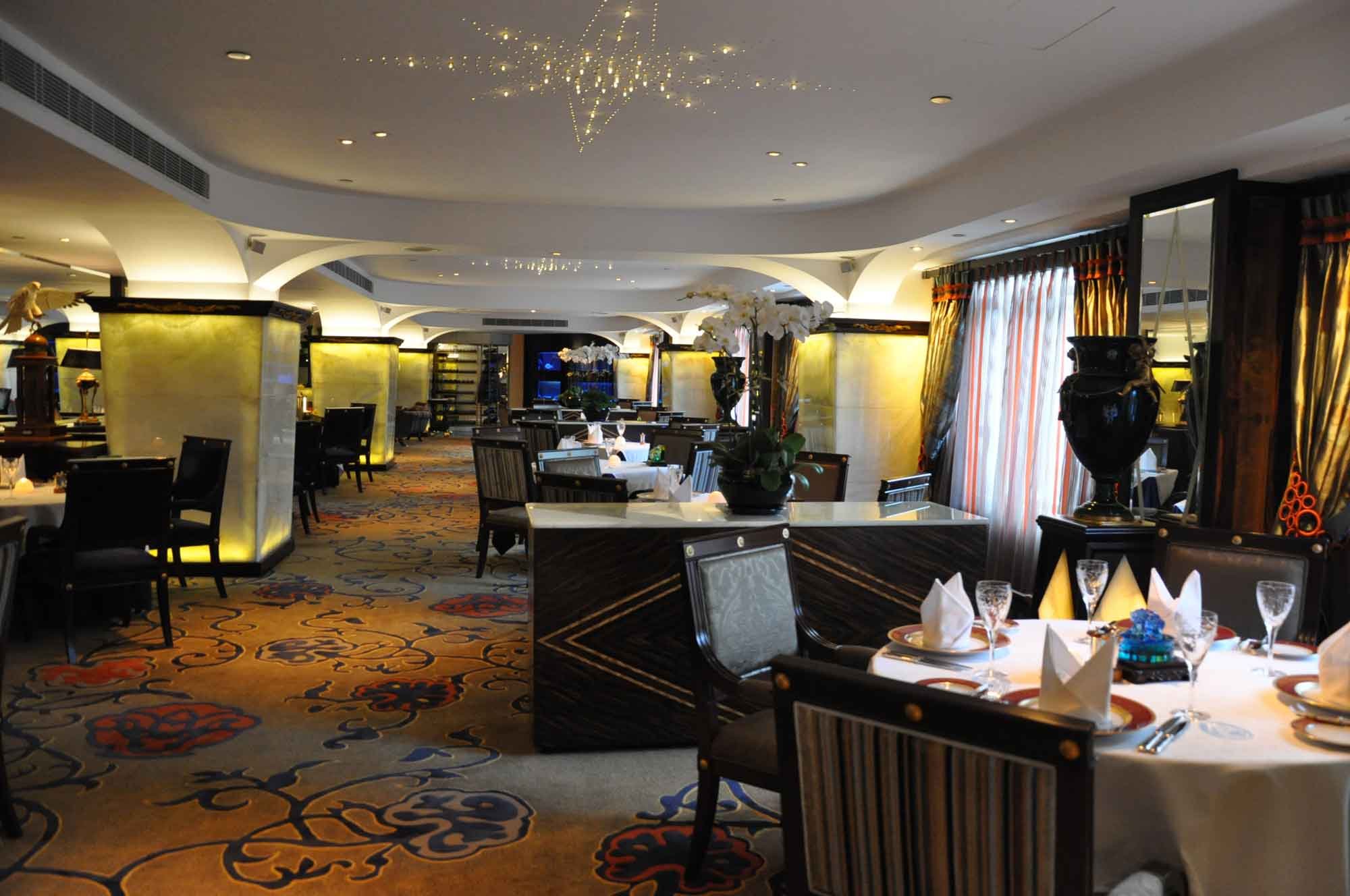
Macau’s Portuguese dining tilts two ways: tavern comfort built around garlic, olive oil, seafood and rice, or hotel dining that gives the same inheritance heavier glassware, quieter pacing and a formal sense of occasion. Guincho a Galera sits in the second camp. Its significance is less spectacle than placement: Portuguese cuisine in a city where colonial memory, Cantonese dining habits and luxury-hotel rituals overlap within a few square kilometres.
That overlap makes Macau a more complex Portuguese restaurant city than it first appears. A casual table may chase cod, clams, suckling pig or egg-based desserts as markers of familiarity; a formal kitchen must decide how much of that vocabulary to preserve and how much to tighten for an international dining room. Guincho a Galera is Portuguese in category, Macau in context and hotel-restaurant in format, so the meal is judged against both cultural memory and fine-dining discipline.
Portuguese technique filtered through Macau's hotel dining culture
Portuguese food in Macau has never been a museum piece. The city’s cooking has absorbed trade-route ingredients, Cantonese buying patterns and diners who move easily between dim sum, seafood rooms and European service. In that setting, a Portuguese restaurant in a major hotel is not simply serving mainland Portugal abroad; it translates a cuisine already shaped by travel into slower pacing and higher ceremony.
Chef Simon Li’s name matters as a credential, but the broader point is the kitchen’s role in a local category with uneven expectations. Portuguese restaurants outside Portugal often split between rustic quotation and luxury reinterpretation. Macau adds another layer because Portuguese identity is not imported novelty here; it is part of the city’s built environment, street names and dining memory. A fine-dining version must avoid turning the cuisine into costume while delivering the polish expected from a hotel address.
The external signals put the restaurant in a serious bracket without inflated language. It is listed among Black Restaurant Guide 2026 one-diamond restaurants and appears in Opinionated About Dining’s 2026 Asia Top Restaurants Recommended selection. Those markers matter because Macau’s high-end dining conversation is crowded with Cantonese, Japanese, Italian and steakhouse formats; Portuguese cooking has to work harder to claim the same critical attention.
For readers mapping the city rather than chasing one booking, the contrast with other Macau categories is instructive. Cantonese formality is represented by The Eight (8餐廳) in Se, while grill-room spending sits in a different lane at 58 Degree Grill (Grill Cuisine). Italian fine dining has its own hotel grammar at 8 1/2 Otto e Mezzo Bombana (Macau) (Italian Fine). Against that spread, Portuguese cuisine reads not as a minority curiosity but as one of the city’s defining reference points.
Why the Portuguese category matters more in Macau than in many luxury dining cities
Macau’s Portuguese restaurants carry a different burden from those in Hong Kong, Singapore or London. Elsewhere, the cuisine is often framed as an imported speciality. In Macau, it is part of the city’s identity and faces sharper scrutiny: locals know the casual end, travellers arrive with colonial-era expectations, and hotel guests often expect a polished dining room rather than a neighbourhood tasca.
That makes Guincho a Galera useful for understanding the city’s dining hierarchy. It sits in the formal Portuguese lane, while A Lorcha (Portuguese) and Albergue 1601 explain the broader local appetite for Lusophone cooking in less explicitly luxury-coded settings. The category is not monolithic: some rooms emphasise home-style generosity, others lean on wine, service rhythm and composed presentation. The better question is not which version is more authentic, but which suits the occasion.
Beyond Macau, the restaurant also belongs to a wider Portuguese fine-dining conversation. Lisbon ranges from tavern revival at A Taberna da Rua das Flores, Portugese in Lisbon to contemporary city cooking at Oficio, Portugese in Lisbon and classic steakhouse ritual at Café de São Bento, Portugese in Lisbon. Northern Portugal adds O Paparico, Portugese in Porto and Casa da Calçada, Portugese in Amarante. In Hong Kong, Antonio, Portugese in Hong Kong and Casa Lisboa, Portugese in Hong Kong show how the cuisine adapts when the historical charge is different.
The Macau context also explains why Portuguese dining here is not a side note to casino luxury. Visitors often organise meals around Cantonese banquets, tasting menus or resort restaurants, then leave Portuguese cooking for a casual lunch. That misses the point. A formal Portuguese room in Macau can act as a cultural hinge, connecting the city’s European inheritance with its present-day appetite for recognised, reservation-led dining.
How to place it in a Macau itinerary
The sensible use case is a slower evening, not a quick cultural checkbox. Recognition from Black and OAD gives the restaurant enough critical weight for a serious Macau food itinerary, but the stronger reason to go is category literacy: it shows why Portuguese cuisine remains central to the city rather than merely historic decoration.
Macau rewards that sequencing. A trip built only around formal dining can flatten the city; one built only around old-town grazing misses how much of Macau’s modern restaurant economy runs through hotels. Pairing a Portuguese fine-dining dinner with a separate casual Portuguese meal, a Cantonese banquet and one contemporary non-Portuguese booking gives a clearer read on the city than chasing a single trophy reservation.
For broader planning, use Our full Macau restaurants guide alongside the city’s hotel, bar and cultural coverage: Our full Macau hotels guide, Our full Macau bars guide, Our full Macau wineries guide and Our full Macau experiences guide. If the meal is part of a wider dining run, Aji (Nikkei, Innovative) provides a useful counterpoint in a different culinary register.
The editorial case is clear: the restaurant is for travellers who want Macau’s Portuguese thread in a formal, recognised setting rather than as a nostalgic side stop. It is not the only way to understand the cuisine in the city, but it occupies a meaningful lane: Portuguese cooking presented with hotel-level seriousness in a market where awards attention often flows to other formats.
Comparable Venues Nearby
Comparable venues nearby, for context on price, style, and recognition.
| Venue | Cuisine | Price | Notes |
|---|---|---|---|
| Guincho a GaleraThis venue — the venue you are viewing | Modern Portuguese Fine Dining | $$$$ | Not listed |
| Don Alfonso 1890 Macau | Fine Italian dining inspired by the Amalfi Coast | $$$$ | Cotai |
| Alain Ducasse at Morpheus | French Fine Dining | $$$$ | Cotai |
| Five Foot Road | Sichuan Fine Dining | $$$$ | Cotai |
| Yi | Seasonal Modern Chinese Tasting Menu | $$$$ | Cotai |
| Chef Tam's Seasons | Seasonal Cantonese Fine Dining | $$$$ | Cotai |
Recognition history
Dated appearances from independent guides and award organizations, with the underlying list record or original source where available.
Black Pearl 1 Diamond
Black Pearl
Opinionated About Dining Top Restaurants in Asia Recommended
Opinionated About Dining
Wine Spectator Best of Award of Excellence
Wine Spectator
Continue exploring
More in Macau
More from Chef Simon Li
Browse all →
Restaurants in Macau
Browse all →
Bars in Macau
Browse all →
Hotels in Macau
Browse all →
Wineries in Macau
Browse all →
At a Glance
- Elegant
- Classic
- Sophisticated
- Romantic
- Well Known
- Date Night
- Business Dinner
- Special Occasion
- Celebration
- Group Dining
- Wine Cellar
- Design Destination
- Hotel Restaurant
- Extensive Wine List
- Sommelier Led
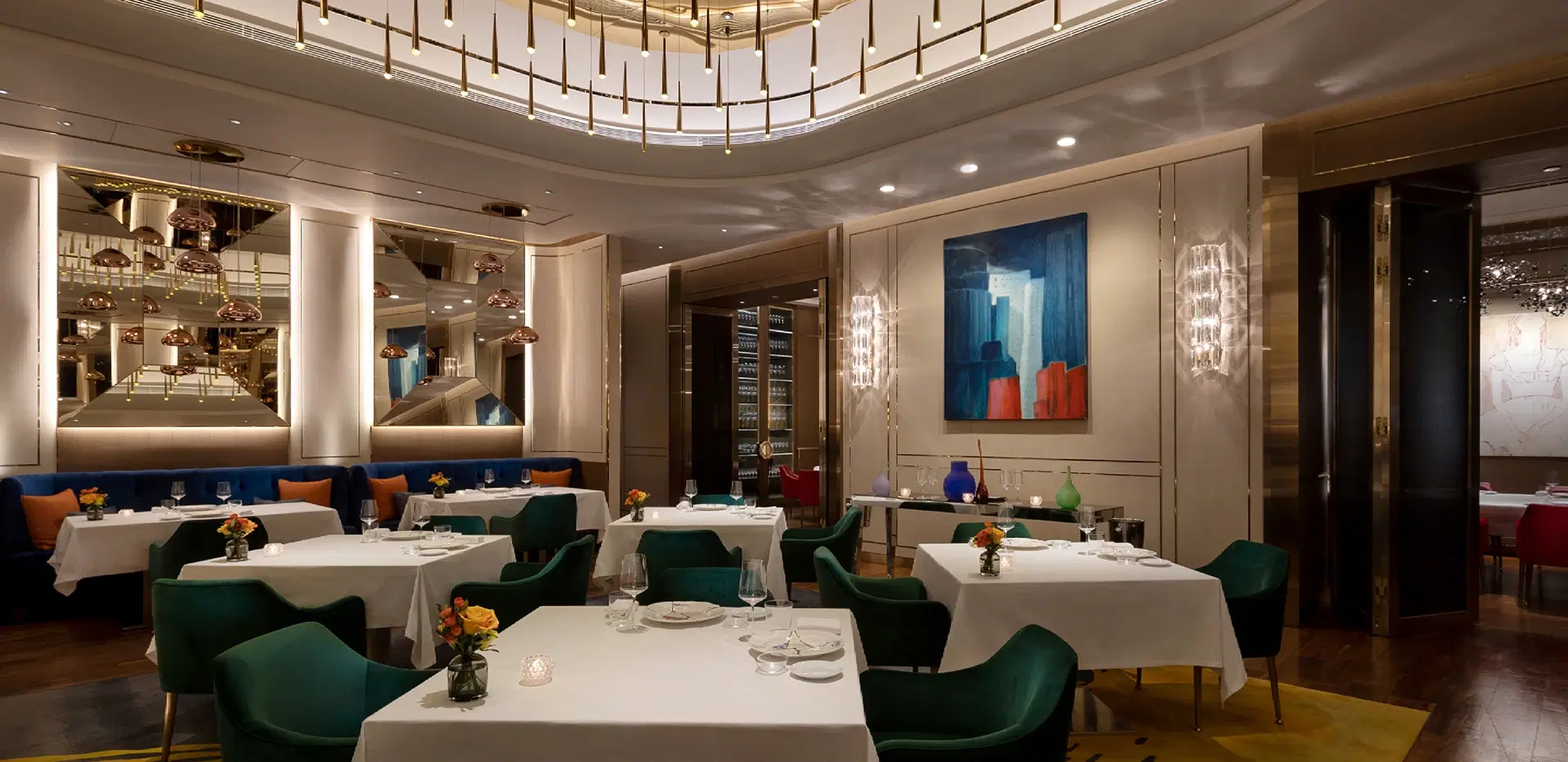
An ornate, classically styled dining room with rich gold and blue tones, white tablecloths and polished silverware, creating an elegant, quietly luxurious atmosphere reminiscent of a European fine-dining salon.