Bahir Dar sits on the southern shore of Lake Tana, Ethiopia's largest lake and the source of the Blue Nile, and a forthcoming addition to a ten-property Ethiopian portfolio is set to bring structured premium hospitality to a city that has long outpaced its accommodation options. Details remain in development, but the project signals a broader shift in how international and domestic travelers engage with one of the country's most historically significant destinations.
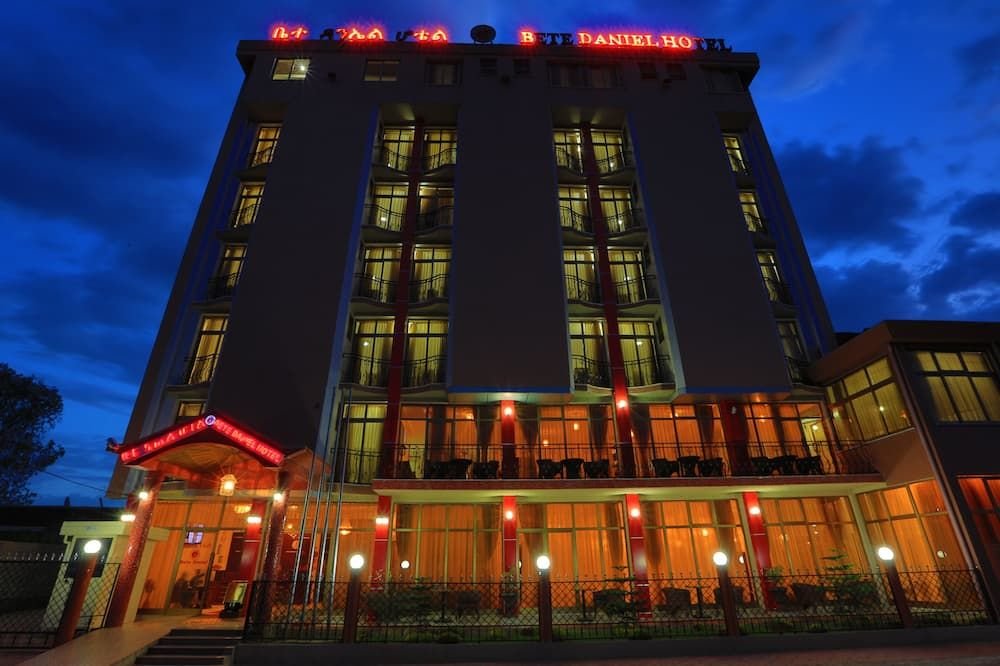
Bahir Dar and the Case for Premium Hospitality on Lake Tana
Lake Tana's shoreline has drawn pilgrims, historians, and travelers for centuries. The lake holds thirty-seven islands, many sheltering monasteries that date to the fourteenth and fifteenth centuries, and the Blue Nile falls less than an hour's drive south. Despite this density of draw, Bahir Dar's accommodation offer has historically lagged the ambition of the visitors it attracts. The project does not yet have a confirmed name, opening date, or published specifications, but its placement within a structured national portfolio signals intent at a scale Bahir Dar has not previously seen. For context on how the broader portfolio is developing across the country, see the planned hotel(s) in Addis Ababa, the planned hotel(s) in Hawassa, and the planned hotel(s) in Jimma.
The Architecture Argument: Why Design Matters Here More Than Elsewhere
In most Ethiopian cities, premium hospitality has defaulted to a formula: large urban blocks, international-brand geometry, and interiors that could belong to any mid-tier global property. Bahir Dar presents a different design brief. The city's relationship with water is immediate and structural. Lake Tana is not a backdrop you glimpse from a rooftop bar; it is the organizing logic of the city itself, shaping street orientation, economic life, and the daily rhythms of the waterfront. Any hotel that takes that relationship seriously as an architectural premise, rather than treating the lake as a view amenity, occupies a fundamentally different category from properties that happen to sit near water.
Across East Africa, the lodges that have drawn the most sustained critical attention, from the design-led camps in the Omo Valley to properties along the Kenyan and Rwandan highland edges, share a common approach: they treat topography and local material vocabulary as the primary design input, not the finishing layer. Eco Omo Lodge in Jinka and Evangadi Lodge in Turmi both operate within that framework, placing local landscape logic ahead of generic luxury signifiers. The Bahir Dar project, if it follows the same design discipline, could represent the first property in the city to operate at that register.
At the higher end of the global hotel spectrum, properties that get this right tend to share a few observable traits: limited key counts, materials sourced from the immediate region, and spatial organization that responds to the specific microclimate rather than imported convention. Amangiri in Canyon Point is the most frequently cited example of a property where the building feels geologically continuous with its site. Castello di Reschio in Lisciano Niccone achieves the same continuity through historical material restoration. Both represent what happens when architecture is treated as the primary hospitality act, rather than as a container for the hospitality offer. Whether the Bahir Dar project reaches that level of design ambition is unknowable at this stage, but the regional precedents and the site's inherent qualities create the conditions for it.
Bahir Dar as a Destination: What the City Currently Offers
The city of roughly 350,000 has a walkable waterfront promenade, access to Blue Nile Gorge excursions, and boat access to the Tana island monasteries that constitute one of Ethiopia's most important concentrations of medieval religious art. The monasteries of Ura Kidane Mehret and Debre Maryam are the most visited, and a morning on the lake covering two or three of them remains one of the more distinctively calibrated cultural half-days available anywhere in Sub-Saharan Africa. The Blue Nile falls, known locally as Tis Abay or Tis Isat, attract a separate excursion; during the high-water season between July and September, the falls reach widths that make them among the broader river system's most volumetrically significant.
The existing accommodation offer in Bahir Dar sits primarily in the mid-range and budget categories. A small number of properties have lake-facing rooms, but few have been designed with the lake as an organizing spatial principle. The gap between what Bahir Dar's cultural and natural profile demands of a hotel and what its current stock delivers is the opportunity the portfolio project is presumably targeting. For context on how structurally similar gaps have been addressed in comparable African destinations, the Dorze Lodge in South Ethiopia Regional State offers a useful reference point for what design-led, culturally rooted hospitality looks like at smaller scale in the same country.
The Portfolio Framework and What It Implies
A ten-hotel portfolio built across a single country implies a deliberate national narrative rather than a collection of opportunistic acquisitions. The cities confirmed or expected in the portfolio, including Addis Ababa, Hawassa, Jimma, and Bahir Dar, represent Ethiopia's economic, cultural, and geographical spread: highland capital, Rift Valley lake town, coffee-growing southwest, and northern lake city. That geographic logic suggests the portfolio is positioning itself as an infrastructure for experiencing Ethiopia's full range rather than concentrating on any single circuit.
For the traveler, this matters because it creates a coherent routing option. Bahir Dar sits naturally on the northern historic circuit alongside Gondar, Axum, and Lalibela, and a stay there would typically bookend a wider Ethiopian itinerary. If the portfolio hotels across multiple cities operate to a consistent design and service standard, the Bahir Dar property becomes part of a larger hospitality argument about traveling Ethiopia at a sustained quality level throughout. That is a different product from a single flagship hotel, and it places the portfolio in a peer category closer to regional circuit operators than to standalone luxury properties.
Planning a Visit: What to Know Now
Travelers planning a Bahir Dar itinerary should factor the city's high season, which runs from October through early March when the rains have cleared and lake and gorge conditions are most favorable for excursions. Bahir Dar is served by Abebe Gobena Airport with multiple daily Ethiopian Airlines connections from Addis Ababa, making it accessible as a short-stay segment within a broader northern circuit. For context on where Bahir Dar sits relative to other premium hotel developments in the country, our full Bahir Dar guide tracks the developing scene as information becomes available.
Travelers building a broader itinerary that includes premium properties internationally for reference or contrast might note that the design-led approach this portfolio appears to be pursuing aligns more closely with properties like Hotel Esencia in Tulum or Aman Venice, where site-specific spatial logic drives the guest experience, than with the grand urban palace tradition represented by Le Bristol Paris, Hotel Plaza Athénée, or Badrutt's Palace Hotel in St. Moritz. That distinction matters for calibrating expectations: this is not a white-glove urban palace; it is, in design ambition if not yet in confirmed detail, a site-responsive property in one of East Africa's most historically loaded waterfront cities.
Details
- Weekend Escape
- Waterfront
Planned modern hospitality property in a scenic lakeside location.