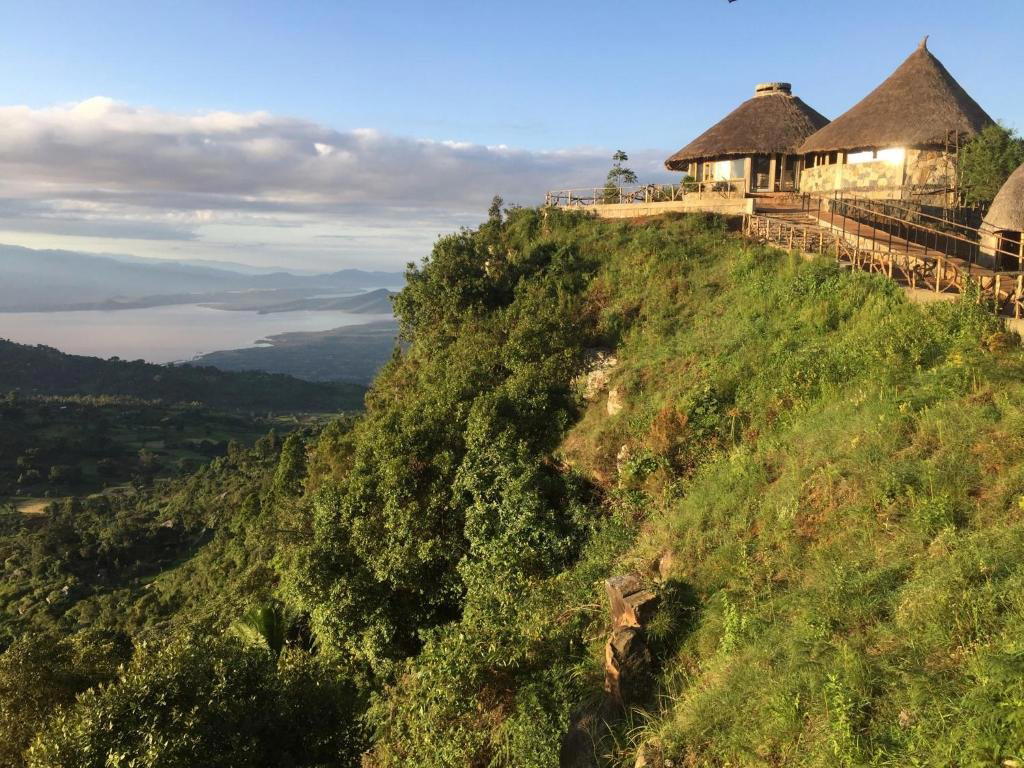
Dorze Lodge sits in the highlands of southern Ethiopia, positioned among the villages of the Dorze people, whose towering elephant-grass huts have defined this highland terrain for generations. The lodge offers a rare point of access to one of Ethiopia's most architecturally distinctive cultural zones, where the built environment itself is the primary draw for travellers moving through the South Ethiopia Regional State.

Pearl is the En Primeur Club membership app, where members save venues, book tables and use the concierge.
Architecture as the Argument: Southern Ethiopia's Highland Lodge Tradition
The highlands above the Rift Valley in southern Ethiopia present a particular challenge to lodge design: the landscape already has an architectural vocabulary, and it belongs to the Dorze people. Their huts, constructed from woven bamboo and enset fibre, rise to heights of eight or nine metres, tapering into a form that draws the frequent comparison to an elephant's head. Any accommodation that situates itself within or adjacent to Dorze territory is, by definition, in dialogue with one of the most visually arresting vernacular building traditions in East Africa. Dorze Lodge enters that conversation by placing itself in the highlands near Chencha, at elevations that push above 2,500 metres, where the air is sharper and the views extend south towards the Omo basin.
This is the defining context for understanding what a lodge in this location means. In southern Ethiopia's broader hospitality picture, properties divide roughly between those positioned for the Lower Omo Valley circuit, where communities such as the Hamar, Mursi, and Karo draw the bulk of international travellers, and those in the cooler highlands that serve either the Arba Minch gateway or the cultural corridor through Dorze country itself. The lodge sits in the highland tier, which commands a different pace and a different kind of attention than the dusty track lodges further south. Travellers moving through this region often combine a stay here with the communities further into the valley, using properties like Eco Omo Lodge in Jinka and Evangadi Lodge in Turmi to complete a full southern corridor itinerary.
The Built Environment as Primary Draw
Southern Ethiopia lodge design has historically oscillated between two approaches. The first imports international safari conventions, using canvas, timber decks, and a generic East African aesthetic that could be transplanted to Kenya or Tanzania without much adjustment. The second takes its cue from the immediate surroundings, using local materials, local construction logic, and local form. Properties that commit to the second approach are more interesting and more honest, because the architecture becomes an act of interpretation rather than imposition.
In the Dorze highlands, the local form is already codified and dramatic. The great enset-fibre huts of the Dorze villages have a structural logic born from altitude, rainfall, and available materials: the enset plant, which also provides the dietary staple kocho, is a resource that defines both cuisine and construction in this part of the country. A lodge that acknowledges this, even partially, in its built form is making a statement about the relationship between hospitality infrastructure and the cultural terrain it occupies. This is the editorial question worth asking of any accommodation in this zone: does the physical structure teach visitors something about where they are, or does it insulate them from it?
At elevations above 2,500 metres, materials choices also carry practical logic. Bamboo, thatch, and dense timber construction all perform better thermally than thin-walled concrete at altitude, where nights drop sharply even in the dry season. The building traditions of highland Ethiopia evolved in direct response to these conditions, which means that vernacular architecture here is also climate-adapted architecture, a point that becomes increasingly relevant as highland lodge development expands across the region.
Positioning Within Southern Ethiopia's Hospitality Tier
Ethiopia's southern tourism corridor has developed unevenly. The Lower Omo Valley, protected as a UNESCO-listed region, draws significant international interest, but infrastructure outside a handful of established camps remains thin. The highland lodges, including those around Arba Minch and the Dorze escarpment, occupy a mid-circuit position where the quality gap between properties can be considerable. For the broader context of what Ethiopia's emerging lodge sector looks like at a national scale, the pipeline of planned hotels in Addis Ababa, Bahir Dar, Hawassa, and Jimma signals that institutional investment is beginning to move into the sector, though the southern highland lodges remain largely in the hands of smaller operators.
This matters because smaller operators in this region tend to have closer relationships with the communities they adjoin. The Dorze cultural economy, built substantially around weaving, agriculture, and cultural tourism, benefits most directly from lodges that source locally and employ from nearby villages. The architecture of any lodge in this zone is therefore not just aesthetic: it signals a set of relationships with land, community, and material supply chains that travellers with any interest in responsible tourism will want to examine. See our full South Ethiopia Regional State guide for a wider view of the region's accommodation options.
Planning a Visit: Logistics and Timing
The Dorze highlands are reached most practically from Arba Minch, the regional hub town that sits at the northern edge of the Nech Sar National Park and serves as the logistical anchor for travel in this part of southern Ethiopia. The road from Arba Minch to Chencha, the town closest to Dorze village, climbs steeply and offers one of the more dramatic ascents in the Ethiopian south, with views back over Lakes Chamo and Abaya. The drive is manageable in a standard 4WD but can be challenging in the rainy season, which runs roughly from April through early October, with a shorter wet period in March. The dry season window from October through February offers the clearest highland conditions and the easiest road access.
Travellers incorporating Dorze Lodge into a wider southern itinerary should allow at minimum two nights at this altitude, both to acclimatise and to make meaningful use of the surrounding villages. The weaving cooperatives and the process of kocho preparation, which involves fermentation of enset over months, reward time and patience rather than a single rushed morning visit. For those assembling a broader Ethiopia itinerary, properties elsewhere across the country's hospitality tier, from international reference points to highland-specific formats, can provide useful calibration for what lodge design at this level can and should achieve.
Details
- Rustic
- Scenic
- Bohemian
- Intimate
- Family Vacation
- Weekend Escape
- Panoramic View
- Garden
- Terrace
- Historic Building
- Waterfront
- Restaurant
- Bar
- Free Parking
- Airport Shuttle
- Garden
- Waterfront
- Mountain
- Wheelchair Accessible
- Accessible Restroom
Warm and welcoming atmosphere with traditional ambiance; guests gather around campfires for local singing and dancing in the evenings, creating an intimate and family-friendly environment.