Karpaha Sands

1 Michelin Key
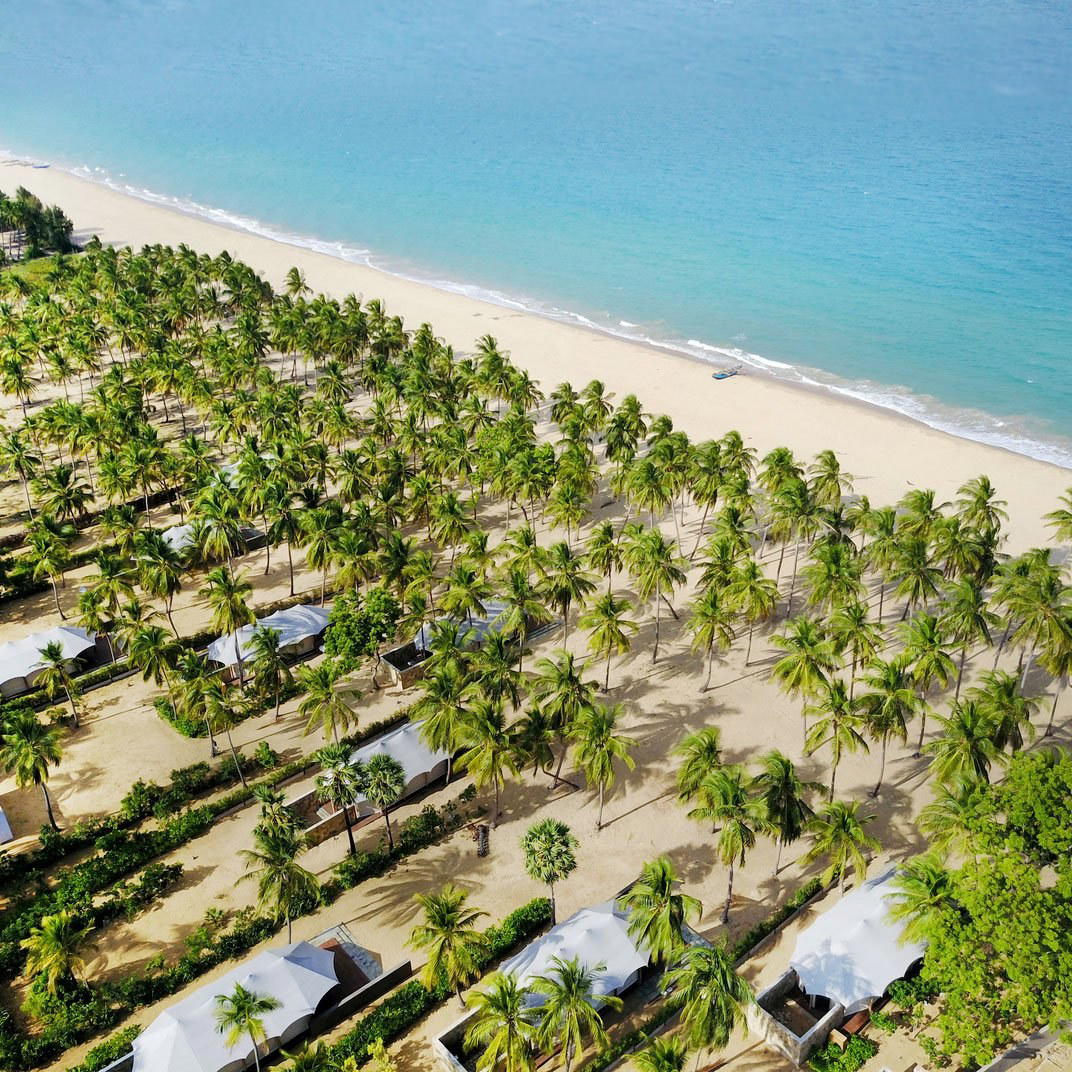
On Sri Lanka's underdeveloped east coast, Karpaha Sands occupies a long stretch of Kalkudah Beach with 17 tented villas that draw directly from the African safari camp tradition. Canvas roofs, outdoor showers, and half-egg soaking tubs sit alongside Ayurvedic spa treatments and a saltwater pool, while the restaurant serves Sri Lankan and French-inflected cooking with an unobstructed view to sea. Rooms from $126 per night.

Pearl is the En Primeur Club membership app — saves, bookings, and concierge access live there. Same editors, same standards.
- Address
- Kimbula Thona Kalkudah Beach, KIRAN
- Phone
- +94 70 366 2000
- Website
- karpahasands.com
- Directions
- Get directions
A Different Sri Lanka, by Design
Sri Lanka's tourism geography has a pronounced tilt. The south and west coasts absorb the bulk of international arrivals, feeding a hospitality corridor that runs from Colombo's colonial hotels — properties like the Galle Face Hotel in Colombo — down through Galle's fort district, where Amangalla in Galle anchors the luxury end. The east coast, by contrast, receives a fraction of that traffic. Infrastructure is thinner, the drive longer, and the beaches considerably less crowded. Karpaha Sands is built around exactly that asymmetry: 17 tented villas on Kalkudah Beach, a sweep of sand in the Kiran area that sees almost none of the resort density that characterises the south. The remoteness is not incidental to the property's appeal, it is the property's appeal.
The tented-villa format puts Karpaha Sands in a specific design lineage, one more commonly associated with East Africa than South Asia. High-end safari camps pioneered the idea of canvas-roofed accommodation that refuses to pretend it is a conventional hotel room: the structure is temporary by implication, the environment presses in from all sides, and the guest is asked to accept a certain porousness between interior and exterior. On Sri Lanka's east coast, that framework translates into something architecturally coherent: the beach itself becomes the context for every design decision, and the tent, rather than a solid wall and a sealed window, keeps that context present throughout the stay.
The Architecture of Canvas and Open Air
Within the tented villa format, the design choices at Karpaha Sands pull in two directions simultaneously. The bones are deliberately impermanent, canvas roofs, open-sided or semi-open layouts, outdoor showers that place the guest in direct contact with the garden or the sea air. Against that rawness, the furnishings read as considered and contemporary: half-egg-shaped soaking tubs, chic tables and chairs, and original artworks that signal a curatorial investment rather than the generic resort procurement that fills most beach properties in this price tier. The contrast is the point. African safari architecture learned long ago that luxury inside a tent registers more sharply precisely because the tent announces its own fragility.
Space and privacy are generous across the villa categories. Beach-facing villas position guests within direct sight and sound of the Indian Ocean, while garden villas trade the sea view for a deeper enclosure in vegetation. Neither option is a compromise: the garden configuration in particular offers a seclusion that beach-fronting rooms, which tend toward visibility and social exposure, cannot replicate. For a property at roughly $126 per night, the spatial allocation per key is notably generous, seventeen rooms across a beachside plot means the density stays low and the sense of privacy holds even when the property is near capacity.
The gardens extend the design logic beyond the villas themselves. Outdoor artworks are distributed through the planted areas, turning a walk between pool and restaurant into something closer to a curated passage than a utilitarian transfer. This kind of spatial programming, where the connective tissue between facilities carries as much design intention as the facilities themselves, is less common in the tented-camp category than it should be. It is more consistently found at properties like Wild Coast Tented Lodge in Yala and Gal Oya Lodge in Gal Oya National Park, both of which treat landscape as an architectural material rather than a backdrop.
Saltwater, Spa, and the Slow Rhythm of the East Coast
The communal infrastructure at Karpaha Sands follows a logic of deliberate deceleration. The saltwater swimming pool is positioned as the social anchor of the property, a design choice that foregrounds the natural over the chemically treated and signals an alignment with the wider wellness positioning that Sri Lankan luxury has adopted across the island's hospitality sector. The Ayurvedic spa extends that positioning into structured treatment: Ayurveda has genuine geographic and cultural roots in Sri Lanka, and properties that offer it on the east coast tend to frame it as a regional tradition rather than a generic wellness amenity. There is a meaningful distinction between the two approaches, and Karpaha Sands sits closer to the former.
A games room and library round out the indoor options, provisions that read as deliberate accommodations for the reality of the east coast's weather patterns. The dry season on this side of the island runs roughly from April through September, which is the inverse of the south and west. Visitors who arrive outside those months should expect periods of rain; the library is not incidental infrastructure.
Eating and Drinking with a View
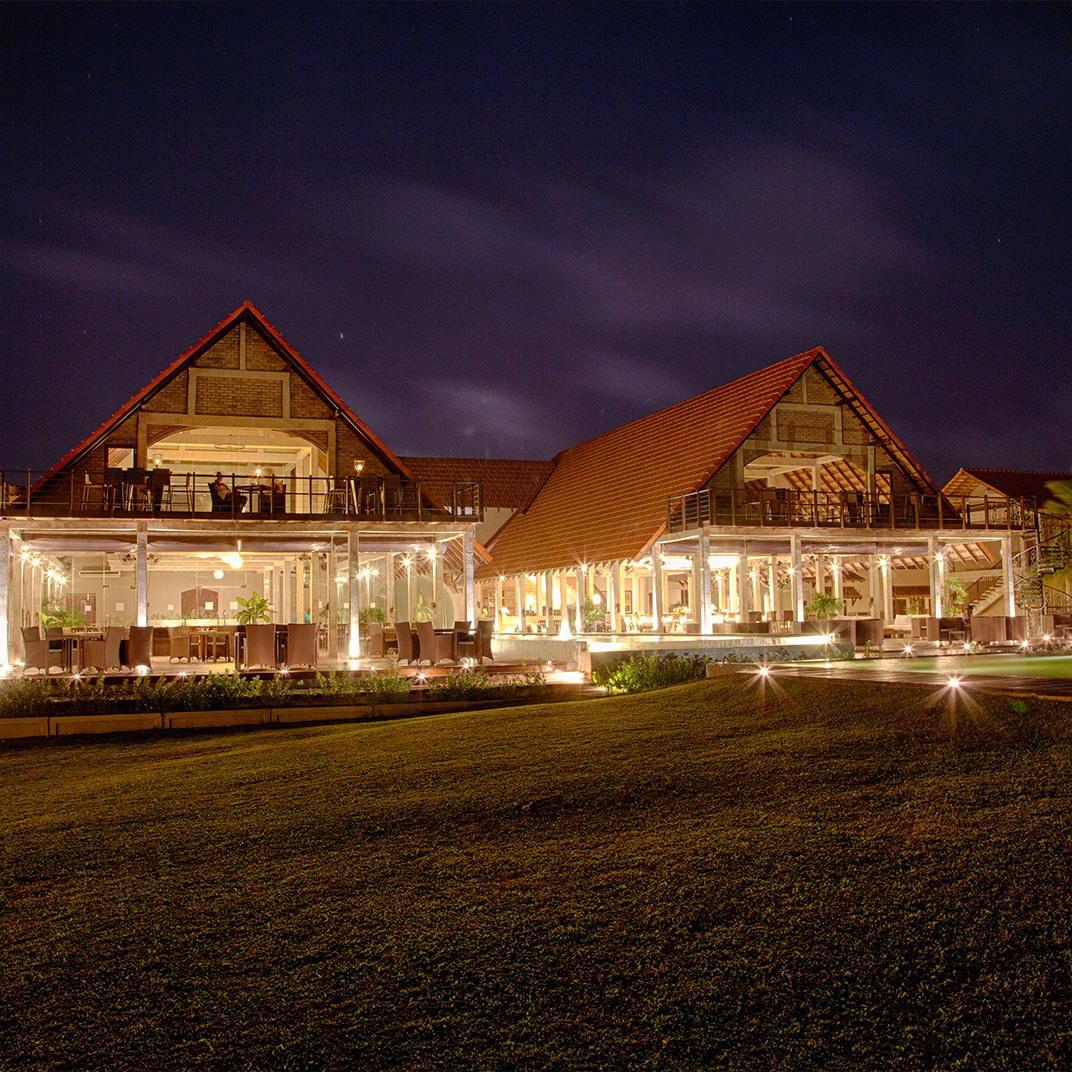
The restaurant at Karpaha Sands operates as the social centre of the property, which is a structural choice as much as a culinary one. At a seventeen-room property this remote, the dining room cannot be optional in the way it might be at an urban hotel; it has to anchor the evening and justify staying in rather than seeking alternatives that, on the Kalkudah stretch, largely do not exist. The menu moves between upscale Sri Lankan cooking and international fare with a pronounced French influence, an unusual pairing that reflects both the island's colonial culinary history and the cosmopolitan expectations of the guests who make the journey to this part of the coast. The setting, with views out to the Indian Ocean, does meaningful work alongside the food.
For a broader map of eating and drinking along this stretch of coast, our full Kalkudah Beach restaurants guide covers the options in detail.
Where Karpaha Sands Sits in the Sri Lanka Luxury Market
Sri Lanka's premium accommodation has developed into a reasonably legible set of categories. There are the large-footprint resort operators, represented at the leading end by properties like Cape Weligama in Weligama and Amanwella in Tangalle on the south coast, and there are the smaller, design-specific properties that compete on atmosphere and specificity of experience rather than facility breadth. Karpaha Sands belongs firmly to the latter group. Seventeen keys, a tented-camp format with a distinct aesthetic identity, and a location that self-selects for guests who have already decided they want something removed from the mainstream circuit.
Other design-led small properties across the island, Kahanda Kanda Galle in Angulugaha, Malabar Hill in Weligama Bay, Kumu Beach in Balapitiya, and Nine Skies in Demodara, each carve out a particular niche through location and design language. Karpaha Sands holds a position no south-coast property can replicate: the east coast's dry season, its uncrowded beach, and its near-total absence of comparable luxury alternatives in the immediate vicinity. Ceylon Tea Trails in the Interior and Water Garden Sigiriya similarly operate in zones where the geography does much of the work of differentiation.
Planning the Trip
Karpaha Sands sits on Kimbula Thona, Kalkudah Beach, in the Kiran area of Sri Lanka's Eastern Province. The east coast is accessible from Colombo by road or via Batticaloa, the nearest significant town, which has domestic flight connections that reduce what is otherwise a lengthy overland journey. The optimal travel window runs from April through September, when the east coast's dry season inverts the weather pattern that closes down the south. Rates start from $126 per night across the seventeen villas. For additional context on comparable stays across the island, the profiles of Heritance Ahungalla, Taru Villas Maia in Habarana, and W15 Hanthana Estate Kandy offer useful reference points for the range of design approaches operating in the Sri Lankan luxury tier.
Side-by-Side Snapshot
Comparable venues nearby, for context on price, style, and recognition.
| Venue | Cuisine | Awards | Notes |
|---|---|---|---|
| Karpaha SandsThis venue — the venue you are viewing | Luxury glamping boutique resort blending authenticity with exclusivity on a pristine beach. | 1 Michelin Key | Not listed |
| Santani Wellness Resort & Spa | Minimalist modern architecture designed as a purpose-built wellness destination with sustainable eco-standards, blending contemporary design with natural forest setting. | Mr & Mrs Smith Seal of Approval | Werapitiya, Kandy District |
| The Golden Ridge | Polished luxury mountain resort blending modern comfort with hill country serenity. | World Luxury Hotel Awards WLHA Global Winner | Nuwara Eliya |
| Taru Villas Villu - Wilpattu | Eco-luxury jungle retreat | Small Luxury Hotels of the World Member · World Luxury Hotel Awards WLHA Regional Winner | Eluwankulama |
| Malabar Hill | Contemporary boutique resort inspired by Moorish and Rajasthani architecture. | 2 Michelin Keys · La Liste Top Hotels | Weligama Bay |
| W15 Hanthana Estate Kandy | Restored colonial estate blending Sri Lankan heritage with modern luxury | 1 Michelin Key | Hanthana |
Recognition history
Dated appearances from independent guides and award organizations, with the underlying list record or original source where available.
Michelin 1 Key
Michelin
Full recognition history (2 entries)
Michelin 1 Key
Michelin
Continue exploring
More in Kalkudah Beach
Hotels in Kalkudah Beach
Browse all →
Restaurants in Kalkudah Beach
Browse all →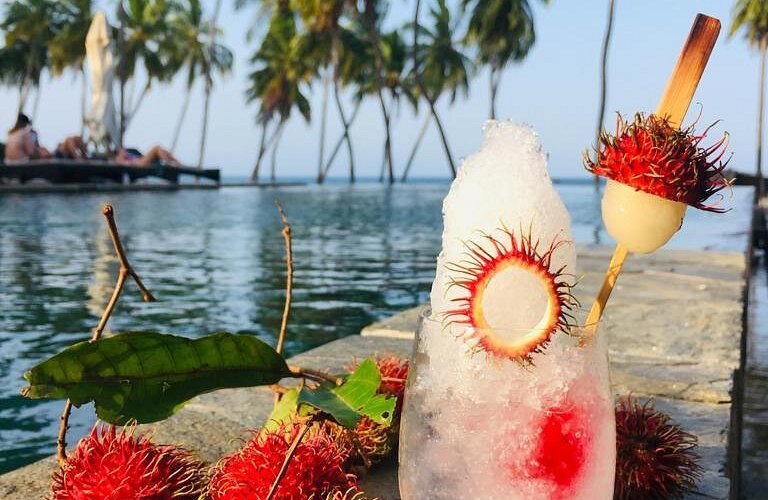
Details
- Romantic
- Quiet
- Elegant
- Scenic
- Intimate
- Sophisticated
- Honeymoon
- Romantic Getaway
- Wellness Retreat
- Weekend Escape
- Beachfront
- Infinity Pool
- Private Villa
- Panoramic View
- Pool
- Spa
- Room Service
- Concierge
- Beach Access
- Wi Fi
- Massage
- Restaurant
- Waterfront
- Garden
Tranquil and stylish with seductive palm tree lighting around the pool and bar, creative artwork, and a romantic glamping atmosphere.