
A Michelin Selected hotel occupying a restored 16th-century palace on Calle de la Merced, NH Collection Palacio de Burgos places guests in the architectural heart of old Castile. The conversion balances preserved stonework and historic volumes with contemporary hospitality, making it a credible base for exploring the cathedral quarter and the Camino de Santiago corridor without sacrificing comfort.
Pearl is the En Primeur Club membership app — saves, bookings, and concierge access live there. Same editors, same standards.
- Address
- C. Merced, 13, 09002 Burgos, Spain
- Phone
- +34 947 47 99 00
- Website
- nh-hotels.com
- Directions
- Get directions
 Saves & bookings on Pearl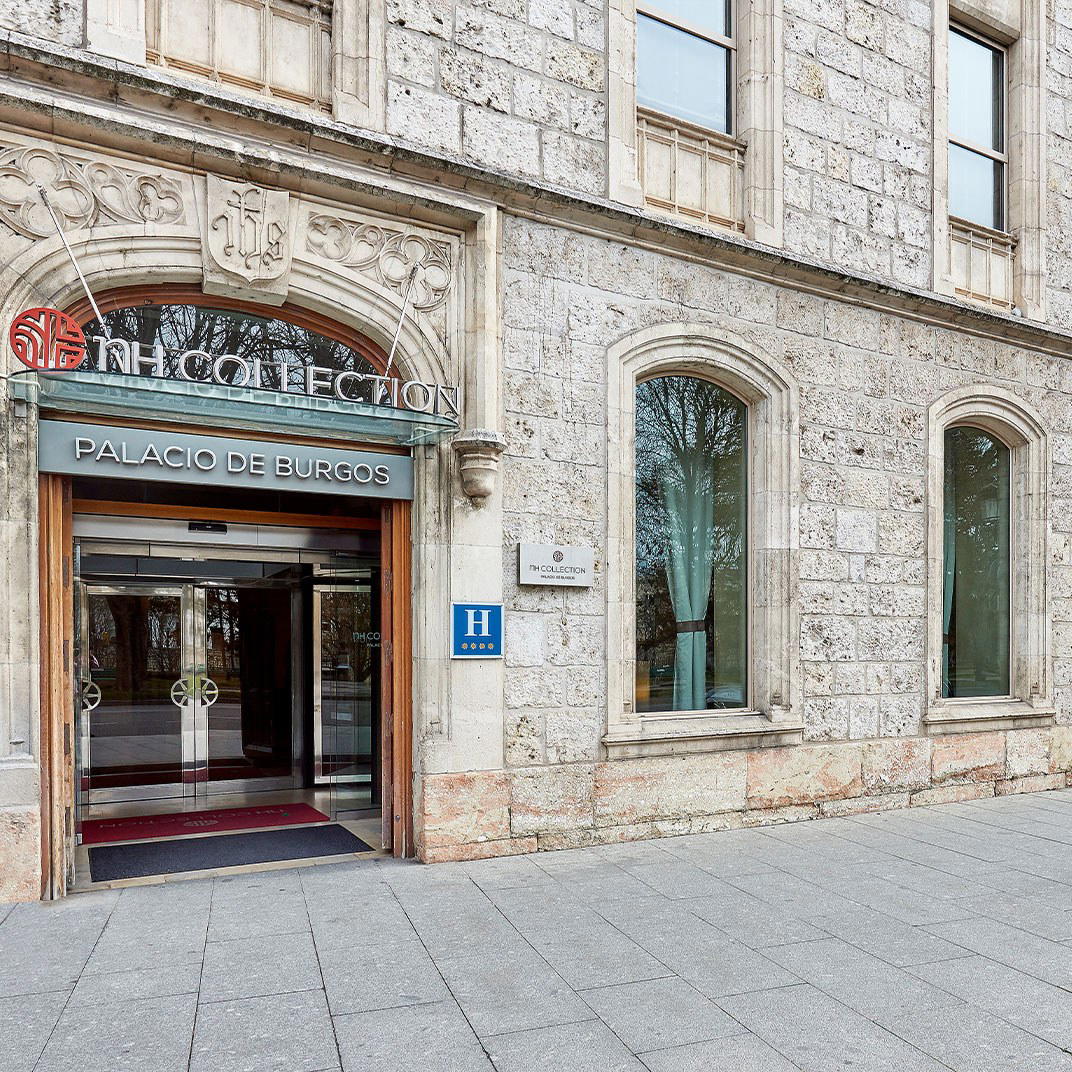
Stone and Steel: How Burgos Converts Its Historic Fabric Into Hotels
Burgos does not have many hotels that make the architecture itself the argument for staying. The city's Gothic cathedral draws visitors from across Europe, the Camino de Santiago moves tens of thousands of pilgrims through its streets each year, and the old quarter holds particularly intact medieval civic buildings in northern Castile. Yet for much of the 20th century, the accommodation offer lagged behind that heritage. The NH Collection Palacio de Burgos represents a more recent pattern in Spanish urban hospitality: the careful conversion of significant historic structures into full-service hotels, a category that in Spain has produced some of its most architecturally interesting stays, from the repurposed convents of Seville to the palace hotels of the Castilian meseta.
That broader conversion trend has accelerated across Spain since the early 2000s, driven partly by EU heritage-funding mechanisms and partly by the demonstrable market appetite for hotels that offer something the international branded box cannot: genuine physical history. Hotel Mercer Sevilla layers Roman wall into its structure. Caro Hotel in València exposes medieval and Roman-era archaeology at basement level. The NH Collection Palacio de Burgos sits in this lineage, occupying a palace that predates most modern hospitality concepts by several centuries. Michelin's 2025 hotel selection confirms the property's position in the upper tier of Burgos accommodation, one of a small number of hotels in this compact Castilian city to carry that designation.
The Physical Experience of Arriving at Calle de la Merced 13
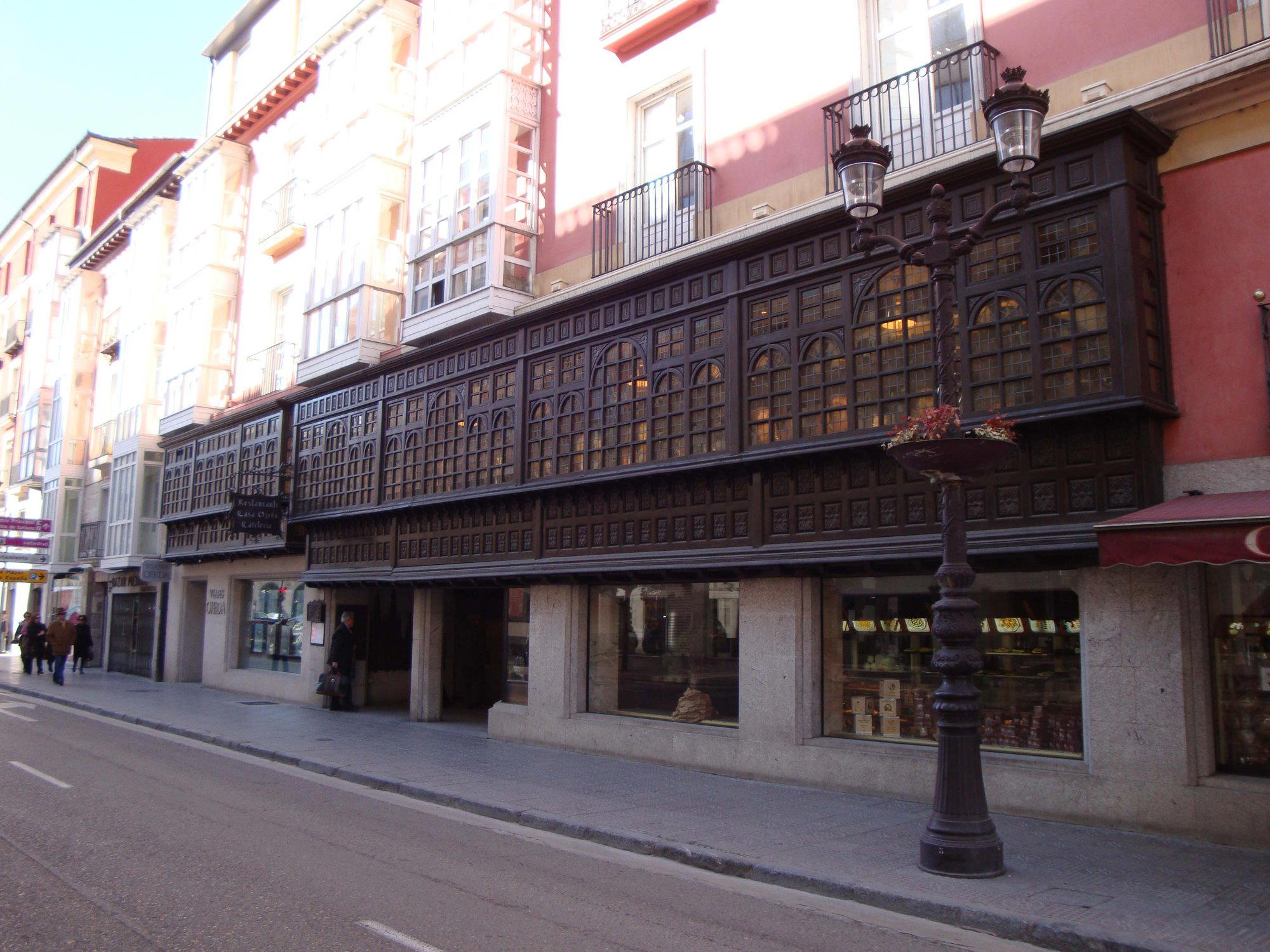
The address places the hotel on a street that runs close to the cathedral precinct, within the older residential and civic core of the city rather than on the commercial periphery. Arriving on foot from the cathedral, the scale of the original palace structure reads clearly: the stone facade, the proportions of the windows, the weight of the masonry all signal a building constructed for permanence and civic status rather than commercial throughput. This is not a building that was ever modest.
Spanish palace conversions of this type typically preserve the exterior envelope and the major structural elements, courtyard, vaulted cellars, stone staircases, while inserting contemporary infrastructure behind and around them. The tension between the original spatial logic and modern hotel programming (corridors sized for luggage, bathrooms carved from what were once unbroken rooms, mechanical systems threaded through walls that were not designed to receive them) is where these projects either succeed or compromise. When the intervention is confident, as in the leading Castilian conversions, the contrast between old stone and contemporary detailing sharpens rather than softens the sense of place. Both elements are legible, and neither pretends the other does not exist.
For properties in Burgos specifically, the surrounding urban fabric of Gothic and Renaissance stone sets a high bar for material quality. Hotels that rely on generic contemporary finishes read as incongruous against that backdrop. The conversion model, when it works, answers that problem directly by grounding the interior in the same material palette the city has used for five centuries.
Where It Sits in the Burgos Accommodation Set
Burgos is a mid-sized city with a hospitality market structured primarily around cathedral tourism, Camino traffic, and business travel connected to the region's food-processing and automotive industries. The upper end of that market is not crowded. The NH Collection brand operates at a different price point and service register than the NH standard tier, and the Collection designation typically signals a property with specific architectural or locational distinction rather than just an upgraded amenity package. Within Burgos, that positions the Palacio de Burgos in a small group of properties where the building itself is part of the offer, rather than hotels that compete primarily on room specification or loyalty programme integration.
For visitors comparing options within the city, the alternative at the branded end of the market includes the AC Hotel Burgos, which operates in a different architectural register entirely. The Palacio de Burgos's Michelin Selected status provides an external reference point that the AC does not share, and for travellers whose reference set includes Michelin-credentialled Spanish properties elsewhere, it places the hotel in a recognisable peer group. That peer group across Spain includes palace and monastery conversions at various price tiers and scales, from the parador network through to independently operated properties like Atrio Restaurante Hotel in Cáceres, where the architecture and the cultural programme together justify the room rate.
Burgos as a Base: What the Location Supports
The cathedral of Santa María de Burgos, a UNESCO World Heritage site and one of the great Gothic structures in Europe, is within walking distance of Calle de la Merced. The Museum of Human Evolution, which sits alongside findings from the Atapuerca sites (among the more significant prehistoric excavations on the continent), is also in the city centre. For anyone approaching Burgos as more than a transit stop on the Camino, both institutions reward serious time, and staying in the historic quarter rather than the commercial outskirts makes the rhythm of those visits considerably easier.
The city's food offer deserves attention separately. Burgos is associated with its own fresh cheese, morcilla (the local blood sausage, distinct from other Spanish regional versions in its use of rice and onion), and a roast lamb tradition that places it within the broader Castilian asado belt running from Segovia through Aranda de Duero and north toward the Ribera del Duero wine country. The Ribera del Duero DO, one of Spain's most serious red wine appellations, lies roughly an hour south of the city by road, making Burgos a credible base for wine-focused itineraries alongside its cultural programme.
Spanish Architectural Hotels: A Wider Context
Travellers whose interest in converted historic properties extends beyond a single stay will find Spain has built one of Europe's strongest inventories in this category. At the more intimate end, Hotel Can Cera in Palma occupies a 17th-century Mallorcan mansion. Hotel Can Ferrereta in Santanyí operates on a similar model in the rural southeast of the island. Terra Dominicata in Escaladei occupies a former monastery in the Priorat, integrating a winery programme into the historic structure. At the upper end of the category, Mandarin Oriental Ritz, Madrid and Mandarin Oriental Barcelona represent the international-brand approach to historic buildings in major urban centres, with the service infrastructure and price point that accompanies that positioning.
The NH Collection Palacio de Burgos occupies a different coordinate on that map: a major hotel group operating through a historic structure in a secondary city, credentialled by Michelin but without the price ceiling of the Madrid and Barcelona flagship conversions. For travellers who want architecturally serious accommodation in northern Castile without building an itinerary around the paradors specifically, it is among the more considered options the city currently offers.
Also Worth Considering in Spain
- Abadía Retuerta LeDomaine, monastery conversion in the Ribera del Duero with its own winery
- Akelarre in San Sebastián, three-Michelin-star restaurant hotel on the Basque coast
- Pepe Vieira Restaurant & Hotel in Poio, Galician chef-led property with Michelin recognition
- Mas de Torrent Hotel & Spa in Torrent, Catalan farmhouse conversion in the Empordà
- Cap Rocat in Cala Blava, converted military fortress on the Mallorcan coast
- Marbella Club Hotel, Costa del Sol institution with a different but equally distinct sense of place
- Royal Hideaway Corales Resort in Adeje, Tenerife resort operating at the upper end of the Canary Islands market
- Hotel Mas Lazuli in Girona, smaller Catalan property with design emphasis
- Torre del Marqués Hotel Spa & Winery in Sardoncillo, Aragon wine-country stay combining hospitality and production
- Predi Son Jaumell in Capdepera, rural Mallorcan finca at the quieter eastern end of the island
- La Residencia, A Belmond Hotel, Mallorca, Deià hillside property with long-established cultural programme
- Casa Beatnik Hotel in A Coruña, Galician city hotel with a distinct creative identity
Side-by-Side Snapshot
Comparable venues nearby, for context on price, style, and recognition.
| Venue | Cuisine | Price | Awards | Notes |
|---|---|---|---|---|
| NH Collection Palacio de BurgosThis venue — the venue you are viewing | Historic palace hotel with modern luxury | $$$ | 4-Star | Not listed |
| AC Hotel Burgos | Modern restoration of historic Beaux-Arts building | $$$ | 4-Star | City Center |
| Vincci Molviedro | Contemporary Andalusian fusion in historic buildings | $$$ | 4-Star | Centro |
| Vincci Puertochico | Modern boutique hotel with beach-house aesthetic reflecting its waterside setting in a historic maritime district. | $$$ | 4-Star | Centro (Castelar) |
| Parador de Alarcón | Medieval castle parador blending authentic history with modern hospitality. | $$$$ | 4-Star | Alarcon |
| Eurostars Pamplona | contemporary urban retreat with spa facilities | $$$ | 4-Star | Segundo Ensanche |
Recognition history
Dated appearances from independent guides and award organizations, with the underlying list record or original source where available.
Michelin Selected
Michelin
Continue exploring
More in Burgos
Hotels in Burgos
Browse all →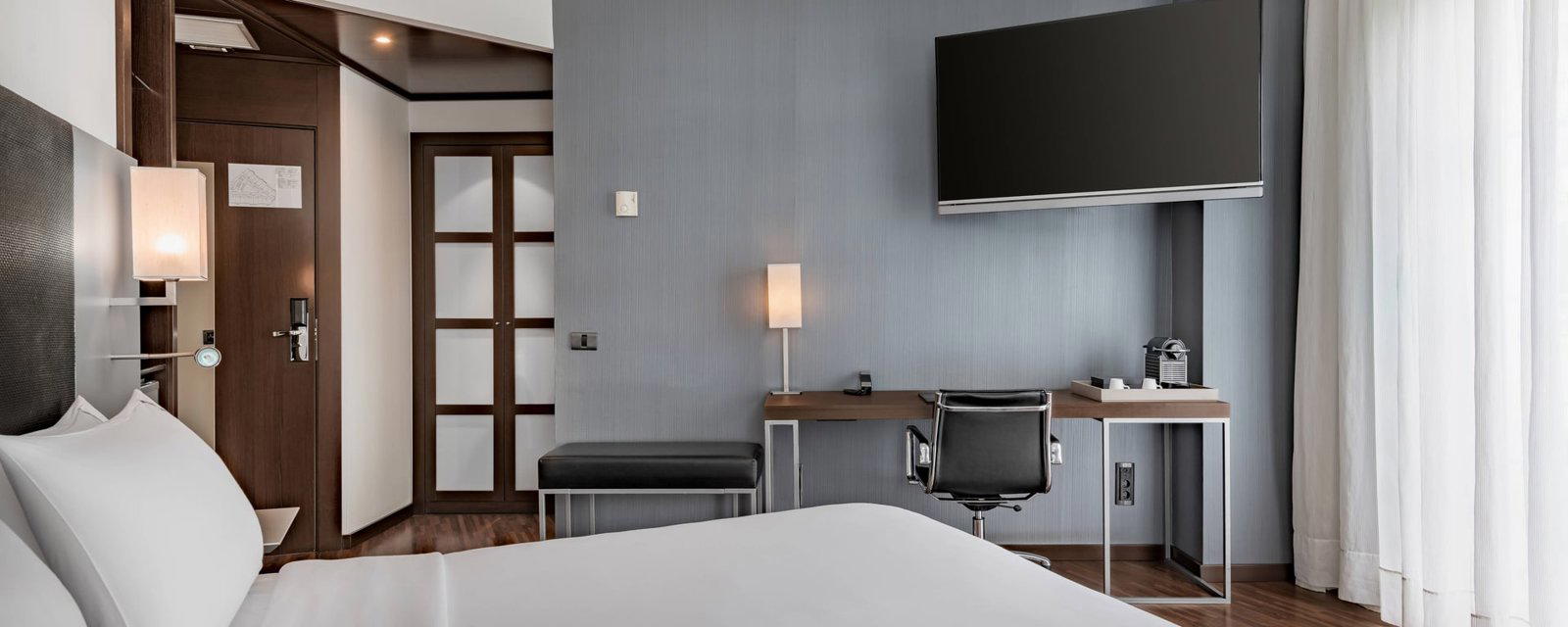
Restaurants in Burgos
Browse all →
Wineries in Burgos
Browse all →
At a Glance
- Elegant
- Historic
- Sophisticated
- Classic
- Romantic Getaway
- Business Trip
- Weekend Escape
- Historic Building
- Panoramic View
- Fitness Center
- Sauna
- Room Service
- Restaurant
- Business Center
- EV Charging
- Wi Fi
- Fitness Center
- Sauna
- Room Service
- Restaurant
- Business Center
- EV Charging
- Wi Fi
Elegant and spacious rooms blending classic dark wood furnishings with contemporary comforts in a serene historic setting.