


1 Michelin Star · Macarfi 7.7 Food Rating · Guía Repsol 1 Sol
Our verdict
Ricardo Temiño holds a Michelin star and operates as a distinct offshoot of the well-regarded La Fábrica, sharing an entrance on Calle San Juan but occupying its own character entirely. Two tasting menus, Camino Corto and Camino Largo, trace the historical routes and personal chapters that have shaped Burgos, delivered across a multi-room progression that moves through wine cellar, kitchen, and semi-open dining room.

Pearl is the En Primeur Club membership app — saves, bookings, and concierge access live there. Same editors, same standards.
- Address
- C. San Juan, 3, 1 derecha, 09003 Burgos, Spain
- Phone
- +34 947 04 04 20
- Hours
- Mon–Tue ClosedWed 1–5 PMThu 1–3 PMFri–Sat 1–3 PM, 8–10 PMSun Closed
- Website
- fabricarestaurante.com
- Directions
- Get directions
- Booking
- Book on TheFork
The menu
What to order
- Camino tasting menu (16 or 19 courses)
A City's History, Structured as a Menu
In Castile, the idea of the camino carries particular weight. Burgos sits at the convergence of several routes that defined medieval Iberia: the pilgrimage road to Santiago de Compostela, the wool trade corridors that connected the meseta to northern ports, the fish routes that brought salted cod inland, and the territorial campaigns associated with El Cid. At Ricardo Temiño, those routes become the organising principle of the menu itself. The two tasting formats, Camino Corto and Camino Largo, are not simply short and long options in the conventional sense; they are scaled iterations of the same architecture, each course functioning as a reference point in a larger map of place, memory, and provincial identity.
This approach positions Ricardo Temiño within a specific current in contemporary Spanish cooking: the use of menu structure as historical argument. Restaurants such as Aponiente in El Puerto de Santa María and El Celler de Can Roca in Girona have long demonstrated that a tasting menu can carry intellectual freight beyond the plate. What distinguishes the Burgos context is how underrepresented the city's depth has been in that broader conversation. Castilian cooking is often reduced to its most visible expression, the roast, and the more layered story of its trade routes, its medieval commerce, and its agricultural cycles has rarely been assembled into a coherent dining argument at this level.
The Architecture of the Experience
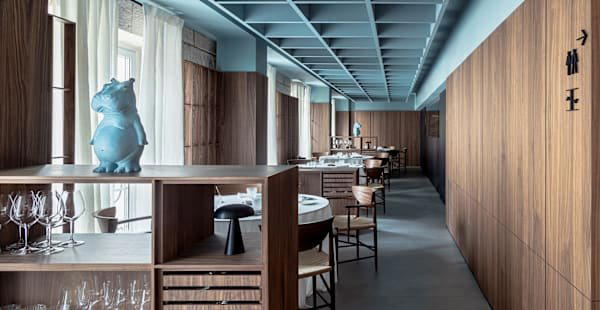
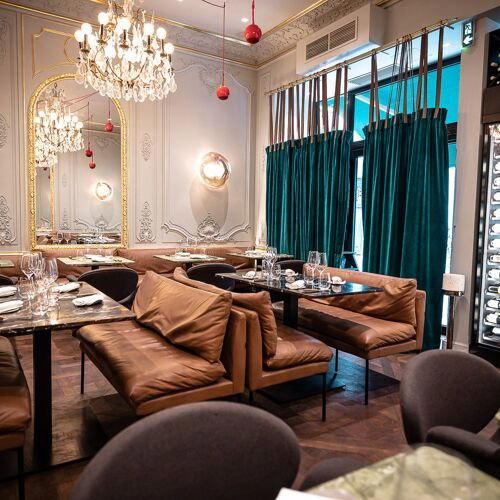
The progression through the space is deliberate and sequential, and understanding it in advance helps calibrate expectations. Guests do not simply arrive at a dining room. The experience opens in the reception area, where the wine cellar is on full display, and the first appetisers are served here rather than at the table. From that point, the path moves through the kitchen, where the lamb-aging process is visible, before arriving in the modern dining room with its semi-open kitchen format.
This kind of multi-room sequencing has become a recognisable feature at the more architecturally considered end of Spanish fine dining. Azurmendi in Larrabetzu and Quique Dacosta in Dénia both use spatial movement as part of the meal's rhythm, with different zones carrying different tones and intensities. At Ricardo Temiño, the transition from wine cellar to working kitchen to dining room tracks from the sourced to the prepared to the composed, an implicit argument about how a dish arrives at the table. The lamb-aging section is particularly pointed: in a region where lechazo is a cornerstone of identity, showing the maturation process as part of the meal's prologue frames the cooking as continuous with its ingredient logic rather than separate from it.
The restaurant operates at the €€€ price tier, which in Burgos places it above the more accessible end of the city's dining offer, including La Fábrica and Cobo Tradición at the €€ level, but below the top tier represented by Cobo Evolución at €€€€. Within that bracket, the Michelin star awarded in 2024 anchors it firmly in the city's upper fine dining tier. Booking in advance is advisable given the seat count and the structured format, which does not accommodate walk-ins in the way a more informal room might.
Where the Personal and the Provincial Intersect
The tasting menus carry references drawn from two registers: the chef's own biography and the province's documented history. A nod to a honeymoon sits alongside a reference to the wool route; the early days of La Fábrica appear in the same sequence as the Camino de Santiago. This is a deliberate structural choice rather than an accident of sentiment. By placing the personal and the historical in the same frame, the menu argues that a chef's formation is inseparable from the geography and culture that shaped it.
This is a model with clear precedents at the highest level of Spanish cooking. Arzak in San Sebastián has long operated where Basque identity and family continuity produce the same effect, and DiverXO in Madrid, though far more disruptive in tone, similarly uses the chef's personal trajectory as a structuring logic. At Frantzén in Stockholm and its international counterpart FZN by Björn Frantzén in Dubai, the biographical thread is woven through menus at both city and global scale. Ricardo Temiño operates in this tradition at a more grounded register: the references are locally specific rather than globally projected, and the research behind them, into the wool route, the fish route, the Cid campaigns, the pilgrimage infrastructure, draws on provincial archives and cultural memory rather than international culinary citation.
Ricardo Temiño in Burgos's Broader Dining Context
Burgos has developed a more layered fine dining scene than its size might suggest, partly because the city's location on the Camino de Santiago brings a consistent flow of international visitors with appetite for considered eating, and partly because a generation of Castilian chefs has taken the region's raw material seriously on its own terms. The concentration of quality within a small area means that a single visit can move between price points and formats without significant travel: the informal end of the spectrum at La Fábrica, the traditional register at Cobo Tradición, and the upper tasting-menu tier at Ricardo Temiño and Cobo Evolución are all accessible within the city centre. Landa and Boccaccio 70 extend the range further.
For visitors building a broader Burgos itinerary, EP Club's guides cover the full range: see our full Burgos restaurants guide, our full Burgos hotels guide, our full Burgos bars guide, our full Burgos wineries guide, and our full Burgos experiences guide.
Planning Your Visit
Ricardo Temiño is located at Calle San Juan, 3, in central Burgos, sharing an entrance with La Fábrica. The address places it within easy walking distance of the cathedral quarter, making it a natural anchor for an evening in the city's historic core. Given the structured, multi-room format and the tasting-menu-only offer, the meal runs longer than a conventional dinner service; allow a full evening rather than treating it as a two-hour commitment. The Michelin recognition from 2024 has raised the profile of the address, and the seat count in a specialist format of this kind means demand outpaces availability at busier periods on the Camino calendar, particularly spring and early autumn when pilgrim and tourist traffic peaks.
Is Ricardo Temiño child-friendly?
The multi-course tasting menu format, structured kitchen tour, and €€€ price point make this a poor fit for young children.
Is Ricardo Temiño formal or casual?
If you arrive expecting a relaxed, à la carte dinner, adjust: the format here is guided, sequential, and structured around two tasting menus. That said, Burgos does not carry the same dress-code rigidity as Madrid or Barcelona's most formal rooms, and the Michelin one-star tier in a regional city typically lands in smart-casual territory rather than black-tie. The semi-open kitchen and the kitchen-tour element give the experience an accessible, engaged quality that offsets the formality of the tasting format.
What do people recommend at Ricardo Temiño?
Order the Camino Largo if time allows. The fuller menu is where the historical architecture of the meal becomes coherent: the progression through wool route, fish route, and pilgrimage references builds meaning across courses in a way the shorter format can only partially deliver. The lamb-aging element, visible during the kitchen passage, is the clearest signal of what makes the cooking here specific to this place rather than generically modern.
Peers in This Market
| Venue | Cuisine | Price | Awards | Notes |
|---|---|---|---|---|
| Ricardo TemiñoThis venue — the venue you are viewing | Modern Spanish Fine Dining | $100–150 | 1 Michelin Star · Macarfi 7.7 Food Rating | Not listed |
| Cobo Evolución | Modern Spanish Evolution Tasting | $150–200 | 1 Michelin Star · Macarfi 8.5 Food Rating | Modern Cuisine |
| Landa | Traditional Castilian | $30–50 | Not listed | Not listed |
| Cobo Tradición | Contemporary Castilian & Cantabrian | $50–100 | Michelin Plate · Macarfi 7.7 Food Rating | Traditional Cuisine |
| La Fábrica | Modern Spanish Mediterranean | $50–100 | Michelin Plate · Macarfi 7.5 Food Rating | Contemporary |
| Boccaccio 70 | Italian with Castilian Essence | $30–50 | Michelin Plate | Not listed |
Recognition history
Dated appearances from independent guides and award organizations, with the underlying list record or original source where available.
Michelin 1 Star
Michelin
Guía Repsol 1 Sol
Guía Repsol
Macarfi 7.7 Food Rating
Macarfi
Full recognition history (5 entries)
Michelin 1 Star
Michelin
Michelin 1 Star
Michelin
Details
- Elegant
- Intimate
- Sophisticated
- Modern
- Date Night
- Special Occasion
- Celebration
- Private Dining
- Open Kitchen
- Sommelier Led
- Farm To Table
- Local Sourcing
- Tasting Menu
- Wine Pairing
Current opening hours
- Monday
- Closed
- Tuesday
- Closed
- Wednesday
- 1–5 PM
- Thursday
- 1–3 PM
- Friday
- 1–3 PM, 8–10 PM
- Saturday
- 1–3 PM, 8–10 PM
- Sunday
- Closed
Hours can change for holidays and private events. Last verified .
Elegantly minimalist interior with a charming, refined atmosphere that complements the intimate dining experience.