Mövenpick Manila Bay Westside
Mövenpick Manila Bay Westside in Parañaque has 1,530 rooms, waterfront and skyline views, on-site dining, and amenities including wifi, pool, spa, fitness center, business center, and concierge.

Pearl is the En Primeur Club membership app — saves, bookings, and concierge access live there. Same editors, same standards.
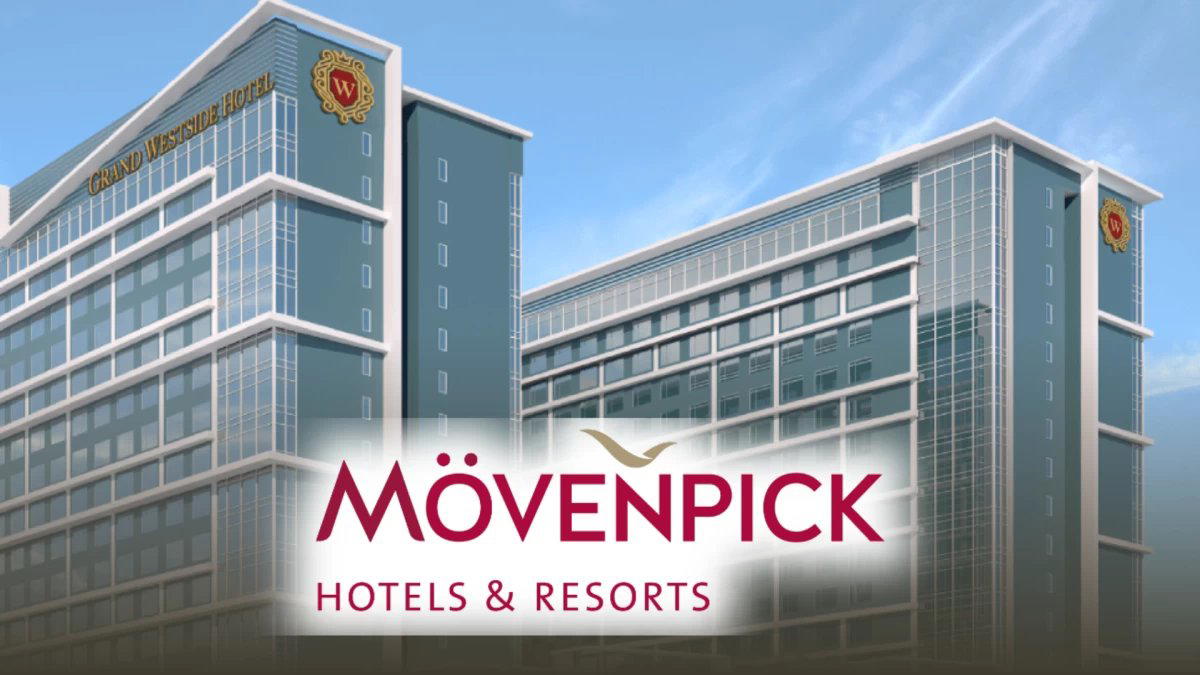
Bayfront scale, not island seclusion
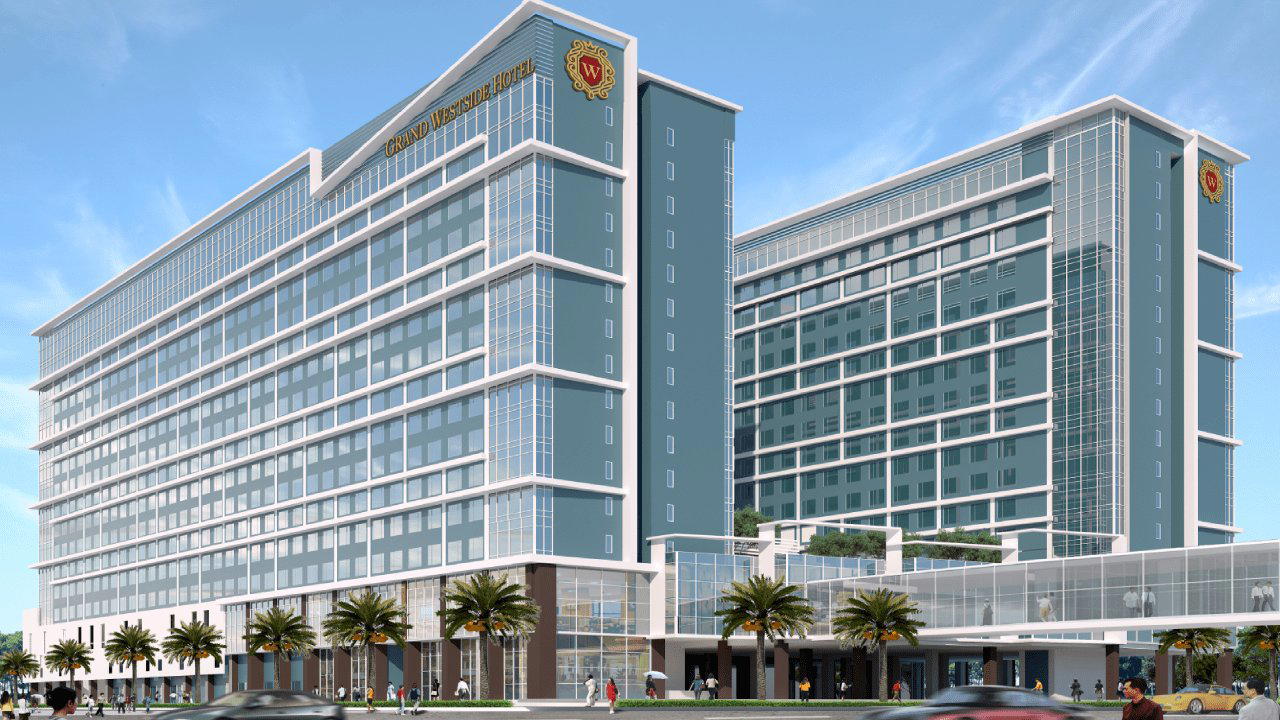
Approaching the Manila Bay side of Parañaque means entering a district built for frontage, movement, and arrival. The visual grammar is not the low-rise resort language of palms and private sand; it is the larger urban-resort idiom of porte-cochères, broad lobbies, gaming-adjacent hospitality, convention traffic, late dinners, and airport-bound guests timing their stays around flights. Mövenpick Manila Bay Westside sits within that broader Manila Bay Westside conversation, where architecture and operational scale carry as much weight as pool decks or room categories. In this part of Metro Manila, the hotel experience is shaped by the building envelope, the surrounding leisure district, and the fact that Parañaque has become a practical base for visitors who want bayfront access without sleeping inside the older Makati or Bonifacio Global City hotel circuits.
The useful comparison is not with a castaway Philippine resort. Parañaque’s bayfront hotels compete in a different comparable set: properties designed for urban leisure, gaming demand, family weekends, business overnights, and international arrivals who may be moving between Ninoy Aquino International Airport and the wider capital. Nearby hospitality references such as Solaire Resort show how the district has pushed Manila’s luxury-hotel vocabulary toward spectacle, large public spaces, and dense food-and-beverage programming. Mövenpick Manila Bay Westside should be read through that lens rather than through the quieter boutique vocabulary associated with smaller island properties.
Architecture as the first filter
In a destination such as Parañaque, design is not decorative afterthought; it is the first filter separating one stay from another. Large Manila Bay properties need to solve several problems at once: arrivals by car, luggage-heavy check-ins, groups moving between restaurants and entertainment venues, and guests who may use the hotel as a base rather than a retreat. That produces a hospitality style where circulation, lobby scale, and adjacency to surrounding leisure infrastructure become part of the experience. The available record does not support specific claims about interiors. What can be said with confidence is that the Parañaque setting places the property inside an urban resort category rather than a heritage hotel or beach-resort category.
This distinction matters for travellers comparing the Philippines across regions. A Manila Bay Westside stay answers a different question than Amanpulo in Pamalican Island, Banwa Private Island in Palawan, or Cauayan Island Resort in El Nido. Those properties trade on isolation, transfer choreography, and landscape-led privacy. Parañaque trades on access, density, and the convenience of being within Metro Manila’s entertainment and airport orbit. The design challenge is therefore urban: how to make a large hotel feel composed when the surrounding district is built for volume.
The Manila Bay Westside context
Parañaque has spent the past decade consolidating its position as one of Metro Manila’s main leisure-hospitality corridors. The district benefits from bayfront land, proximity to the airport, and a concentration of large integrated resorts. For guests, that changes the calculus. A stay here can be efficient for late arrivals, early departures, casino-led weekends, concert traffic, and short Manila stopovers where crossing the city would waste more time than the itinerary can spare. This is not the old Manila hotel story of colonial addresses and grand dining rooms; it is a newer urban-resort model, closer to the airport economy and the capital’s entertainment infrastructure.
That context also explains why practical planning matters. Travellers should verify current booking channels and arrival instructions before committing. Metro Manila traffic can turn a short map distance into a long transfer, especially on Friday evenings, holiday periods, and during major events. Parañaque is convenient in relation to the airport district, but convenience in Manila is always time-sensitive. The stronger move is to plan around arrival windows rather than assume any cross-city movement will be easy.
How it compares with Philippine luxury stays
The Philippine luxury hotel field is unusually split. Manila and Parañaque lean toward tower hotels, integrated resorts, business-luxury formats, and serviced city stays. The islands, by contrast, are defined by transfer logistics, beach frontage, villa privacy, and weather exposure. That split is visible when comparing Manila Bay Westside with Discovery Primea Manila in Manila, BE Grand Resort, Bohol in Bohol, Dusit Thani Mactan Cebu Resort in Cebu, Villa Caemilla Beach Boutique Hotel in Boracay, and Crimson Resort and Spa, Boracay in Boracay Island. The city properties carry the pressure of access and vertical density. The resort properties depend on setting, pacing, and the degree to which design can frame water, horizon, or garden space.
Wellness and retreat-led hotels sit in another lane again. Nawa Wellness, Calatagan in Batangas, Nawa Wellness in Calatagan, Anya Resort Tagaytay in Tagaytay City, and Manami Resort in Sipalay City belong to a slower category where the itinerary can be built around recovery, climate, and distance from the capital. Mövenpick Manila Bay Westside, by contrast, belongs to a metropolitan rhythm. Its value is not measured by remoteness. It is measured by how well the property works as a designed base within a high-density leisure district.
Food, drink, and the district rather than a single table
Any specific menu claim would be speculation. The editorial point sits at district level instead. Parañaque’s hospitality economy is built around internal dining ecosystems: hotels and integrated resorts commonly compete by keeping guests on property through multiple restaurant formats, late-night options, bars, banqueting, and event-led programming. That pattern differs from neighbourhood dining cities where guests leave the hotel to chase independent restaurants. In Manila Bay, the hotel building often becomes the dining district for the night.
For readers planning around food and drink, the smarter approach is to treat the stay as one layer in a wider Parañaque plan. Use Our full Parañaque restaurants guide for dining context, Our full Parañaque bars guide for drinking options, Our full Parañaque wineries guide for wine-led listings, and Our full Parañaque experiences guide for non-hotel planning. The broader city pattern is clear: dinner, entertainment, and lodging are frequently bundled by geography, even when each venue keeps its own identity.
Who the stay makes sense for
Mövenpick Manila Bay Westside makes sense for travellers who want the Manila Bay side of the capital rather than a central business district address. That includes guests with airport-sensitive itineraries, entertainment plans in Parañaque, meetings in the southern part of Metro Manila, or a preference for larger hospitality infrastructure. It is less naturally suited to travellers whose Manila plans sit entirely in Makati, Bonifacio Global City, old Manila, or Quezon City, where cross-city traffic can erode the convenience of a bayfront base. For a northern Metro Manila comparison, Solaire Resort North in Quezon City sits in a different urban catchment area and answers a different logistical question.
The property also fits travellers who prefer a hotel district with multiple adjacent leisure uses over a small design hotel embedded in a walkable neighbourhood. Parañaque is not a strolling city in the European sense. Movement is usually by car, and the surrounding environment rewards planning more than wandering. That does not weaken the case for staying here; it simply defines the kind of trip. The traveller choosing this district is choosing convenience within a specific Manila geography, not spontaneous pavement culture.
Planning notes for a Parañaque stay
Planning should start with verification rather than assumption. Confirm the exact property location, current operating status, booking conditions, and any restaurant or facility access rules before arrival. If the stay is tied to a flight, leave margin for security queues, airport-terminal transfers, and Manila traffic patterns. If the stay is tied to a concert, casino visit, dinner, or large event, expect peak arrival periods to affect car access and lobby flow. Its editorial relevance comes from place, category, and design context.
For readers weighing a wider Philippines itinerary, the Parañaque choice should be paired against the trip’s larger architecture. Phuket Village in Polillo, Bluewater Sumilon Island Resort in Sumilon Island, and Amorita Resort in Panglao Island speak to water-led leisure and slower transfers. Manila Bay speaks to compression: shorter stays, denser schedules, easier airport access, and an urban-resort setting. For full local hotel comparison, Our full Parañaque hotels guide gives the more useful frame than national resort lists.
International comparable set
Placed internationally, the Parañaque bayfront model shares more with urban grand hotels and resort-casino districts than with remote luxury retreats. The comparison is not literal in age or style, but in function: properties such as The Fifth Avenue Hotel in New York City, Hôtel de Paris Monte-Carlo in Monte Carlo, and Badrutt's Palace Hotel in St. Moritz demonstrate how location can define hotel identity before a guest reaches the room. New York compresses culture and commerce, Monte Carlo compresses casino history and Riviera ceremony, and St. Moritz compresses alpine seasonality and social ritual. Parañaque compresses airport access, bayfront leisure, and integrated-resort energy. That is the meaningful design reading: the hotel is part of a district machine.
Reputation & Price
Comparable venues nearby, for context on price, style, and recognition.
| Venue | Price | Awards | Notes |
|---|---|---|---|
| Mövenpick Manila Bay WestsideThis venue — the venue you are viewing | $$$ | 5-Star | Not listed |
| Solaire Resort | $$$$ | 5-Star | Entertainment City, Integrated luxury resort with casino and entertainment |
| Piece Lio, El Nido | $$$$ | 5-Star | Lio Tourism Estate, Contemporary Japanese-inspired luxury resort with emphasis on sustainability and environmental conservation. |
| NUSTAR Hotel Cebu | $$$$ | 5-Star | South Road Properties, Ultra-luxury integrated resort with classic grandeur and modern sophistication. |
| Crimson Resort & Spa Mactan | $$$$ | 5-Star | Punta Engaño, Mactan Island, Contemporary Asian design with Balinese-inspired tropical aesthetics and Cebuano cultural touches, master-planned by internationally recognized resort architects. |
| Princesa Garden Island Resort and Spa | $$$ | 5-Star | Puerto Princesa City Centre, Oceanfront family resort with expansive recreational facilities |
Continue exploring
More in Parañaque
Hotels in Parañaque
Browse all →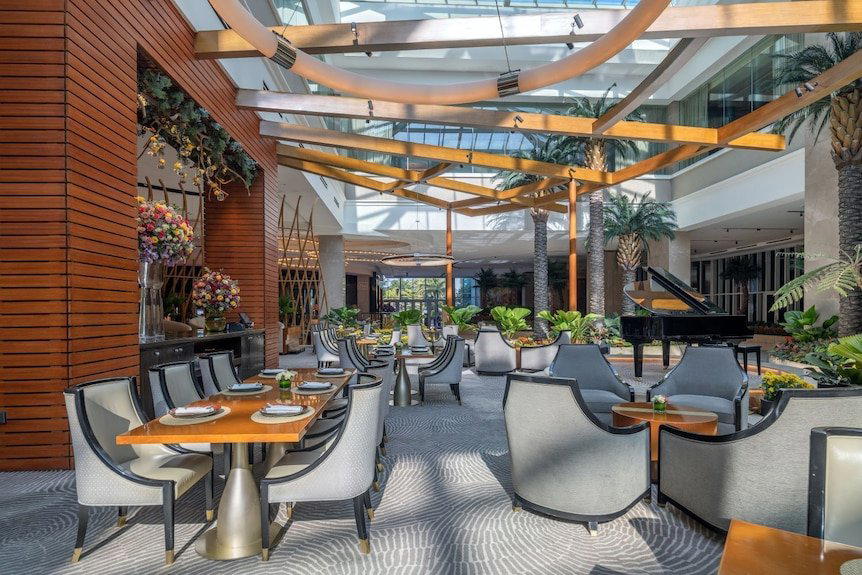
At a Glance
- Modern
- Lively
- Sophisticated
- Ornate
- Business Trip
- Group Retreat
- Celebration
- Family Vacation
- Weekend Escape
- Waterfront
- Panoramic View
- Wi Fi
- Pool
- Spa
- Fitness Center
- Business Center
- Concierge
- Waterfront
- Skyline
- Wi Fi
- Pool
- Spa
- Fitness Center
- Business Center
- Concierge
A massive, contemporary premium hotel designed as a flagship Mövenpick property, combining business and leisure facilities with energetic resort-style surroundings in an integrated entertainment township by Manila Bay.