Banwa Private Island

Banwa Private Island occupies six hectares of marine-protected waters in north-eastern Palawan's Sulu Sea, operating as a whole-island rental for guests seeking complete seclusion. The island sits within a designated marine protected area, meaning its reef systems and surrounding ecosystem are actively managed rather than incidentally preserved. For Palawan's upper tier of private-island experiences, Banwa sets the terms on exclusivity.
Pearl is the En Primeur Club membership app — saves, bookings, and concierge access live there. Same editors, same standards.
- Address
- Banwa Private Island, Roxas
- Directions
- Get directions
 Saves & bookings on Pearl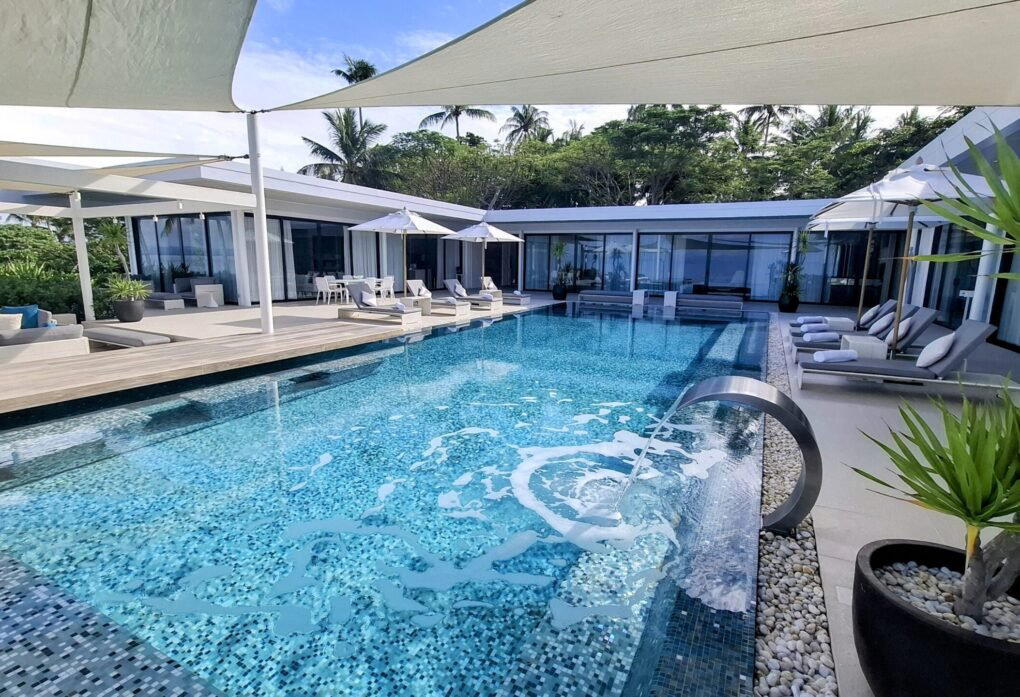
An Island That Arrives Before You Do
The approach to Banwa Private Island by sea sets the register for everything that follows. North-eastern Palawan's Sulu Sea is not a gentle body of water. It carries the kind of horizon that reminds you how far removed this place is from the urban Philippine archipelago. The island's six hectares resolve slowly from open water: white sand fringing dense, managed vegetation, no visible infrastructure competing with the treeline. The design logic here is one of deliberate restraint.
Palawan has carried an international conservation reputation for decades, with marine ecosystems that still function at close to their natural capacity. Banwa sits inside a formally designated marine protected area, which is not a marketing designation, it is a regulatory classification that shapes what can and cannot be built, docked, or disturbed on and around the island. That boundary condition gives the property its most durable asset: an ecosystem that is actively managed rather than incidentally tolerated.
The Architecture of Absence
Private island hospitality in the Asia-Pacific region has fractured into two distinct models. The first is resort-at-scale: multiple room categories, shared amenities, staff-to-guest ratios that still allow for anonymous experience. The second is whole-island exclusivity, where the property is taken in its entirety by a single party, and the infrastructure is sized accordingly. Banwa operates on the latter model. The island does not host overlapping guest groups, when you arrive, the island is yours in the operational sense, not merely in the marketing sense.
The design philosophy that emerges from this model tends toward the specific rather than the generic. Where large-resort architecture must accommodate diverse guest preferences through breadth, multiple pools, multiple dining venues, multiple room types, a single-party island can make deliberate commitments. At Banwa, those commitments are legible in the relationship between built structure and natural environment: the landscaping across the six hectares has been developed to support local flora and fauna, which means the island's biodiversity is a design outcome, not a backdrop. This is an architectural posture that places ecological function at the centre of spatial planning, a position more commonly associated with conservation lodges than with luxury hospitality.
The Tagbanwa people, indigenous to Palawan and holders of deep ancestral connection to its waterways, provided the cultural framework through which the island's identity was shaped. The name itself derives from that connection, and the island's broader ethos reflects Tagbanwa philosophies around stewardship of land and ocean. In hospitality design terms, this is a meaningful constraint: it sets parameters on how the space can be used, how materials are sourced, and how the relationship between guests and environment is framed. Properties like Amanpulo in Pamalican Island operate from a different tradition, Aman's globally consistent design vocabulary prioritised over localised cultural embedding, which places Banwa in a distinct peer category even within Philippine private-island hospitality.
Marine Infrastructure as Design Intent
Marine protected area classification surrounding Banwa is worth examining as a design decision in its own right. Across Palawan and the wider Visayas, reef degradation from uncontrolled dive tourism, boat traffic, and coastal development has affected a significant proportion of historically important marine sites. A property that actively operates within a protected zone is making a structural commitment: it accepts constraints on guest-facing activities in exchange for an ecosystem that functions. The reef life and supporting marine ecosystem around Banwa are described as thriving, which, within the context of Philippine marine conservation, is a specific and meaningful claim rather than a general one.
This matters architecturally because the underwater environment is an extension of the designed experience. Properties like Cauayan Island Resort in El Nido and Discovery Coron operate in areas with strong above-water visual appeal, but the marine dimension at Banwa is not incidental, it is a primary spatial amenity, maintained through the protected area framework. The design implication is that the island's perimeter, below the waterline, has been as deliberately managed as the terrestrial landscaping above it.
Where Banwa Sits in the Philippine Private-Island Tier
The Philippines has produced a range of private-island and island-resort formats across its 7,000-plus islands, from the international-brand integration of Amanpulo to the design-led boutique positioning of Nay Palad Hideaway Siargao. Banwa's whole-island exclusivity model places it in a narrower subset: properties where the competitive frame is not room rate but total-island pricing, and where the guest profile is one that has moved past branded-resort recognition toward genuine operational seclusion.
Within Palawan specifically, the accommodation tier ranges from the mid-market anchored around Puerto Princesa, where Princesa Garden Island Resort and Spa operates, through the design-conscious category represented by Daluyon Beach and Mountain Resort, up to the ultra-private tier where Banwa operates without direct local competition. The absence of shared-amenity compromises at Banwa, no other guests at the beach, no scheduling around resort-wide programming, is the operational outcome of that tier positioning.
For guests comparing across the Philippine archipelago, the relevant comparable set extends to properties like Bluewater Sumilon Island Resort, Amorita Resort on Panglao Island, and BE Grand Resort in Bohol, though none of these operate on a whole-island exclusivity model. Internationally, the design philosophy aligns more closely with properties like Aman Venice, which similarly commits to a specific cultural and spatial identity over generic luxury signalling, than with the volume-luxury model of urban Philippine properties such as Admiral Hotel Manila or Solaire Resort.
Planning a Stay
Banwa is located in north-eastern Palawan in the Sulu Sea, near the municipality of Roxas. Access from Manila or Puerto Princesa requires coordination with the property, as transfer logistics to a private island of this classification are arranged on an individual basis rather than through standard transport links. Given the whole-island model, availability, pricing, and access details are handled through direct inquiry with the island.
Quick Comparison
Comparable venues nearby, for context on price, style, and recognition.
| Venue | Cuisine | Price | Awards | Notes |
|---|---|---|---|---|
| Banwa Private IslandThis venue — the venue you are viewing | Exclusive private island retreat harmoniously integrated with nature, featuring the largest beachfront pool villas in the world. | $$$$ | 5-Star | Not listed |
| Daluyon Beach and Mountain Resort | Eco-conscious luxury beachfront resort blending modern comforts with native Filipino design | $$$$ | 4-Star | Sabang Beach |
| Crimson Resort and Spa, Boracay | luxury beach resort with rolling terrain and multi-level structures | $$$$ | 5-Star | Station Zero |
| Pangulasian, El Nido | contemporary Filipino architecture with private villas perched in forest or beachfront | $$$$ | 4-Star | Pangulasian Island |
| Sheraton Cebu Mactan Resort | Polished modern beachfront resort | $$$$ | 5-Star | Mactan Island |
| Piece Lio, El Nido | Contemporary Japanese-inspired luxury resort with emphasis on sustainability and environmental conservation. | $$$$ | 5-Star | Lio Tourism Estate |
Recognition history
Dated appearances from independent guides and award organizations, with the underlying list record or original source where available.
Virtuoso Luxury Hotel Partner
Virtuoso
Continue exploring
More in Palawan
Restaurants in Palawan
Browse all →
At a Glance
- Romantic
- Quiet
- Elegant
- Intimate
- Scenic
- Ornate
- Honeymoon
- Romantic Getaway
- Family Vacation
- Group Retreat
- Beachfront
- Infinity Pool
- Private Villa
- Panoramic View
- Pool
- Spa
- Fitness Center
- Room Service
- Concierge
- Beach Access
- Tennis
- Golf Course
- Waterfront
- Pool
- Spa
- Fitness Center
- Room Service
- Concierge
- Beach Access
- Tennis
- Golf Course
Tranquil and serene with natural lighting from floor-to-ceiling windows blending lush verdant landscapes, pristine beaches, and turquoise waters into contemporary-designed villas featuring infinity pools that merge with panoramic ocean views.