Leon Towers sits in the Tel Aviv-Yafo conversation as an architecture-led urban address rather than a data-rich resort listing. With for cuisine, chef, awards, rates, address, or booking channel, the useful read is contextual: how a tower-format stay fits a city split between shoreline hotels, Jaffa heritage conversions, and design-minded urban bases.

Pearl is the En Primeur Club membership app, where members save venues, book tables and use the concierge.
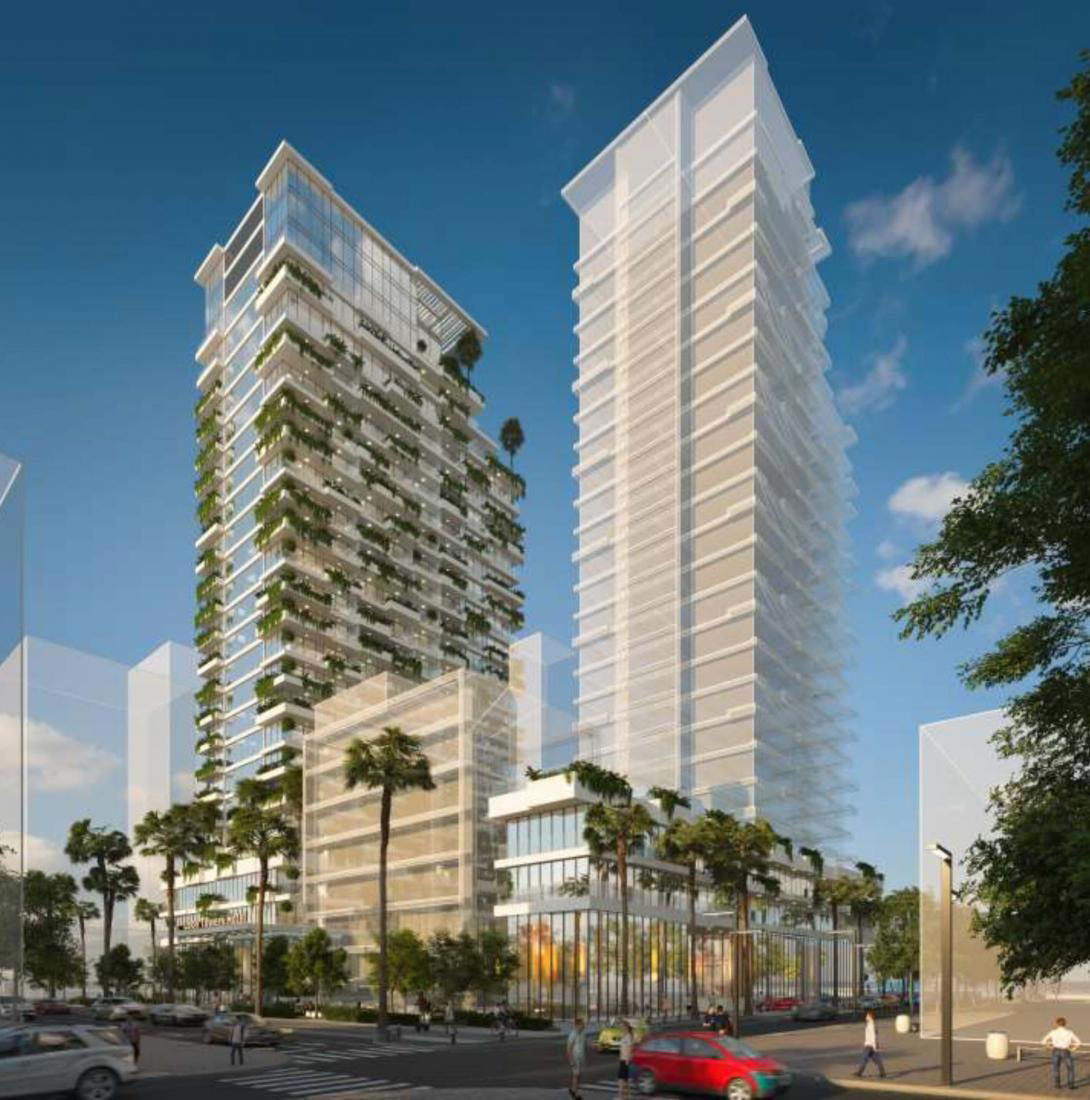
First read: glass, height, and the Tel Aviv habit of looking outward
Approaching a tower-format address in Tel Aviv-Yafo changes the rhythm of the city before a guest reaches any lobby. The usual street-level sequence of cafés, scooters, balconies, and shade trees gives way to a more vertical reading of place: security desk, lift core, framed views, and the compressed hush that comes with high-rise circulation. That absence matters. It means the more responsible way to assess the property is not through invented amenities or borrowed glamour, but through the architectural role it occupy in a city where hospitality is often divided between beach-facing leisure, restored Jaffa stone, and apartment-like towers designed around privacy.
Tel Aviv-Yafo rewards this kind of distinction. A beachfront hotel sells proximity to sand and sunset; a Jaffa conversion sells masonry, courtyards, and historic texture; a tower sells separation from the street, controlled arrival, and the possibility of height as the main amenity. It gives a contained base in a city that runs late, moves fast, and can feel spatially fragmented between sea, business districts, nightlife pockets, and older neighbourhoods.
The design argument: Tel Aviv luxury is not one visual language
Israel's premium hotel scene resists a single design identity. In the south, desert properties use low silhouettes and earth-toned materials to make the landscape feel architectural; Beresheet in Mizpe Ramon, Beresheet Hotel in Mitzpe Ramon, and Six Senses Shaharut in Shaharut sit in that conversation. In Jerusalem, grandeur is more institutional, shaped by heavy stone, formal public rooms, and heritage-adjacent positioning, a register associated with Waldorf Astoria Jerusalem in Jerusalem. Along the coast, Tel Aviv and Jaffa split the field again. The Setai Tel Aviv in Tel Aviv and Soho House Tel Aviv, Jaffa in Jaffa point toward adaptive reuse and clubby social space, while a tower address participates in the city's newer vertical language.
That distinction is the useful lens for Leon Towers. What can be said with confidence is that the name and category place it closer to the serviced-residence and urban-tower end of the hospitality spectrum than to the courtyard hotel or resort model. In Tel Aviv-Yafo, that matters because the city is dense, informal, and often acoustically exposed. Travelers choosing a tower format are usually making a practical design choice: controlled access, lift-served privacy, and a cleaner division between public city and private stay.
How the city frames the stay
Tel Aviv-Yafo is a coastal city with several competing centres rather than one ceremonial core. The beach pulls visitors west; Rothschild Boulevard and surrounding streets pull them toward Bauhaus-era urbanism, offices, restaurants, and late-night bars; Jaffa pulls them south into stone lanes, port history, galleries, and a slower evening cadence. That geography explains why hotel choice in the city is less about a universal luxury checklist and more about daily pattern. A traveler planning restaurant-heavy evenings may read the city through taxi times and neighbourhood density. A traveler focused on sea access will judge everything against the promenade. A traveler using the city as a work base may value height, quiet, and private circulation above lobby theatre.
The current EP Club listing for Leon Towers does not include latitude, longitude, phone number, website, booking method, or price range. That removes the usual practical anchors and pushes the page toward comparative intelligence rather than direct instruction. For broader planning, Our full Tel Aviv-Yafo hotels guide gives the cleaner category view, while dining, drinking, wine, and cultural planning are better mapped through Our full Tel Aviv-Yafo restaurants guide, Our full Tel Aviv-Yafo bars guide, Our full Tel Aviv-Yafo wineries guide, and Our full Tel Aviv-Yafo experiences guide. In this city, the strongest itineraries usually come from matching the sleeping address to the evening plan, not from treating the hotel as an isolated object.
Where a tower fits among Israel's design-led stays
The strongest hotel comparisons in Israel are architectural before they are service-driven. The Efendi Hotel in Acre represents the restored historic-house model, where scale and patina carry the story. Elma Arts Complex Luxury Hotel - אלמא מלון ומרכז אמנויות in Hadera brings the arts-complex format into the hotel conversation, making culture and architecture inseparable.
Leon Towers sits apart from those examples because the tower format is not primarily nostalgic. It does not need arches, courtyards, or desert drama to make its case. Its value, if the stay matches the category implied by the name, is urban clarity: a building that treats the city as something to look over, enter, and leave on one's own schedule. That is a different luxury language from Acre's restored rooms or Shaharut's desert retreat. It is also closer to how many frequent travelers actually use Tel Aviv: sleep late after dinner, take meetings or beach time in fragments, return to privacy, then go back out after the city cools.
High-rise hospitality has a specific grammar across major cities. In Tokyo, Bvlgari Hotel Tokyo in Tokyo uses altitude as part of the luxury code. In Manhattan, Aman New York in New York City and The Fifth Avenue Hotel in New York City show two different urban answers: one highly controlled and wellness-coded, the other townhouse-palazzo in spirit. In Paris, Le Bristol Paris in Paris operates in a palace-hotel tradition rather than a tower idiom; in Madrid, Mandarin Oriental Ritz, Madrid in Madrid similarly draws authority from civic grandeur and historic hospitality culture.
These comparisons are useful because they separate architectural type from price fantasy. A tower is not automatically more luxurious than a low-rise palace, and a heritage building is not automatically more characterful than a modern block. The question is fit. Tel Aviv-Yafo's climate, nightlife, and fragmented geography make vertical privacy a rational choice for certain trips. By contrast, Hôtel de Paris Monte-Carlo in Monte Carlo, Badrutt's Palace Hotel in St. Moritz, Aman Venice in Venice, Cipriani, A Belmond Hotel, Venice in Venice, Mandarin Oriental Bangkok in Bangkok, and Hotel Sacher Wien in Vienna each draw from older urban, riverfront, alpine, or palace traditions. The comparison clarifies the point: Leon Towers should be read as a city-base proposition until verified data proves a broader resort or landmark-hotel claim.
Dining and social life: what can be said responsibly
That silence should not be filled with generic claims about breakfast spreads, rooftop cocktails, or tasting menus. Tel Aviv-Yafo already has enough strong independent dining and drinking to make unsupported hotel-dining language unnecessary. The city is particularly good at informal high-quality eating: market-driven restaurants, Levantine grills, seafood near the coast, contemporary Israeli cooking, and wine bars that draw from local producers as well as Europe. For a tower-based stay, the smarter assumption is that the surrounding city, rather than an undocumented in-house restaurant, will carry much of the culinary itinerary.
This is also where the hotel decision becomes practical. Tel Aviv traffic can make short map distances feel longer at dinner hour, and the difference between staying near the beach, Rothschild, Sarona, Florentin, or Jaffa will shape the evening. Without a verified booking channel, rates, or phone number in the listing, the planning move is simple: confirm the property's current operating status and exact location through official channels before treating it as the anchor for restaurant reservations or late-night returns.
There are two honest ways to read a sparse hotel record. The lazy version dresses absence as mystique. The better version treats absence as a warning label and then uses city context to decide whether the category still makes sense. Leon Towers has no awards listed, no star rating listed, no public review count in the record, no price range, no website, and no booking method. That does not make the property weak; it makes unsupported certainty inappropriate. For EP Club readers, the lack of data means the venue should be evaluated against needs that do not depend on unverified promises: tower format, urban privacy, and likely suitability for travelers who want a contained base rather than a full-service resort narrative.
The trust signals in the wider Israeli hotel set are easier to identify because several peers carry established brand, heritage, or design recognition in the public hotel market. International brands such as Waldorf Astoria and Six Senses come with operating standards that travelers can interpret before arrival. Restored properties in Jaffa, Acre, and Jerusalem also make their design proposition visible through building type. Leon Towers, by contrast, requires verification at the trip-planning stage. The editorial stance is therefore cautious but not dismissive: it belongs on the longlist for travelers specifically seeking an urban tower-style stay in Tel Aviv-Yafo, but it should not be treated as a substitute for a fully documented luxury hotel until current details are confirmed.
Planning notes for Tel Aviv-Yafo
Tel Aviv-Yafo works well when the stay is matched to daily movement. Beach-focused travelers should check how easily they can reach the promenade. Restaurant-focused travelers should map dinner reservations before choosing a base. Business travelers should weigh lift-served privacy and access against commute patterns. If the property is being considered for a specific date, confirm the official booking path, cancellation terms, arrival procedure, and exact location before arranging airport transfers or restaurant times around it.
Season also changes the reading. Summer in Tel Aviv intensifies the value of air-conditioned interiors, short transfers, and proximity to evening plans. Spring and autumn make walking more attractive, which can shift preference toward neighbourhood hotels or Jaffa stays. Winter is milder than much of Europe, but rain and wind can make a beachfront address less automatically appealing. A tower format can be sensible across seasons if privacy and controlled access matter more than a resort atmosphere. The deciding factor is not romance; it is how cleanly the building supports the trip's actual pattern.
Comparable venues nearby, for context on price, style, and recognition.
| Venue | Cuisine | Awards | Notes |
|---|---|---|---|
| Leon TowersThis venue (the venue you are viewing) | Hotel | Not listed | Not listed |
| Nobu Tel Aviv | Intimate luxury boutique hotel by Nobu that brings local Tel Aviv culture into a curated, lifestyle-driven stay. | Not listed | Rothschild Boulevard |
| Elma Arts Complex Luxury Hotel - אלמא מלון ומרכז אמנויות | Contemporary boutique resort combining cultural institution with luxury hospitality, designed as an integrated art complex with performance and exhibition spaces. | Not listed | Zikhron Ya'akov |
| The Norman Tel Aviv | Historic pre-Bauhaus residences restored with modern luxury amenities | La Liste Top Hotels · Star Wine List | Newe Sha'anan |
| Red Sea Hotel | historic boutique in low stone buildings | Not listed | Old City |
| Sam&Blondi | Boutique hotel in a heritage 1930s building with eclectic European design. | Michelin Selected | Tel Aviv City-Centre |
Continue exploring
More in Tel Aviv
Hotels in Tel Aviv
All hotels in Tel Aviv →
Bars in Tel Aviv
All bars in Tel Aviv →
Details
- Business Trip
- Weekend Escape
- Group Retreat
- Waterfront