


Michelin Selected · Vogue 2026 Vogue Best Hotels in Provence · Mr & Mrs Smith Seal of Approval
A Michelin Selected property on a quiet impasse in the heart of Avignon, La Divine Comédie occupies a category of small, design-conscious hotels that have reshaped how travellers approach the Vaucluse.

Pearl is the En Primeur Club membership app — saves, bookings, and concierge access live there. Same editors, same standards.
- Address
- 16 Imp. Jean Pierre Gras, 84000 Avignon, France
- Phone
- +33 6 77 06 85 40
- Website
- la-divine-comedie.com
- Directions
- Get directions
A Walled City, and What It Demands of a Hotel
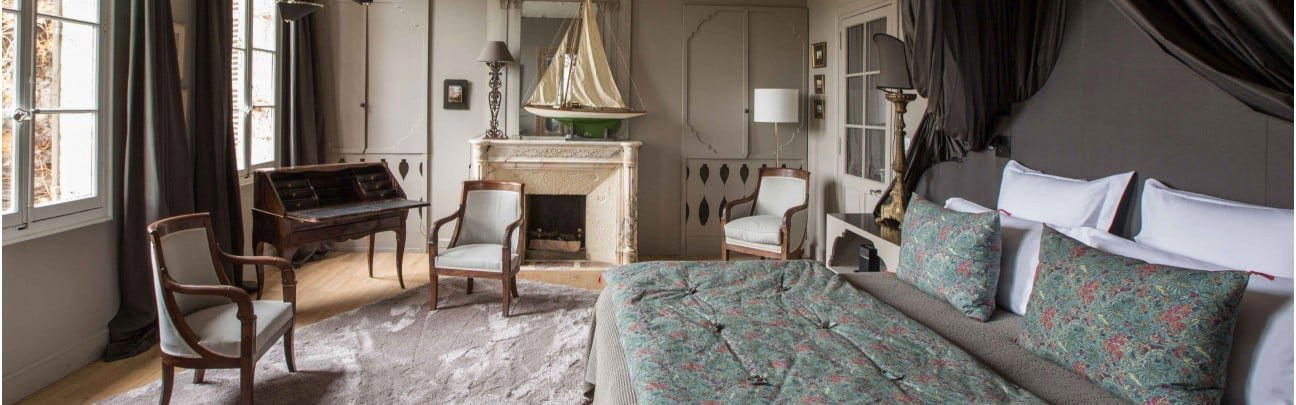
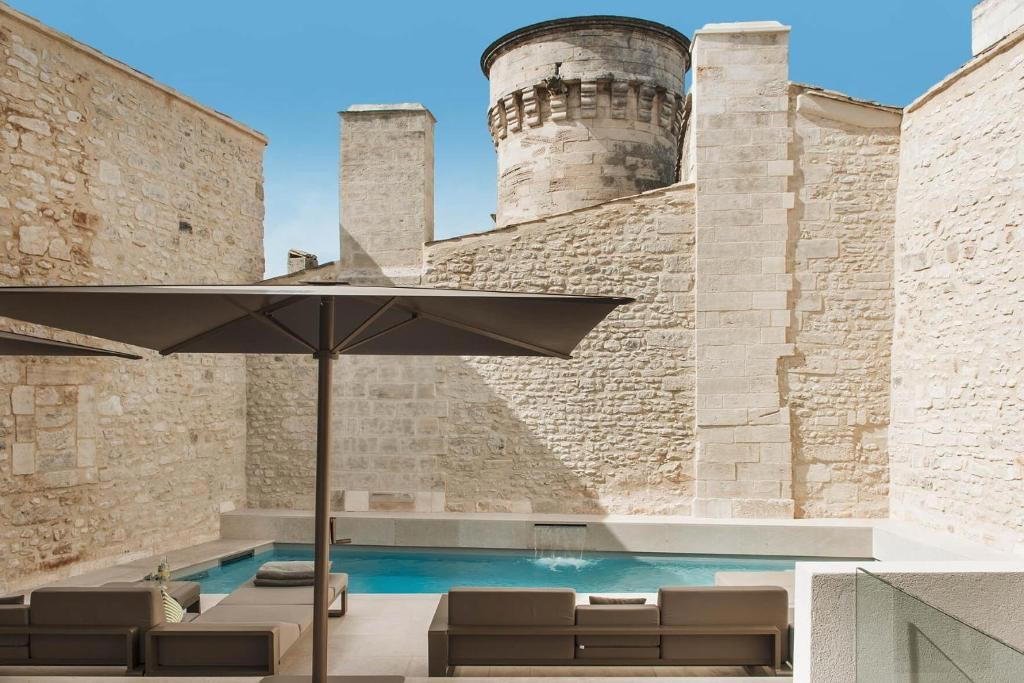
Avignon's intra-muros properties operate under a specific architectural constraint: the medieval street grid tolerates expansion badly, rewards sensitivity to existing fabric, and punishes anything that reads as imposition. The most considered addresses here have responded by going inward, building an identity around enclosed gardens, layered stone interiors, and a relationship with vertical light that open-plan resort hotels simply cannot replicate. La Divine Comédie, on the quiet impasse Jean-Pierre Gras, belongs to this tradition. The alley address is not incidental; it signals a deliberate retreat from Avignon's busy central axes while keeping the Palais des Papes and the Place de l'Horloge within a few minutes on foot.
The physical setting inside the walled city places this property in a different competitive conversation from Provence's out-of-town bastide hotels. Where a property like La Bastide de Gordes in Gordes trades on panoramic hillside drama, or Villa La Coste in Le Puy-Sainte-Réparade situates guests inside a working wine and art estate, La Divine Comédie's proposition is urban and pedestrian: the city itself is the landscape, and the hotel functions as a composed interior from which to engage it.
Design as Argument
The pattern that defines a certain tier of French boutique hotel is the conversion of historically layered buildings into spaces that make the palimpsest visible rather than plastered over. In Avignon, where building stock ranges from Romanesque foundations to 17th-century hôtels particuliers to 19th-century civic additions, that layering is especially rich material to work with. The approach that separates considered properties from simple renovations is restraint: letting thickness of wall, height of ceiling, and quality of stone do the communicative work, rather than filling rooms with decorative assertiveness.
La Divine Comédie occupies that position in the Avignon market. Its Michelin Selected designation in the 2025 guide, awarded through the same editorial process that evaluates properties across France's full range of accommodation categories, signals a standard of physical quality and hospitality coherence that places it above the city's undifferentiated boutique hotel middle. The Michelin hotel selection is not a restaurant star and does not work on the same criteria, but it functions as a meaningful curatorial signal: the inspectors found enough consistency between the property's setting, its physical execution, and the guest experience to include it in a guide that has no commercial incentive to be generous.
This positions La Divine Comédie in the same editorial bracket as La Mirande, the other Michelin-recognized address inside Avignon's walls, and distinguishes it from Mas de Capelou, which operates on the city's periphery with a different spatial logic. The intra-muros Michelin tier is small. That scarcity matters to travellers who want to be inside the medieval city rather than driving into it from a rural property.
The Impasse as Asset
Understanding why La Divine Comédie's address works requires some familiarity with how Avignon's street hierarchy functions. The city's main pedestrian corridors, particularly around the Rue de la République and the approaches to the Palais des Papes, carry significant foot traffic during the summer festival season, when the Festival d'Avignon swells the city to multiples of its resident population. Properties directly on those axes trade convenience for noise and anonymity. An impasse, by definition a dead end, filters that traffic almost entirely. The result is a quietness that is structural, not acoustic: visitors who arrive at the hotel's entrance have intended to arrive there, which changes the texture of the immediate surroundings in ways that no amount of double glazing can replicate.
This is a recognizable pattern in French urban hospitality. Some of the most coherent small hotels in cities like Lyon, Bordeaux, and Aix-en-Provence occupy similar side-street or courtyard addresses for exactly this reason. The impasse is not a drawback requiring apology; it is part of the design logic, as deliberate as the choice of stone or the height of a threshold.
Where This Fits in Wider Provence and French Luxury
The broader Provence and Côte d'Azur premium hotel category has consolidated significantly around a handful of distinctive formats. On the coast, large-footprint resort properties dominate the highest price brackets: Hotel Du Cap-Eden-Roc in Cap d'Antibes, The Maybourne Riviera in Roquebrune-Cap-Martin, and La Réserve Ramatuelle all operate at a scale and price point that is categorically different from an intra-muros Avignon boutique. Inland, the bastide and château format provides a third option, with properties like Baumanière Les Baux-de-Provence in Les Baux holding long-established positions at the premium end. La Divine Comédie operates in none of these formats. It is a city hotel, and its proposition is specifically urban: proximity to monuments, restaurants, and the cultural infrastructure of a working French city, in a physically considered space that does not require a car to engage with.
That positioning has parallels elsewhere in France. Domaine Les Crayères in Reims and Royal Champagne Hotel & Spa in Champillon each serve as reference points for how a regionally rooted property can hold editorial weight without competing on resort scale. At the highest end of the urban French tier, Le Bristol Paris and Hôtel du Palais in Biarritz anchor what palace-grade city hospitality looks like. La Divine Comédie sits considerably below that in price and scale, but the underlying logic of the urban hotel as cultural access point is shared.
Planning a Stay
Avignon's dual calendar shapes when this hotel is most in demand. The Festival d'Avignon runs through most of July, concentrating cultural tourism into a single dense month; booking lead times for any intra-muros property during that period extend considerably further than the rest of the year. Outside festival season, the city's quieter spring and autumn months offer the most comfortable conditions for exploring the Palais des Papes, the Pont Saint-Bénézet, and the surrounding Vaucluse villages without the summer compression. The property's location on impasse Jean-Pierre Gras (address: 16 impasse Jean-Pierre Gras, Avignon) is walkable from the TGV station, which connects to Paris Gare de Lyon in roughly two and a half hours and to Marseille in under an hour, making La Divine Comédie accessible without requiring a hire car on arrival. For further context on eating and staying in the city, see our full Avignon guide.
In Context: Similar Options
Comparable venues nearby, for context on price, style, and recognition.
| Venue | Cuisine | Price | Awards | Notes |
|---|---|---|---|---|
| La Divine ComédieThis venue — the venue you are viewing | Restored historic Provençal mansion blending art and history | $300–500 | Michelin Selected · Vogue 2026 Vogue Best Hotels in Provence | Not listed |
| Mas de Capelou | Historic Provençal farmhouse converted into a contemporary boutique accommodation while retaining period architecture and aesthetics. | Not listed | Michelin Selected | Barthelasse |
| La Mirande | 18th-century Provençal mansion converted to luxury boutique hotel | Not listed | 2 Michelin Keys · La Liste Top Hotels | Avignon City Center |
| Orion Treehouses | Ecological treehouse B&B retreat | Not listed | Michelin Selected | Saint-Paul-de-Vence |
| Le Pavillon de Galon | Restored 18th-century hunting pavilion with contemporary comforts | $300–500 | Michelin Selected | Cucuron |
| Banke Opéra Paris – A Radisson Collection Hotel | Luxury lifestyle heritage hotel in a converted early-20th-century bank building near Opéra Garnier. | Not listed | Not listed | 9th arrondissement (Opéra/La Fayette) |
Recognition history
Dated appearances from independent guides and award organizations, with the underlying list record or original source where available.
Michelin Selected
Michelin
Mr & Mrs Smith Seal of Approval
Mr & Mrs Smith
Vogue 2026 Vogue Best Hotels in Provence
Vogue
Continue exploring
More in Avignon
Hotels in Avignon
Browse all →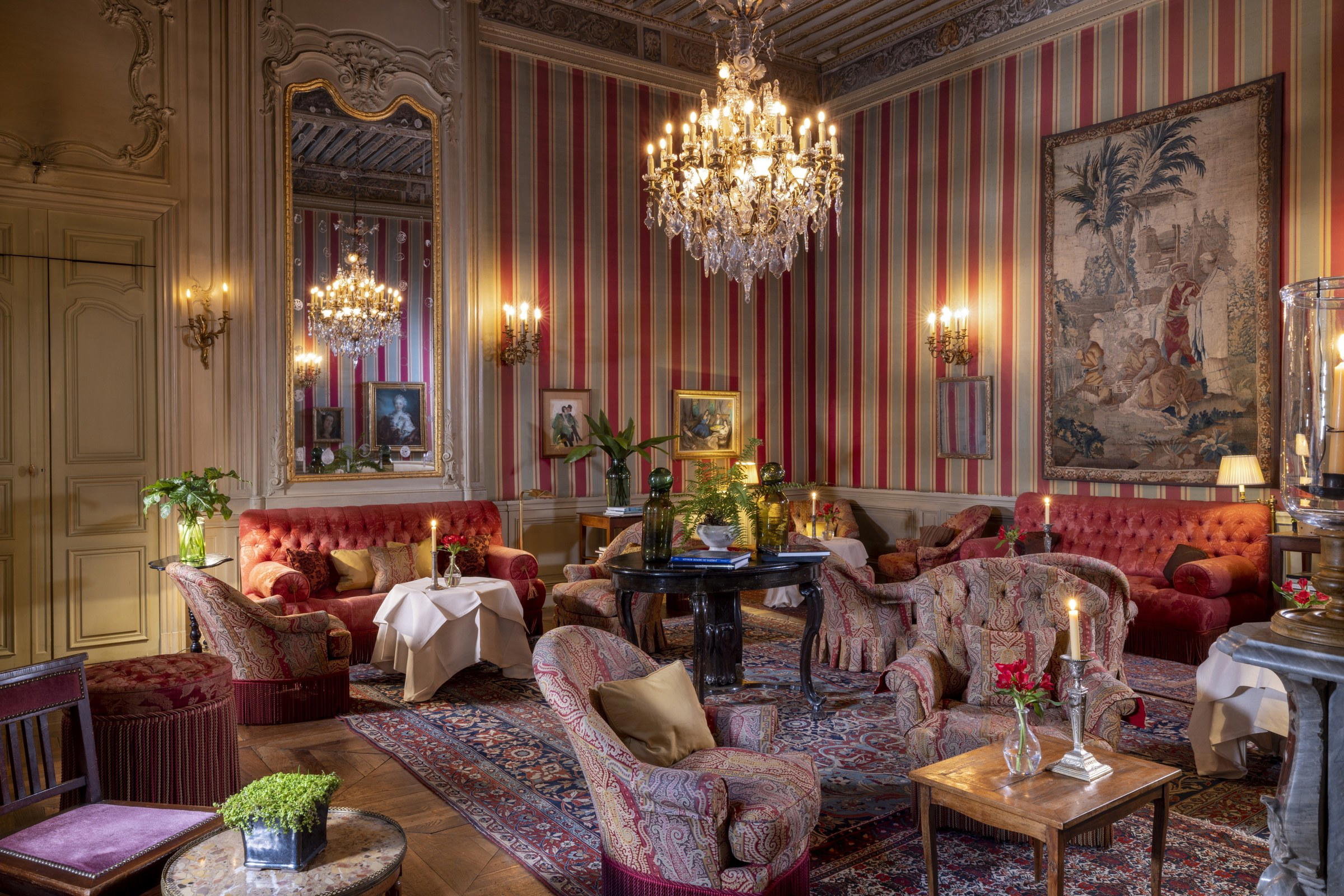
Bars in Avignon
Browse all →
Restaurants in Avignon
Browse all →
Details
- Romantic
- Elegant
- Classic
- Intimate
- Cozy
- Sophisticated
- Romantic Getaway
- Anniversary
- Weekend Escape
- Garden
- Historic Building
- Wi Fi
- Pool
- Spa
- Air Conditioning
- Garden
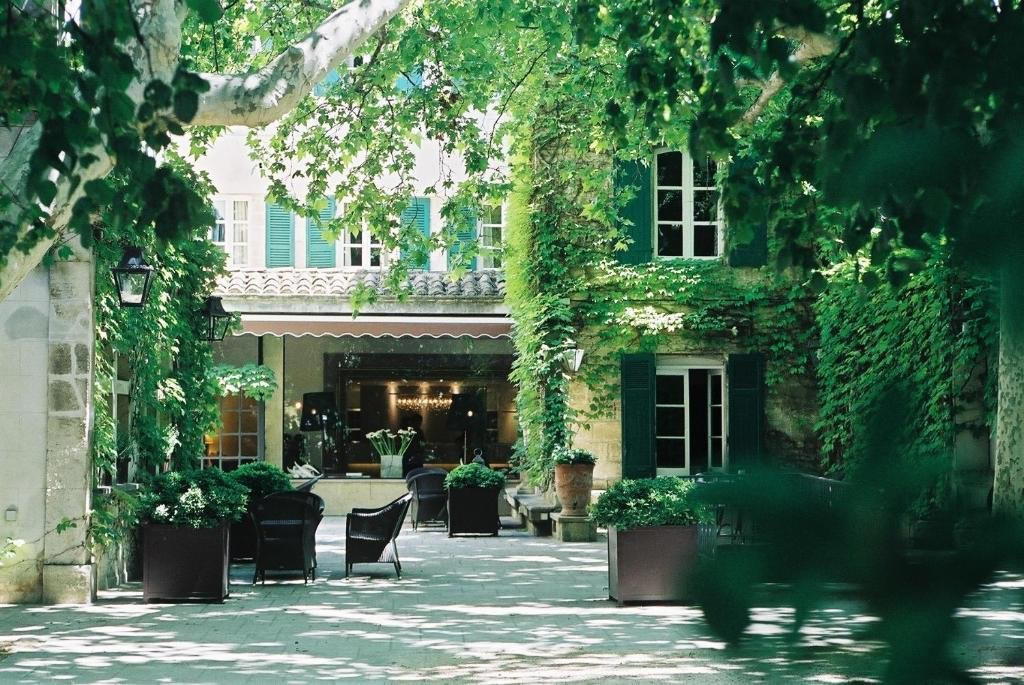
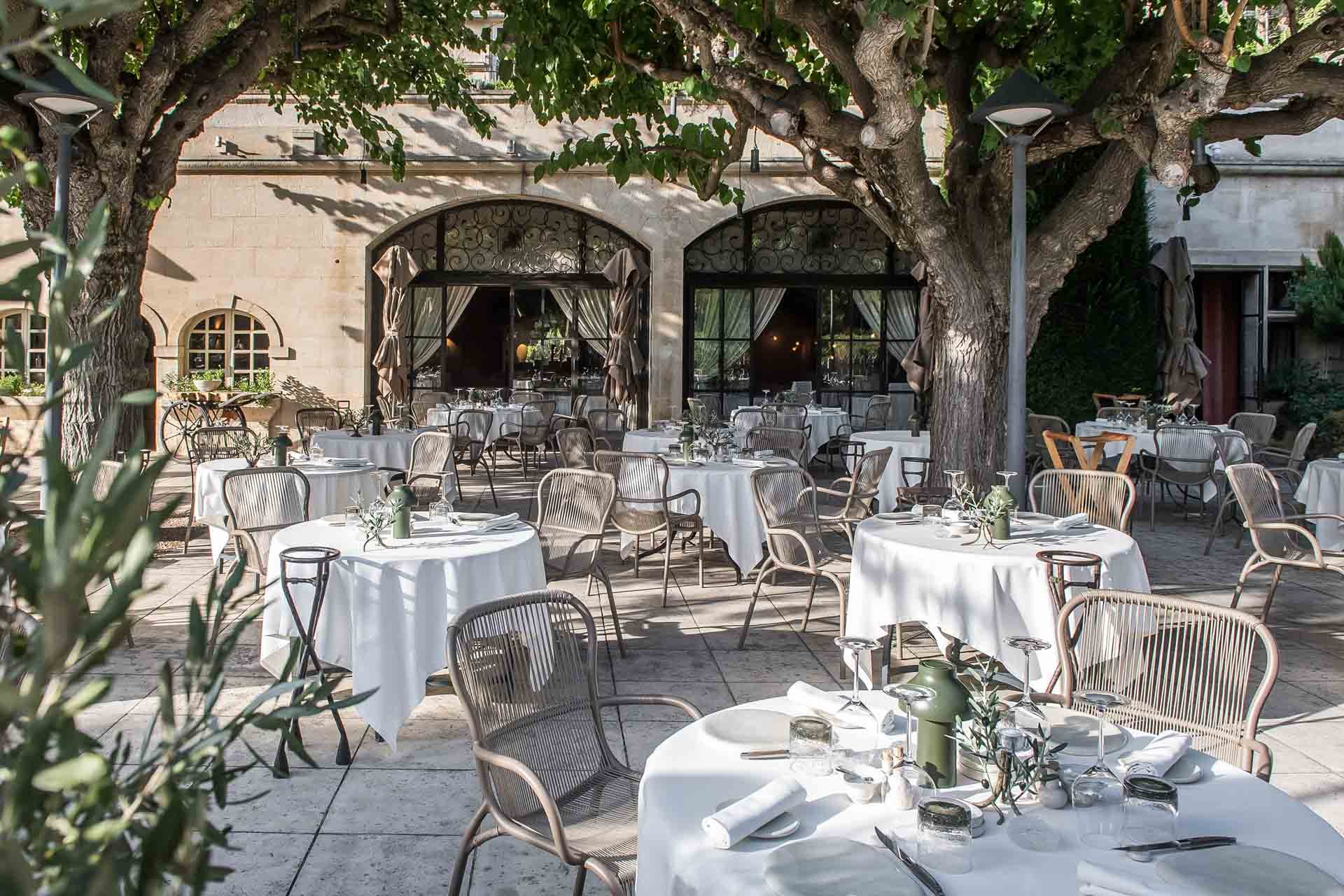
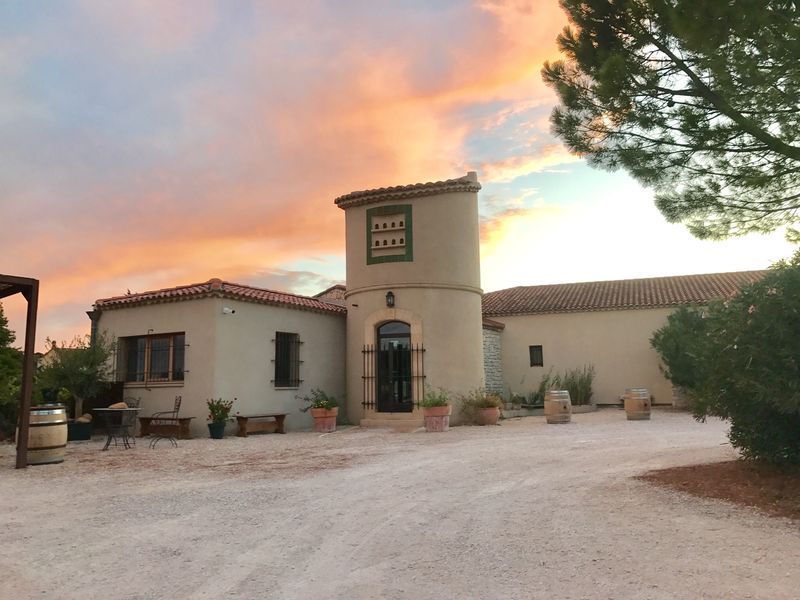
Antique-filled with eclectic baroque to modern styles, cool steely grey hues, modern bathrooms, and serene garden atmosphere evoking timeless Provençal luxury.