
A Michelin Selected hotel occupying a fortified castle above the Cap Corse village of Erbalunga, Castel Brando translates medieval Corsican architecture into an unhurried Mediterranean retreat. The setting, stone ramparts, sea views, and the pace of a village that sees few tourists, positions it firmly in the tradition of character-led French heritage hotels rather than the polished-resort circuit.
Pearl is the En Primeur Club membership app — saves, bookings, and concierge access live there. Same editors, same standards.
- Address
- Erbalunga, Route du Cap Lieu-dit, 20222 Brando, France
- Phone
- +33 4 95 30 10 30
- Website
- castelbrando.com
- Directions
- Get directions
 Saves & bookings on Pearl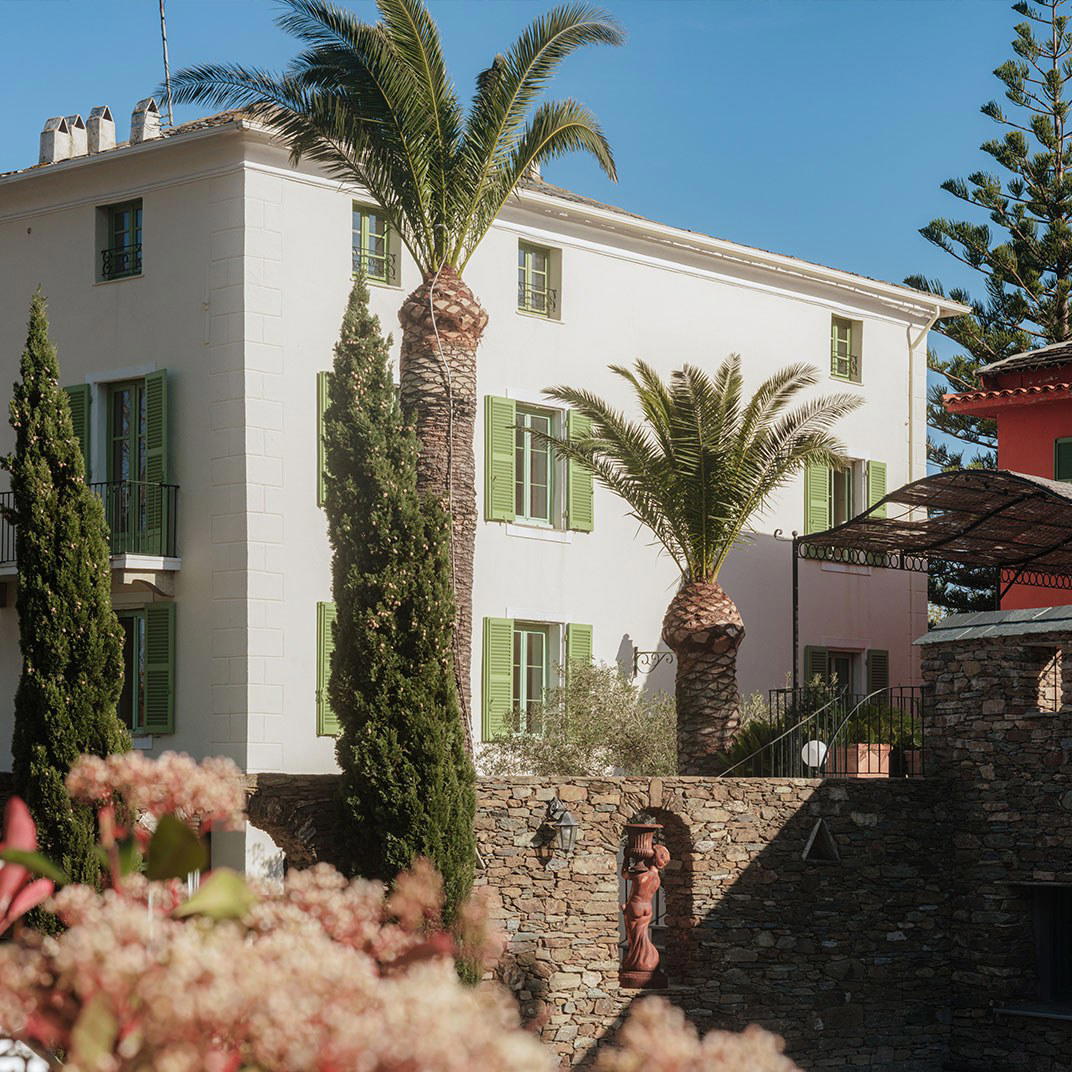
A Castle Above the Cape
The northern tip of Corsica, Cap Corse, operates at a different register from the island's more trafficked southern coast. The villages here are smaller, the roads narrower, and the relationship between built environment and landscape more immediate. Erbalunga, a fishing hamlet a few kilometres north of Bastia, sits at the base of a promontory where a Genoese watchtower still marks the shoreline. Castel Brando occupies a fortified castle above this scene, and the approach tells you immediately what kind of property this is: old stone, serious scale, and a silhouette shaped by centuries of defensive purpose rather than hospitality design. The hotel has 37 rooms and a 4-star rating.
Among Michelin Selected hotels in France, the category spans everything from Haussmann-era Parisian palaces to converted Provençal farmhouses. What distinguishes the heritage-castle tier is precisely this physical specificity, the sense that the building preceded any notion of welcoming guests, and that hospitality has been carefully introduced into spaces with their own prior logic. Castel Brando belongs to that subset. Compare it to the Riviera's design-led contemporaries, such as The Maybourne Riviera in Roquebrune-Cap-Martin or La Réserve Ramatuelle, and the difference in architectural proposition becomes clear: those properties were designed as hotels; this one was not.
Architecture as the Central Argument
Corsica's building vernacular draws heavily on Genoese influence, the island was a Genoese possession for several centuries, and that lineage shows in the thick-walled, tower-punctuated construction that defines Cap Corse's historic settlements. Castel Brando's structure carries those markers: the massing is defensive, the stonework is local, and the proportions are dictated by fortification logic rather than by any desire to maximise views or create panoramic living spaces. This is not a limitation; it is the point. Interiors shaped by defensive necessity have a particular quality of enclosure and weight that contemporary hotel construction cannot reproduce.
The property sits within the Route du Cap corridor, the road that traces the peninsula's coast and connects a series of villages whose character has been preserved partly by the relative difficulty of access. This insularity has worked in Castel Brando's favour architecturally: development pressure in the area has not produced the kind of glass-and-concrete intrusions that have diluted the character of more accessible Mediterranean destinations. The castle reads as a coherent piece of its environment rather than an imposition on it.
That coherence places the hotel in a specific competitive set within the Michelin Selected France portfolio. It is not comparable to Le Bristol Paris or Hôtel du Palais in Biarritz, both of which have been continuously operated as grand hotels and refined accordingly. It is closer in spirit to properties like Château du Grand-Lucé or Baumanière Les Baux-de-Provence, where the primary guest experience is shaped by the architecture and site, and the hospitality layer exists in service of that rather than the reverse.
The Cap Corse Context
Understanding what the hotel offers requires understanding Cap Corse as a travel proposition. The peninsula is Corsica's least developed major zone, a narrow spine of mountains running roughly thirty-five kilometres north of Bastia with coastal villages on both the eastern and western flanks. Tourism here is lower-volume than in Porto-Vecchio or Ajaccio, and the accommodation options are correspondingly fewer and more varied in character. There is no resort strip, no yacht-club concentration, no international hotel-brand footprint. What exists instead is a collection of smaller properties, village guesthouses, and, in Erbalunga, a castle that has been receiving guests for decades.
For travellers calibrated to the Michelin Selected tier who might otherwise gravitate toward Corsica's more polished south, properties like Casadelmar in Porto-Vecchio represent one kind of island luxury: design-led, marina-adjacent, internationally positioned. The hotel represents the alternative logic, location over amenity density, architectural character over interior refinement, village integration over resort separation.
The Michelin Selected designation signals that the property meets a threshold of quality and character worth recommending to a informed traveller, even if it does not aspire to the full-service model of a starred hotel. Within France's broader Michelin hotel selection, which includes properties ranging from Royal Champagne Hotel & Spa in Champillon to Domaine Les Crayères in Reims, the selection framework rewards properties with genuine identity, and a fortified Genoese castle above a fishing harbour has that in unambiguous terms.
Placing It in France's Heritage Hotel Tradition
France has a long and reasonably well-defined tradition of château and castle conversions, ranging from Loire Valley properties built for aristocratic display to smaller fortified structures like this one that were never about grandeur but about control of territory and coastline. The hospitality conversion of these buildings has evolved considerably since the 1970s and 1980s, when the dominant approach involved heavy formal interiors that often fought against the architecture. More recent conversions, including properties like Château de la Chèvre d'Or in Èze and La Bastide de Gordes, have tended toward a more restrained reading that allows the structure to carry the primary aesthetic weight.
The question with any heritage-castle conversion is always how much the hospitality infrastructure has been allowed to compromise the architectural integrity. For properties on Cap Corse, the constraints of the site, the supply-chain realities of operating on an island with limited construction resources, and the relatively contained tourism economy have historically limited the scale of intervention. That limitation has often served the architecture better than ambition would have.
Planning Your Stay
The hotel is located in Erbalunga on the Route du Cap, approximately ten kilometres north of Bastia and its airport, which receives direct flights from several French and European cities, particularly during the summer months when Cap Corse is at its most accessible. The Cap Corse season runs roughly from late spring through early autumn, with August representing the peak of both visitor numbers and temperatures. Arriving in late May, June, or September gives the region in a more open and less crowded state, and the architecture reads particularly well in the lower-angle light of shoulder-season afternoons.
Travellers building a broader French itinerary around this kind of architecturally-led property might also consider Hôtel Chais Monnet & Spa in Cognac for its conversion of historic distillery buildings, Villa La Coste in Le Puy-Sainte-Réparade for contemporary architectural ambition in a landscape setting, or Les Sources de Caudalie in Bordeaux for estate-based hospitality with a strong sense of place. Each represents a different answer to the same underlying question that hotel poses in Corsica: what does it mean to build a hotel experience around a location and a structure rather than around a service formula?
Side-by-Side Snapshot
Comparable venues nearby, for context on price, style, and recognition.
| Venue | Cuisine | Price | Awards | Notes |
|---|---|---|---|---|
| Castel BrandoThis venue — the venue you are viewing | Charming seaside patrician mansion with timeless elegance. | $$$ | 4-Star | Not listed |
| La Colonie Maison d'Hôtes | Renovated historic guesthouse with traditional French countryside aesthetics and comfortable elegance. | $$$ | 4-Star | Collonges |
| Solly Hotel Paris | Boutique hotel in historic Art Deco building with modern updates | $$$ | 4-Star | Le Marais |
| Les Dromonts | Well-known 1960s alpine architecture with fan-shaped pine-cone design. | $$$$ | 4-Star | heart of Avoriaz |
| Le Pic Blanc | Modern chalet-style ski resort hotel | $$$ | 4-Star | Les Bergers |
| nhow Marseille | Contemporary design hotel blending international architecture with Provençal coastal vibes. | $$$ | 4-Star | La Corniche |
Recognition history
Dated appearances from independent guides and award organizations, with the underlying list record or original source where available.
Michelin Selected
Michelin
Continue exploring
More in Brando
Hotels in Brando
Browse all →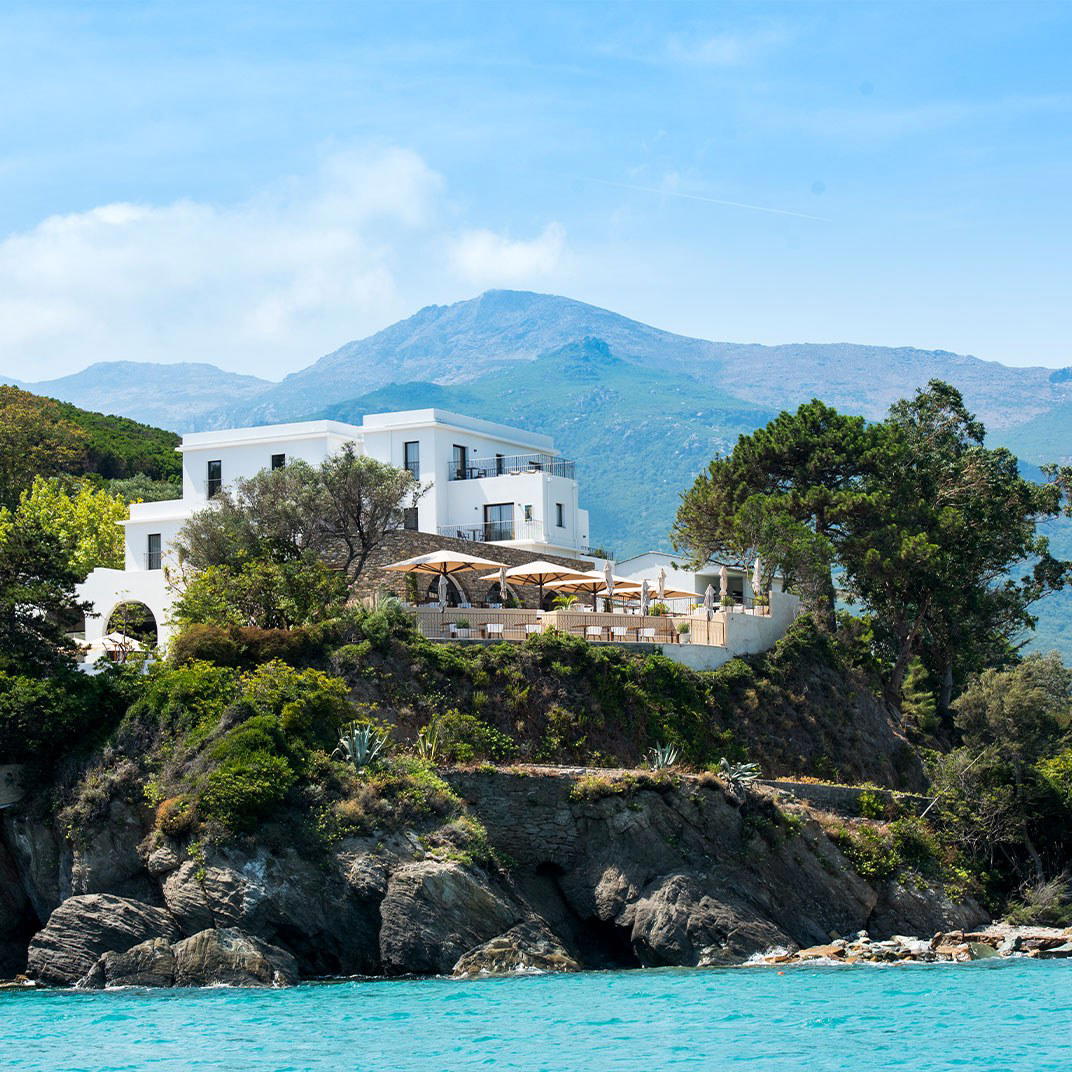
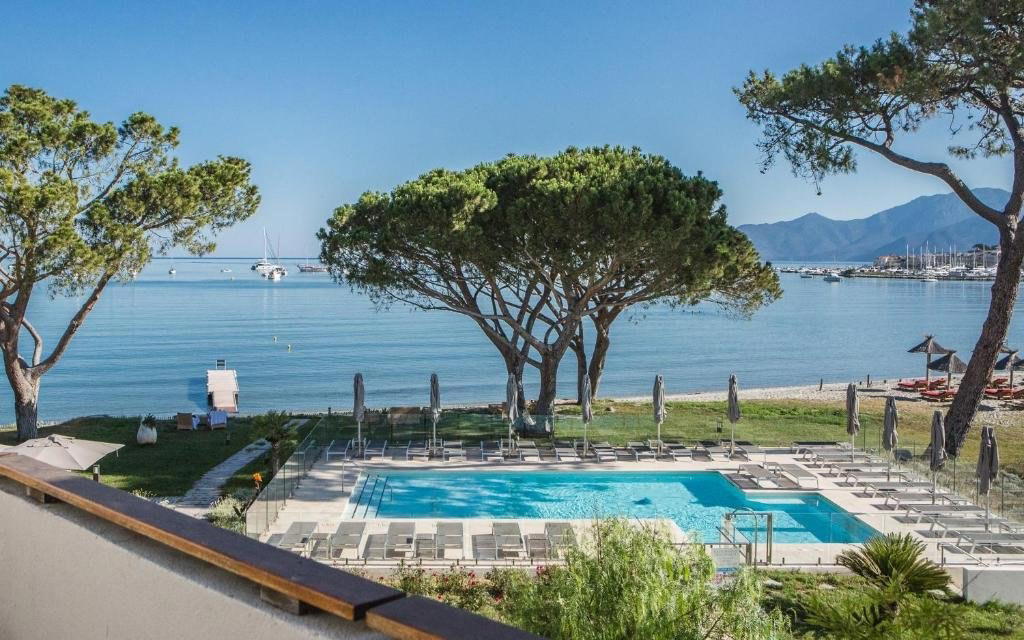
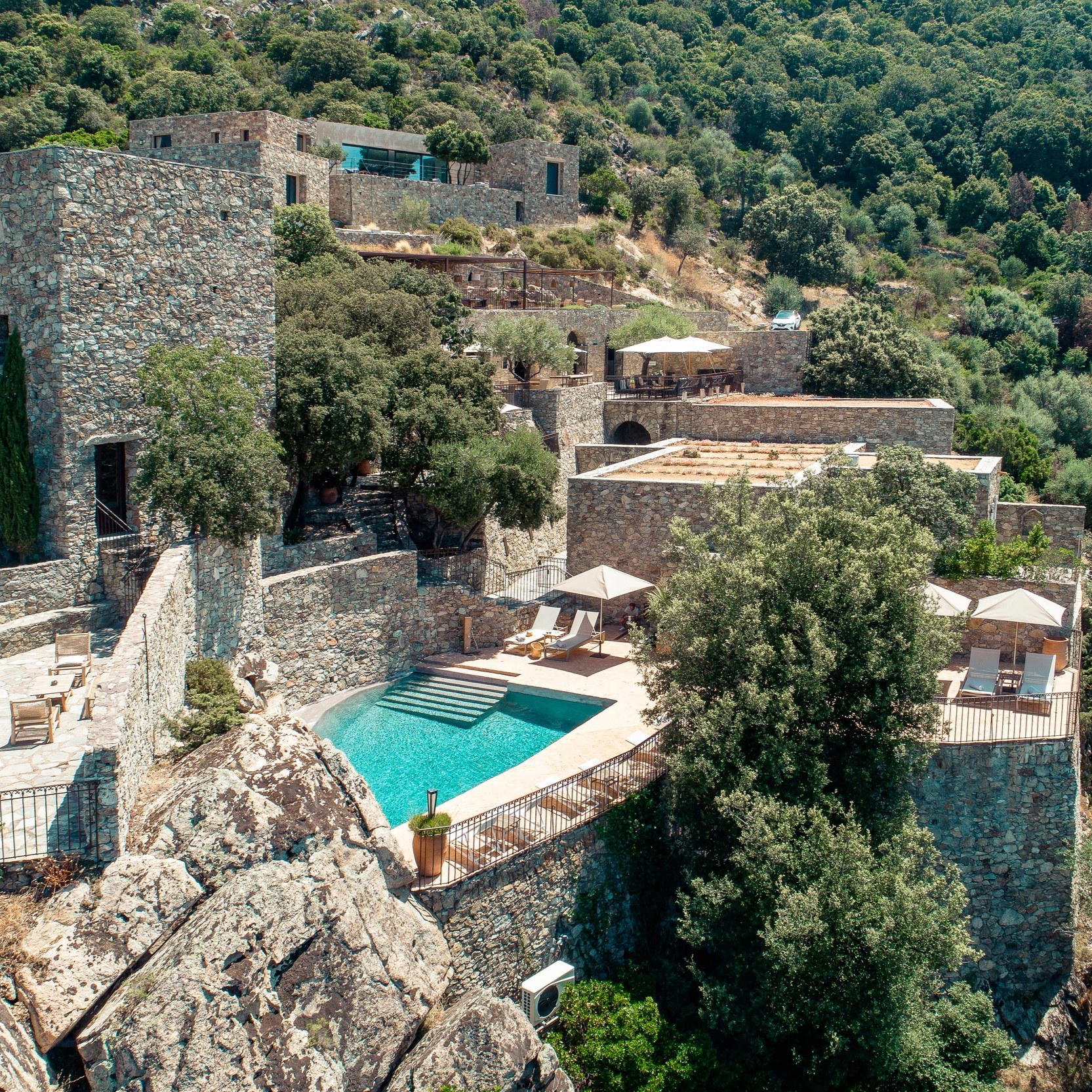
Restaurants in Brando
Browse all →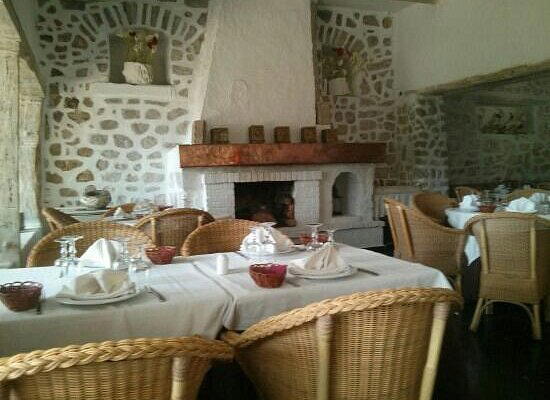
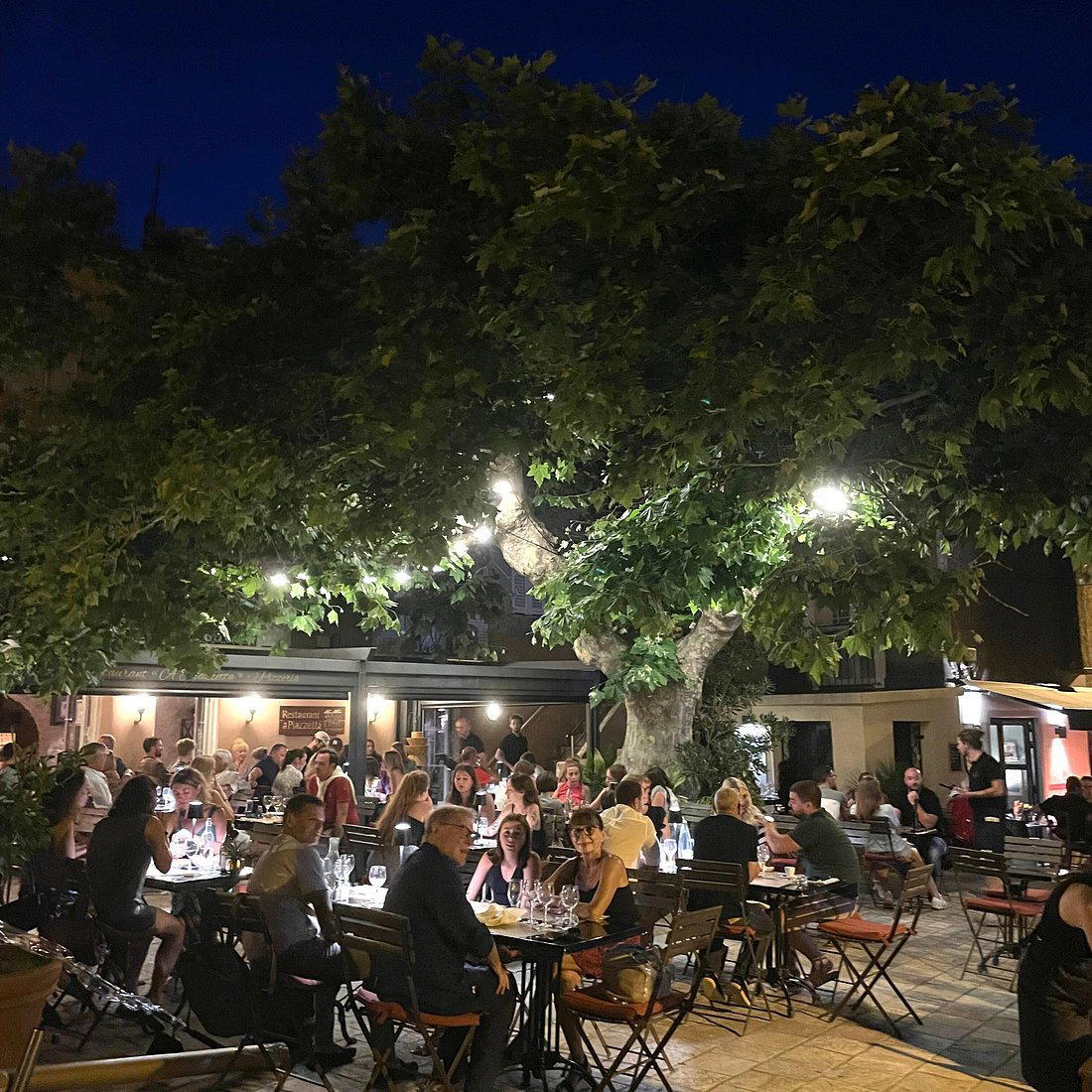

Wineries in Brando
Browse all →
At a Glance
- Romantic
- Elegant
- Scenic
- Classic
- Intimate
- Romantic Getaway
- Wellness Retreat
- Weekend Escape
- Panoramic View
- Terrace
- Historic Building
- Garden
- Wi Fi
- Pool
- Spa
- Restaurant
- Room Service
- Waterfront
- Garden
- Mountain
- Wi Fi
- Pool
- Spa
- Restaurant
- Room Service
Timeless and serene atmosphere with warm Mediterranean lighting, evoking peace and comfort amid palm trees and sea panoramas.