
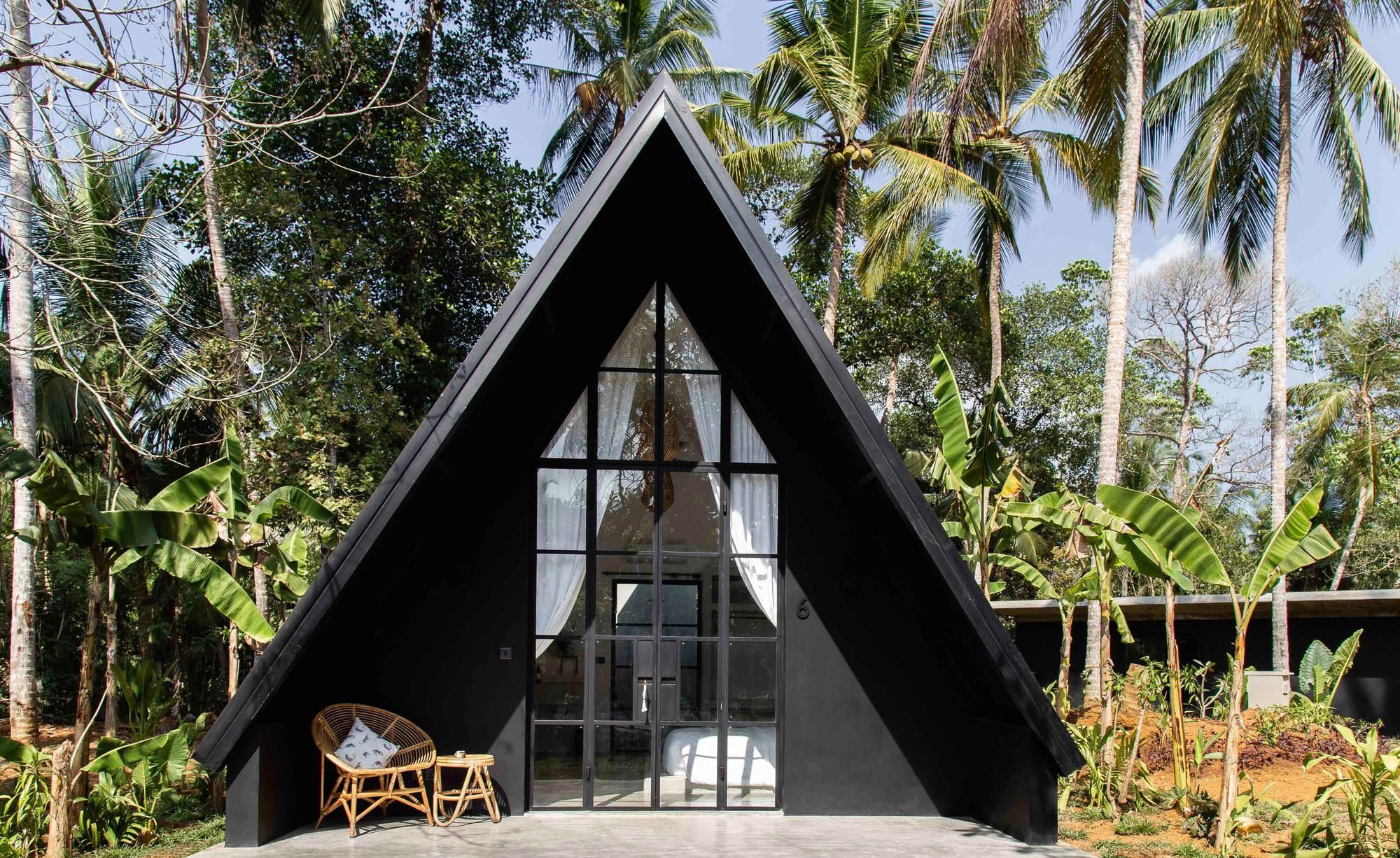
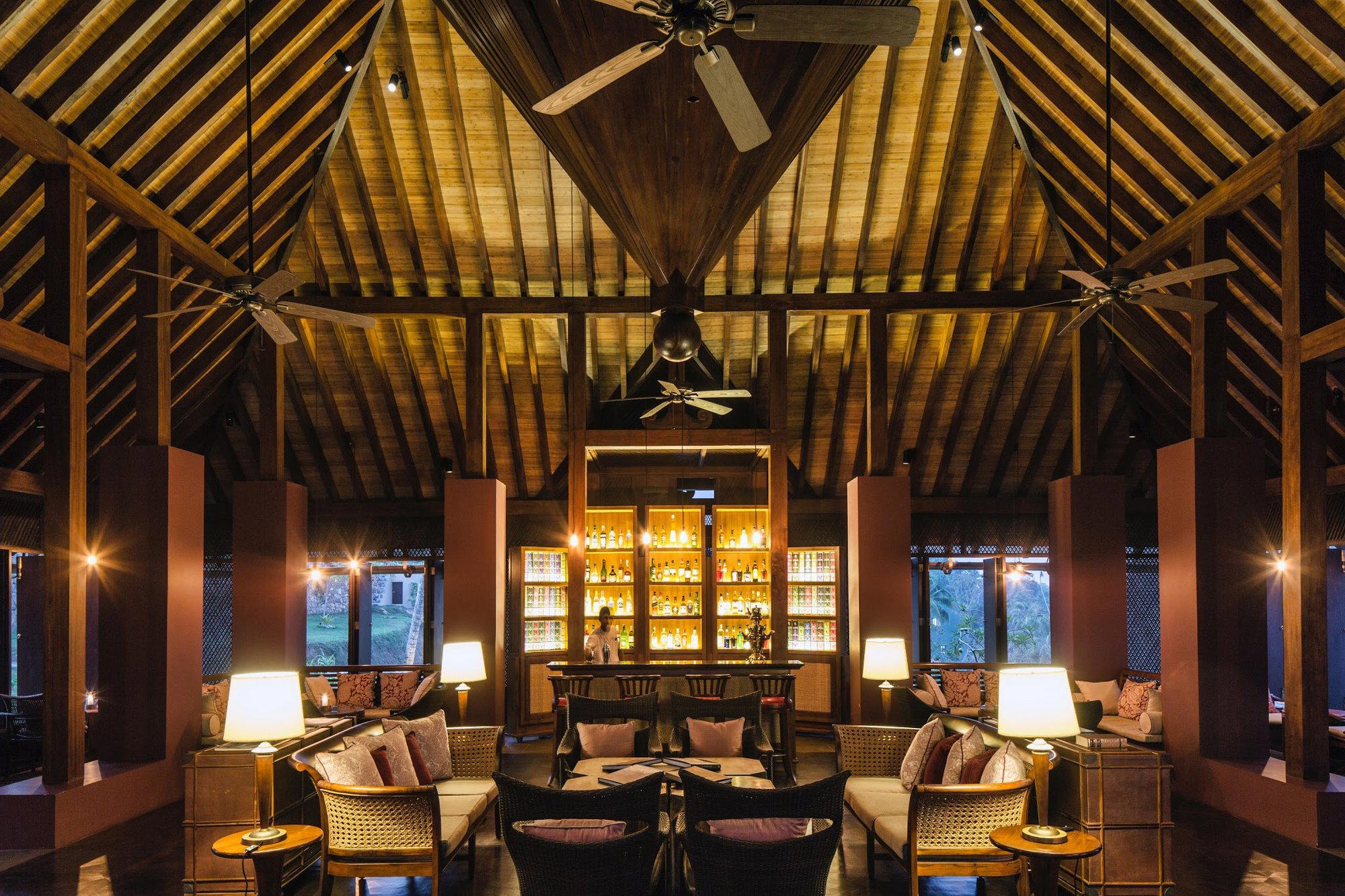
Kurulu Bay occupies the shores of Koggala Lake in Ahangama, built around the Kurulu House, a residence designed by Sri Lankan architect Channa Daswatte. Fourteen suites and treehouses extend through adjacent bird sanctuary forest in a tropical modernist idiom, with an open-air dining kitchen overlooking the lake and a spa combining Eastern and Western therapies.
Pearl is the En Primeur Club membership app — saves, bookings, and concierge access live there. Same editors, same standards.
- Address
- Gurunkanda, Kathaluwa, Ahangama
- Phone
- +94 76 095 0090
- Website
- kurulubay.com
- Directions
- Get directions
 Saves & bookings on Pearl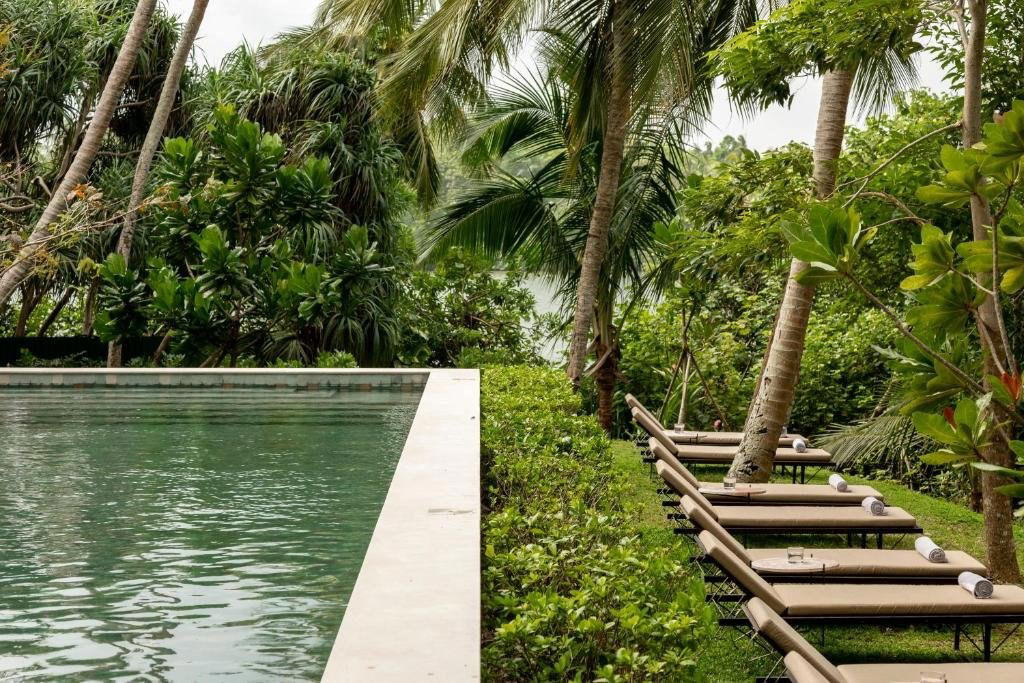
Where the Lake Defines Everything
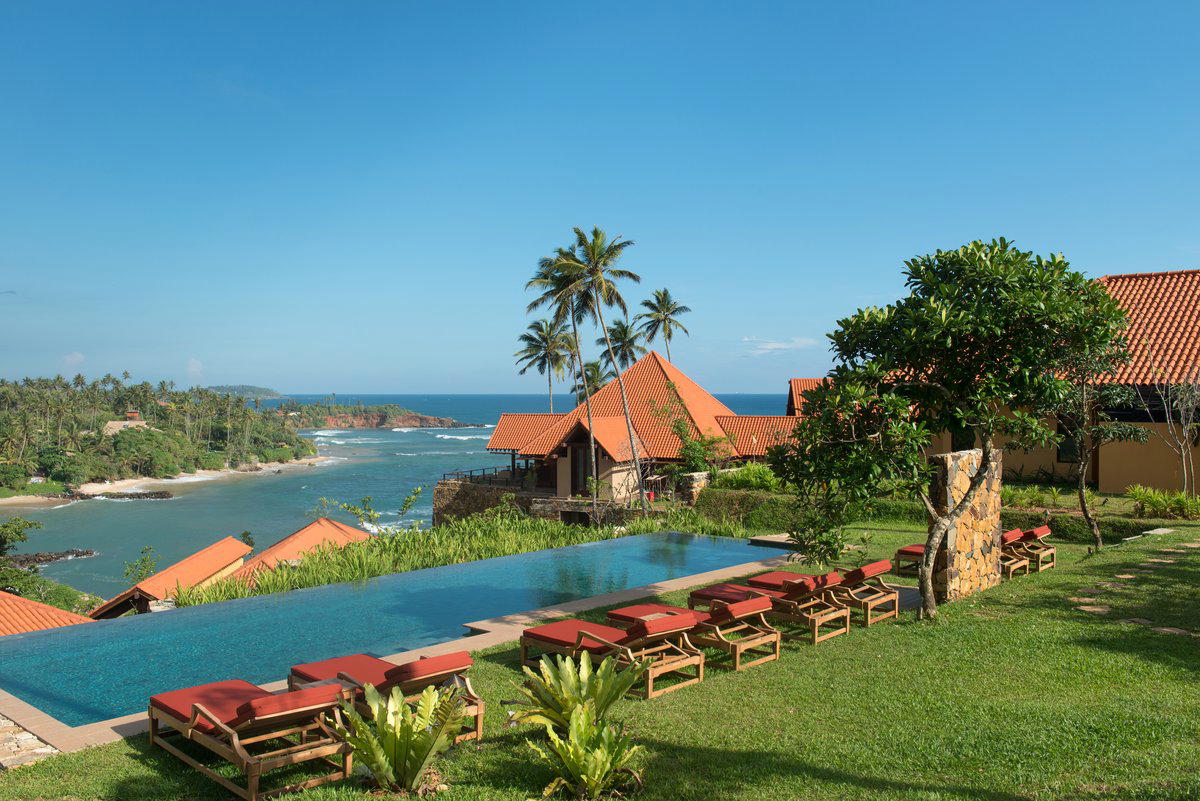
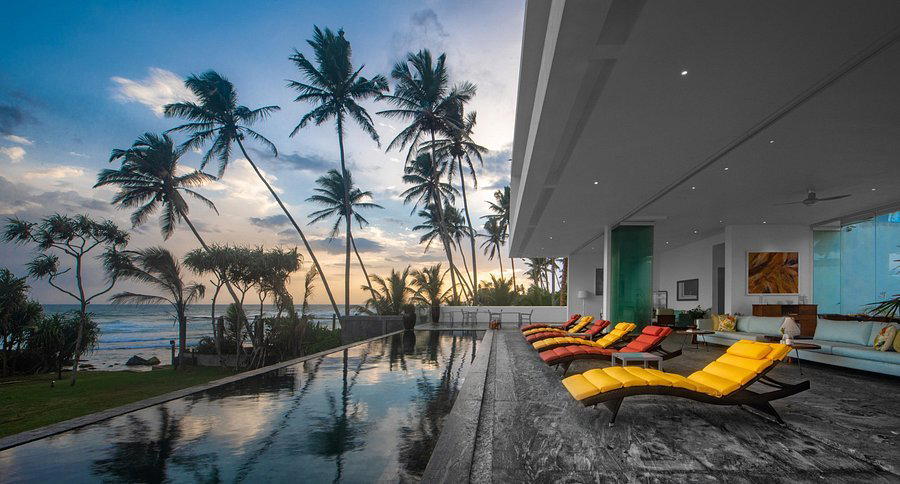
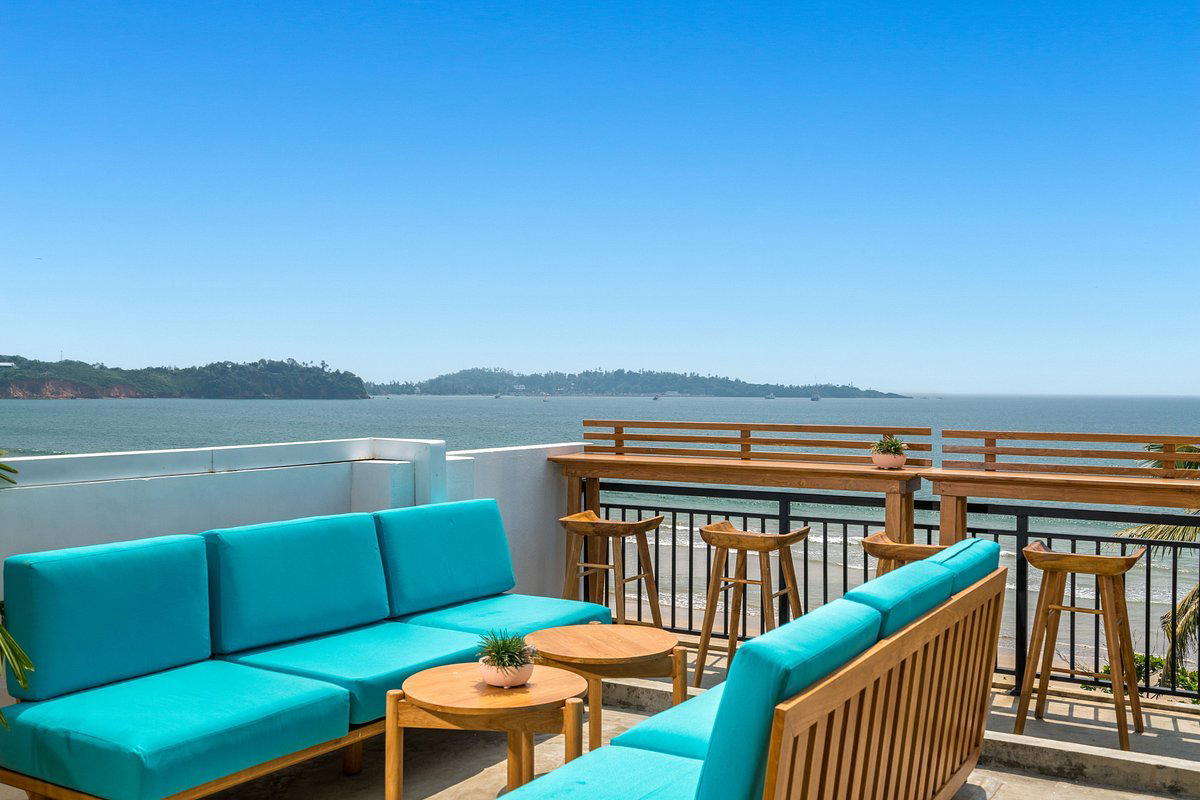
The south coast of Sri Lanka has developed a recognisable hospitality grammar over the past decade: sea-facing terraces, white-washed walls, and surf-adjacent positioning. Kurulu Bay is a 5-star hotel in Ahangama, with 14 rooms, a Michelin Key and a nightly rate of about $226. Set on the shores of Koggala Lake, a large and ecologically significant lagoon running parallel to the coastline just inland from Ahangama Beach, the property organises itself around water that moves slowly, bird calls rather than wave sets, and a density of forest that makes the surrounding national bird sanctuary feel less like an amenity and more like the actual context of the place.
Arriving at Gurunkanda, Kathaluwa, the shift from coastal road to lakeside setting happens quickly. The vegetation thickens, the light changes quality, and the architecture that emerges from it belongs to a different tradition than most properties in this coastal corridor.
Channa Daswatte and the Tropical Modernist Inheritance
The design conversation on Sri Lanka's south coast tends to cluster around a handful of recurring influences: Geoffrey Bawa's legacy, colonial-era plantation aesthetics, and the broader vernacular of open-plan tropical living. Kurulu Bay enters that conversation through Channa Daswatte, a Sri Lankan architect with a significant position in the country's contemporary design culture and a direct professional connection to Bawa's office. The Kurulu House, which forms the architectural and social core of the property, was built as a private residence to Daswatte's design, and the hotel has grown outward from it.
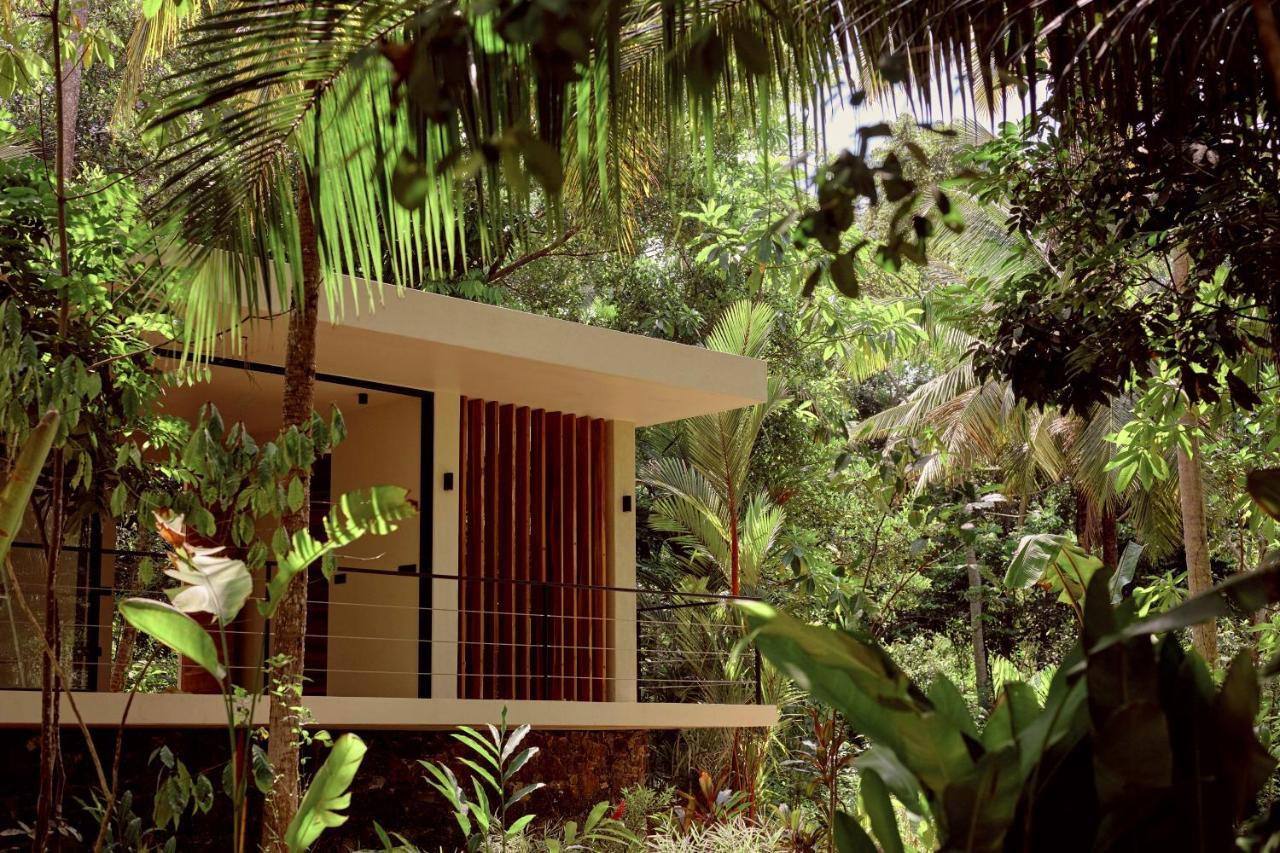
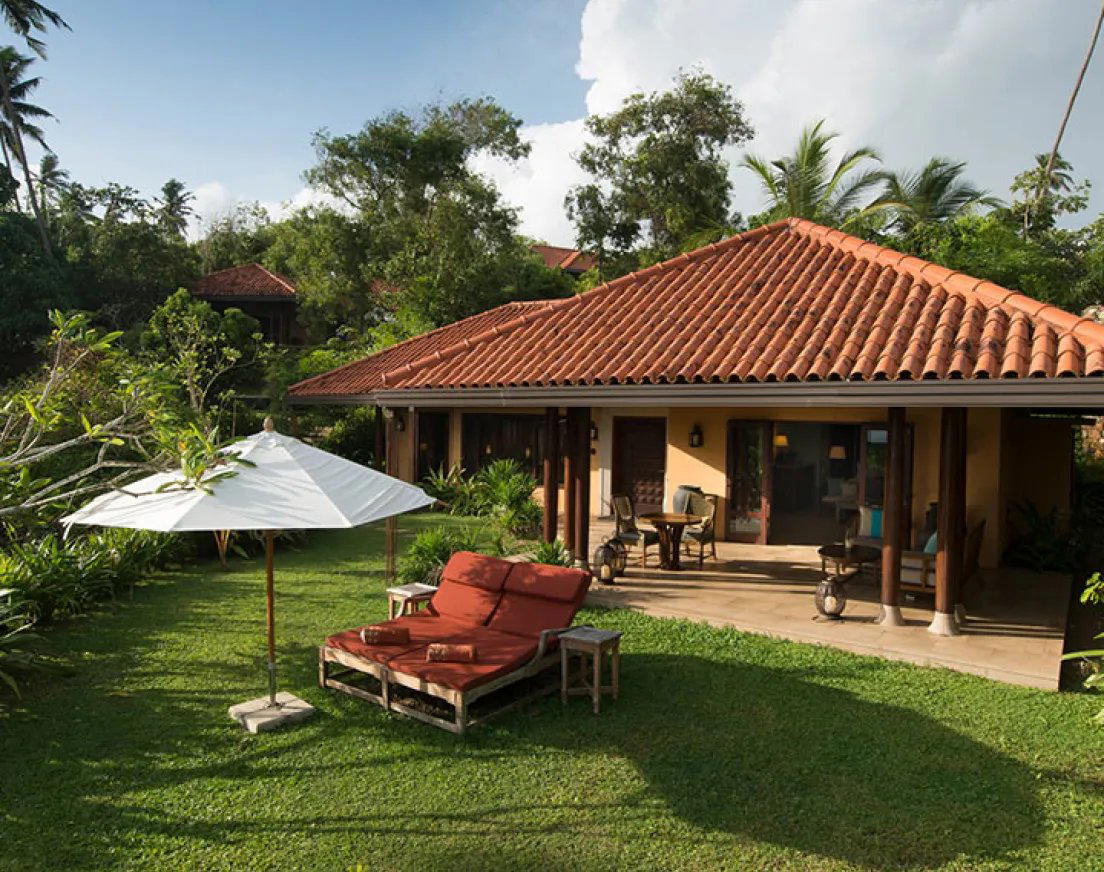
What distinguishes Daswatte's approach at this scale is the discipline of restraint. Tropical modernism at its weakest becomes a catalogue of borrowed gestures: infinity edges, teak decking, and louvred shutters assembled without spatial logic. At Kurulu Bay, the Kurulu House functions as a genuine anchor, and the 14 suites and cottages that spread through the surrounding landscape follow its formal logic rather than departing from it. The result is a property that reads as a coherent whole rather than a collection of accommodation units.
The room typology ranges from garden-facing suites to raised treehouse structures, the latter placing guests above the forest floor with views into the canopy rather than across it. This vertical positioning is a relatively rare move in Sri Lankan eco-resort design, where the tendency is to keep structures low and horizontal. For travellers comparing options along this stretch, PALM Hotel Sri Lanka and Cape Weligama in Weligama occupy different positions in the same regional market. The hotel's distinction is the lakeside forest setting and the coherence of its architectural provenance.
The Ecology as Programme
Eco-resort is a designation that has suffered from overuse, applied to properties that offer little more than bamboo straws and a recycling bin. The context at the hotel is more literal. Koggala Lake is not an ornamental feature: it is a large natural lagoon with documented ecological significance, flanked by a bird sanctuary and bordered by areas of dense riparian forest. The property's 14 rooms sit within that environment rather than beside it, and the physical design, with its open structures and integration into the treeline, reflects that positioning.
The spa draws on both Eastern and Western therapeutic traditions, a common framework on this coast but one that makes particular sense in a setting where the surrounding environment already provides a natural counterpoint to the more procedural aspects of wellness programming. Yoga sessions take place in an refined, open-walled pavilion surrounded by frangipani canopy, which is a specific spatial decision: the room is defined by what surrounds it rather than by walls and ceiling.
The Kitchen and the Lake View
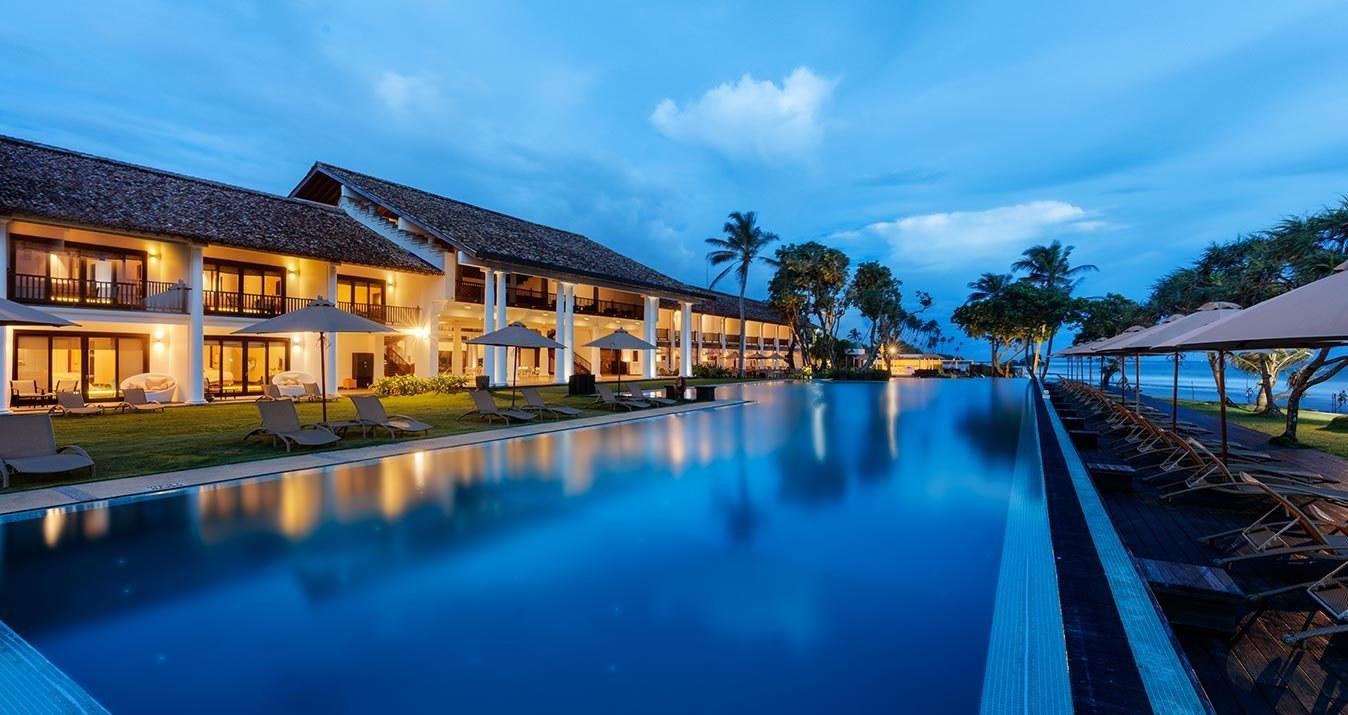
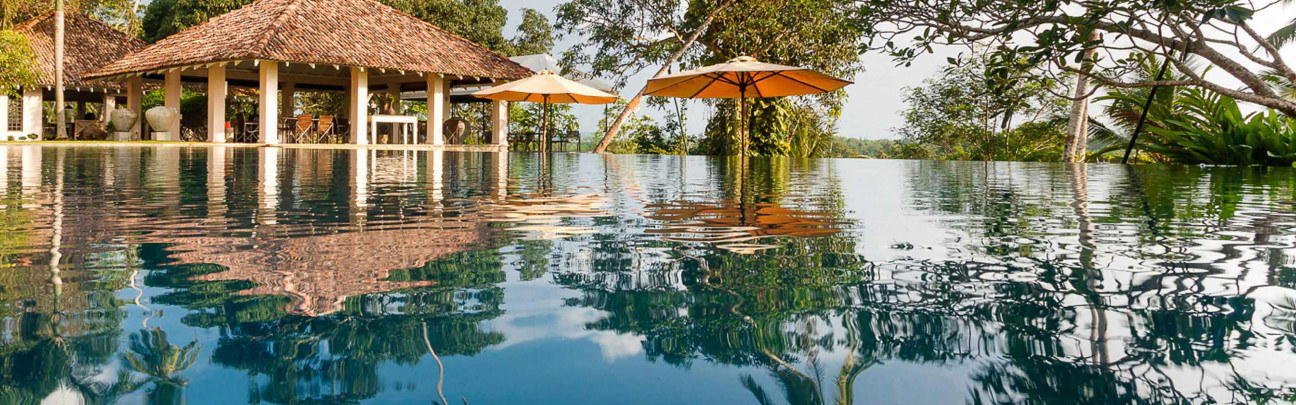
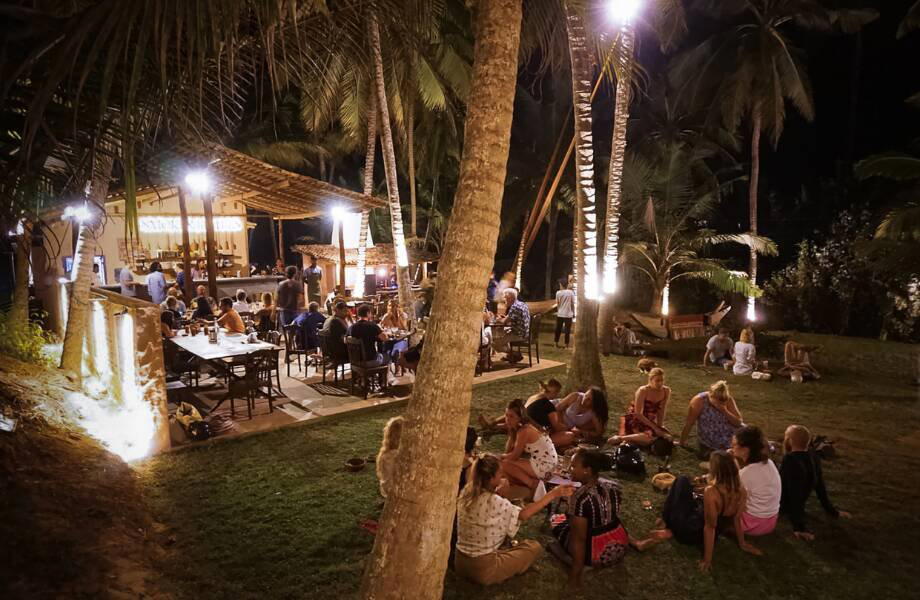
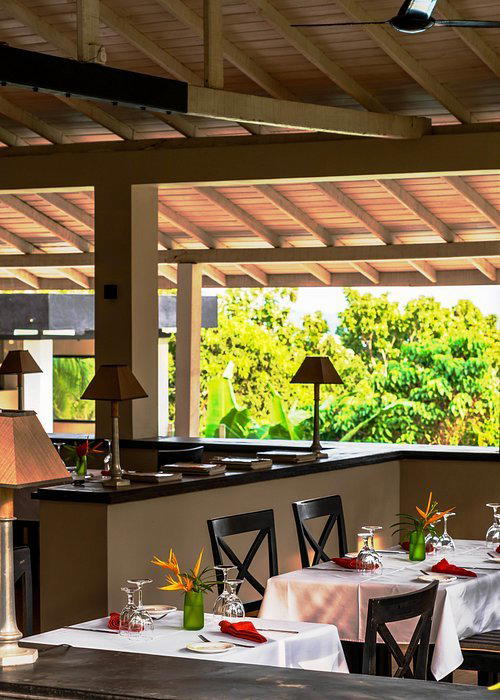
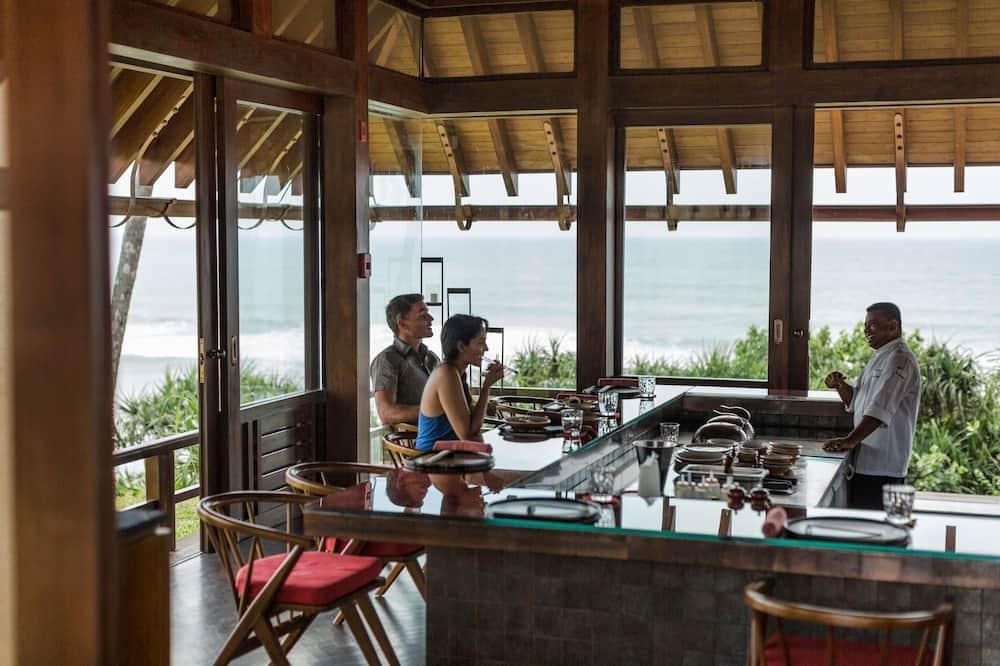
The Kitchen, which is the property's dining space, operates on a similar principle of openness. Three meals a day are served in a structure that is open to the lake breeze, with views across the water. The menu operates under a sea-to-table philosophy, appropriate given the proximity to both Koggala Lake and the coastline at Ahangama Beach. The Kitchen serves three meals a day with a sea-to-table approach and lake views.
For those mapping the broader south coast dining context, Amangalla in Galle and Amanwella in Tangalle represent the Aman presence on this coast, each with its own dining format and positioning.
Placing Kurulu Bay in the Regional Tier
Sri Lanka's south coast accommodation market has stratified considerably. At one end, large international-flag hotels with full amenity stacks; at the other, a growing number of design-conscious boutique properties with limited keys and strong architectural identities. The hotel, at 14 rooms built around a residence by a named Sri Lankan architect, sits firmly in the latter category. The comparison set includes Kahanda Kanda Galle in Angulugaha and Kumu Beach in Balapitiya, properties that similarly position themselves through design specificity and ecological context rather than scale or brand recognition.
Further afield on the island, the design-led small-property tier includes places like Gal Oya Lodge in Gal Oya National Park, which uses a comparable framework of ecological immersion with architectural intentionality, and Wild Coast Tented Lodge in Yala, which occupies a similar niche in the national park context of the southeast. Nine Skies in Demodara and Ceylon Tea Trails in the Interior extend that category into the hill country, demonstrating that this mode of property, small, architecturally coherent, environmentally specific, runs as a consistent thread through Sri Lanka's better-considered accommodation stock.
Planning a Stay
The property address at Gurunkanda, Kathaluwa places it on the inland side of the coastal strip, adjacent to Koggala Lake. With 14 rooms across suite and treehouse typologies, availability at this scale moves quickly during the peak December-to-April dry season on the south coast; advance planning is advisable for that window. Guests looking to extend across the south coast might consider Malabar Hill in Weligama Bay or Heritance Ahungalla to the north as adjacent stays with different but complementary positioning.
Fast Comparison
Comparable venues nearby, for context on price, style, and recognition.
| Venue | Cuisine | Price | Awards | Notes |
|---|---|---|---|---|
| Kurulu BayThis venue — the venue you are viewing | Eco-conscious boutique resort harmonizing with jungle landscape on lake shore | $$$$ | Michelin 1 Key | Not listed |
| Sola Boutique Hotel | Nature-hidden boutique with jungle immersion | $$$$ | 5-Star | Ahangama |
| PALM Hotel Sri Lanka | Contemporary tropical lifestyle retreat blending Brutalist industrial design with Sri Lankan minimalism and sustainable architecture. | $$$ | 4-Star | Ahangama |
| Casa Tikiri - Boutique Hotel Adults Only | Intimate adults-only boutique retreat inspired by local culture and Italian design. | $$$ | Not listed | Ahangama |
| Villa Sielen Diva | Modern luxury villa with open spaces and private beach access | $$$$ | Michelin 1 Key | Talpe |
| Malabar Hill | Contemporary boutique resort inspired by Moorish and Rajasthani architecture. | $$$$ | Michelin 1 Key | Weligama Bay |
Recognition history
Dated appearances from independent guides and award organizations, with the underlying list record or original source where available.
Michelin 1 Key
Michelin
At a Glance
- Quiet
- Scenic
- Modern
- Minimalist
- Elegant
- Intimate
- Romantic Getaway
- Wellness Retreat
- Honeymoon
- Weekend Escape
- Panoramic View
- Private Villa
- Garden
- Terrace
- Pool
- Spa
- Wi Fi
- Restaurant
- Room Service
- Airport Transfer
- Waterfront
- Garden
- Pool
- Spa
- Wi Fi
- Restaurant
- Room Service
- Airport Transfer
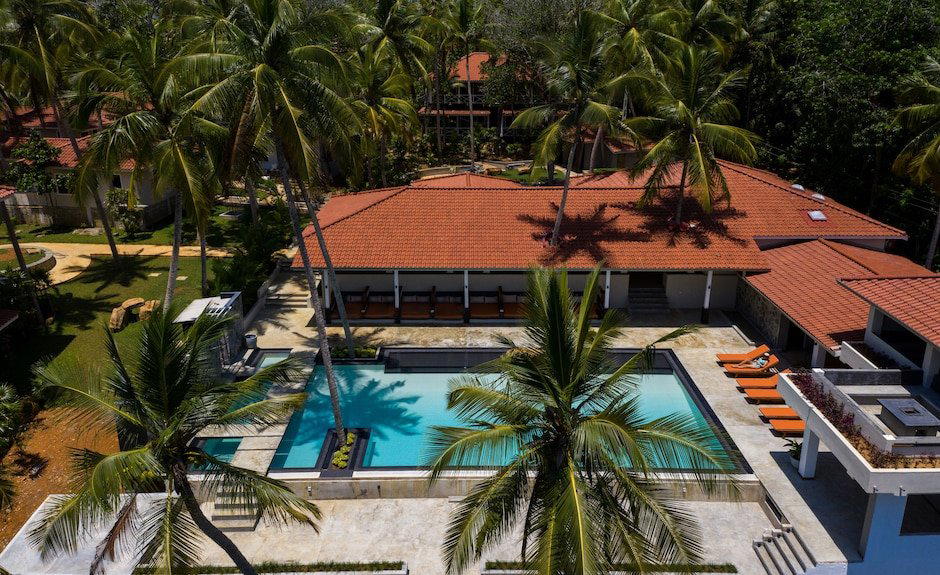
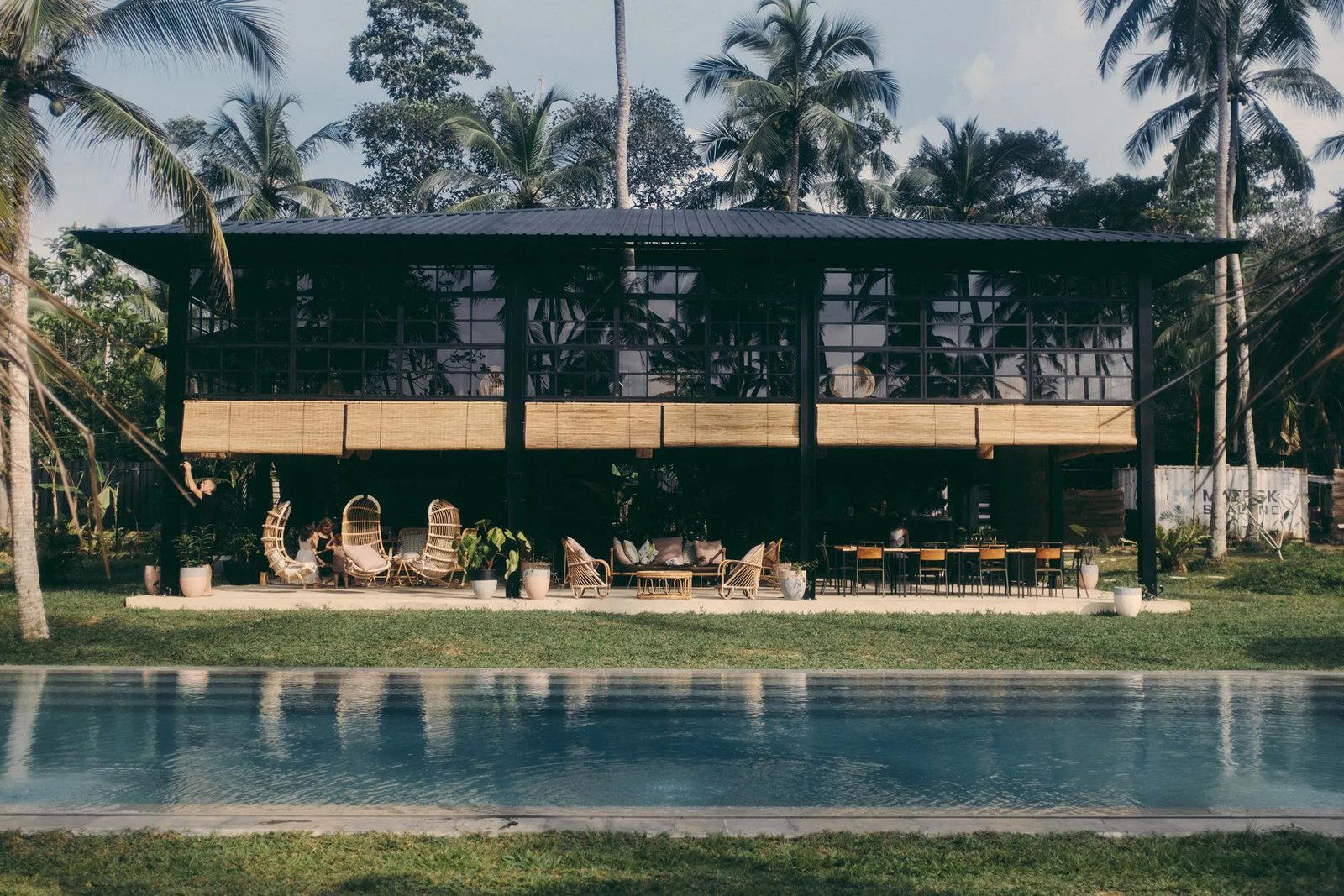
Tranquil jungle oasis with lush greenery, serene lake views, natural light, and calming minimalist interiors evoking peace and connection to nature.