

1 Michelin Key · World Luxury Hotel Awards WLHA Continent Winner
Open since 1914 and awarded Regional Winner for Luxury Urban Hotel, Country Winner for Luxury Hotel and Conference Centre, and Continent Winner for Luxury Historical Hotel, the Athénée Palace occupies one of Bucharest's most consequential addresses, steps from the Romanian Athenaeum and Calea Victoriei. Its 283 classically styled rooms and the restored Belle Époque Le Diplomate ballroom make it the reference point for grand-hotel tradition in the Romanian capital.

Pearl is the En Primeur Club membership app, where members save venues, book tables and use the concierge.
Where an Address Does the Work of a Reputation
Strada Episcopiei 1-3 is not a quiet side street. It places you at the intersection of Bucharest's institutional and cultural core: the Romanian Athenaeum, one of the most architecturally significant concert halls in Southeast Europe, is visible from upper-floor windows, and Calea Victoriei, the city's historic commercial and ceremonial spine, is a short walk away. In a city where geography and history have always been inseparable, few hotel addresses carry as much accumulated weight. The Athénée Palace has occupied this position since 1914, and that longevity is not incidental to its identity, it is its identity.
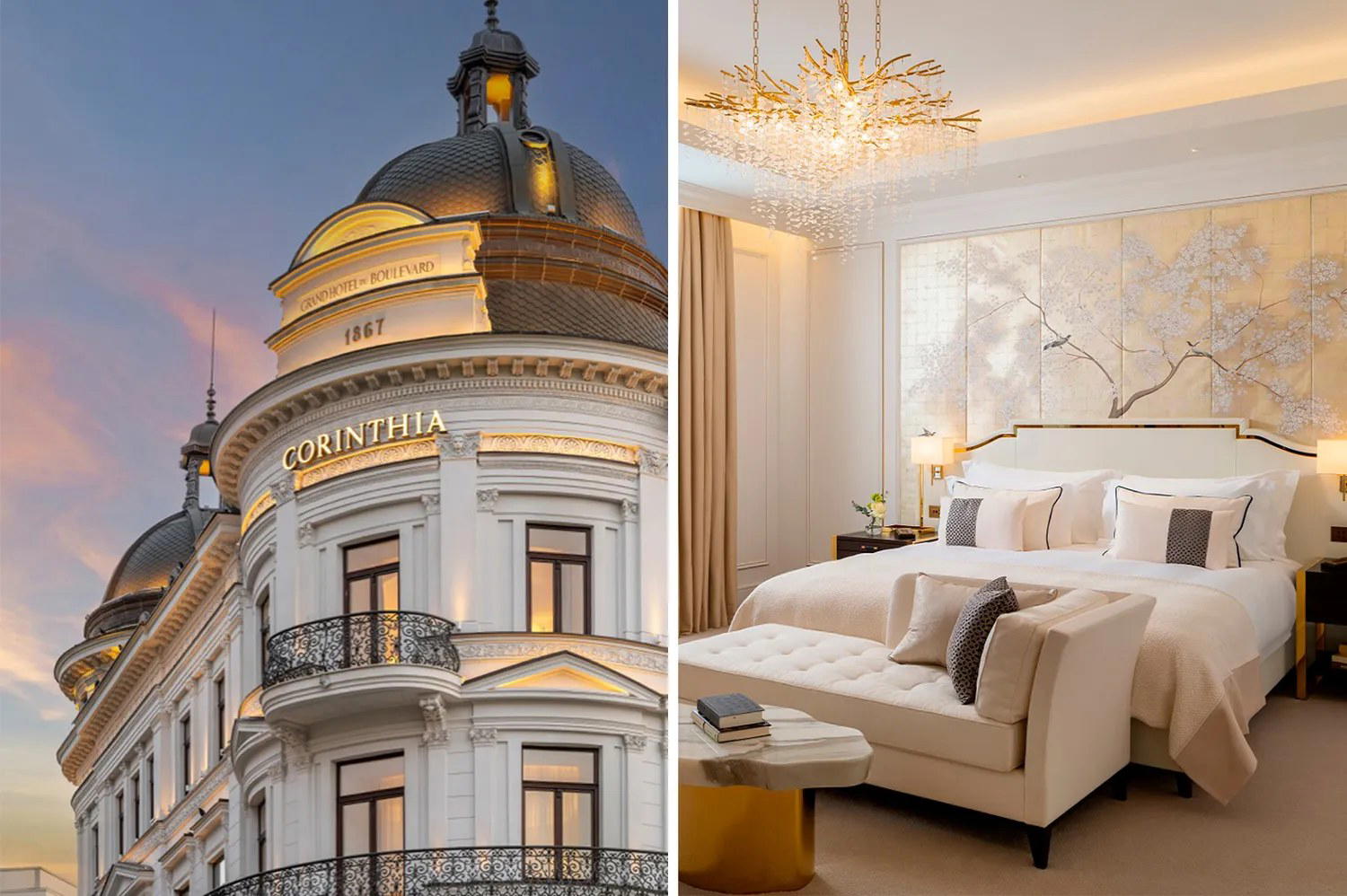
Among Bucharest's grand-hotel tier, which includes the Corinthia Grand Hotel du Boulevard Bucharest and The Marmorosch Bucharest, Autograph Collection, the Athénée Palace occupies a distinct position: it is the property most explicitly anchored to civic centrality. Where other historic hotels trade on restored interiors or curated design narratives, the Athénée Palace's most immediate asset is simply where it stands. The proximity to the Athenaeum, the National Museum of Art, and the government quarter means that guests are not accessing the city from a hotel, they are already inside it.
A Century of Political Geography
The hotel's role in Bucharest's political and cultural life over the past century has been extensively documented. During the interwar period, it served as a gathering point for diplomats, journalists, and intelligence operatives operating in a city that was, at the time, one of Europe's more complicated listening posts. That history gives the property a depth of context that no amount of renovation or rebranding can replicate, and the current InterContinental management has not tried to. The hotel operates as a formal, classically styled property, with room proportions and public-space detailing that reflect its Belle Époque origins rather than obscure them.
This approach places it in a specific tier within the broader European grand-hotel tradition, properties like Hôtel de Paris Monte-Carlo or Badrutt's Palace Hotel in St. Moritz, where historical authenticity is the product rather than a veneer applied to a contemporary hospitality formula. The Athénée Palace is not a design hotel with period references. It is a period hotel that has been maintained and operated into the present.
The Le Diplomate Ballroom and What It Signals
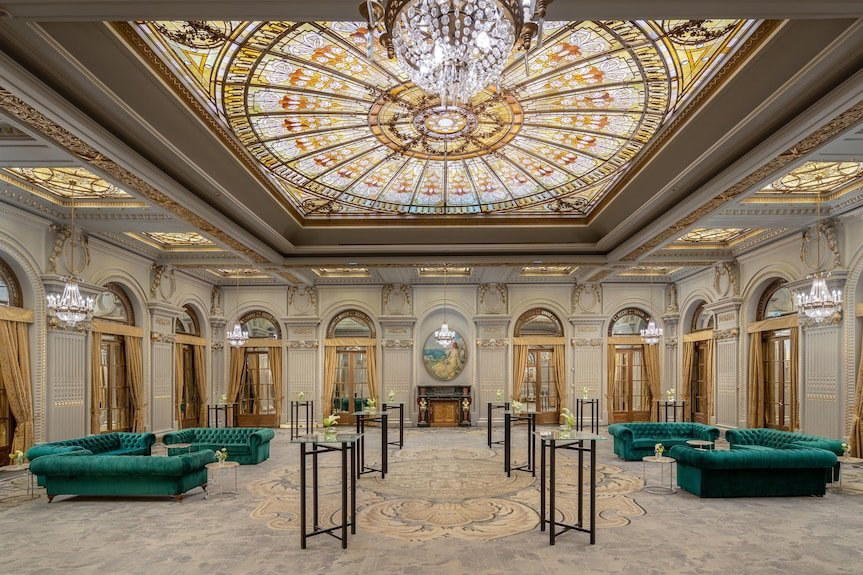
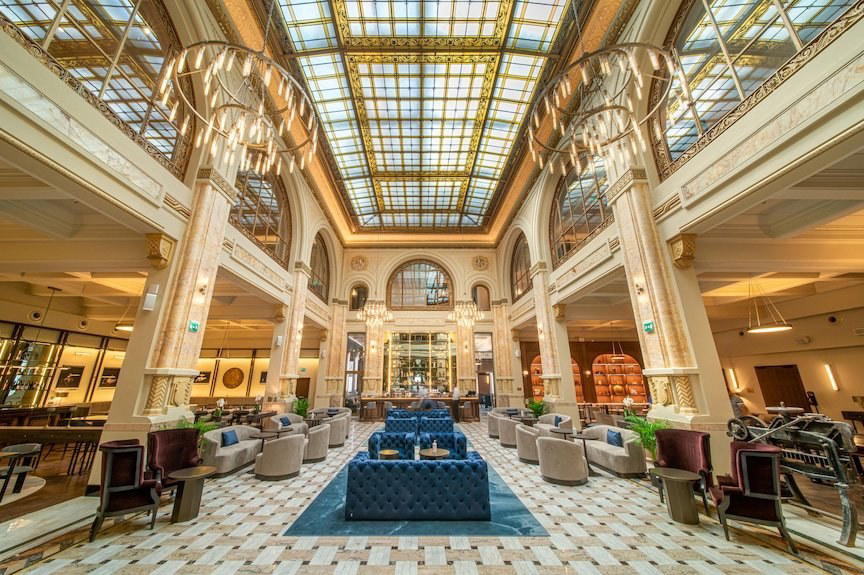
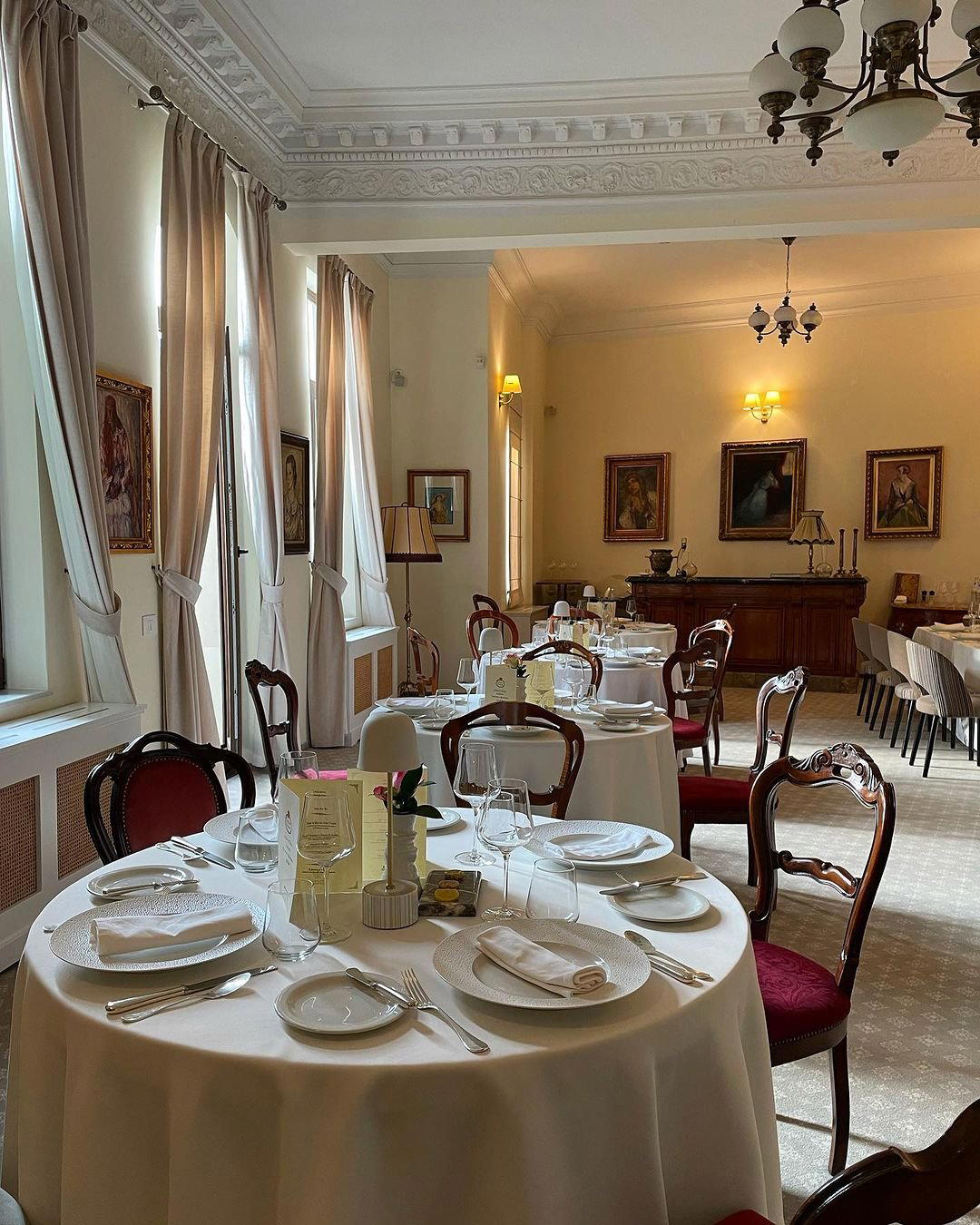
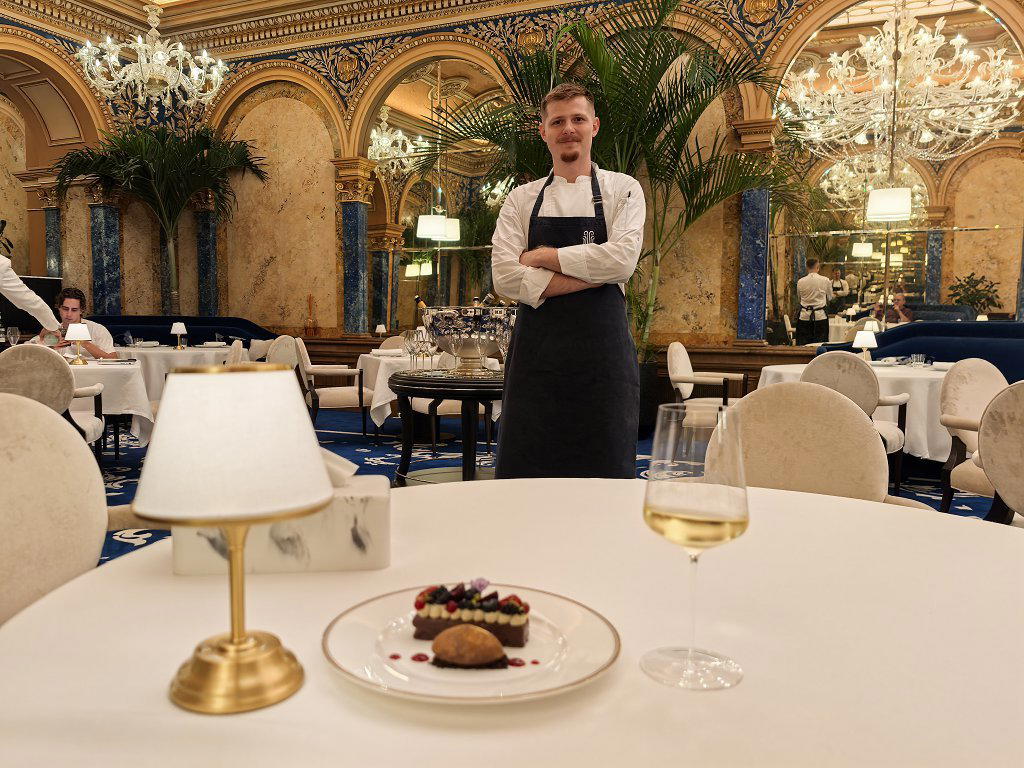
Within the property, the restored Le Diplomate ballroom functions as the clearest statement of the hotel's ambitions. The stained-glass ceiling, mirrored walls, and Belle Époque detailing are not reconstructed approximations, they are the result of careful restoration work on original architectural fabric. In a city where many historic interiors were altered or erased during the Communist period, a preserved ballroom of this quality is a genuinely rare piece of the built environment.
The ballroom's continued use for events and functions also signals the hotel's positioning within Bucharest's conference and institutional market. The property holds a Country Winner designation for Luxury Hotel and Conference Centre, alongside its Regional Winner recognition for Luxury Urban Hotel and Continent Winner status for Luxury Historical Hotel, a combination that reflects a dual operating identity: it serves both the cultural-tourism guest drawn by the history and address, and the institutional or corporate guest requiring formal event infrastructure at a central location. These are not always the same traveller, and the Athénée Palace manages both demands from the same physical plant.
Room Rates, Scale, and What to Expect
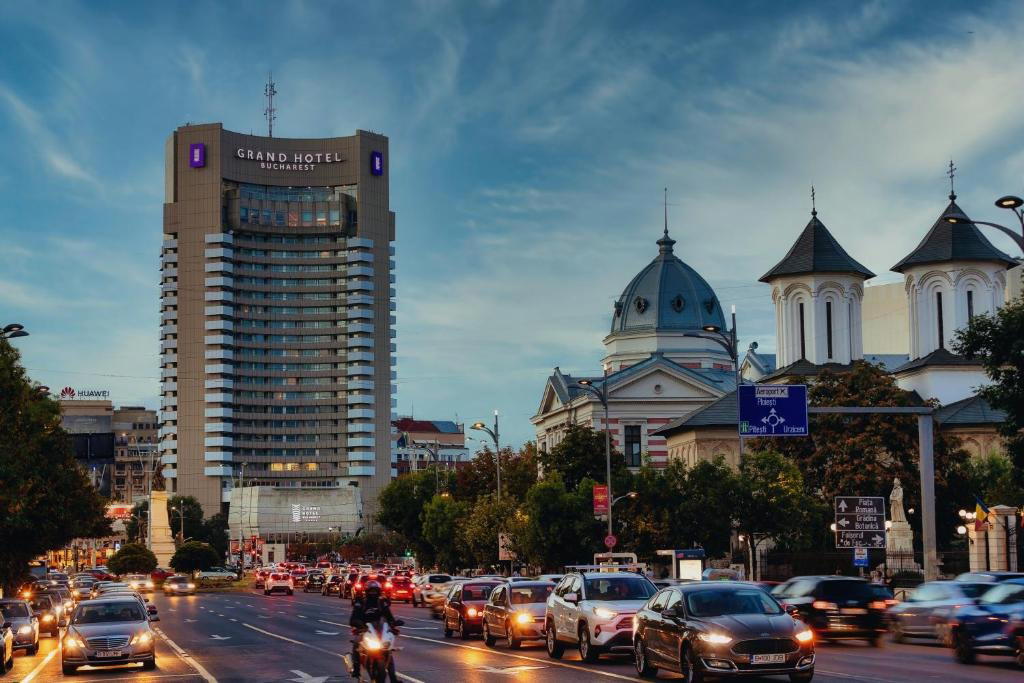
With 283 rooms and rates from approximately $244 per night, the Athénée Palace operates at a price point that sits below the top tier of European grand hotels but above Bucharest's mid-market properties. The JW Marriott Bucharest Grand Hotel and Radisson Blu Hotel, Bucharest offer comparable scale and international-brand reliability, while the Epoque Hotel and Grand Hotel Bucharest occupy smaller, more intimate formats. The Athénée Palace's case rests not on competing on amenity density or design novelty but on the combination of scale, address, and historical depth that no newer entrant can replicate by definition.
The rooms themselves are classically styled with generous proportions, a characteristic of the original construction that later renovations have preserved rather than reconfigured. Views of the Romanian Athenaeum from upper floors represent one of the more architecturally rewarding outlooks available from any Bucharest hotel room, placing the guest in direct visual dialogue with a building that has been at the centre of the city's cultural life since 1888.
Planning Your Stay
The Athénée Palace is walkable to the key sites of central Bucharest: the National Museum of Art, the Revolution Square, and the beginnings of Calea Victoriei's shopping and café strip are all within a few minutes on foot. For visitors whose primary interest is in Bucharest's architectural and political heritage, the address removes the need for daily transport entirely. Booking through the IHG platform is the standard route, and rates at the $244 entry point represent reasonable value for the central location and award-recognised property tier, particularly when comparable addresses in Western European capitals run considerably higher for equivalent historical positioning. For peak seasons, including the spring and autumn conference periods when institutional demand fills the larger room blocks, planning several weeks ahead is prudent.
Travellers using Bucharest as a base for wider Romanian exploration will find the hotel a practical starting point. Properties further afield, including Bethlen Estates Transylvania in Cris, Matca Hotel in Simon, Swissôtel Poiana Brașov in Brasov, Hotel Snagov Club in Snagov, and Lebada Luxury Resort and Spa in Crisan, represent the country's range of alternative accommodation formats, from Transylvanian estate stays to Danube Delta retreats. The Athénée Palace, with its urban formality and institutional infrastructure, sits at the opposite end of that spectrum: a city anchor rather than an escape. For the full picture of where to stay and eat in the capital, the EP Club Bucharest guide covers the city's broader hospitality picture.
Travellers comparing the Athénée Palace to grand-hotel peers in other European capitals will find the value proposition clearest in the context of what the address delivers. At a property like Cheval Blanc Paris or Hotel Du Cap-Eden-Roc, the price of centrality and historical prestige runs several multiples higher. Bucharest's relative position in the European travel market means that the Athénée Palace's combination of a genuinely significant address, a documented century-long history, and formal grand-hotel operation remains accessible at a price point that would not buy comparable positioning in Paris, Venice, or Monte Carlo. For those interested in Bucharest's equestrian surroundings, Singureni Manor Equestrian Retreat offers a contrasting rural format within reach of the capital.
Just the Basics
Comparable venues nearby, for context on price, style, and recognition.
| Venue | Price | Awards | Notes |
|---|---|---|---|
| InterContinental Athenee Palace Bucharest by IHGThis venue (the venue you are viewing) | $200–300 | 1 Michelin Key · World Luxury Hotel Awards WLHA Continent Winner | Not listed |
| The Marmorosch Bucharest, Autograph Collection | Not listed | 1 Michelin Key | Old Town, Historic Art Deco luxury hotel reliving Bucharest's golden age |
| Epoque Hotel | Not listed | 1 Michelin Key · Relais Chateaux Award | near Cișmigiu Park, neo-Romanian architecture with contemporary clarity and generous suite layouts |
| Corinthia Grand Hotel du Boulevard Bucharest | $500–750 | 2 Michelin Keys · AFAR Best New Hotels | District 5, Restored historic Belle Époque palace with palatial intimate setting |
| JW Marriott Bucharest Grand Hotel | Not listed | Michelin Selected · Forbes Recommended | Old Town, Modern luxury blending international standards with Romanian traditions |
| Radisson Blu Hotel, Bucharest | Not listed | Michelin Selected · World Luxury Hotel Awards WLHA Regional Winner | downtown Bucharest, Contemporary luxury hotel with modern design elements and sophisticated finishes, positioned as an upscale urban destination. |
Recognition history
Dated appearances from independent guides and award organizations, with the underlying list record or original source where available.
Michelin 1 Key
Michelin
World Luxury Hotel Awards WLHA Continent Winner
World Luxury Hotel Awards
Full recognition history (5 entries)
Michelin 1 Key
Michelin
World Luxury Hotel Awards WLHA Regional Winner
World Luxury Hotel Awards
World Luxury Hotel Awards WLHA Country Winner
World Luxury Hotel Awards
Continue exploring
More in Bucharest
Hotels in Bucharest
All hotels in Bucharest →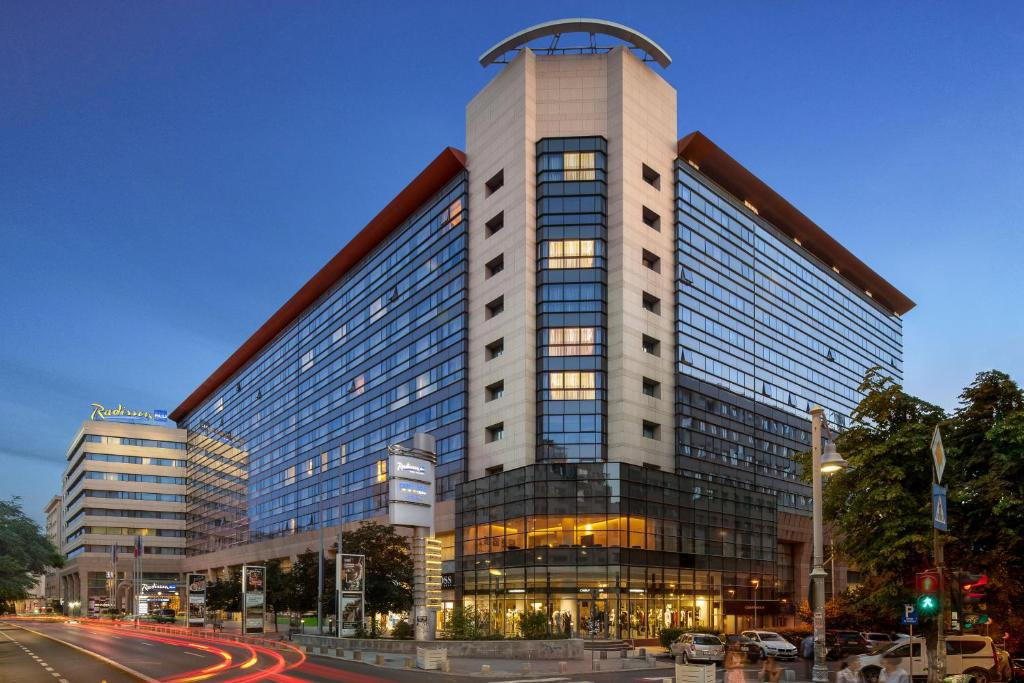
Details
- Elegant
- Sophisticated
- Classic
- Ornate
- Well Known
- Business Trip
- Romantic Getaway
- Anniversary
- Celebration
- Historic Building
- Terrace
- Panoramic View
- Wi Fi
- Pool
- Spa
- Fitness Center
- Room Service
- Concierge
- Business Center
- Valet Parking
- Skyline
- Street Scene
- Wheelchair Accessible
- Elevator
- Step Free Entrance
- Accessible Parking
Intimate yet sophisticated atmosphere with Art Deco elegance, soundproofed rooms, and serene spa lighting.