


2 Michelin Keys · Tablet Hotels Best New Hotel Designs (Europe) · Small Luxury Hotels of the World Member
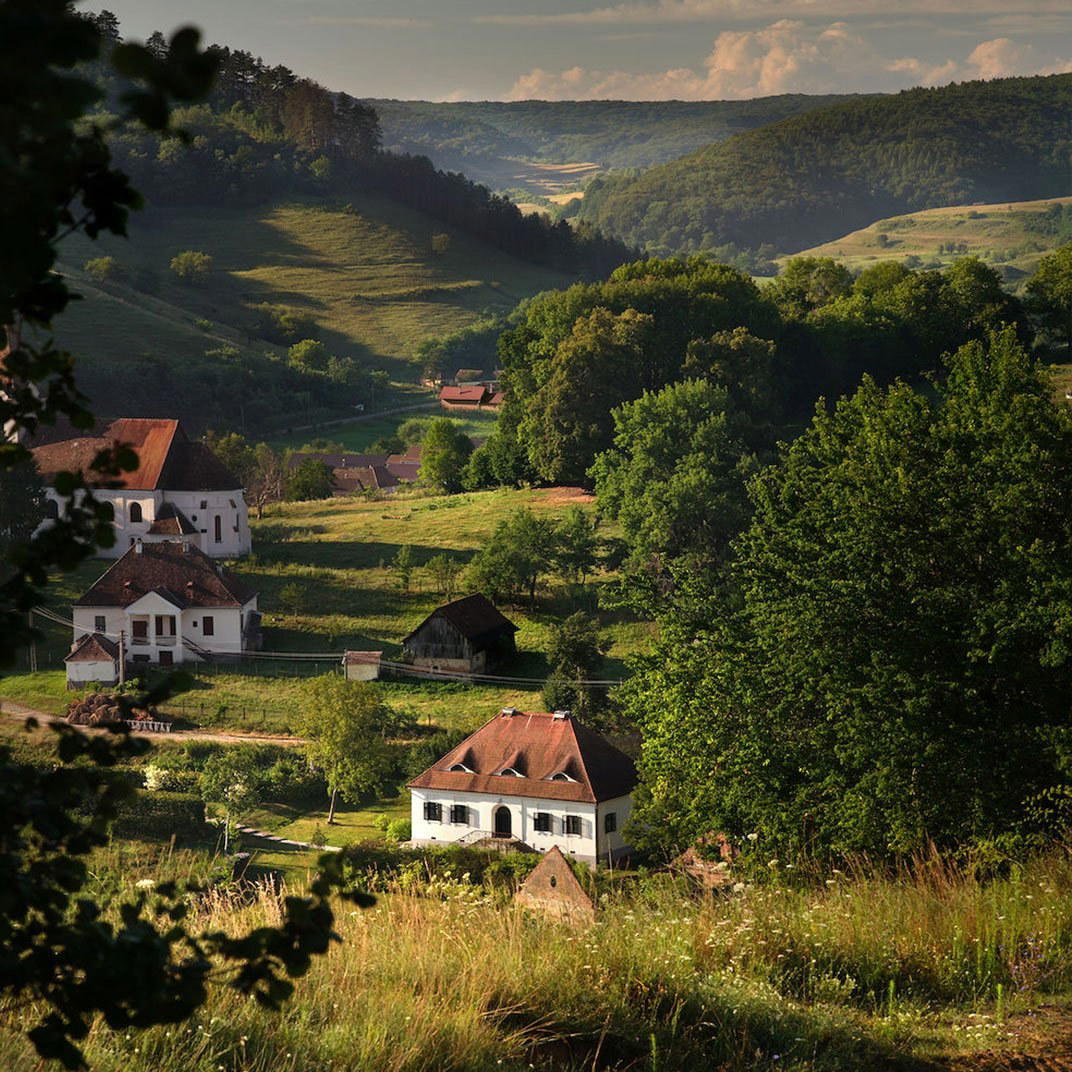
A reclamation project as much as a hotel, Bethlen Estates occupies three restored 300-year-old buildings in the remote Transylvanian village of Criș. Ten rooms are distributed across Depner House, the Caretaker's House, and the Corner Barn, each bookable in configurations suited to intimate stays or larger parties. The surrounding Carpathian wilderness and a fine-dining restaurant committed to local sourcing complete a property that operates well outside conventional hospitality categories.

Pearl is the En Primeur Club membership app, where members save venues, book tables and use the concierge.
Architecture as Argument: What Bethlen Estates Says About Heritage Hospitality in Transylvania
The village of Criș sits in a part of Romania where the built environment has not been overwritten by modernisation. Saxon, Hungarian, and Romanian architectural traditions layer across the region in various states of preservation, and in several cases, active decay. Against that backdrop, the restoration project that produced Bethlen Estates represents a particular position in the current conversation about what heritage hospitality can and should mean. The choice to work with centuries-old structures rather than around them, to restore rather than replicate, places it in a small cohort of European properties, alongside ventures like Castello di Reschio in Lisciano Niccone, where the architecture is not backdrop but argument.
Three Buildings, One Estate: The Physical Logic of the Property
Bethlen Estates distributes its ten rooms across three distinct structures: Depner House, the Caretaker's House, and the Corner Barn. Each building carries different architectural DNA, and the decision to preserve those differences rather than smooth them into a unified aesthetic is one of the property's defining choices. The Corner Barn divides into four individually bookable bedrooms, allowing for single-room stays within a working estate context. Depner House (two bedrooms) and the Caretaker's House (four bedrooms) are reserved as whole-unit bookings, a format that has become increasingly standard among heritage properties in Central and Eastern Europe that want to attract multigenerational families or small groups without converting their spaces into conventional hotel corridors.
The approach acknowledges something important about how people actually use rural escapes in this tier: the group stay, the gathered family, the shared property taken over for a long weekend in October when the Carpathian foliage turns. That configuration logic is not incidental; it shapes the entire character of the property and distinguishes it from, say, a boutique hotel that happens to occupy an old building.
Restoration Philosophy: Contemporary Lens on Historical Form
The interiors across all three structures share a design sensibility described as paying homage to the estate's history, viewed through a contemporary lens. In practical terms, this means the kind of intervention that strips away later additions and lets original materials speak, while introducing modern comfort without disguising the age of the fabric. It is a position familiar from the leading restoration work across Central Europe, where the temptation to over-restore, to make everything look as it might have looked on the day of construction rather than on the day of arrival, is resisted in favour of an honest layering of eras.
For comparison, properties operating at the opposite end of this spectrum, large international hotels in urban centres like the Corinthia Grand Hotel du Boulevard Bucharest, manage heritage through grand public spaces and period styling applied to contemporary hospitality formats. Bethlen Estates takes the inverse approach: the historical fabric is primary, and the hospitality format adapts to it. Neither is objectively superior, but for a guest whose interest is in occupying rather than visiting a historic space, the Criș model is the more immersive proposition.
The Landscape as Infrastructure
The Carpathian Mountains form the operational backdrop to the estate rather than simply its view. The wilderness surrounding Criș is genuinely untamed by Western European standards, and the property positions access to that landscape as a core part of the experience. Nearby villages extend the cultural dimension of a stay, offering contact with rural Transylvanian life that has no parallel in urban Romanian hospitality, from the Hotel Snagov Club in Snagov to the riverside ambience of Lebada Luxury Resort and Spa in Crisan.
For travellers accustomed to luxury hotels where nature is curated, fenced, and presented at a safe distance, the scale of what surrounds Criș requires a recalibration. This is closer to what Amangiri in Canyon Point achieves in the American Southwest: a property whose surrounding terrain is genuinely formidable, and where the building is defined partly by its relationship to that terrain.
Dining: Local Sourcing as Design Principle
The fine-dining restaurant at Bethlen Estates operates on a local sourcing commitment that functions less as a marketing position and more as a structural constraint shaping the menu. In a region where ingredients are tied to specific valleys, altitudes, and seasonal rhythms, that constraint produces a kitchen vocabulary that is not reproducible elsewhere. This approach places the restaurant in the same broad category as properties like Matca Hotel in Simon, where the surrounding landscape directly determines what appears on the plate.
The distinction matters for a guest deciding how central the dining experience is to their stay. At Bethlen Estates, the kitchen and the surrounding countryside are in a direct relationship; what you eat at dinner has a traceable connection to the landscape you walked through in the afternoon. That coherence is harder to achieve in cities, and it is one reason why properties in this register attract travellers who have already moved through the more conventional tier of luxury dining, from Le Bristol Paris to Cheval Blanc Paris, and are now looking for something with a different kind of specificity.
Where Bethlen Estates Sits in Romania's Hospitality Range
Romanian hospitality has expanded considerably in range over the past decade, with urban properties in Bucharest now competing credibly with their Central European peers, and a growing number of rural retreats positioning themselves for the international market. Bethlen Estates occupies a distinct position within that range: it is not a spa resort, not a boutique city hotel, and not a converted manor in the standard sense. The family-with-deep-local-roots story behind the restoration, and the eco-friendly operating approach, connect it to a category of properties, found also at places like Hotel Esencia in Tulum, where the ownership relationship to the land and its history is part of what the guest is paying for.
That positioning carries its own set of expectations. Guests arriving from properties like Swissôtel Poiana Brașov in Brasov will find Bethlen Estates operating at a different register entirely: quieter, more remote, with a formality determined by the rhythms of the estate rather than by hotel convention. For those aligned with that proposition, the ten-room scale and the three-building configuration make it one of the more considered rural hospitality offers in Romania.
For a broader picture of where Bethlen Estates fits among Criș's dining and accommodation options, see our full Criș restaurants guide.
Planning Your Stay
The estate's remote location in the village of Criș, address 157, Transylvania, 547201, means that advance planning is worth the effort. With only ten rooms distributed across three buildings, availability at Bethlen Estates moves on a different timeline than urban hotels, and the whole-unit booking format for Depner House and the Caretaker's House means those configurations need to be secured well ahead for peak periods. The Carpathian seasons are a relevant factor: autumn brings lower temperatures and the most dramatic landscape conditions, while summer opens up the full range of outdoor access. Guests interested in the wilderness dimension of the stay would do well to consult with the estate about guided access to the surrounding terrain at the point of booking.
FAQ
Is Bethlen Estates Transylvania more formal or casual?
The tone at Bethlen Estates is closer to staying with a family in their historic home than to checking into a conventional hotel. There is no lobby, no concierge desk, and no standard check-in protocol in the urban hotel sense. The formality is determined by the estate's rhythms: meals, landscape access, and the pace of a working rural property. Guests who have experienced properties like Hotel Sacher Wien in Vienna or Badrutt's Palace Hotel in St. Moritz should expect something considerably less structured, and more personally oriented to the specific group staying at the time.
What is the most popular room type at Bethlen Estates Transylvania?
Corner Barn's four individually bookable bedrooms suit travellers arriving as couples or solo guests who want the estate experience without committing to a whole-unit booking. For families or groups, the Caretaker's House, with four bedrooms bookable as a single unit, provides the most complete version of what Bethlen Estates offers: an historic building occupied in its entirety, with the kind of privacy and continuity that individual hotel rooms cannot replicate. Properties in a comparable whole-unit tier, such as Aman Venice or HOTEL THE MITSUI KYOTO in Kyoto, achieve exclusivity at a larger scale; at Criș, the version is intimate and defined by the village setting rather than by grand urban architecture.
Comparison Snapshot
| Venue | Price | Awards |
|---|---|---|
| Bethlen Estates TransylvaniaThis venue (the venue you are viewing) | Not listed | 2 Michelin Keys · Tablet Hotels Best New Hotel Designs (Europe) |
| JW Marriott Bucharest Grand Hotel | Not listed | Michelin Selected · Forbes Recommended |
| Epoque Hotel | Not listed | 1 Michelin Key · Relais Chateaux Award |
| Matca Hotel | $500–750 | Michelin Selected · Relais Chateaux Award |
| Corinthia Grand Hotel du Boulevard Bucharest | $500–750 | 2 Michelin Keys · AFAR Best New Hotels |
Recognition history
Dated appearances from independent guides and award organizations, with the underlying list record or original source where available.
Michelin 2 Keys
Michelin
Tablet Hotels Best New Hotel Designs (Europe)
Tablet Hotels · Tablet Hotels Design Awards 2026: Best New Hotel Designs (Europe)
Small Luxury Hotels of the World Member
Small Luxury Hotels of the World
Full recognition history (4 entries)
Michelin 2 Keys
Michelin

Details
- Rustic
- Scenic
- Cozy
- Quiet
- Elegant
- Romantic Getaway
- Wellness Retreat
- Weekend Escape
- Historic Building
- Panoramic View
- Garden
- Terrace
- Wi Fi
- Pool
- Spa
- Massage
- Garden
- Sauna
- Mountain
- Garden
- Step Free Entrance
Cozy and homely with open fires, wooden beams, and bright airy spaces; warm, relaxing atmosphere enhanced by natural light, fireplaces, and scenic countryside views.