Hotelito at MUSA

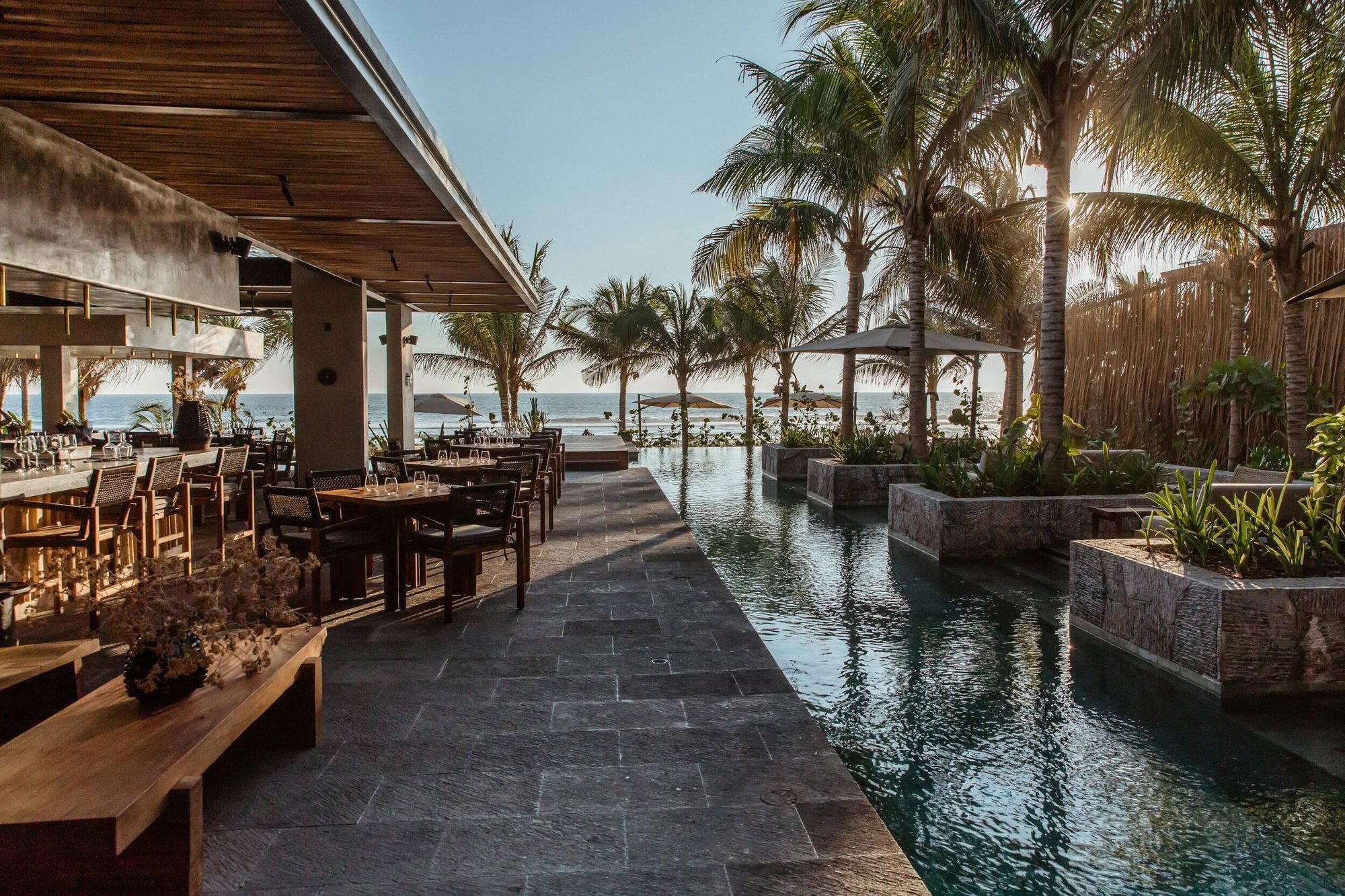
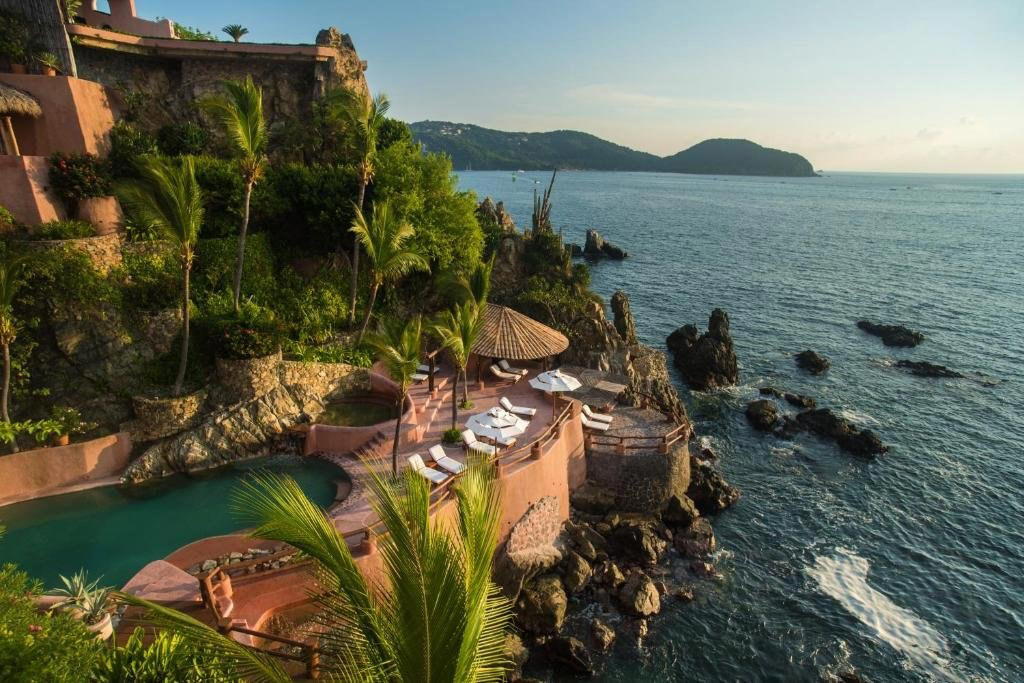
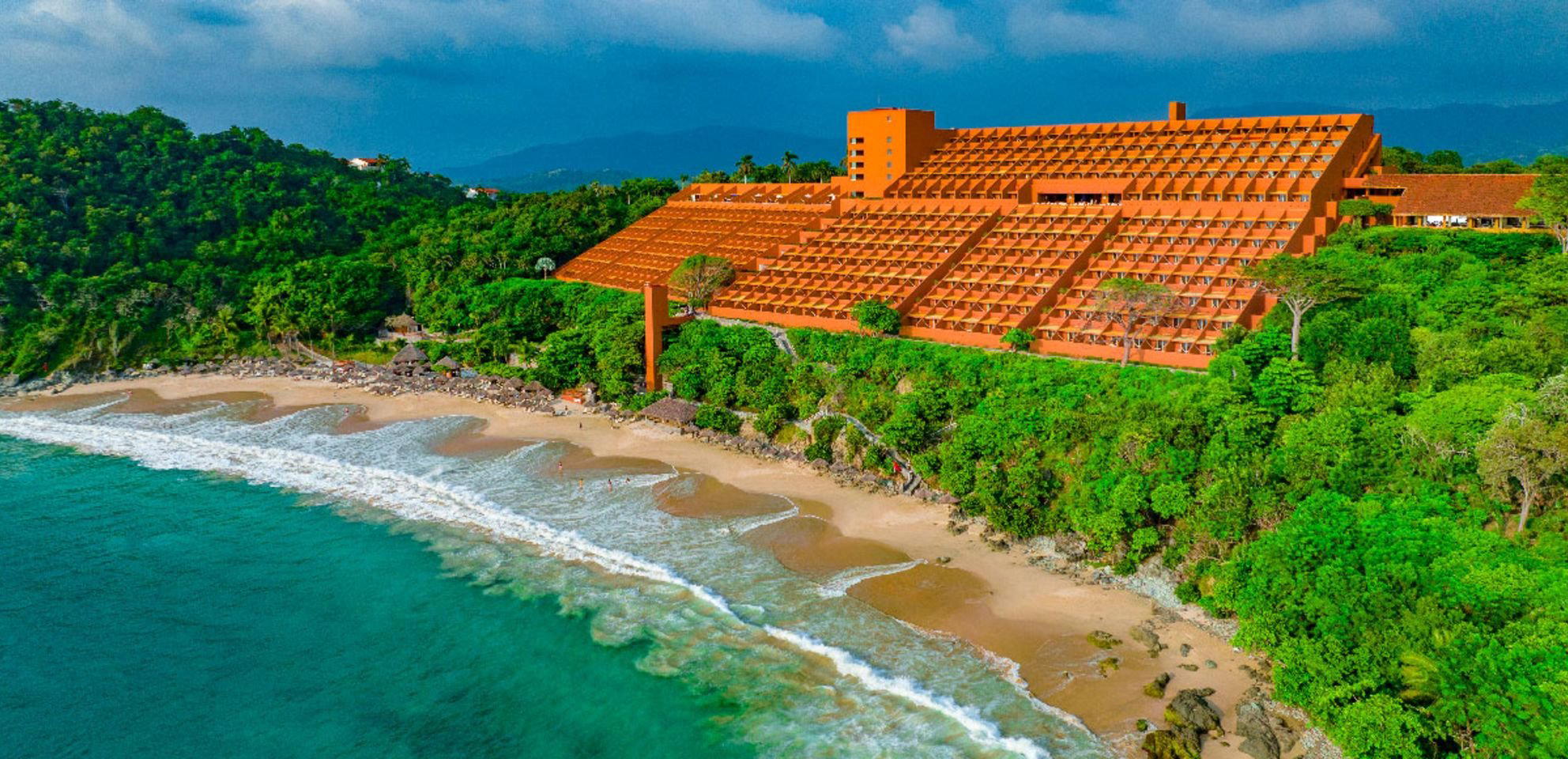
On Mexico's Pacific Coast, where the Sierra Madre meets the surf at Ixtapa-Zihuatanejo, Hotelito at MUSA operates at the intersection of architecture, art, and community-driven hospitality. This is not a conventional resort: MUSA stands for Modern Utopian Society of Adventurers, a framing that signals a design-led, purpose-built environment oriented around innovation, regeneration, and cultural exchange rather than standard amenity checklists.
 Discover on Pearl
Pearl is the En Primeur Club membership app — saves, bookings, and concierge access live there. Same editors, same standards.
Where the Sierra Meets the Pacific: A Different Kind of Property
The approach to Ixtapa-Zihuatanejo from the inland highway is one of Mexico's more arresting coastal arrivals. The Sierra Madre drops toward the ocean with unusual abruptness here, and the stretch of Pacific shoreline that emerges carries none of the resort-strip uniformity that defines Los Cabos or the Riviera Maya. It is against this backdrop, between mountain geography and open surf, that Hotelito at MUSA positions itself, and the setting is not incidental to what the property is trying to do. Architecture and environment are doing the same work.
MUSA is an acronym: Modern Utopian Society of Adventurers. That framing immediately separates this property from the conventional hotel typology. Where most coastal Mexican properties, including properties like Lo Sereno Casa de Playa nearby, orient themselves around the beach-access-and-service equation, Hotelito at MUSA declares an explicit set of values: art, innovation, exploration, regeneration, and philanthropy. Those are commitments that typically require physical space to argue their case, and the design at MUSA is the argument.
Design Philosophy in a Region Finding Its Identity
Mexico's Pacific Coast has, over the past decade, seen a growing divide between large-format international resort development and smaller, design-led properties that trade scale for specificity. The former cluster along Ixtapa's grid of hotel-fronted beaches; the latter tend to occupy the hillsides, coves, and coastal approaches that corporate development has passed over. MUSA occupies the second category, where architecture becomes the primary editorial statement rather than a backdrop to F&B; programming or spa square footage.
This is a pattern visible elsewhere on the Mexican coast. Hotel Esencia in Tulum built its reputation on the integration of a restored hacienda with contemporary art programming. One&Only; Mandarina in Riviera Nayarit positioned its tree-house-style structures as the experience rather than a novelty add-on. Chablé Yucatán built around a cenote and colonial restoration logic. In each case, the physical environment and architectural approach carry more weight than brand affiliation. MUSA belongs to this tradition rather than to the amenity-led resort tradition represented by Las Ventanas al Paraíso or Montage Los Cabos.
The MUSA Framework: Community as Structure
The property's self-description as a "community" rather than a hotel is worth taking seriously as an architectural concept. Community-model properties require spatial design that supports interaction, shared programming, and the circulation of guests between individual accommodation and collective space. This is a more demanding brief than the privacy-and-seclusion model favored by properties like Zadun, A Ritz-Carlton Reserve, which orients its architecture toward separation and exclusivity.
The MUSA model has parallels in properties like Xinalani in Quimixto, which built a community around wellness practice and yoga programming in a similarly remote Pacific location, accessible only by boat. Both operate on the principle that the property's identity comes from what happens between guests as much as what happens for them individually. The architectural brief at such properties rewards spaces that invite gathering: shared terraces, open studios, communal dining formats, and circulation paths that create accidental encounter rather than managed service sequences.
At MUSA specifically, the stated pillars of art, innovation, and philanthropy suggest spaces designed for programming: exhibition areas, workshop formats, or residency functions that require flexible, gallery-adjacent architecture. Properties that declare art as a founding value typically build it into the spatial grammar, circulation routes that pass through curated work, public areas that double as exhibition space, or accommodation that integrates commissioned pieces as structural rather than decorative elements.
Regeneration and the Pacific Coast Sustainability Tier
The inclusion of "regeneration" among MUSA's stated values places it within a growing cohort of Mexican coastal properties that have moved beyond standard sustainability claims toward active land and community restoration programs. Playa Viva in Juluchuca, further down the Guerrero coastline, operates a sea turtle sanctuary and reforestation program as integral to its design concept rather than as corporate responsibility footnotes. Las Alamandas in Costalegre has similarly framed its land management as part of the property's identity.
In this context, regeneration as an architectural value translates into specific spatial decisions: building materials sourced from local supply chains, construction techniques that preserve existing vegetation rather than clear it, water management systems integrated into the landscape rather than buried beneath it, and the treatment of the site's ecological character as a design asset.
Where MUSA Sits in the Wider Mexican Luxury Map
Ixtapa-Zihuatanejo occupies an unusual position in the hierarchy of Mexican coastal destinations. It draws a more local and Latin American leisure traveler than the Los Cabos or Riviera Maya corridors, which skew heavily toward North American and European visitors. The airport at Zihuatanejo connects to Mexico City, Guadalajara, and select U.S. gateways, but the infrastructure remains thinner than at the major resort hubs. For travelers arriving from or comparing to Four Seasons Resort Punta Mita or Maroma in Riviera Maya, the scale is markedly different.
That comparative quietness is, for a property like MUSA, a feature rather than a limitation. Design-led, community-model properties tend to perform better in locations where the surrounding environment hasn't already been processed into a resort product. The relative underdevelopment of the Zihuatanejo corridor gives MUSA's architectural statement room to read clearly, without competition from adjacent mega-properties diluting the effect.
For travelers exploring Mexico's Pacific Coast more broadly, comparisons with Palmaïa on the Caribbean side or Etéreo, Auberge Resorts Collection are instructive: both operate with similarly refined concept-led positioning, but within the denser Caribbean resort corridor. MUSA's Pacific isolation distinguishes it from that competitive set in ways that matter operationally and experientially.
Planning a Stay
The property sits on the coastal road serving Ixtapa-Zihuatanejo, addressed at Rumbo a la playa 79, placing it within the broader resort zone that connects the beaches to the Zihuatanejo town center. Given MUSA's community-event and art-program orientation, timing a visit around specific programming periods will shape the experience significantly, a property organized around collective activity reads differently when programming is active versus between residency cycles. Direct contact with the property ahead of booking is advisable. Travelers with an interest in comparable design-led Mexican properties should also consider Casa de Sierra Nevada in San Miguel de Allende, Casa Antonieta in Oaxaca City, or Casa Silencio in San Pablo Villa de Mitla for properties operating within a similar art-and-architecture register across different Mexican regions.
A Quick Peer Check
Comparable venues nearby, for context on price, style, and recognition.
| Venue | Cuisine | Price | Awards | Notes |
|---|---|---|---|---|
| Hotelito at MUSAThis venue — the venue you are viewing | Tropical modernist ecological community blending architecture with raw coastal jungle. | $$$$ | ||
| Lo Sereno Casa de Playa | barefoot elegant beachfront boutique | $$$$ | 4-Star | Troncones |
| The Standard | Boutique hotel redefining hospitality with urban flair. | $$$$ | , | Tabacalera |
| Casapani | Revived mid-century modernist mansion turned intimate guesthouse. | $$$$ | , | Cuauhtemoc |
| Pendry Mexico City | Contemporary luxury mixed-use hotel and branded residences designed to celebrate Mexico City’s culture and Roma Norte’s Art Deco heritage.[11][1][4][5][8] | $$$$ | , | Roma Norte |
| Roso Guest House | Restored Porfirian mansion with bold contemporary design in vibrant Roma Norte. | $$ | Roma Norte |
Continue exploring
More in Ixtapa-Zihuatanejo
At a Glance
- Romantic
- Quiet
- Modern
- Scenic
- Minimalist
- Intimate
- Honeymoon
- Romantic Getaway
- Wellness Retreat
- Weekend Escape
- Beachfront
- Infinity Pool
- Panoramic View
- Wifi
- Pool
- Concierge
- Room Service
- Beach Access
- Gym
- Waterfront
- Garden
- Mountain
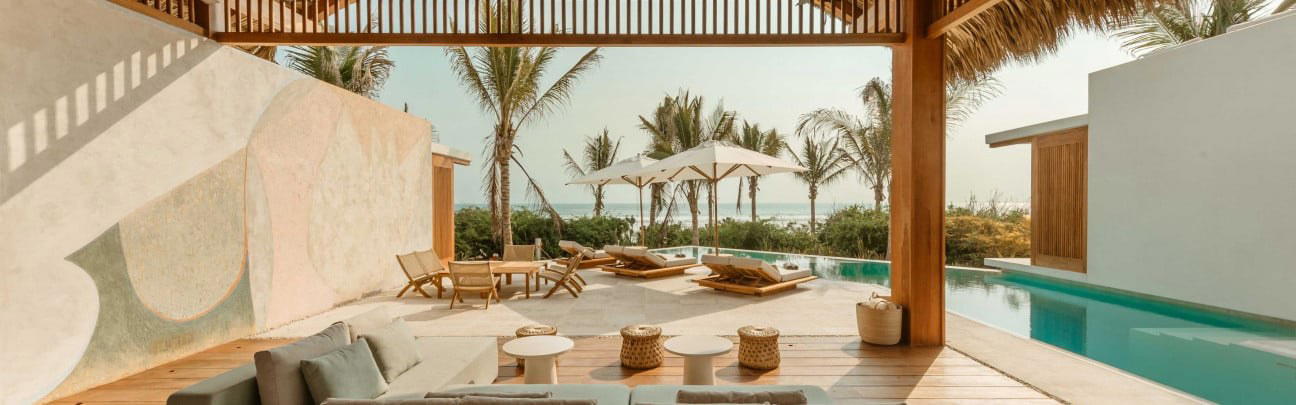
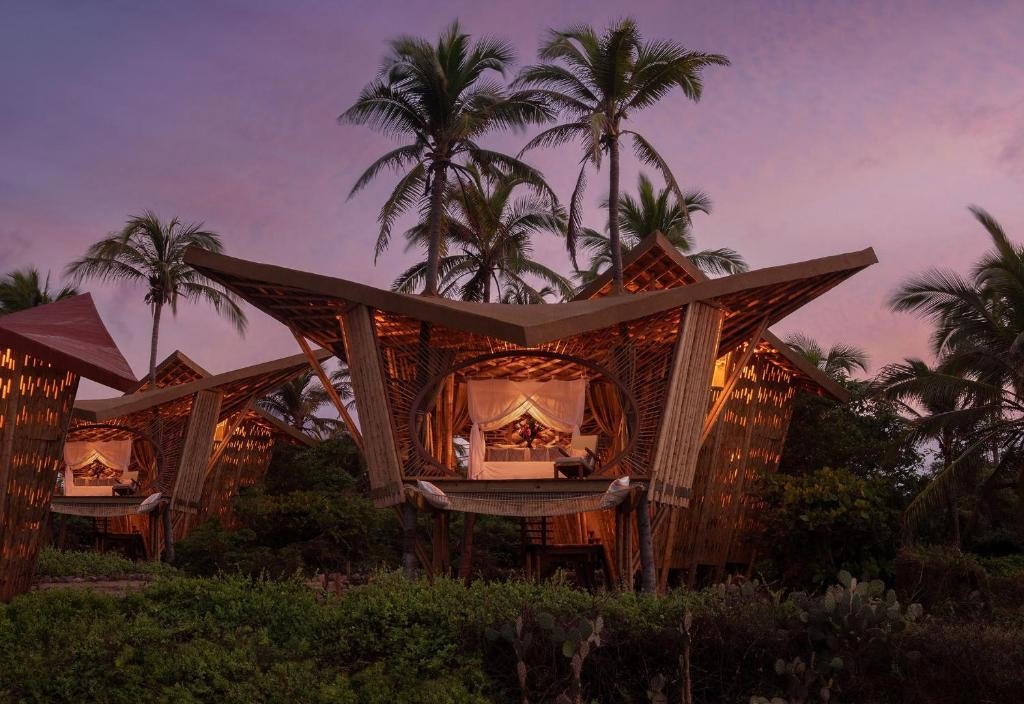
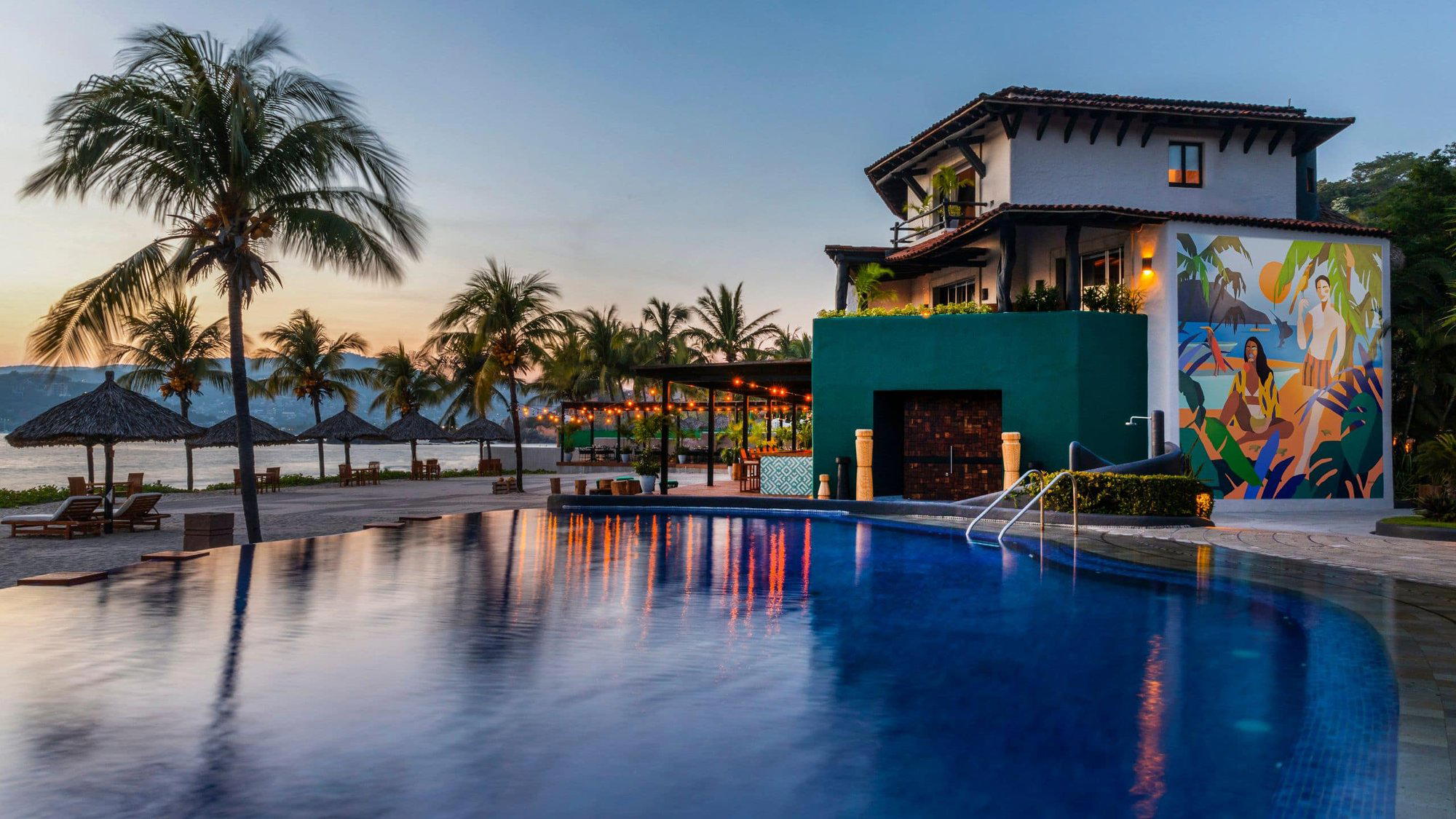
Airy minimalist interiors with natural light, cross-breezes from open-air spaces, wabi-sabi sensibility, and tranquil connection to ocean sunsets and lush jungle.