
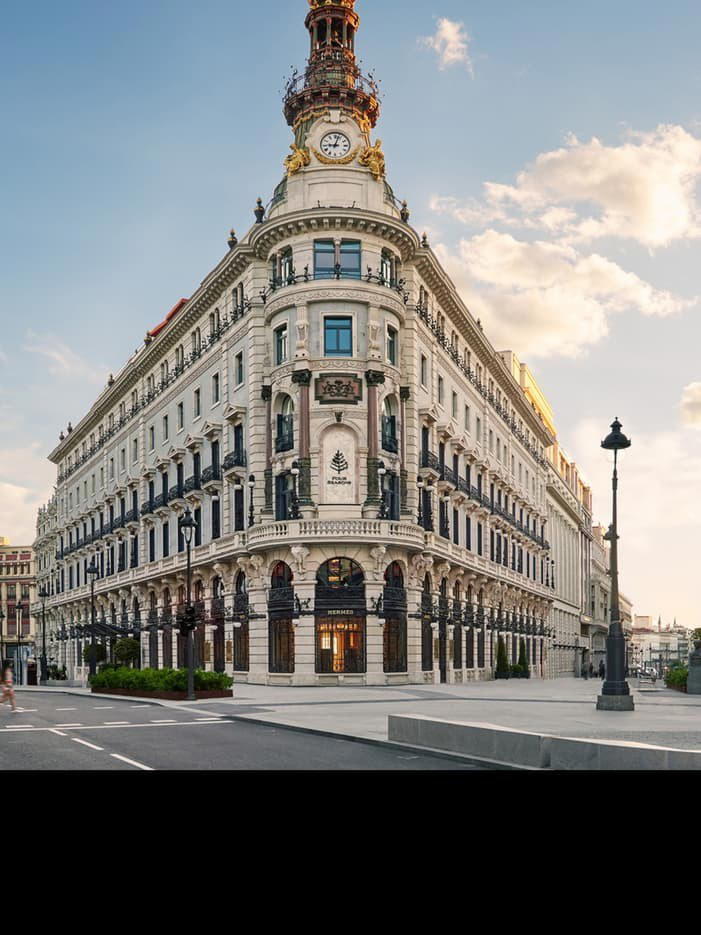
Hotel Urban Madrid occupies a glass-and-iron building on Carrera de San Jerónimo, steps from the Prado and the Cortes. Its avant-garde design identity, anchored by a gold-accented atrium and an extensive collection of exotic artifacts, places it in Madrid's design-led hotel niche rather than the grand-palace tier occupied by the Ritz or Four Seasons. Book well ahead for central-Madrid positioning at this price point.
 Discover on Pearl
Pearl is the En Primeur Club membership app — saves, bookings, and concierge access live there. Same editors, same standards.
Where Madrid's Historic Centre Meets Design Ambition
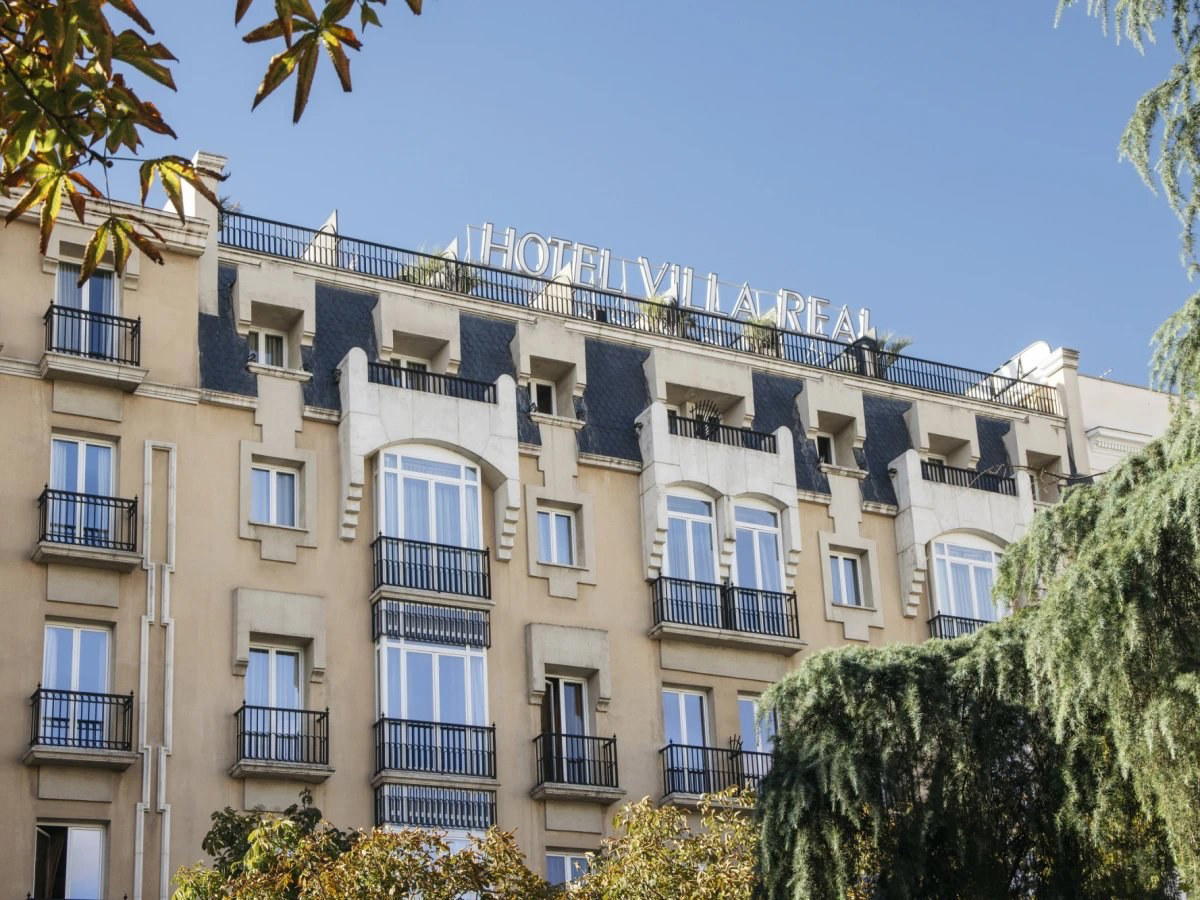
Madrid's central hotel market divides cleanly into two camps. On one side sit the grand-palace institutions: the Mandarin Oriental Ritz, Madrid and the Four Seasons Hotel Madrid, both operating within restored monuments and trading on architectural heritage as much as service. On the other side, a smaller cohort of design-driven properties competes on visual identity, curatorial instinct, and a certain deliberate modernity. Hotel Urban Madrid belongs firmly to the latter group. Its address on Carrera de San Jerónimo, 34, places it at the intersection of the city's political and cultural geography: the Spanish Congress of Deputies is a short walk in one direction, the Museo del Prado in another. The building itself is a contemporary insertion in iron and glass, and the statement is intentional — this is not a hotel that aspires to replicate the faded grandeur of the Bourbon-era palaces surrounding it.
The Arrival Sequence: Reading the Atrium
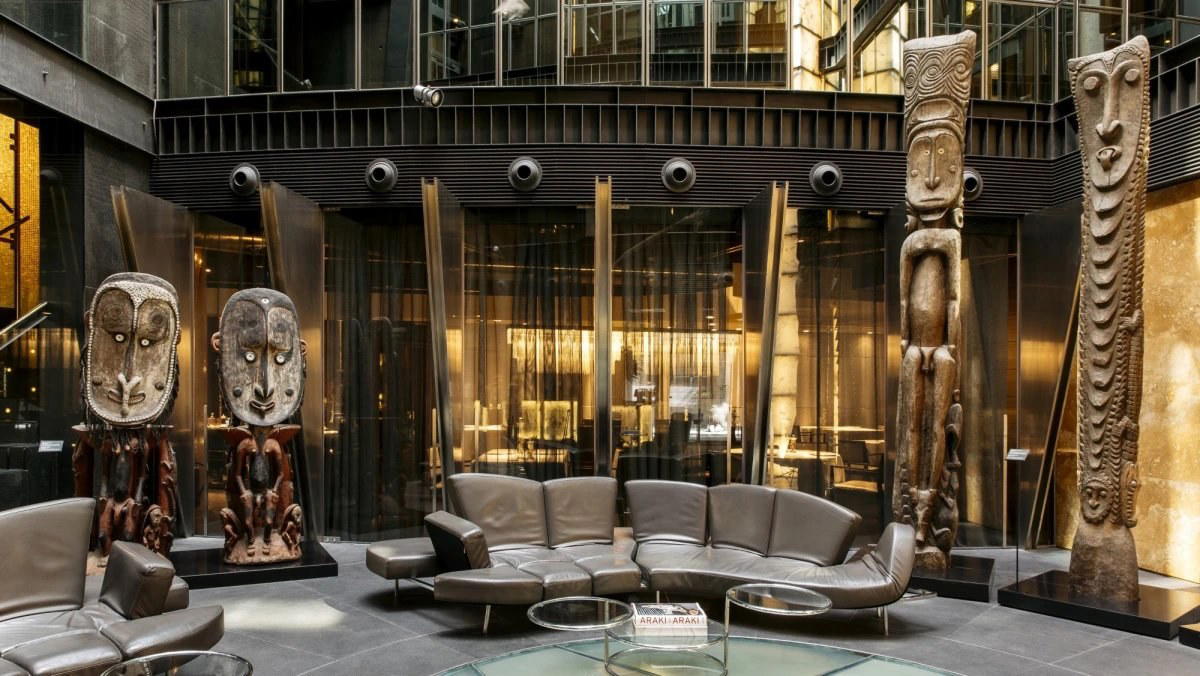
The experience of Hotel Urban begins at the threshold, and the atrium is the property's strongest editorial argument. Shimmering gold accents frame the vertical space, with natural light filtering through the glass structure above. This is the kind of design gesture that either coheres or collapses, and at Urban it coheres precisely because it is offset by the collection: artifacts from across Asia, Oceania, and Africa distributed throughout the public spaces give the interior a density of reference that reads less like decoration and more like accumulated intent. In the broader Madrid context, this positions Urban alongside properties like CoolRooms Palacio de Atocha and Gran Hotel Inglés, which similarly use design specificity to carve a niche away from the international chain template.
The collection itself merits attention as a compositional strategy. Hotels that invest in art and artifact at scale — rather than commissioning a few signature pieces for the lobby , tend to create spaces that hold attention across multiple visits. Urban's approach distributes objects through corridors, dining areas, and common spaces so the visual experience unfolds gradually rather than arriving all at once. It is a sequencing logic, and it mirrors the logic of a well-constructed tasting menu: each room or corridor becomes a course, each artifact a point of considered arrival.
Position Within Madrid's Design-Led Tier
Design-led hotel segment in Madrid is not large, and it operates under different pressure than the palace tier. Where a property like the Rosewood Villa Magna or Gran Meliá Palacio de los Duques can anchor guest trust in an established brand or building pedigree, a design-led independent must sustain its proposition through consistent execution across the stay. This is where the sequencing logic becomes operationally significant: the design identity that creates a strong first impression must be substantiated by the room product, food and beverage, and service quality across a two- or three-night stay. Urban has operated long enough in this position to have established a recognizable profile among European city-break travelers who prioritize visual environment and central location over the amenity depth of larger luxury properties.
For comparison, travelers who want the full grand-palace experience in Madrid will find it at the Mandarin Oriental Ritz or the Four Seasons. Those seeking a smaller, more intimate footprint within the city center might also consider Hotel Unico Madrid or Hotel Rector. Urban sits between these poles , more visually ambitious than a conventional boutique property, less institutionally scaled than the palace tier.
The Neighbourhood as Context
The Carrera de San Jerónimo address is one of the more considered locations available in central Madrid for a design-forward hotel. The street runs from Puerta del Sol southeast toward the Paseo del Prado, threading through the Cortes district. Within walking distance lie the Prado, the Thyssen-Bornemisza, and the Reina Sofía , Madrid's three anchor museums , as well as the tapas density of the Barrio de las Letras and the more formal dining options along Paseo del Prado and in the upscale Salamanca quarter. Guests who want to move through the city on foot for the first two days of a stay will find this positioning genuinely useful. For extended exploration of Madrid's restaurant scene, our full Madrid restaurants guide maps the relevant options by neighbourhood and category.
Spain's wider hotel landscape offers a useful frame for understanding what Urban represents in the domestic context. Design-led properties have emerged as a meaningful category across Spanish cities, from Mandarin Oriental Barcelona to independent rural properties like Mas de Torrent Hotel and Spa in Torrent and wine-country retreats such as Abadía Retuerta LeDomaine. Urban's contribution to this category is specifically urban: it demonstrates that a design identity built around curatorial instinct rather than historic architecture can sustain a premium position in one of Europe's more competitive city-hotel markets.
Planning a Stay: What to Know Before You Book
The Carrera de San Jerónimo location makes Hotel Urban one of the more direct choices for guests arriving at Madrid Atocha by rail , the station is reachable on foot in under fifteen minutes, which matters for travelers arriving from Barcelona or Seville on the high-speed network. Madrid Barajas airport connects to the city center via the Metro Line 8 to Nuevos Ministerios, then transfer to Lines 6 or 10 toward Sol, a journey of approximately forty-five minutes depending on connections. For travelers comparing Urban against other design properties in Spain's broader offering, the island and coastal alternatives , Hotel Can Cera in Palma, Cap Rocat in Cala Blava, or La Residencia, A Belmond Hotel, Mallorca , serve a different travel logic altogether: longer stays, less density, more landscape. Urban's case rests on city access and design intensity within a compact footprint. Booking through the hotel's direct channel typically yields the most flexible cancellation terms; advance planning of three to four weeks is advisable for peak spring and autumn periods, when Madrid's central properties fill ahead of major cultural and trade events.
Cost and Credentials
A quick snapshot of similar venues for side-by-side context.
| Venue | Price | Awards | Notes |
|---|---|---|---|
| Hotel Urban Madrid | This venue | ||
| Mandarin Oriental Ritz, Madrid | Michelin 3 Key | ||
| Four Seasons Hotel Madrid | Michelin 2 Key | ||
| Rosewood Villa Magna | Michelin 2 Key | ||
| Santo Mauro, a Luxury Collection Hotel | Michelin 1 Key | ||
| JW Marriott Hotel Madrid |
Continue exploring
More in Madrid
Hotels in Madrid
Browse all →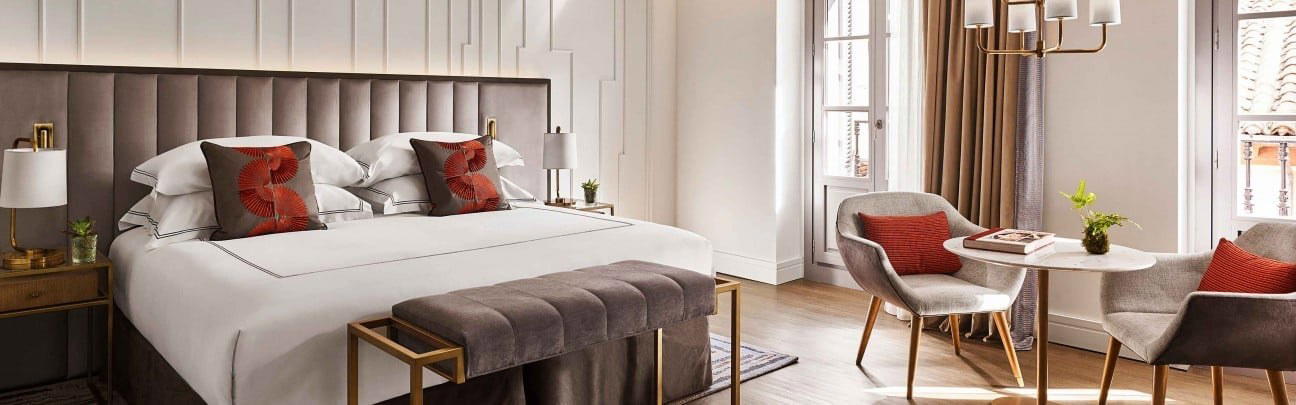
Bars in Madrid
Browse all →
Restaurants in Madrid
Browse all →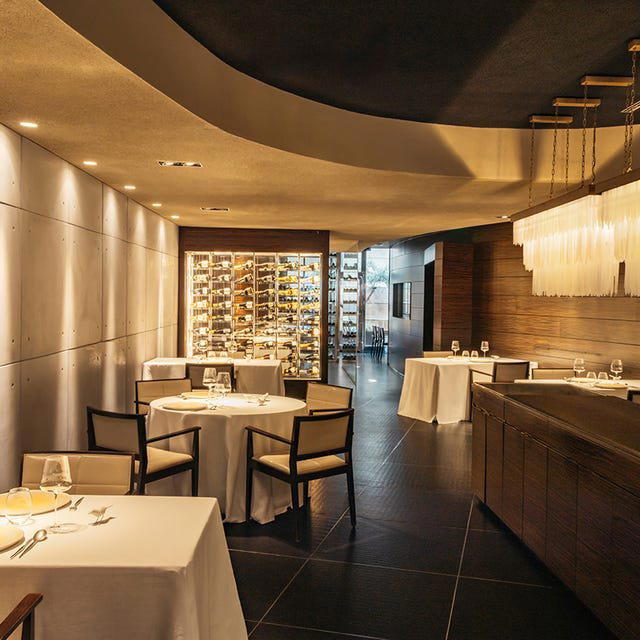
At a Glance
- Modern
- Elegant
- Sophisticated
- Trendy
- Romantic Getaway
- Business Trip
- Weekend Escape
- Rooftop Pool
- Historic Building
- Design Destination
- Wifi
- Pool
- Spa
- Fitness Center
- Room Service
- Concierge
- Business Center
- Valet Parking
- Ev Charging
- Street Scene
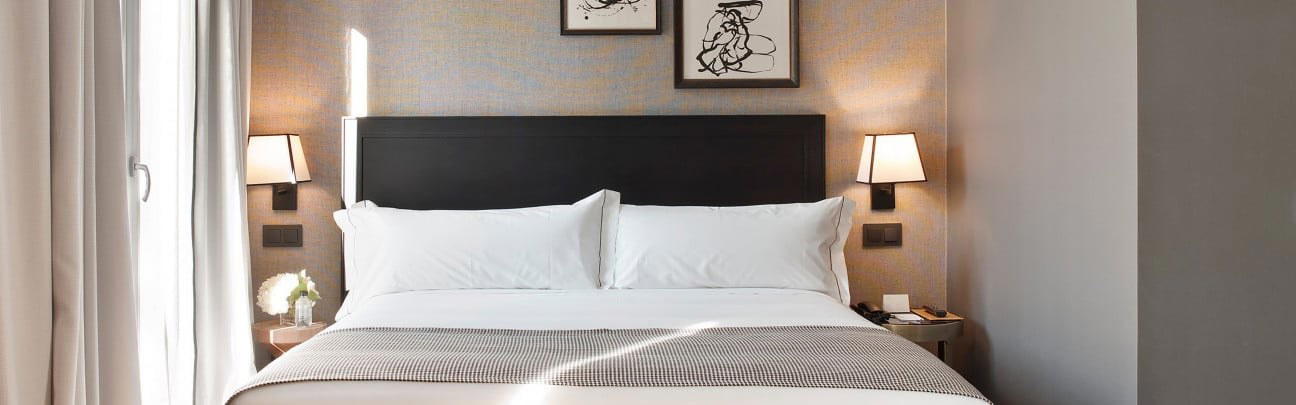
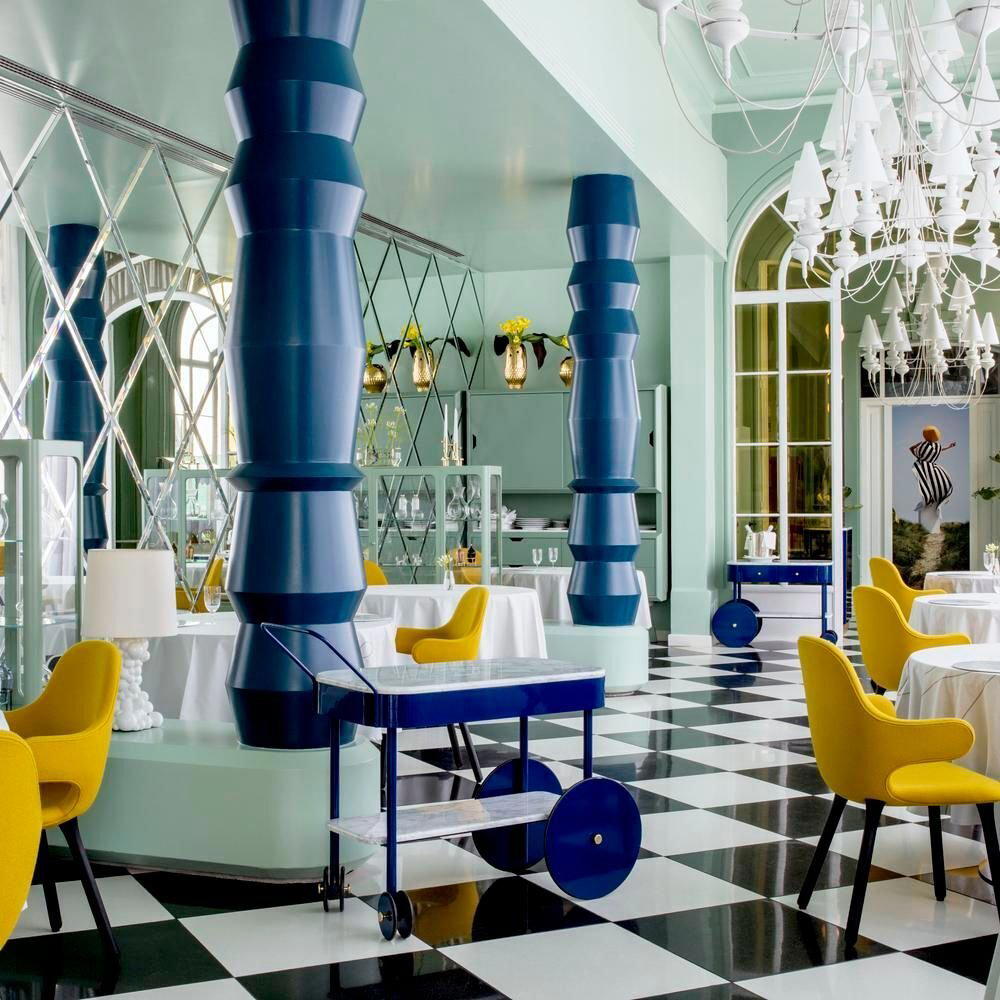
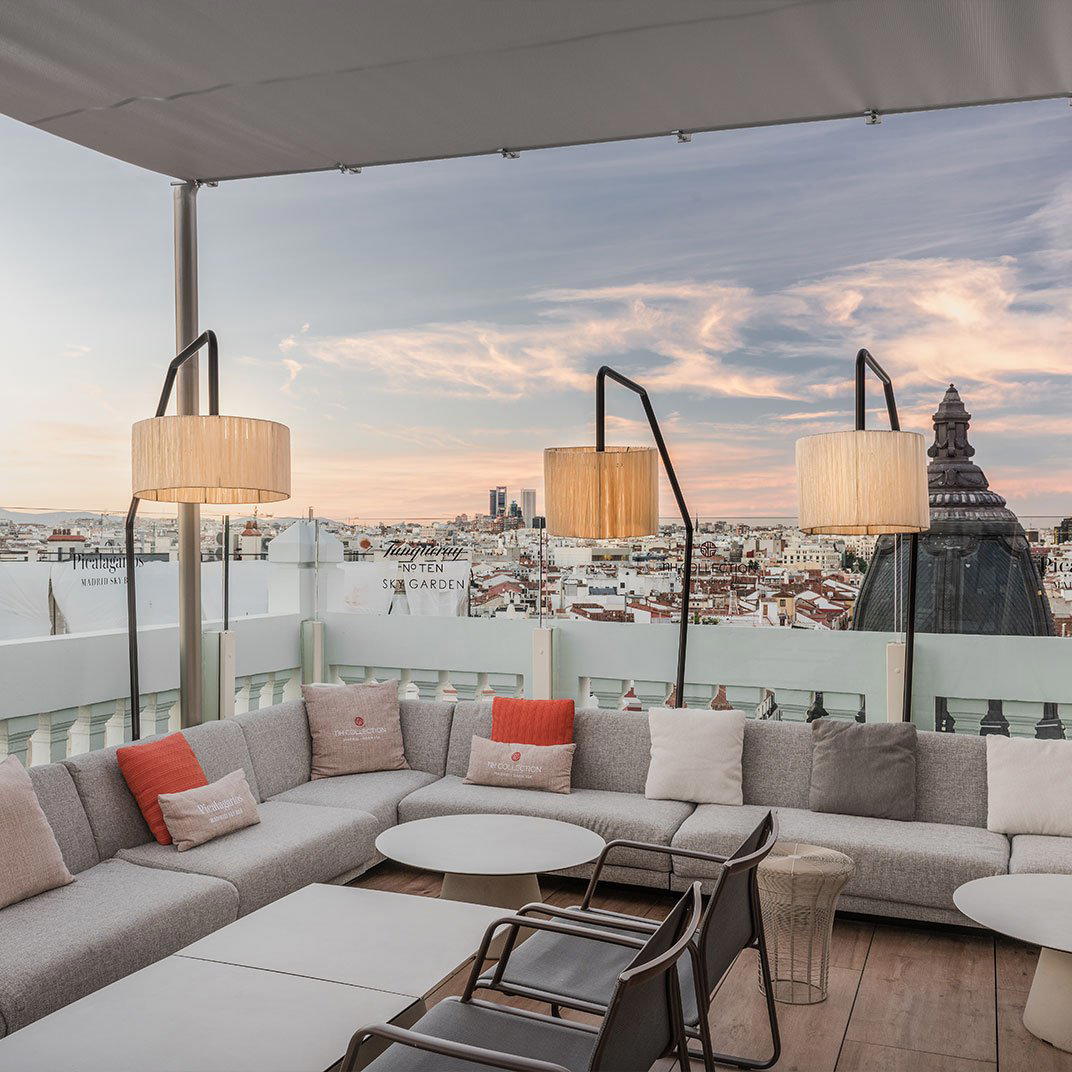
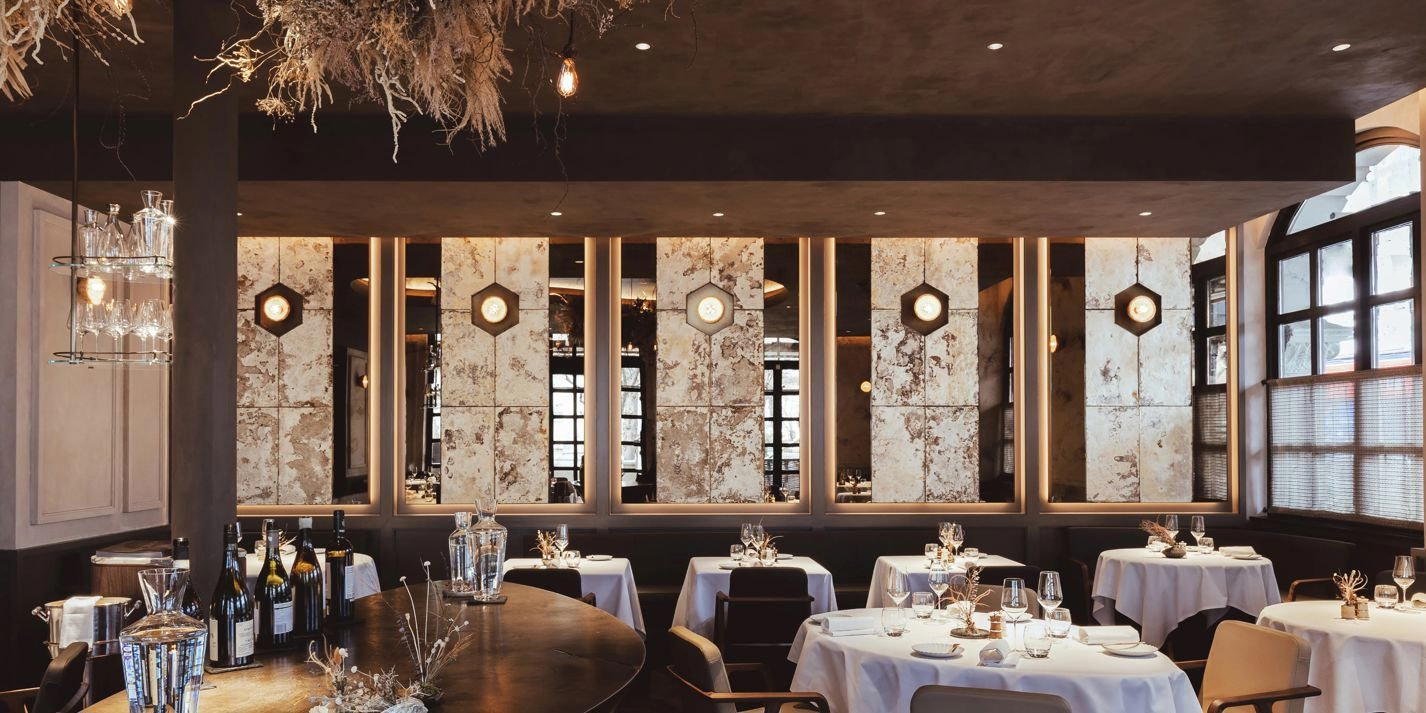
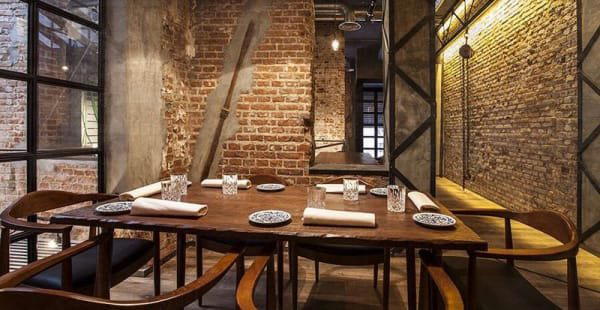
Elegant and stylish with dark walls, high ceilings, natural light from large windows, and art pieces creating a cozy, luxurious atmosphere.