Hotel AtypiQ

A Michelin Selected property on Rue Saint-Anne, Hotel AtypiQ occupies one of Old Quebec's most architecturally charged addresses, where 18th-century stone walls meet a deliberately contemporary interior approach. For travellers who find the grandeur of the Château Frontenac too performative and the budget boutiques too thin, AtypiQ sits in the middle tier with a clear design identity rather than a compromise position.
Pearl is the En Primeur Club membership app — saves, bookings, and concierge access live there. Same editors, same standards.
- Address
- 109 Rue Sainte-Anne, Québec, QC G1R 3X6, Canada
- Phone
- +1 866-694-1720
- Website
- atypiqhotel.com
 Saves & bookings on Pearl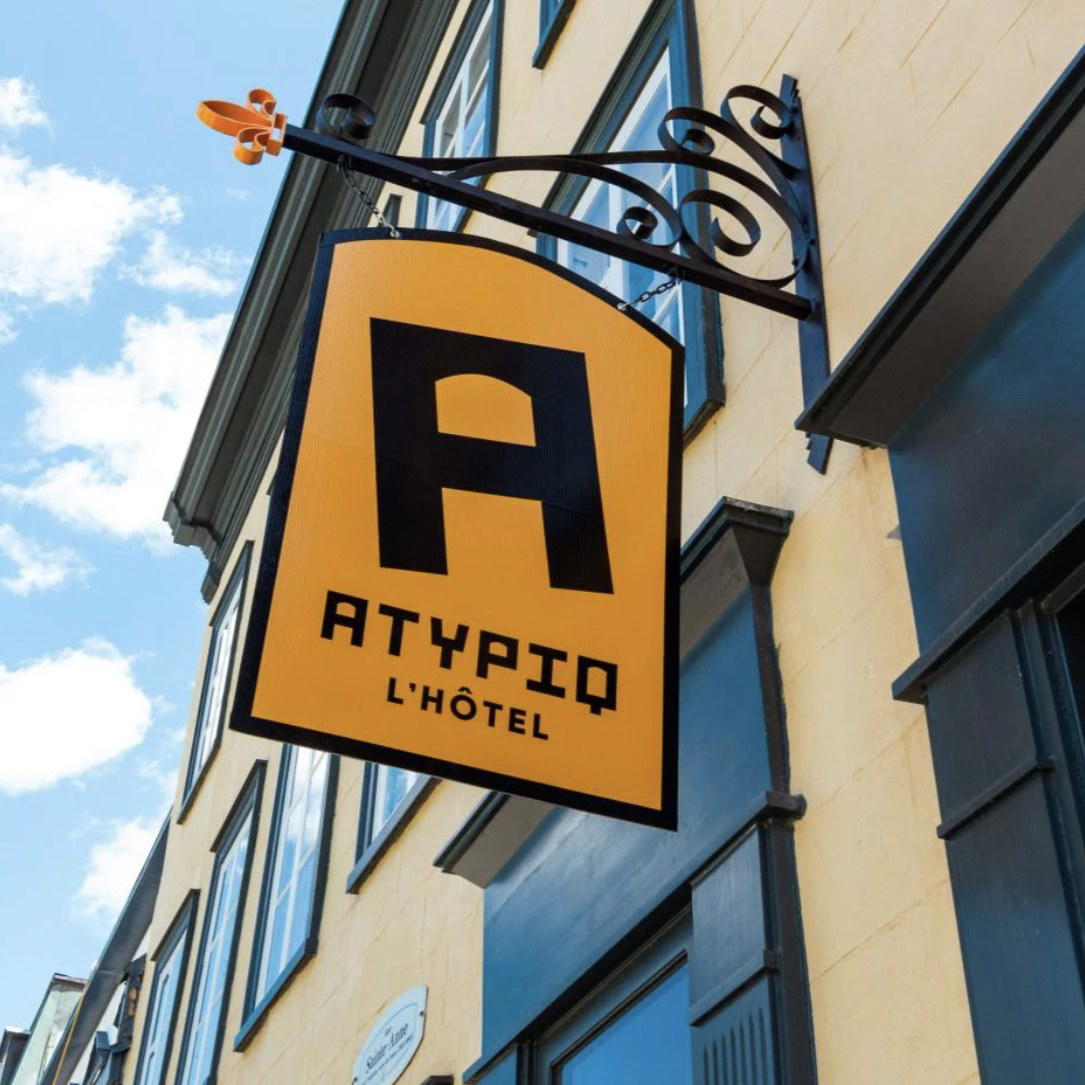
Where Old Quebec's Stone Fabric Meets a Deliberate Design Counterpoint
Rue Saint-Anne runs parallel to the Terrasse Dufferin and sits within the compressed grid of the Upper Town, where nearly every building is governed by heritage preservation rules that dictate façade materials, window proportions, and rooflines. Within those constraints, Quebec City's boutique hotel operators have developed two broad responses: lean into the period character with exposed timber and period reproduction furniture, or use the historic shell as a counterpoint for something sharply contemporary inside. Hotel AtypiQ belongs to the second camp, and the name signals the intention plainly. The French word atypique is not subtle branding, it is a declaration of positioning within a neighbourhood where most properties compete on authenticity to the 17th and 18th centuries rather than departure from it.
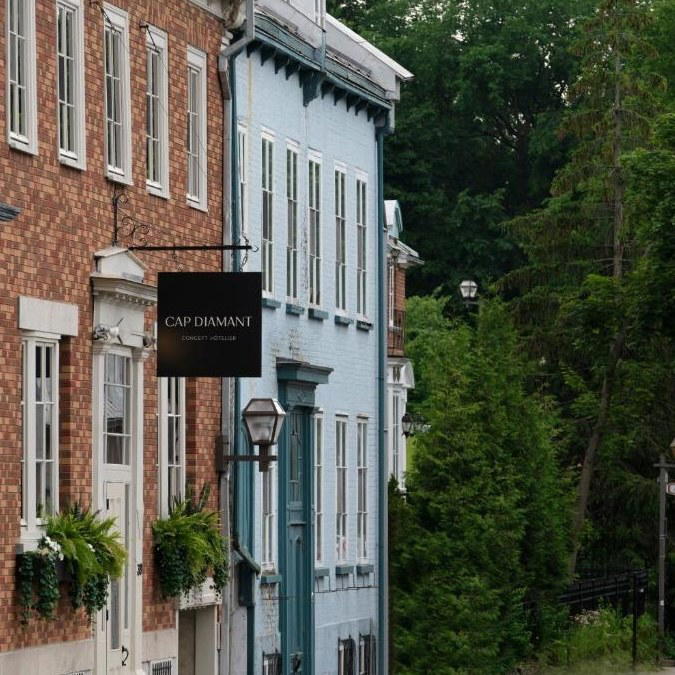
That positioning matters because the Upper Town market is genuinely crowded. The Fairmont Le Château Frontenac dominates the skyline and the category conversation. Below it, properties like Hotel Cap Diamant, Hôtel Maurice, and Monsieur Jean, Hôtel Particulier each make a case for period-inflected character. Monastère des Augustines goes further still, converting an actual 17th-century convent into a wellness-oriented retreat where the historical weight is the entire proposition. AtypiQ's bet is different: that a segment of travellers arriving in one of North America's most historically preserved cities specifically wants to sleep somewhere that does not perform that history at them.
The Architecture of Contrast
Quebec City's Upper Town building stock is largely 18th and early 19th century, with stone construction mandated by fire codes introduced after catastrophic blazes in the colonial period. The result is a streetscape of thick-walled, deep-windowed buildings that hold cold in winter and cool in summer with passive efficiency. Working inside these structures is architecturally demanding: ceiling heights are often irregular, floor plans rarely rectangular, and any intervention must satisfy heritage review. The most considered boutique conversions in this city treat those constraints as generative rather than limiting, letting the original geometry drive spatial decisions rather than fighting it with dropped ceilings and standardised room modules.
AtypiQ's address at 109 Rue Saint-Anne places it within a block of the Musée du Fort and within easy reach of both the Château Frontenac terrace and the Place d'Armes. For a city where walking is the primary mode of movement within the Vieux-Québec walls, that address is logistically efficient in a way that matters to guests who want to move between the Plains of Abraham, the antique shops of Rue Saint-Paul in the Lower Town, and the restaurants clustered around Rue Saint-Jean without returning to a hotel taxi.
Michelin's Read on the Quebec City Hotel Market
Hotel AtypiQ carries a Michelin Selected designation in the 2025 Michelin Hotels guide. Michelin's hotel selection criteria weight service quality, comfort relative to category, and maintenance alongside design, which means a Selected designation in a competitive historic city carries more information than a simple style endorsement. In Quebec City's Michelin hotel cohort, the Selected tier includes properties that demonstrate consistent quality without necessarily occupying the leading price bracket.
Within Canada's Michelin hotel selection more broadly, Quebec City sits in an interesting position relative to the country's other premium hotel markets. Properties like Fogo Island Inn in Joe Batt's Arm and Clayoquot Wilderness Lodge in Tofino have built international reputations on remote landscape settings. Urban luxury in Canada clusters around Toronto's Four Seasons Hotel Toronto and Vancouver's Rosewood Hotel Georgia. Quebec City's premium offer is distinct: it sells European urban density and walkability in a North American context, which is genuinely scarce on the continent. AtypiQ competes within that specific frame rather than against the wilderness lodges or the international chain flagships.
Elsewhere in Quebec province, Manoir Hovey in North Hatley and Hôtel Quintessence in Mont-Tremblant occupy a lakeside resort register that draws a different traveller profile. In Montreal, Le Mount Stephen has repositioned a Gilded Age bank building into the city's most architecturally self-aware hotel. AtypiQ's Quebec City play, contemporary design inside a heritage building, is a strategy Montreal has deployed more extensively, which gives it a reference point even if the two cities attract visitors for different reasons.
The Quebec City Stay in Practical Terms
Quebec City draws two distinct travel peaks: winter Carnival season in late January and February, when the city fully commits to its Nordic identity with outdoor ice structures and temperatures that regularly fall below -15°C, and summer from June through August, when the Terrasse Dufferin fills and accommodation rates across the Upper Town move to their annual highs. Shoulder season, particularly October, when the St. Lawrence Valley foliage is at full colour, offers a persuasive case for the city at less pressure. AtypiQ's Rue Saint-Anne location makes it functional across all seasons; the tight block distances within the walled city mean that weather conditions affect the experience less than they would in a car-dependent destination.
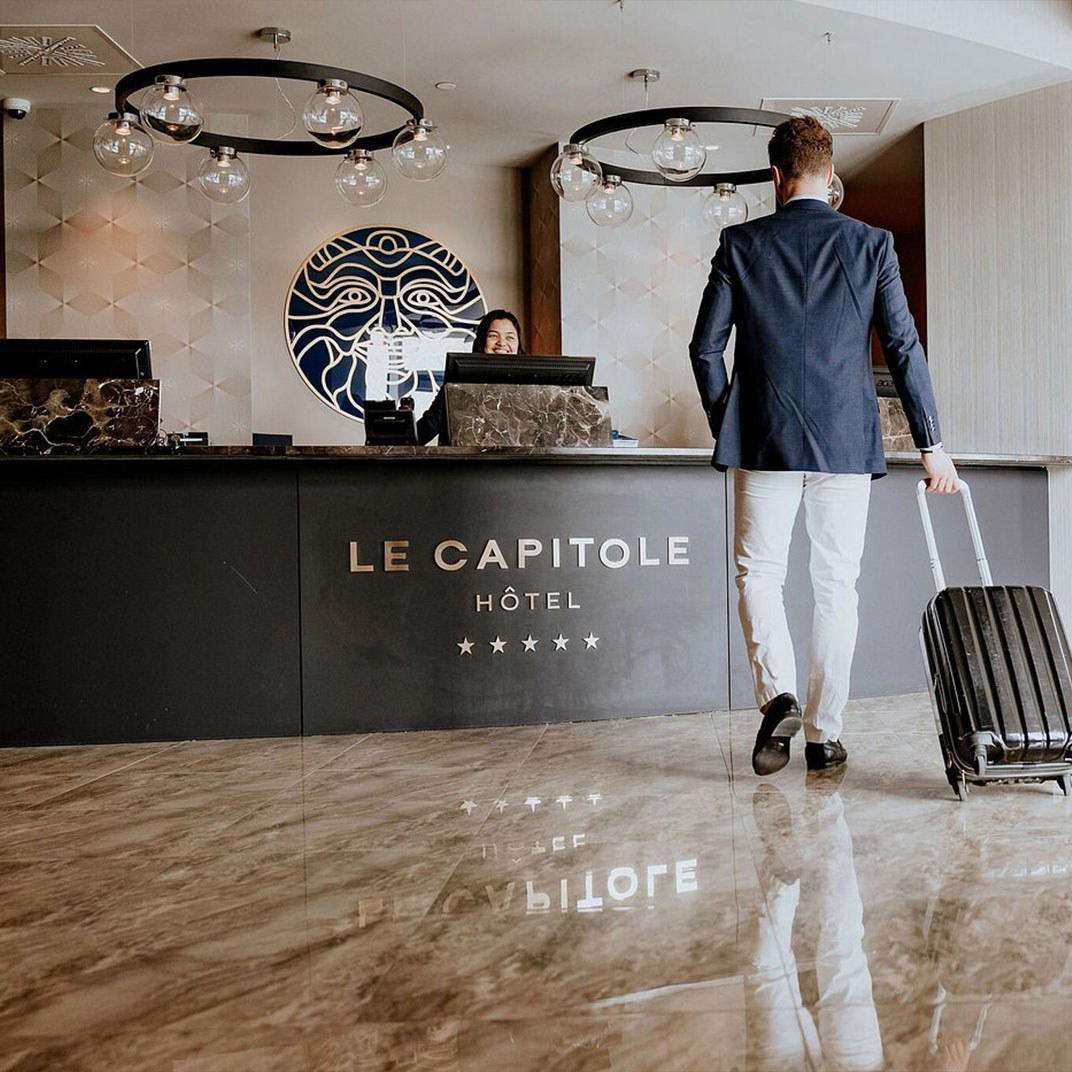
For dining context, the city's restaurant concentration in the Upper Town and along Grande Allée means guests are rarely more than ten minutes' walk from nearby restaurants. The culinary scene has shifted meaningfully over the past decade, with Quebec producers supplying a tighter farm-to-table loop than many larger Canadian cities can claim. Visitors staying at Le Capitole Hotel or Le Bonne Entente face longer transfers to the restaurant core.
For travellers calibrating Quebec City within a wider Canada itinerary, the city pairs most naturally with the Eastern Townships or Charlevoix rather than the Rocky Mountain properties: Fairmont Banff Springs, Fairmont Chateau Lake Louise, and Fairmont Chateau Whistler each occupy a different register entirely. The Le Germain Charlevoix Hotel & Spa in Baie-St-Paul is the most logical extension of a Quebec City stay, positioned about 90 minutes northeast along the river and offering a coastal counterpoint to the city's urban density.
Side-by-Side Snapshot
Comparable venues nearby, for context on price, style, and recognition.
| Venue | Cuisine | Price | Awards | Notes |
|---|---|---|---|---|
| Hotel AtypiQThis venue — the venue you are viewing | Contemporary urban boutique with smart, compact rooms. | $$$ | 3-Star | |
| Hotel Cap Diamant | Historic boutique hotel combining 19th-century charm with contemporary elegance. | $$$ | 4-Star | Vieux-Québec, Cap-Blanc, Colline parlementaire |
| Monastère des Augustines | Restored historic monastery with wellness focus | $$$ | 3-Star | Vieux-Québec, Cap-Blanc, Colline parlementaire |
| Le Capitole Hotel | Contemporary luxury blended with historic Beaux-Arts architecture; modern glass additions integrated with 1901 theatre complex. | $$$$ | 5-Star | Vieux-Québec, Cap-Blanc, Colline parlementaire |
| Monsieur Jean, Hôtel Particulier | Contemporary boutique hotel with artistic flair in historic quarter | $$$$ | Vieux-Québec, Cap-Blanc, Colline parlementaire | |
| Hôtel Maurice | Luxurious boutique hotel in a century-old heritage mansion. | $$$$ | 5-Star | Vieux-Québec, Cap-Blanc, Colline parlementaire |
Continue exploring
More in Quebec City
Hotels in Quebec City
Browse all →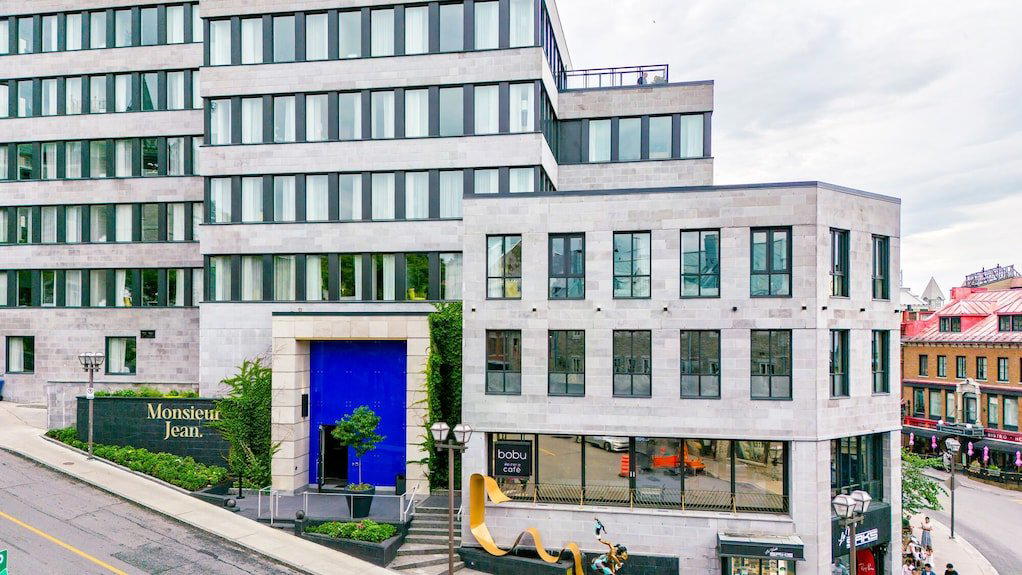
Bars in Quebec City
Browse all →
At a Glance
- Modern
- Trendy
- Minimalist
- Weekend Escape
- Romantic Getaway
- Historic Building
- Wifi
- Air Conditioning
- Rooftop Terrace
- Garden
- Shared Kitchen
- Board Games
- Street Scene
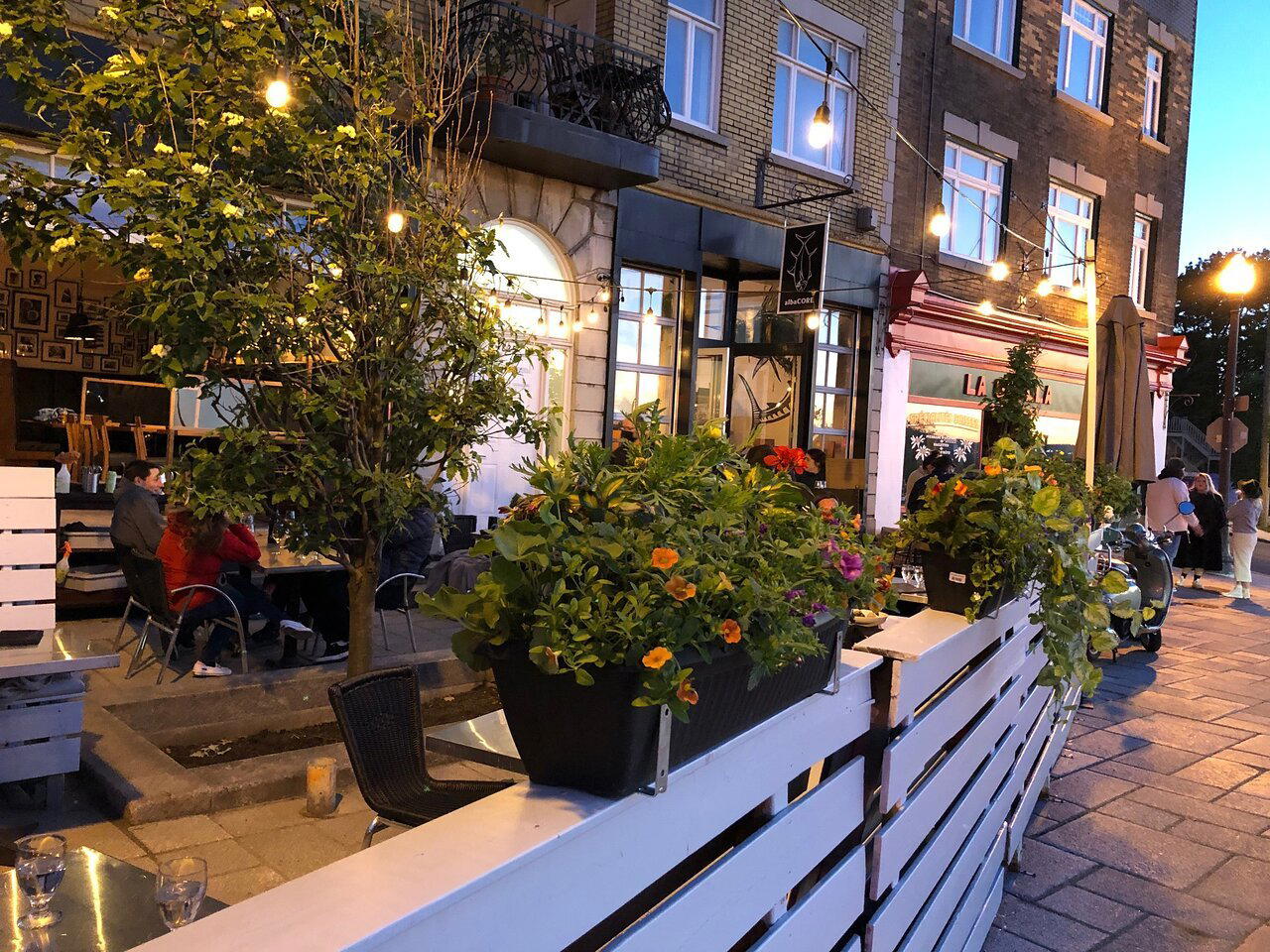
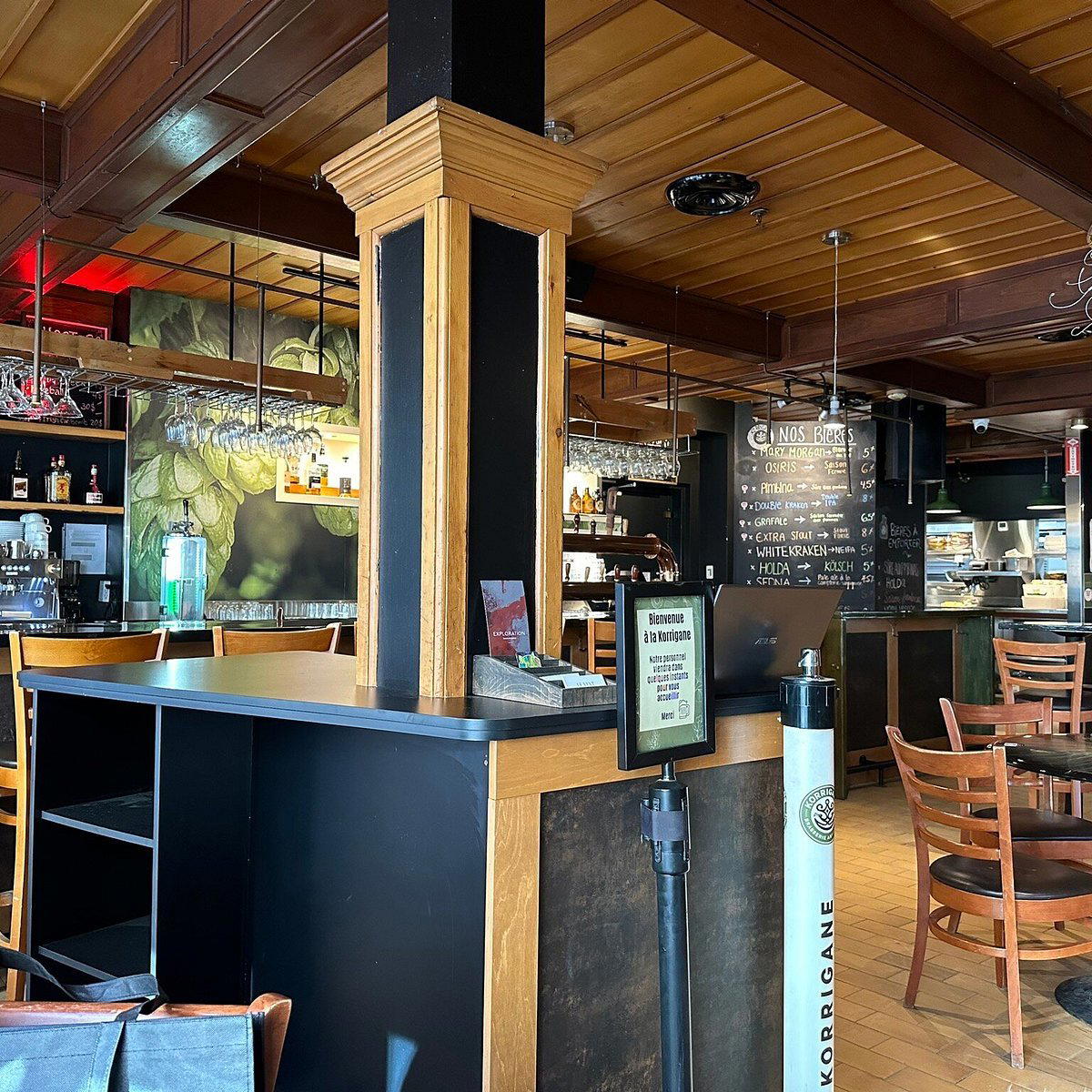
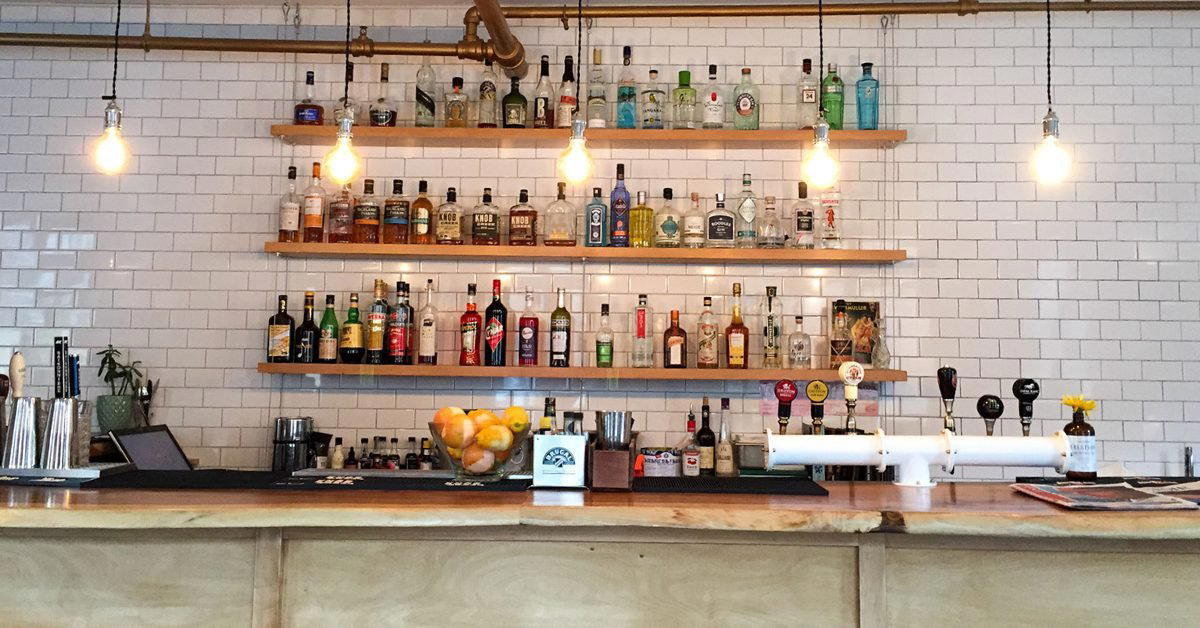
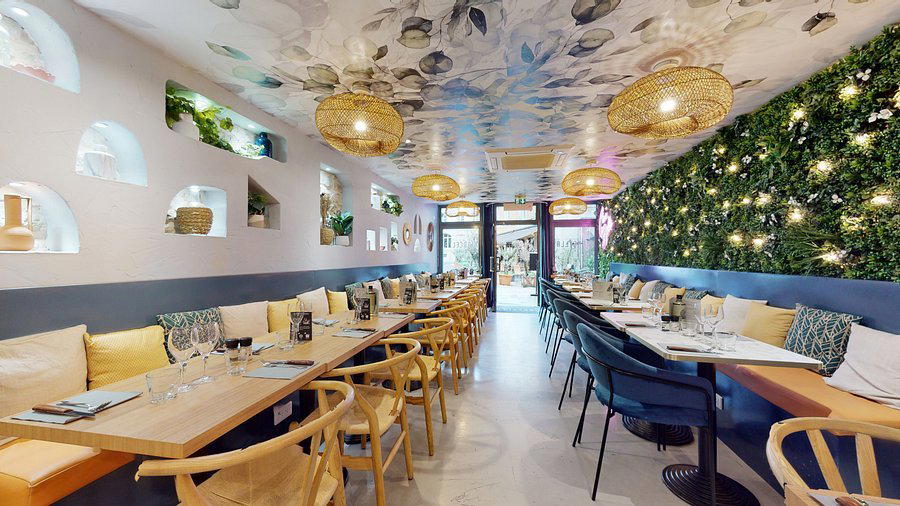
Bright and generous light with a social courtyard featuring hammocks and firepits, fostering a lively yet clever atmosphere.