Fogo Island Inn







3 Michelin Keys · La Liste Top Hotels · Virtuoso Luxury Hotel Partner
Fogo Island Inn sits on a remote island off the northeast coast of Newfoundland, where 29 rooms with floor-to-ceiling ocean views occupy a structure that reinterprets traditional Maritime vernacular through a contemporary architectural lens. Rated 98.5 points by La Liste (2026), awarded Michelin 3 Keys (2024), and ranked sixth in Condé Nast's Best Hotels list (2025), it operates as a social business that reinvests all operating surpluses into the surrounding community.

Pearl is the En Primeur Club membership app — saves, bookings, and concierge access live there. Same editors, same standards.
- Address
- 210 Main Road, Joe Batt's Arm, NL A0G 2X0
- Phone
- (709) 658-3444
- Website
- fogoislandinn.ca
- Directions
- Get directions
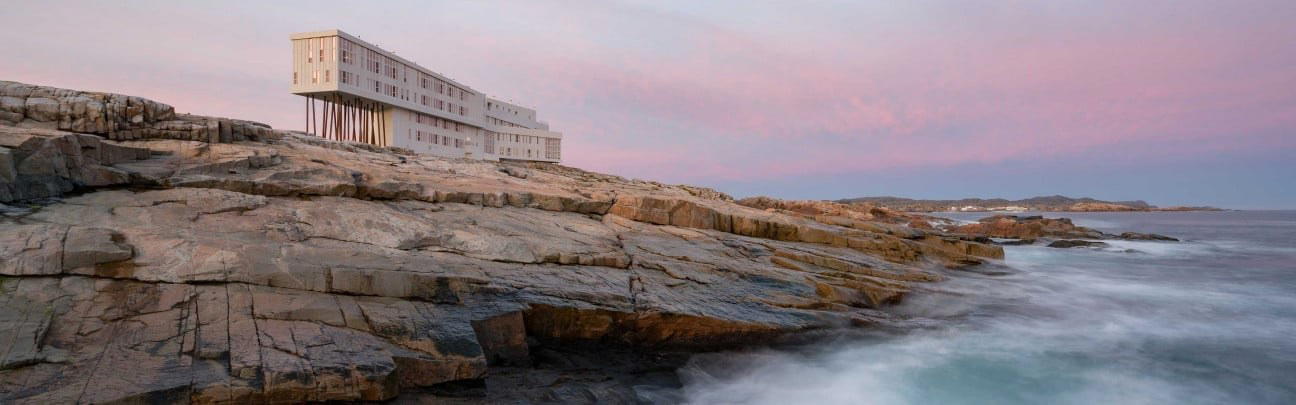
Architecture at the Edge of the Atlantic
There is a category of building that earns its authority from the landscape it refuses to hide from. Fogo Island Inn belongs to that category. The structure sits on the northeastern tip of Fogo Island, itself an island off the coast of Newfoundland, on a shoreline that faces open North Atlantic water with nothing softening the view. The architectural language draws from the utilitarian fish stages and tilt buildings that once defined outport Newfoundland, then reinterprets those forms in glass, blackened wood, and stilted platforms that lift the building above the rock. Floor-to-ceiling windows run the full face of the guest rooms across all 29 keys, placing the ocean not as backdrop but as primary occupant of every interior sight line. This is not the kind of luxury property that hides its context behind heavy curtains and spa lighting. The design insists on exposure.
The building's refined footprint, which raises portions of the structure on stilts above the coastal rock, has become the project's most discussed formal gesture. It solves a practical problem — the shoreline is uneven, ice-prone, and inhospitable to conventional foundations — while producing an effect that reads as structural drama. Guests in upper-floor rooms occupy a position that sits partially over water at high tide, with the sensation of floating above one of the most powerful stretches of ocean on the continent. That effect is not incidental. It is the architecture's central argument.
What the Rooms Deliver
Across its 29 rooms and suites, the Inn maintains a material consistency that prioritises handcraft over specification. Furniture is made by Fogo Island artists and craftspeople, using local methods and materials that keep the interiors from tipping into the generic luxury register common to high-end hotels elsewhere in Canada. The effect is closer to a well-considered private house than a resort, which places the Inn in a different competitive tier from properties like the Four Seasons Hotel Toronto or the Rosewood Hotel Georgia in Vancouver, where luxury is delivered through polish and brand continuity rather than place-specific craft.
Rates begin from USD 2,416 per night, a price point that positions the Inn firmly in the upper tier of Canadian boutique accommodation, above destination properties such as Manoir Hovey in North Hatley or Hôtel Quintessence in Mont-Tremblant, and closer in pricing to the wilderness-immersion model of Clayoquot Wilderness Lodge in Tofino. What the rate covers is not just a room but a structure of hospitality that includes community host access, guided excursions, and transfers arranged through the reservations team.
The Dining Room as Seasonal Record
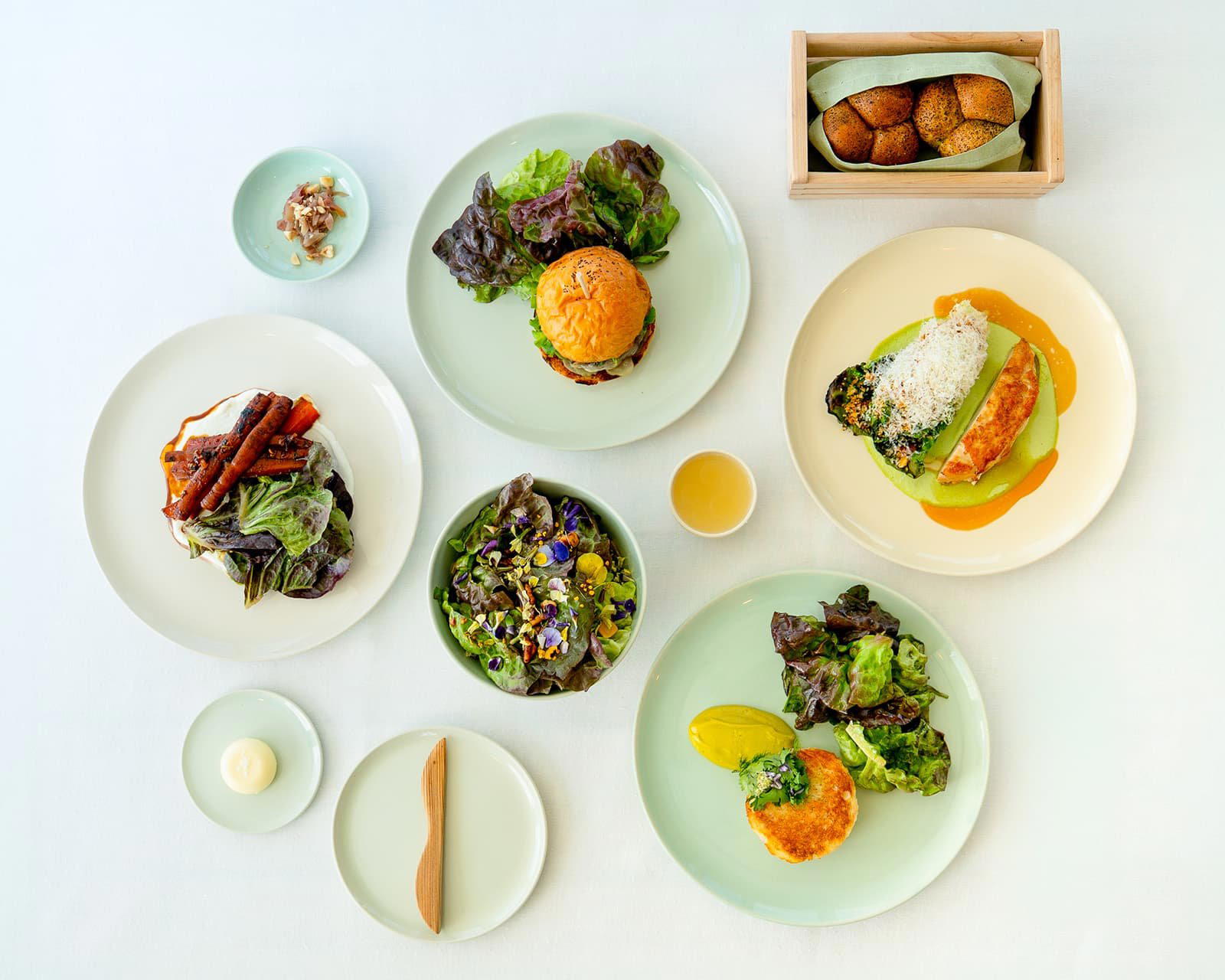
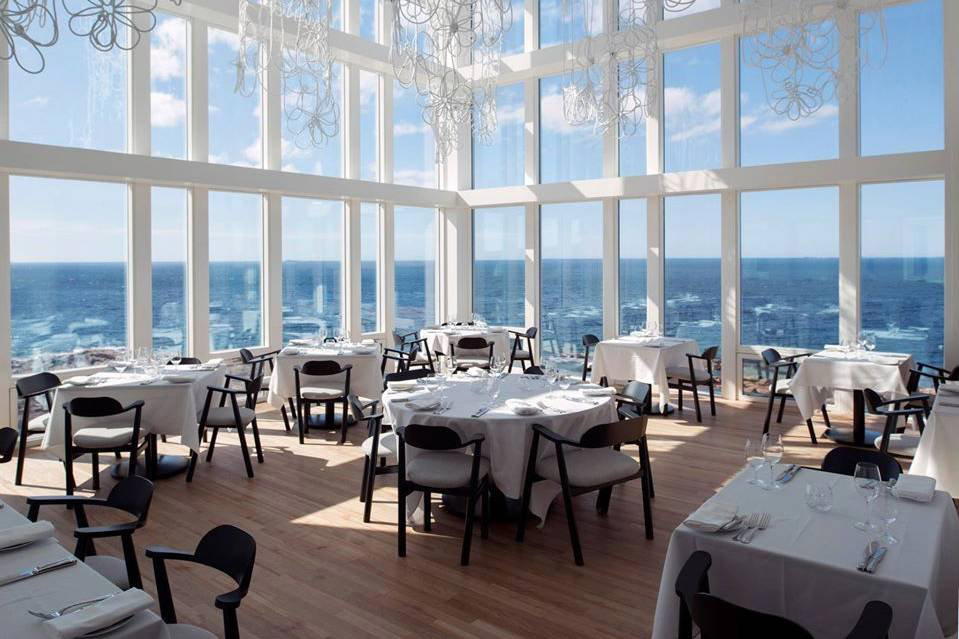
Remote-location dining in Canada has increasingly split between properties that import a finished culinary identity and those that build their menu entirely from what is immediately around them. Fogo Island Inn sits decisively in the second camp. The kitchen recognises seven distinct seasons on Fogo Island, each shifting what arrives and what disappears from the menu.
That structure earned the dining room a ranking among Canada's leading three Leading New Restaurants by enRoute magazine, a citation that carries weight because the category is competitive and the evaluation criteria extend beyond food alone to consider the coherence of the total dining proposition. The 35-seat lounge operates alongside the main room, with the same kitchen team handling both spaces plus off-site catering. For guests arriving after a long transfer, the lounge provides a lower-key entry point before committing to the more formal dining room format. For our broader restaurant context across the region, see our full Joe Batt's Arm restaurants guide.
Recognition and Where It Places the Inn
The awards record here is dense for a 29-room property in a location with no urban support infrastructure. La Liste's 2026 ranking gives the Inn 98.5 points, a score that sits well above the threshold where boutique properties in more accessible locations tend to cluster. Michelin's 3 Keys designation in 2024 applies the brand's accommodation evaluation framework and confirms the property in the top tier of that system's first iteration.
Among Canadian properties with comparable award density, the closest comparisons by recognition tier include Fairmont Chateau Lake Louise and Fairmont Banff Springs, though those properties operate at significantly larger scale with a different hospitality model. The Inn is closer in format to Langdon Hall Country House Hotel and Spa or Elora Mill in Centre Wellington in the sense that scale is deliberately constrained and the guest experience is structured around intimacy and specificity of place. The Fogo Island model takes that logic further by embedding the property in a community ownership structure where 100% of operating surpluses are reinvested into the island.
The Island as Programme
Purpose-driven luxury travel has produced a recognisable format: properties that frame environmental or cultural context as an activity programme rather than as incidental scenery. Fogo Island Inn runs that format at high intensity. Iceberg tours, geological hikes, whale watching, foraging, forest boil-ups, and bird observation are all available through the Inn's guided excursion structure. The Community Host Programme connects guests directly with Fogo Island residents across all seven seasons, producing encounters that sit outside what a conventional concierge relationship can deliver.
The island sits along Iceberg Alley, the stretch of North Atlantic where icebergs calve from Greenland glaciers and drift south, making seasonal iceberg sightings from the Inn's rooms a documented and recurring feature rather than a speculative possibility. Caribou are trackable on the island's interior terrain. The combination of ocean access and hill terrain within a compact island footprint gives the activities programme a density that larger wilderness destinations such as Fairmont Chateau Whistler or Cathedral Mountain Lodge in Field achieve through sheer scale rather than geographic concentration.
Getting to Fogo Island
Access logistics are the most consequential planning factor for any stay here. Gander, Newfoundland (YQX) serves as the primary international gateway. Commercial flights from Toronto connect through St. John's or Halifax, with a total travel time of just over four hours. Travellers arriving from the United States or Europe may find it practical to overnight in St. John's (YYT) or Halifax (YHZ) before continuing. From Gander, the drive to the Farewell ferry crossing and across to Fogo Island takes approximately two hours by road, or around 30 minutes by charter aircraft or helicopter.
The Inn provides a dedicated land-and-ferry house-car transfer service from Gander, priced at CAD 1,000 for groups of up to four passengers. All transfer logistics, including accommodation coordination along the route, can be arranged directly through the reservations team. For guests combining the visit with time elsewhere in Canada, Air Canada operates connections from Gander to Halifax, Montreal, Ottawa, St. John's, and Toronto. The remoteness that makes planning more involved is, in practice, the same condition that makes the property coherent. Properties like Le Germain Charlevoix Hotel and Spa in Baie-St-Paul or Hôtel Manoir Victoria in Quebec deliver regionality with considerably easier access. Fogo Island's version of regionality is inseparable from the effort it takes to arrive.
Comparison Snapshot
Comparable venues nearby, for context on price, style, and recognition.
| Venue | Cuisine | Price | Awards | Notes |
|---|---|---|---|---|
| Fogo Island InnThis venue — the venue you are viewing | Contemporary expression of traditional Fogo Island outport architecture, cantilevered on stilts to resemble a historic fishing stage, blending modern luxury with local craftsmanship and cultural heritage. | Not listed | 3 Michelin Keys · La Liste Top Hotels | Not listed |
| Manoir Hovey | Historic lakeside manor reimagined as a luxury resort, marrying 19th-century architectural character with contemporary hospitality and wellness-focused amenities. | $300–500 | 2 Michelin Keys · La Liste Top Hotels | North Hatley |
| Hôtel Place d'Armes | Luxury boutique hotel in a restored historic building ensemble | $100–200 | 1 Michelin Key | Old Montreal |
| Muir, A Luxury Collection Hotel, Halifax | Contemporary luxury with distinctly Nova Scotian design heritage, featuring bespoke made-in-Canada furnishings, original local artwork, and refined oceanfront positioning. | $300–500 | 1 Michelin Key · Forbes 4-Star | Queen's Marque district, downtown Halifax waterfront |
| Belvedere Hotel | Boutique heritage hotel in a restored 19th‑century residence with an intimate, residential feel. | $200–300 | 1 Michelin Key | Sydenham Ward |
| Naturally Pacific Resort Campbell River | Modern boutique resort blending natural elements with luxury amenities | Not listed | Michelin Selected | Campbell River |
Recognition history
Dated appearances from independent guides and award organizations, with the underlying list record or original source where available.
Michelin 3 Keys
Michelin
La Liste Top Hotels
La Liste
Mr & Mrs Smith Seal of Approval
Mr & Mrs Smith
Relais Chateaux Award
Relais Chateaux
Virtuoso Luxury Hotel Partner
Virtuoso
Full recognition history (11 entries)
Conde Nast Best Hotels #6
Conde Nast
Conde Nast Gold List
Conde Nast
Michelin 3 Keys
Michelin
Relais Chateaux Award
Relais Chateaux
World Travel Awards
World Travel Awards
Michelin 3 Keys
Michelin
Continue exploring
More in Joe Batt's Arm


Details
- Romantic
- Scenic
- Elegant
- Sophisticated
- Quiet
- Well Known
- Romantic Getaway
- Family Vacation
- Weekend Escape
- Destination Wedding
- Waterfront
- Panoramic View
- Design Destination
- Private Dining
- Wi Fi
- Hot Tub
- Sauna
- Fitness Center
- Room Service
- Concierge
- Valet Parking
- EV Charging
- Restaurant
- Bar
- Waterfront
Warm contemporary interiors with modern finishes, abundant natural light from expansive windows overlooking the ocean, wood-burning fireplaces, and a communal atmosphere centered around a roaring fire in the dining room with 30-foot ceilings.