Grand Hotel Portovenere

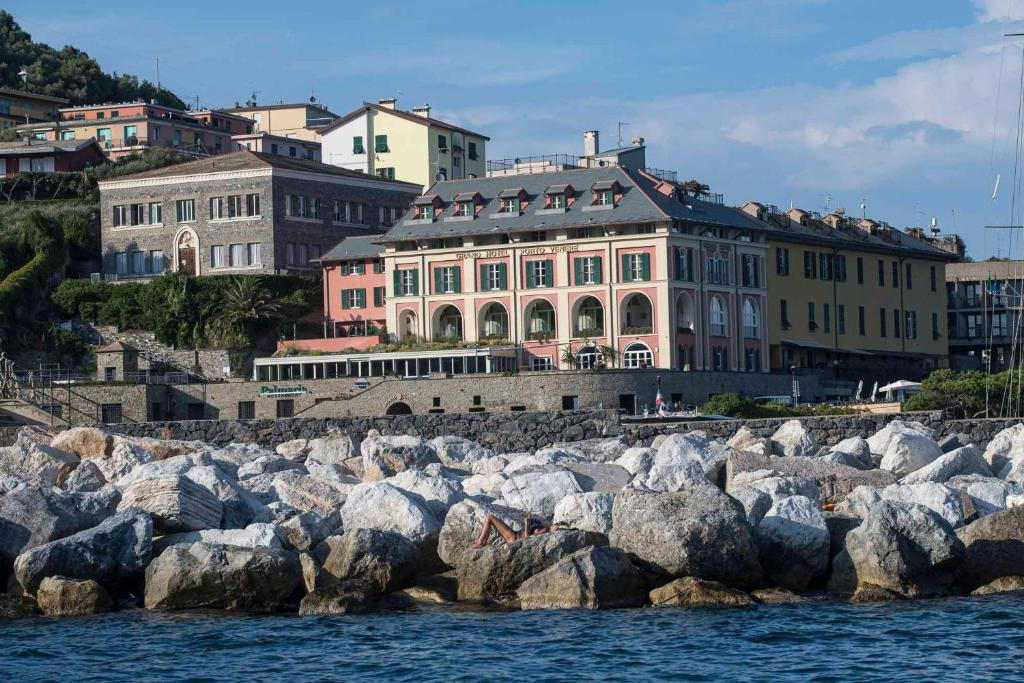
The only five-star property in the Cinque Terre zone, Grand Hotel Portovenere occupies a seventeenth-century monastery on the UNESCO-listed village's most panoramic headland. All 46 rooms face the sea, the island of Palmaria, or the medieval castle, and the outdoor terrace at Palmaria Restaurant positions the Ligurian coastline as the primary dining companion. It is a property where architecture and geography are inseparable.
 Discover on Pearl
Pearl is the En Primeur Club membership app — saves, bookings, and concierge access live there. Same editors, same standards.
Stone, Sea, and Seventeenth-Century Structure
The Ligurian coast has a particular gift for compression: a narrow strip of rock and pastel plaster where monasteries, fishing villages, and some of Italy's most photographed shoreline share a few kilometres of terrain. Portovenere, the village anchoring the southern edge of the Cinque Terre peninsula where it meets the Gulf of Poets, sits inside that compression with particular force. The approach along Via G Garibaldi arrives at a building whose stone facade has been absorbing salt air since the 1600s, a former monastery that has been converted, carefully and without architectural violence, into the only five-star hotel in the Cinque Terre zone. The hotel has 48 rooms.
That conversion is the central fact of the property. Adaptive reuse of religious architecture is a recurring theme in Italian luxury hospitality, from converted abbeys in Tuscany to repurposed convents along the Amalfi Coast, but the challenge specific to a monastery on a Ligurian headland is the relationship between enclosed mass and open panorama. Grand Hotel Portovenere resolves this by keeping the structural character of the original building largely intact while positioning every guest room to face outward. The 48 rooms look across the sea, the island of Palmaria, or the medieval Doria Castle. There is no inward-facing room that defeats the purpose of the location. That single editorial decision, no bad view, is harder to achieve in a converted historic building than it sounds.
The Architecture of Restraint
Italian coastal luxury has historically split between maximalist sea-view villas and properties that lean on historic fabric as their primary aesthetic argument. Grand Hotel Portovenere belongs to the latter category. The renovation approach places it in a peer group that includes converted historic properties across the peninsula, among them Borgo Santandrea on the Amalfi Coast and Il Pellicano in Porto Ercole, where the architecture does the principal decorative work and interior design operates in support rather than competition.
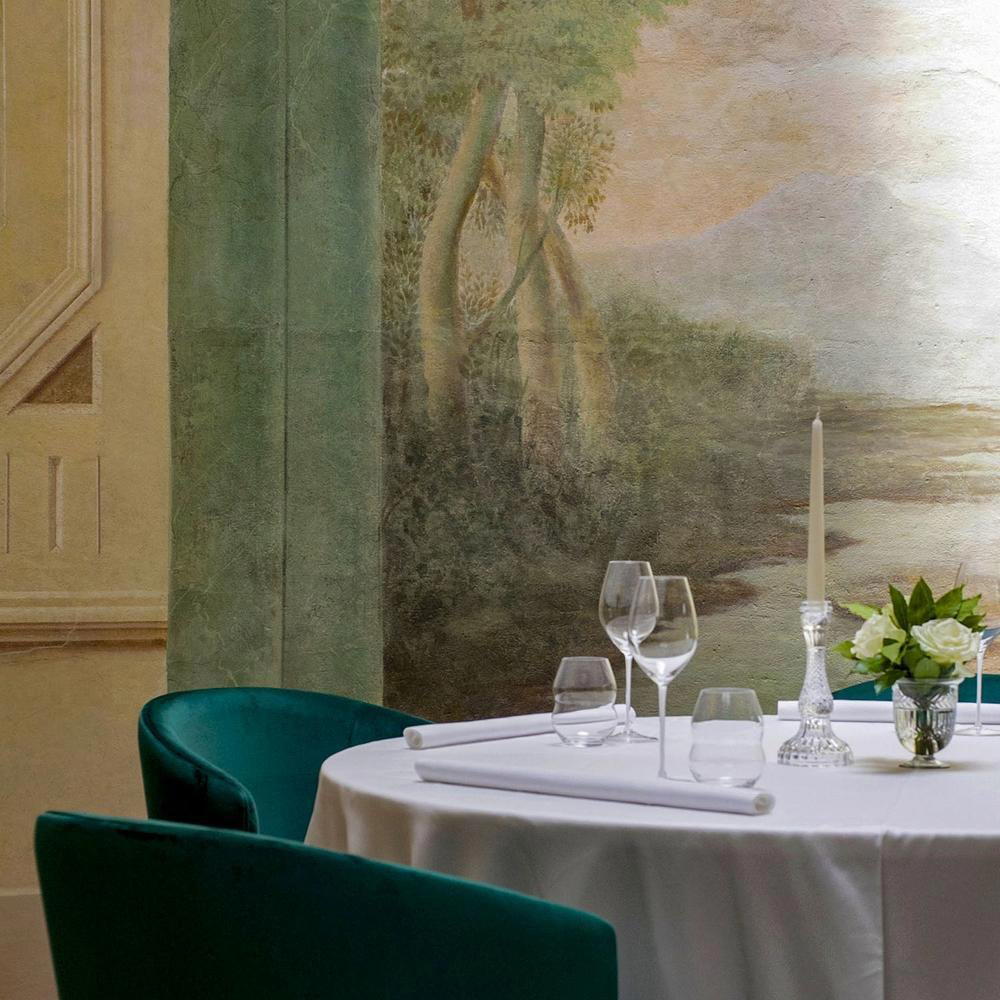
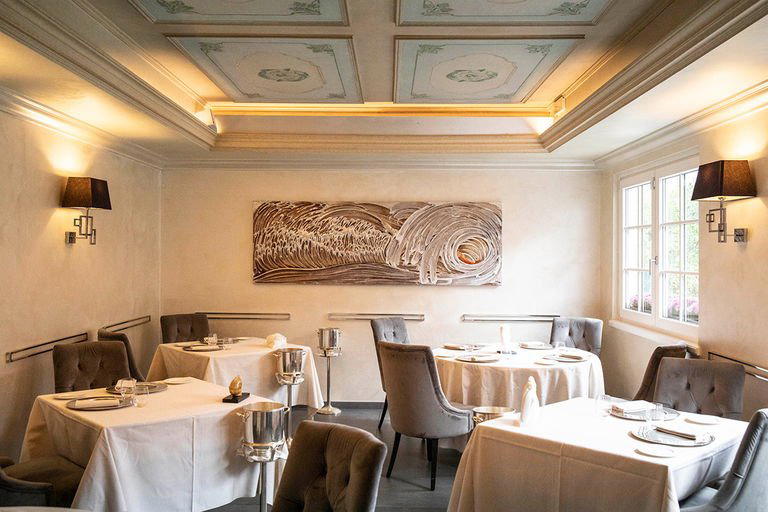
The interior palette draws from the pastel tones of Portovenere itself: the ochres, corals, and faded yellows that characterise the village's harbour-front buildings and have made the town one of the most photographed settlements on the Italian Riviera. Framing those colours from inside a room or from the terrace creates a layered visual continuity between building and town that newer purpose-built properties struggle to replicate. It is a coherence that comes from geography and time rather than from an interior designer's brief. For contrast, consider what a purpose-built resort such as Four Seasons Hotel Firenze achieves through grand palazzo provenance in an urban setting, the effect is analogous but the context entirely different.
Palmaria Restaurant and the Terrace
The food program at Palmaria Restaurant operates inside the regional-with-contemporary-twist framework that has become standard at this tier of Italian coastal hospitality. Ligurian recipes, a canon that includes pesto, focaccia, seafood from the gulf, and preparations built around local olive oil, provide the foundation, with a contemporary reinterpretation layered over. This is a credible approach in a region with a distinct culinary identity, where guests arrive with reasonable expectations of eating in a Ligurian register rather than an international fine-dining one.
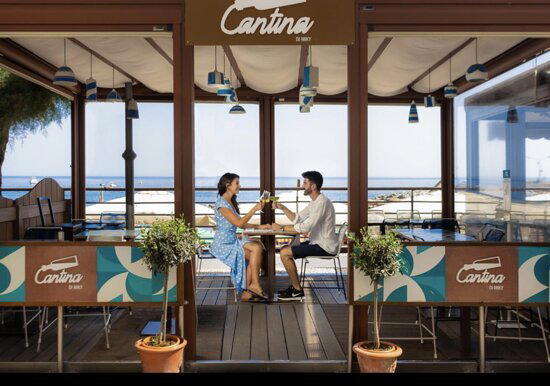
Outdoor terrace is the point where food becomes secondary to context. Overlooking the harbour, the castle, and the open sea toward Palmaria Island, it functions as one of the more cinematically positioned dining spaces on the western Ligurian coast. Terrace dining in coastal Italy is never just about the food; the view is load-bearing, and here it carries a great deal of weight. The ferry connection to the Cinque Terre villages runs from the harbour below.
Position, Access, and the UNESCO Context
Portovenere's designation as a UNESCO World Heritage Site, shared with the Cinque Terre and the islands of Palmaria, Tino, and Tinetto, is not merely a credential for the village, it reflects a level of landscape integrity that constrains new development and protects the character that makes properties like this one viable at a premium tier.
Access is genuinely multimodal. The property sits at the harbour front, where ferry boats run daily to the five Cinque Terre villages. La Spezia, the nearest mainline station, is reachable by the hotel's own transfer service or by car, and the hotel offers on-site parking in the village centre. For guests arriving by rail from Milan or Florence, the Cinque Terre Express connects La Spezia to the coast with regular departures.
The position between Cinque Terre and the Gulf of Poets gives Portovenere a dual orientation that distinguishes it from the five villages to the north. Cinque Terre draws the larger tourist volume; Lerici, Tellaro, and the Tuscan border to the south attract a quieter, more literary travel tradition connected to Shelley, Byron, and D.H. Lawrence, who all spent time in the gulf. Guests at Grand Hotel Portovenere can move between those two registers in the same stay, ferry north into the Cinque Terre crowds in the morning, return to a quieter headland by afternoon.
For those building a wider Italian itinerary, the property fits naturally into a northern coastal sequence. Properties such as Grand Hotel Tremezzo on Lake Como, Passalacqua in Moltrasio, and EALA My Lakeside Dream on Lake Garda represent the northern lakes end of the same premium Italian leisure circuit. Further south, Borgo Egnazia in Fasano, Il San Pietro di Positano, JK Place Capri, and Bellevue Syrene 1820 in Sorrento anchor the southern coastal sequence. Grand Hotel Portovenere occupies the Ligurian middle of that map, not as well known internationally as the Amalfi alternatives, which is part of its value proposition in a travel market where relative quietude at a specific location carries real currency. Elsewhere in the premium Italian spectrum, converted historic properties such as Castel Fragsburg in Merano, Borgo San Felice in Chianti, Castelfalfi in Tuscany, Corte della Maestà in Civita di Bagnoregio, and Castello di Reschio in Umbria offer points of comparison for guests deciding between different forms of Italian historic architecture.
Planning Notes
The property's parking facility is a genuine differentiator for guests arriving by car, as Portovenere's medieval street plan makes independent parking difficult. Guests using the train network should factor in the La Spezia connection, where the hotel transfer service bridges the gap.
Fast Comparison
Comparable venues nearby, for context on price, style, and recognition.
| Venue | Cuisine | Price | Awards | Notes |
|---|---|---|---|---|
| Grand Hotel PortovenereThis venue — the venue you are viewing | Historic monastery with informal elegance | $$$$ | 5-Star | |
| Grand Hotel Portovenere | Historic boutique hotel in former monastery | $$$$ | 5-Star | Porto Venere |
| Tivoli Palazzo Gaddi | Historic palace blending Renaissance heritage with modern luxury | $$$$ | 5-Star | Centro Storico |
| Grand Hotel Imperiale | Luxurious seaside retreat surrounded by pine woods with private beach access. | $$$$ | 5-Star | Forte dei Marmi |
| L'Olmo | Restored 17th-century Tuscan farmhouse with modern comforts. | $$$$ | 5-Star | Monticchiello |
| My Arbor - Dolomites | Sustainable family-run treehouse hotel elevated in the forest | $$$$ | 5-Star | Plose |
Continue exploring
More in Porto Venere
Hotels in Porto Venere
Browse all →
Bars in Porto Venere
Browse all →
At a Glance
- Romantic
- Elegant
- Scenic
- Sophisticated
- Romantic Getaway
- Honeymoon
- Anniversary
- Waterfront
- Historic Building
- Panoramic View
- Terrace
- Wifi
- Spa
- Room Service
- Concierge
- Fitness Center
- Elevator
- Business Center
- Waterfront
Refined and elegant atmosphere with soberly creative style, comfortable soundproofed rooms, and panoramic terrace dining.