Faena Buenos Aires


Faena Buenos Aires occupies a converted red-brick warehouse on the Río de la Plata waterfront, where Belle Époque theatrics meet Puerto Madero's reimagined docklands. The hotel's 88 rooms and suites carry lapacho wood floors, red velvet curtains, and picture-window views of the river or the ecological reserve. Five food and beverage outlets run from estancia-style asado to the Rojo Tango cabaret show.
 Discover on Pearl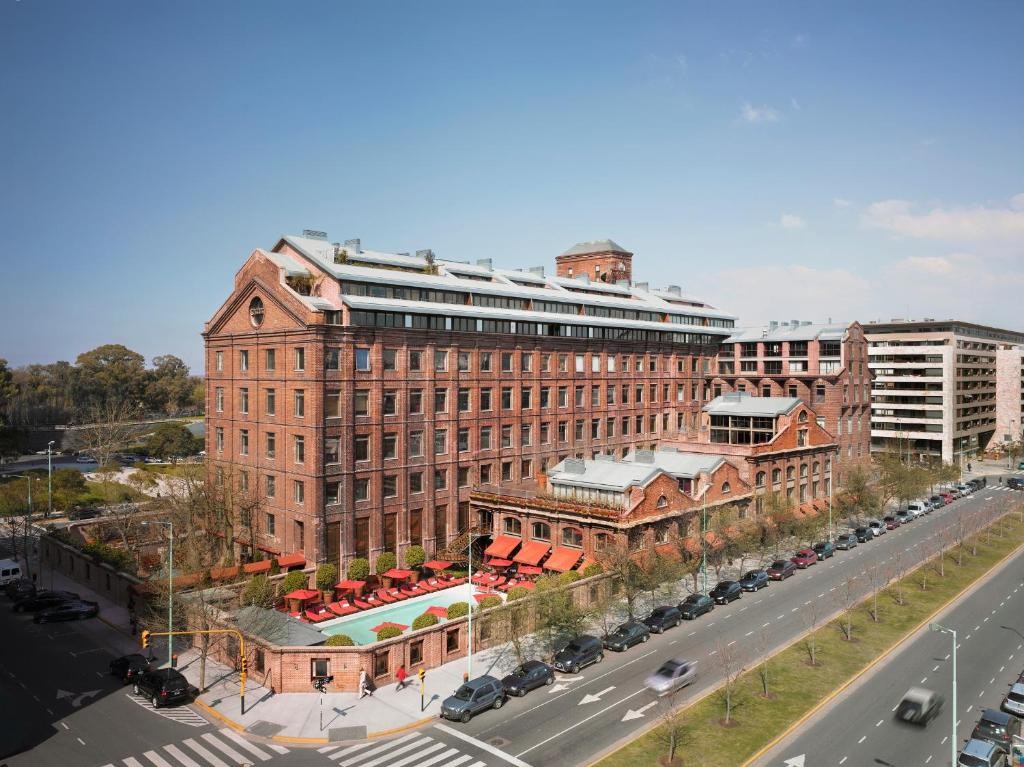
Puerto Madero and the District That Built Itself Around a Hotel
Two decades ago, Puerto Madero was a strip of derelict grain warehouses along the eastern edge of Buenos Aires, separated from the rest of the city by wide avenues and a general sense of civic neglect. The transformation since then has been one of the more striking urban pivots in South America: the docks were rezoned, the red-brick silos converted or demolished, and a grid of glass towers, waterside restaurants, and parkland emerged along the Río de la Plata. Faena Buenos Aires sits at the eastern edge of that reshaped neighbourhood, on Martha Salotti 445, in what is now formally branded the Faena District, a micro-neighbourhood that integrates the hotel, luxury apartments, and the Faena Arts Center into a single walkable block. The hotel did not arrive after the neighbourhood; in significant ways, the neighbourhood arrived alongside it.
That context matters for how guests experience the property. Puerto Madero is not the Recoleta — there are no Alvear Palace Hotel adjacencies here, no tree-lined streets carrying decades of café culture. What the location offers instead is open sky, proximity to the ecological reserve's 350 hectares of protected wetlands, and a waterfront orientation that most Buenos Aires hotels cannot match. The Four Seasons Hotel Buenos Aires operates from a Recoleta mansion; the Anselmo Buenos Aires draws from San Telmo's cobblestone grid. Faena's competitive distinction is precisely its peripheral positioning — a self-contained world that asks guests to commit to the Faena District rather than integrate into a pre-existing neighbourhood fabric.
The shortlist, unlocked.
Hard-to-book tables, cellar releases, and concierge-planned trips.
Get Exclusive Access →The Interior Logic of Red and Black
The building's exterior gives little away. The red-brick warehouse facade reads as industrial heritage, modest in scale against the glass towers nearby. Inside, the visual register shifts sharply. Black marble floors, deep red velvet, gold accents, and ivory leather furnishings define the public areas and carry through to the 88 rooms and suites. The design references Belle Époque Buenos Aires , the period of confident, European-inflected prosperity at the turn of the twentieth century , but filtered through a theatrical contemporary lens attributed to Philippe Starck, who handled the interiors. The result is less period reconstruction than cinematic interpretation: the lobby functions as stage set as much as reception space.
Rooms run from 375 square feet at the entry tier to 3,875 square feet in the larger suites, meaning the size differential between room categories is substantial. Lapacho wood floors and claw-foot tubs in glass-walled bathrooms appear in select configurations. Picture windows throughout the property frame views of the Río de la Plata, the ecological reserve, or the quaysides of Puerto Madero depending on orientation, and those views are among the property's most legible selling points for guests who place natural outlook above urban animation. Smart televisions, Egyptian cotton linens, and complimentary wireless internet are standard across all categories. With a Google rating of 4.6 across nearly 8,000 reviews, the property sits at the high-confidence end of guest satisfaction for Buenos Aires luxury hotels.
Five Outlets, One Editorial Identity
Buenos Aires has long organised its food culture around specific rituals , the asado as social institution, the late dinner hour, the drawn-out coffee. Faena's dining programme addresses that culture across five outlets. El Mercado frames itself around the estancia tradition, the open-fire asado barbecue that is as much ceremony as meal in Argentine life. Bistro Sur, designed by Starck, takes contemporary Argentine cuisine as its reference point. Between them they cover the spectrum from traditional to modernised without leaving the national framework.
The Library Lounge operates as the social hub , a place with enough local traction that Argentine musician Charly Garcia has played the baby grand there, an anecdote that functions as a reasonable proxy for the venue's cultural positioning in Buenos Aires nightlife. Poolbar extends that social energy outdoors in the warmer months, with the infinity-edge pool and its oversized decorative crown creating a visual language that is deliberately theatrical. El Cabaret houses Rojo Tango, a contemporary tango show produced in a space of red velvet and deliberate seduction, which has earned enough sustained attention to be called one of Buenos Aires' more prominent tango productions. Visitors seeking the traditional milonga culture of San Telmo or Almagro will find a different proposition here , Rojo Tango is produced entertainment, not community dancing , but as a self-contained evening format it draws consistent audiences. Check our full Buenos Aires restaurants guide for the wider dining scene across the city.
The Spa and the Wider Amenities Stack
The Faena Spa positions itself around holistic treatments that reference a range of healing traditions. The facility includes a hammam, sauna, beauty lounge, and fitness centre, which places it at the full-service end of Buenos Aires hotel spa provision. For Buenos Aires properties at this tier, the Algodon Mansion and Fierro Hotel represent smaller, design-led alternatives without equivalent spa infrastructure, while the Be Jardín Escondido by Coppola and Casa Lucia offer boutique formats with garden orientation rather than water-view theatrics.
Planning Your Stay
Warmer months , roughly November through March , are when the pool area and Poolbar terrace operate at full capacity, and the outdoor spaces become a meaningful part of the guest experience. Booking in that window, particularly around the December and January peak, benefits from early planning. Puerto Madero is a short cab or rideshare ride to central Buenos Aires attractions including El Obelisco and the Teatro Colón, which means the property's apparent remove from the city centre is less logistically significant than it might appear on a map. The ecological reserve is walkable from the hotel, providing a rare option for morning runs or walks on the edge of the Río de la Plata.
For guests combining a Buenos Aires stay with wider Argentina travel, the country's interior offers a distinct range of properties: Awasi Mendoza in Lujan De Cuyo and Cavas Wine Lodge in Alto Agrelo anchor wine-country itineraries in Mendoza. Casa de Uco in Tupungato and Algodon Wine Estates in San Rafael extend the Mendoza circuit further south. For Patagonia, Charming Luxury Lodge in Bariloche and Arakur Ushuaia Resort and Spa in Ushuaia represent the southern extreme. The Iguazu side is covered by Awasi Iguazu in Puerto Iguazu, while the northwest reaches Colomé Winery in Molinos and La Urumpta Hotel in Córdoba. Estancia travel outside Buenos Aires is well represented by Estancia El Ombú de Areco in San Antonio de Areco, a manageable day trip from the capital.
FAQ
- Which room category should I book at Faena Buenos Aires?
- The entry rooms at 375 square feet are compact by the standards of a property at this tier, and the size differential to the next categories is significant. Guests who plan to spend meaningful time in the room , rather than using it primarily as a base for city exploration , should consider moving up a tier. Suites in the larger configurations run to 3,875 square feet and include amenities such as claw-foot tubs in glass-walled bathrooms. River-facing orientations command the strongest views; reserve-facing rooms offer quieter outlooks over the ecological reserve. Given the theatrical design language throughout the property, the larger room formats allow the interior details , red velvet, lapacho floors, gold accents , to read at the scale they were conceived for.
- Why do people go to Faena Buenos Aires?
- Three reasons dominate. First, the Rojo Tango cabaret: as a standalone evening event in Buenos Aires, it draws guests who want a produced, high-design tango experience without committing to the traditional milonga circuit. Second, the waterfront positioning in Puerto Madero, which offers river views and proximity to the ecological reserve that centrally located Buenos Aires hotels cannot provide. Third, the design itself , the Philippe Starck interiors, the theatricality of the public spaces, the pool area with its bedazzled crown centerpiece , appeals to guests for whom the hotel is an experience in its own right rather than a base for city exploration. The 4.6 rating across nearly 8,000 Google reviews suggests the property consistently delivers against those expectations. Comparable properties in Buenos Aires, including the Av. Cnel. Díaz 1736 and Lodge Atamisque options further afield, serve different guest profiles; Faena is the clearest choice for guests who want design spectacle and a cabaret in the same building.
Similar Picks
A small peer set for context; details vary by what’s recorded in our database.
Preferential Rates?
Our members enjoy concierge-led booking support and priority upgrades at the world's finest hotels.
Get Exclusive AccessThe shortlist, unlocked.
Hard-to-book tables, cellar releases, and concierge-planned trips.
Get Exclusive Access →