
A Michelin Selected property on Hurumzi Street in Stone Town, Emerson on Hurumzi occupies one of the oldest merchant houses in Zanzibar's UNESCO-listed historic core. The rooftop dining format, carved Zanzibari architecture, and position inside the medina's densest layer of Swahili-Arab heritage make it a reference point for understanding how Stone Town's accommodation scene has evolved around its built environment.
Pearl is the En Primeur Club membership app — saves, bookings, and concierge access live there. Same editors, same standards.
- Address
- 236, Zanzibar, Tanzania
- Phone
- +255 779 854 225
- Website
- emersonzanzibar.com
- Directions
- Get directions
 Saves & bookings on Pearl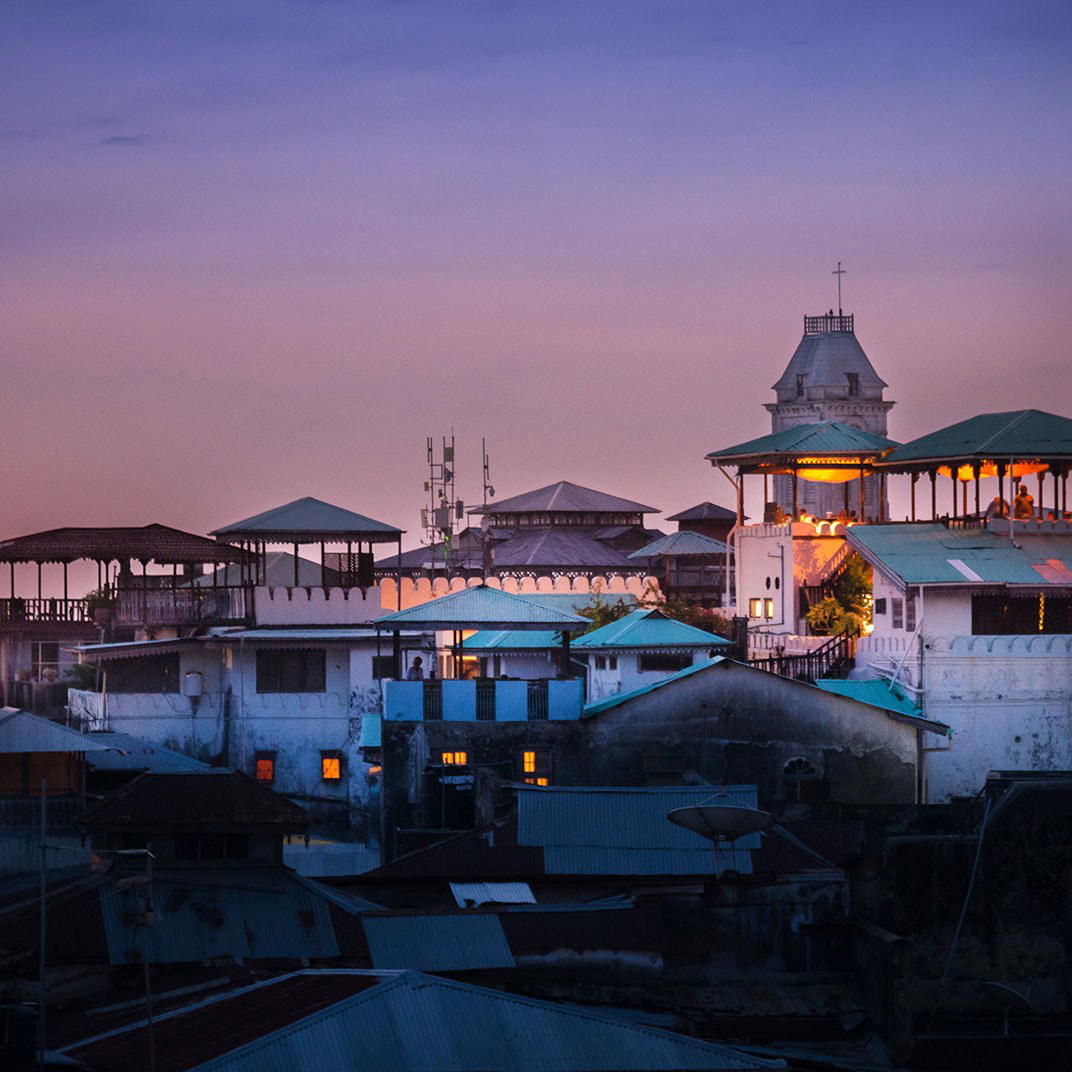
A Merchant House in the Heart of Stone Town
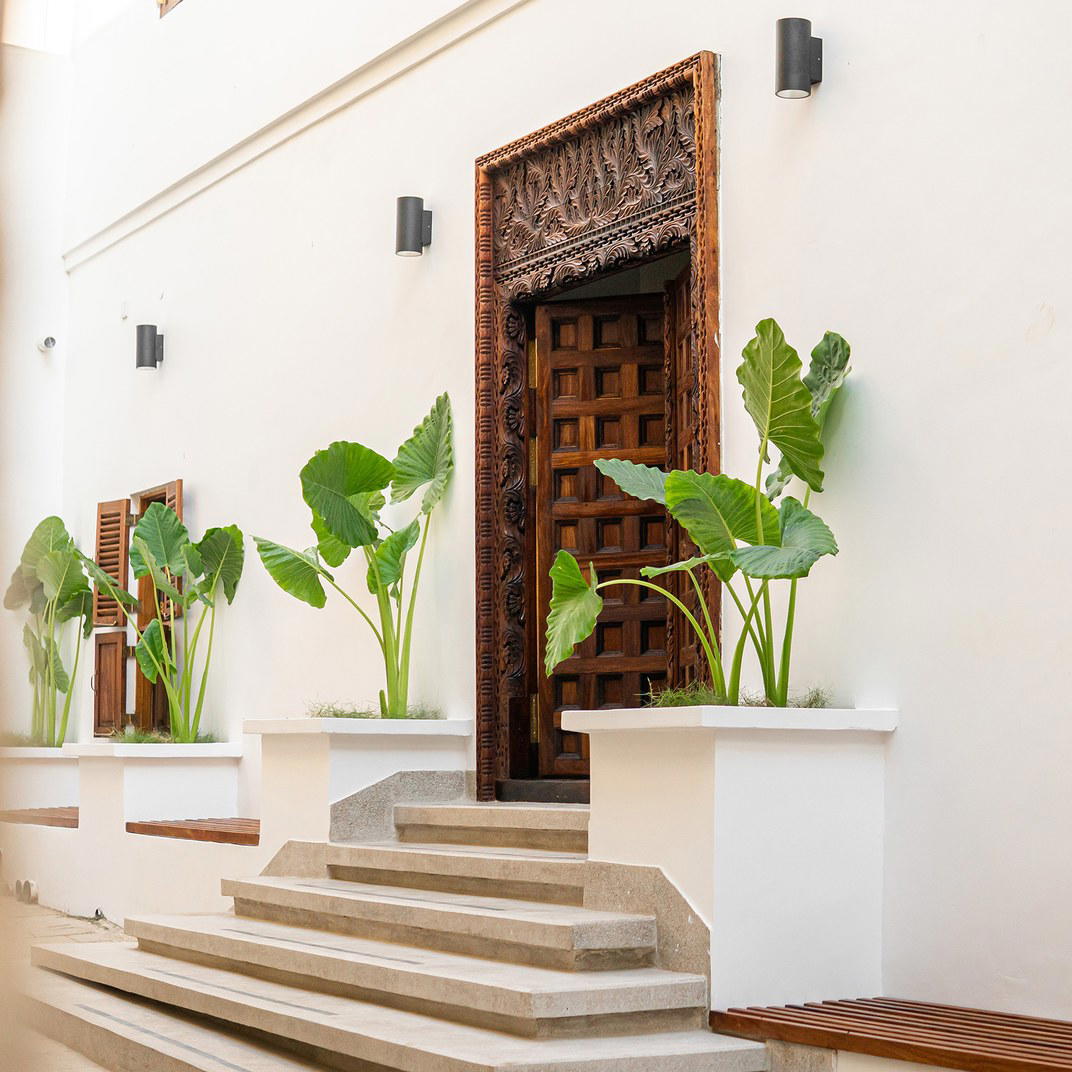
Approaching 236 Hurumzi Street on foot, the street narrows to the width of two people walking abreast. The walls on either side are coral rag and lime plaster, the kind of construction that has kept Stone Town standing through Indian Ocean humidity for centuries. The building that becomes Emerson on Hurumzi announces itself through its carved wooden door before anything else, a double-panelled entry with brass studs and deep geometric relief, the same architectural grammar that defines the grandest merchant residences of the Omani and Indian trading families who shaped this city between the seventeenth and nineteenth centuries. What you are entering is not a hotel that has borrowed some local aesthetic for atmosphere. The structure itself is the argument.
Stone Town's UNESCO World Heritage status, confirmed in 2000, recognised the town as an outstanding example of Swahili coastal trading culture. The Hurumzi district sits close to the historic centre and contains some of the highest-status residential architecture from Zanzibar's peak trading period. Buildings of this category were built by men with direct commercial links to the spice and ivory trades, and the multi-storey layout, with its inner courtyards and projecting balconies, followed conventions derived from Oman, India, and the Swahili coast simultaneously. Emerson on Hurumzi, as a property that occupies and has restored one such house, belongs to a small group of Stone Town hotels that derive their value almost entirely from the integrity of their buildings rather than from resort infrastructure.
The Michelin Selection in Context
Emerson on Hurumzi carries a MICHELIN Selected designation from the 2025 Michelin Hotels guide, a recognition that sits outside the star system but signals that Michelin's inspectors consider the property worth recommending to readers who use the guide to plan travel. It is a 15-room hotel at 236 Hurumzi Street in Zanzibar, Tanzania. In Stone Town, where the accommodation offering ranges from budget guesthouses in restored buildings to the internationally branded Park Hyatt Zanzibar in Stone Town, a Michelin selection places Emerson on Hurumzi in the tier of properties distinguished by character rather than scale. The same logic applies to properties like Emerson Spice, the sister property on Tharia Street, which operates within the same design and restoration philosophy. Between the two, the Emerson addresses represent one architecturally committed strand of Stone Town hospitality.
For context on how Zanzibar's premium accommodation tier is structured more broadly: the island's highest-end properties tend to cluster either in Stone Town's historic medina or along the northeastern coast, where open ocean frontage supports a different kind of luxury entirely. andBeyond Mnemba Island and Kilindi Zanzibar occupy that coastal register. Bawe Island sits on its own private island a short boat ride from Stone Town. The hotel operates in a different category altogether: its premium comes from depth of place, not breadth of facility.
The Architecture as Experience
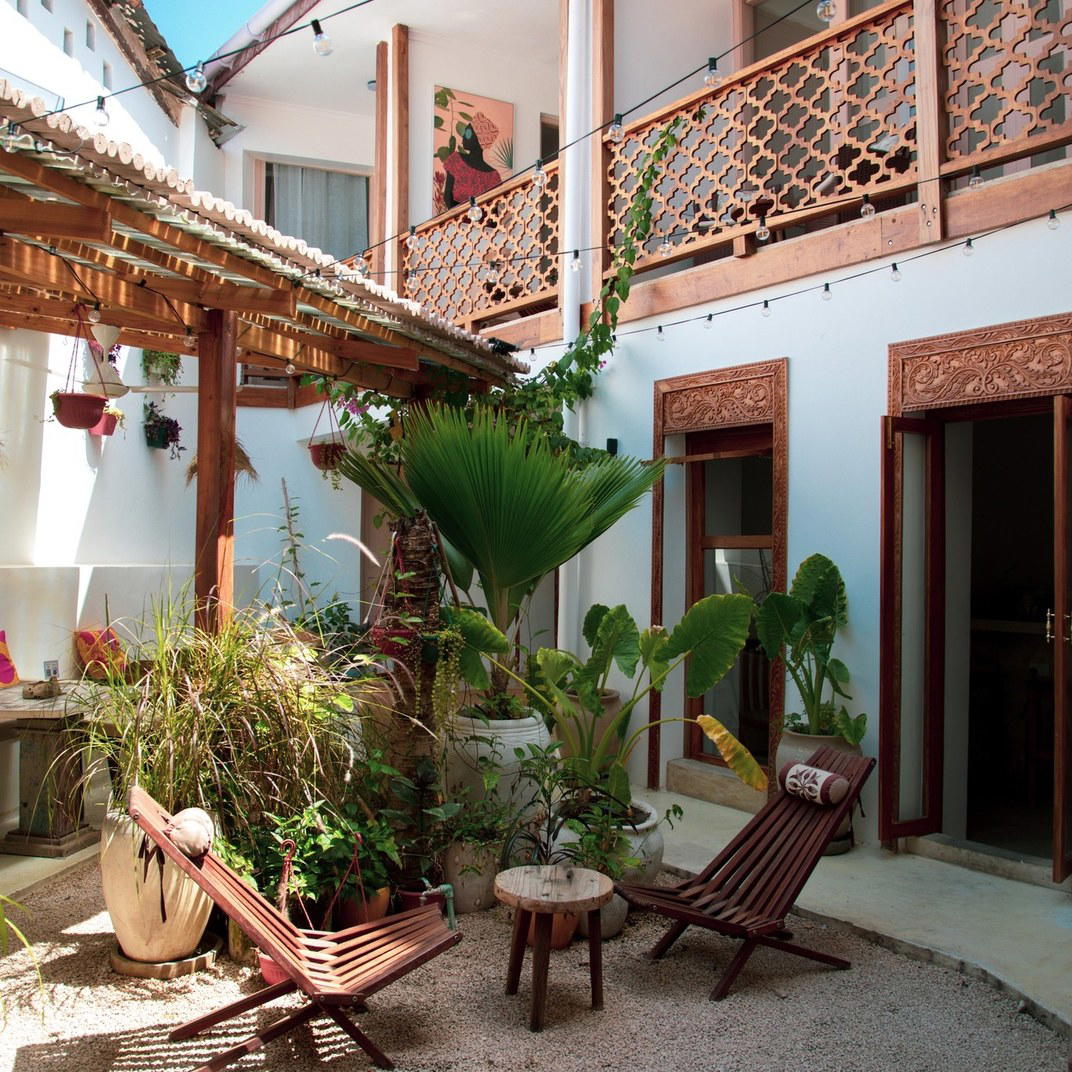
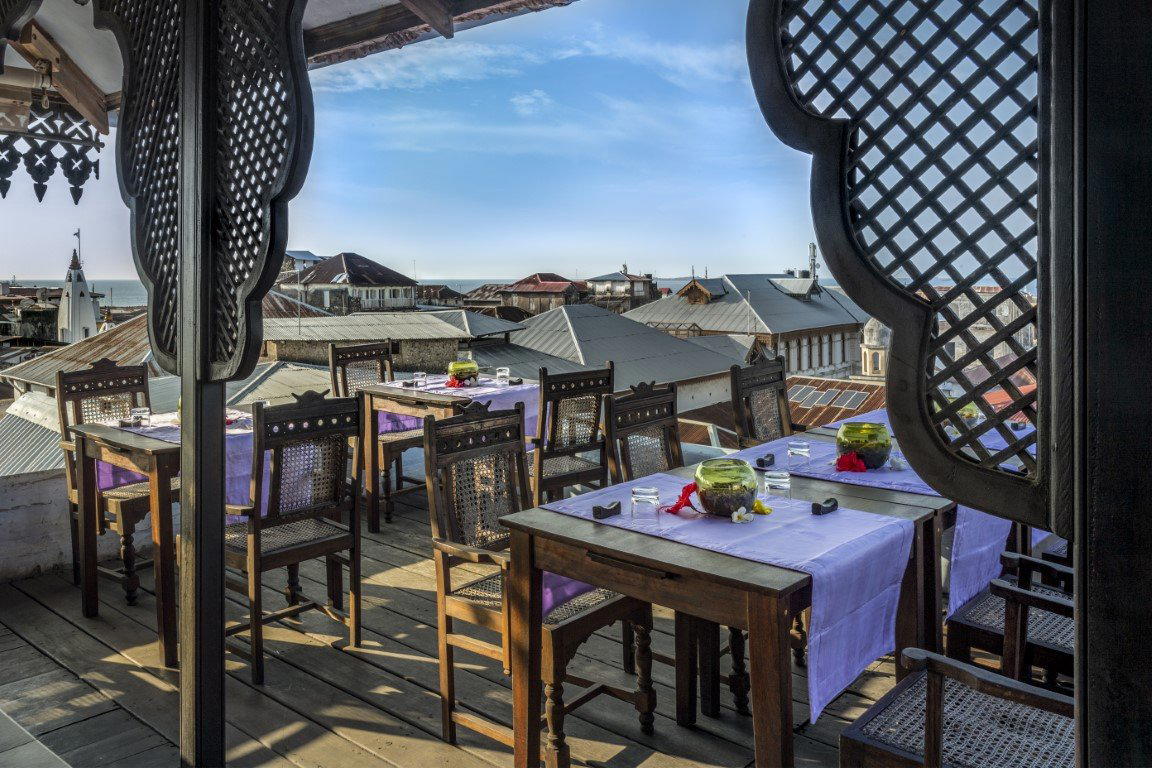
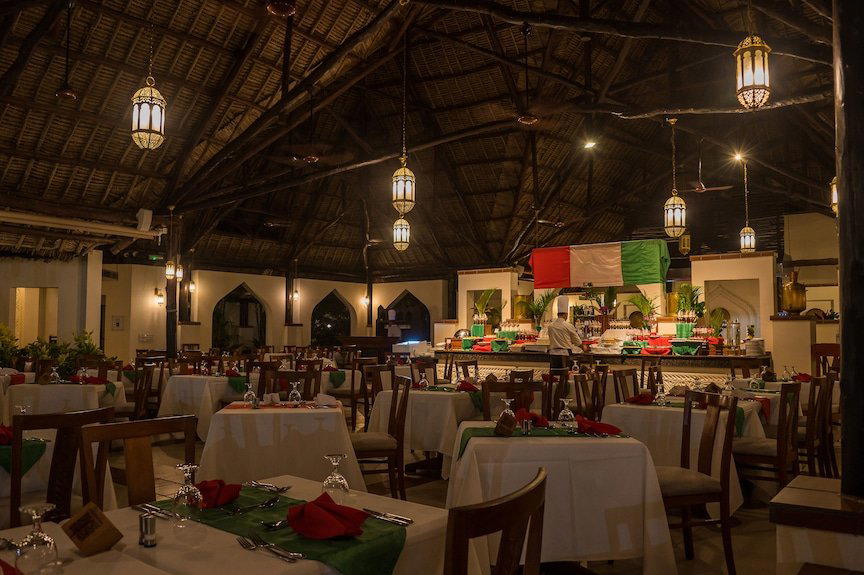
Zanzibari merchant houses were designed for vertical living. Ground floors handled commerce and storage; upper floors were residential and increasingly private as you ascended. The rooftop, open to the prevailing sea breeze, was desirable space in the building during the hot season. This spatial hierarchy survives in how the hotel functions as a hotel. Rooms occupy the middle floors and vary considerably by position within the building, some open to the interior courtyard, others look toward the street and the city's roofscape. The rooftop is where the dining experience concentrates, as it does in many of Stone Town's older restored properties, because the elevation and the breeze make it one comfortable and most atmospheric part of any traditional house after dark.
The carved woodwork throughout the building is not decorative in any superficial sense. Zanzibari door and panel carving followed a code: the density of carving, the use of particular motifs (fish, chains, date palms, lotus flowers), and the width of the frame communicated the owner's status and religious affiliation. A property on Hurumzi with this level of carved detail is reading from a specific page of the island's social history. That context makes wandering the building something different from moving through a conventionally decorated hotel. Guests who arrive with some knowledge of that code, or who acquire it during their stay, will find the space more legible and more interesting than those who treat it as backdrop.
Stone Town's Broader Hospitality Scene
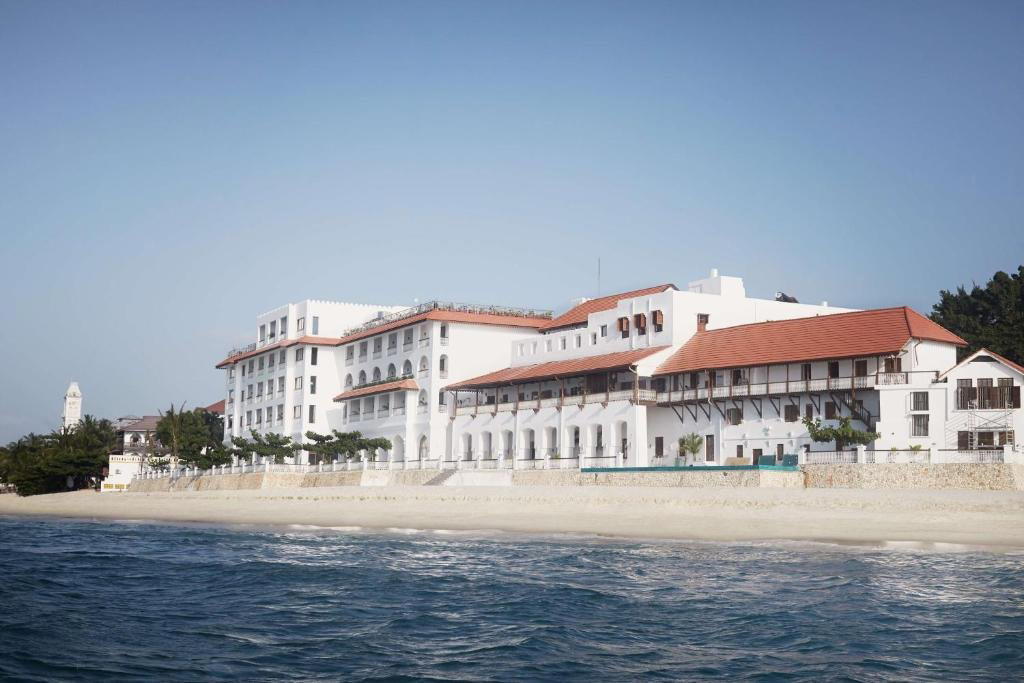
Stone Town has developed a recognisable typology of boutique accommodation over the past two decades: restored merchant houses, typically with fewer than twenty rooms, rooftop or courtyard dining, and interiors that draw heavily on Swahili-Arab decorative traditions. Sharazad Wonders Boutique and Amani Boutique Hotel operate within this typology. kizikula and Mvuvi Boutique Resort represent adjacent approaches to Zanzibari hospitality at a smaller scale. Sea Cliff Resort and Spa Zanzibar and Xanadu Luxury Villas and Retreat Zanzibar in Dongwe move toward a resort format that trades the medina's density for more open grounds. What distinguishes the hotel within its peer group is the Michelin recognition and the specific historical weight of the Hurumzi address itself.
Guests extending their Tanzania itinerary beyond Zanzibar have strong options on the mainland. Singita Sasakwa in Serengeti National Park, Singita Sabora in Arusha, JABALI RIDGE in Ruaha National Park, and Siringit Serengeti Camp in Seronera represent the premium safari tier. Chem Chem Lodge in Vilima Vitatu, Ndutu Camp in Ngorongoro, andBeyond Klein's Camp in Sedeco, andBeyond Lake Manyara Tree Lodge in Magara, Laba Grumeti Art Lodge in Serengeti, and Gibb's Farm in Karatu fill out the broader northern circuit. A Zanzibar stay at a property like Emerson on Hurumzi pairs naturally with a mainland safari as cultural and historical counterweight to days spent on game drive.
Planning a Stay
Stone Town sits on the western coast of Unguja (Zanzibar Island), with Abeid Amani Karume International Airport approximately 6 kilometres to the south. The town itself is navigable only on foot once inside the medina; vehicles cannot enter most of the historic lanes. Arriving guests typically transfer to the edge of the old town by car and walk the final section. The cooler, drier months from June through October represent one popular season for Stone Town visits, with lower humidity and reliable afternoon breezes making the city's labyrinthine streets considerably more comfortable than the wet season from March to May. The rooftop dining experience that defines properties like Emerson on Hurumzi is at its most appealing in the dry season, when evenings are clear and the wind off the Indian Ocean keeps temperatures moderate after dark. Booking well ahead of the June to August peak is advisable, particularly for Stone Town's most characterful small properties where room counts are low.
Travellers who want to compare the Stone Town heritage-hotel model against international reference points in the Michelin Selected tier might consider what properties like Badrutt's Palace Hotel in St. Moritz, Hôtel de Paris Monte-Carlo in Monte Carlo, and The Fifth Avenue Hotel in New York City share with the Hurumzi property: all derive significant authority from their buildings' histories, even as they operate in radically different markets.
City Peers
Comparable venues nearby, for context on price, style, and recognition.
| Venue | Cuisine | Price | Notes |
|---|---|---|---|
| Emerson on HurumziThis venue — the venue you are viewing | Restored historic Zanzibari merchant house blending Swahili, Arabic, and Indian influences with theatrical antique decor. | $$$$ | Not listed |
| Emerson Spice | Restored historic merchant's house with Zenji Déco elements | $$$$ | Stone Town |
| Upendo Beach Zanzibar | stylish boutique beach retreat combining private villas with social areas | $$$$ | Michamvi Peninsula |
| Mvuvi Boutique Resort | Intimate beachfront boutique blending Swahili heritage and Western luxury. | $$$$ | Kiwengwa |
| Kilindi Zanzibar | Exclusive ultra-luxury boutique resort owned by Elewana Collection, originally designed for ABBA's Benny Andersson, positioned as a romantic barefoot getaway with personalized service. | $$$$ | Kendwa |
| andBeyond Mnemba Island | barefoot luxury private island resort | $$$$ | Mnemba Island |
Recognition history
Dated appearances from independent guides and award organizations, with the underlying list record or original source where available.
Michelin Selected
Michelin
At a Glance
- Romantic
- Elegant
- Rustic
- Historic
- Intimate
- Sophisticated
- Honeymoon
- Romantic Getaway
- Anniversary
- Historic Building
- Terrace
- Rooftop
- Panoramic View
- Restaurant
- Wi Fi
- Air Conditioning
- Street Scene
- Restaurant
- Wi Fi
- Air Conditioning
Atmosphere of antique splendor with eclectic traditional furnishings, lively colors, plush fabrics, and lively rooftop dining.