Puyuhuapi Lodge & Spa occupies a remote corner of Chilean Patagonia's Aisén region, accessible only by sea or gravel road and set against glacial fjords that frame every window. The lodge operates at the frontier of isolation-as-amenity, where thermal pools, wilderness proximity, and a bar drawing on southern Chilean ingredients define the experience as much as the accommodation itself.

Pearl is the En Primeur Club membership app, where members save venues, book tables and use the concierge.
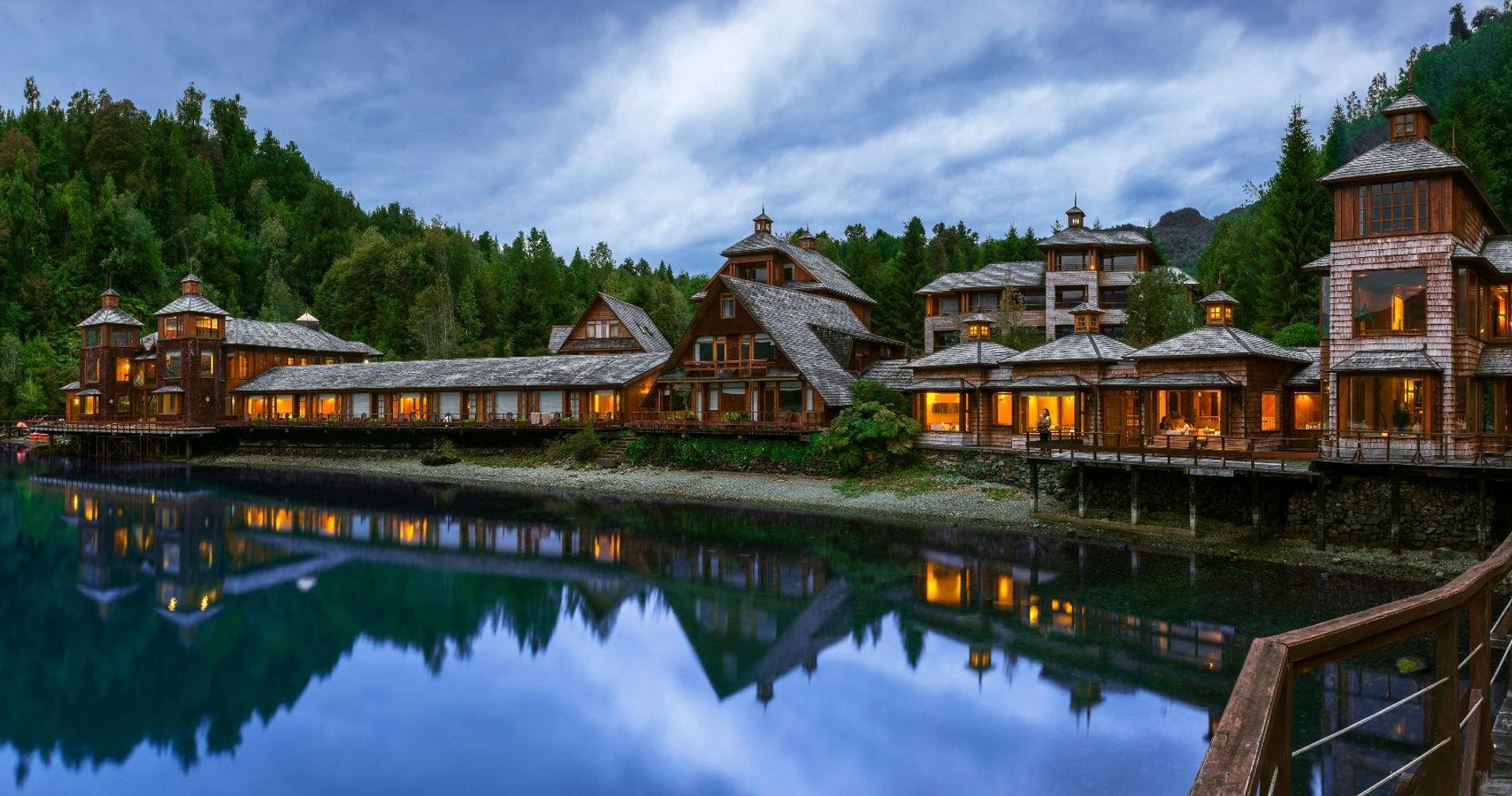
Where the Carretera Austral Ends and the Fjord Begins
Arriving at Puyuhuapi requires a decision most travellers are not used to making: boat or gravel. The lodge sits on Bahía Dorita, a bay off the Puyuhuapi Channel in Chile's Aisén region, a stretch of Patagonia where road infrastructure thins to a single unpaved artery and weather systems arrive without warning from the Pacific. That physical remove is not incidental to the experience, it is the experience. Properties in this tier of Patagonian wilderness are evaluated less on room count or dining accolades and more on how fully they deliver on the premise of genuine isolation. Puyuhuapi commits to that premise with few concessions.
The lodge belongs to a category of remote South American properties that has grown in reputation over the past two decades as high-income travellers shifted interest from urban luxury toward controlled wilderness encounters. The Singular Patagonia in Puerto Natales represents the design-forward end of that spectrum; Puyuhuapi operates with a different priority, where thermal geography and fjord access do more editorial work than interiors. Both sit within the broader Patagonian premium tier, but they address different versions of the same appetite for remoteness. For further context on how Aisén's hospitality scene fits into Chile's wider offering, see our full Aisén restaurants guide.
The Bar at the End of the Carretera
Remote lodge bars occupy an unusual position in the broader geography of serious cocktail culture. The programmes at venues like Kumiko in Chicago, Jewel of the South in New Orleans, or Amor y Amargo in New York City operate within dense urban cocktail ecosystems, competing on technique, sourcing transparency, and format discipline. A lodge bar in Patagonia operates on entirely different logic: the question is not how the programme compares with peers in a given city, but how well it channels the specificity of its location into something worth drinking.
Southern Chile offers raw material that urban programmes cannot replicate. Calafate berry, maqui, merkén (a smoked chilli blend with Mapuche origins), apple-based chicha from the Lake District, and local aguardiente variants all appear in the repertoire of bartenders working this region's more considered properties. The leading Patagonian lodge bars treat these not as novelty garnishes but as structural ingredients, building drinks around them the way coastal programmes in Hawaii Bar Leather Apron in Honolulu being a strong reference point, use local spirits and botanical inputs to anchor a programme to its geography.
Puyuhuapi's bar operates in that spirit of place-rooted hospitality. The format favours guests arriving from thermal pool sessions or day hikes, which shapes what a good bar programme here actually needs to do: warm, settle, and orient rather than impress with technical complexity. A clarified-drink programme of the kind that defines ABV in San Francisco or the narrative-led cocktail menus at Allegory in Washington D.C. would be beside the point here. What works is something grounded in regional character, served in an environment where the fjord view competes with whatever is in the glass.
Thermal Logic and the Rhythm of the Days
The thermal pools at Puyuhuapi are not an amenity bolted onto a hotel concept, they are the conceptual centre of the lodge's offer. Aisén sits above a geothermal belt that runs through the Chilean and Argentine Andes, and properties that have direct thermal access operate in a different tier from those that import the idea through heated outdoor pools. The distinction matters when assessing whether a remote lodge justifies the logistical commitment required to reach it.
Days at the lodge follow a rhythm set by the landscape rather than a programme sheet. Excursions into the surrounding fjords and forest, by kayak, boat, or foot depending on weather and season, feed back into the thermal soak and bar sequence that anchors evenings. This pattern, repeated across several nights, is closer to the logic of a mountain hut traverse than a resort stay, and it attracts guests who understand the difference. The shoulder seasons of late spring (November) and early autumn (March) tend to offer the most stable weather windows for fjord access, while peak summer brings longer daylight hours but also more competition for boat-based excursions.
Getting There, and What That Costs You
Reaching Puyuhuapi from Santiago involves a flight to Balmaceda or Coyhaique, followed by road travel along the Carretera Austral, a route that, depending on conditions, takes several hours on unpaved road. Alternatively, boat transfers from the channel side bypass the road section entirely. Neither option is convenient in the way that airport-to-hotel transfers in established tourism corridors are, and that friction is precisely what keeps the surrounding region at a lower visitor volume than comparable Patagonian destinations further south.
Properties in this category are assessed more usefully against the logic of what they promise, isolation, thermal access, regional food and drink, wilderness proximity, than against Michelin or 50 Best frameworks built for urban restaurant contexts. On those internal terms, the reach required to get here is also the reason it holds its value.
Chilean Bar Culture in Context
Chile's cocktail scene has developed unevenly across its geography. Santiago has produced venues with international reference points, The Clinic in Santiago being a culturally embedded example of how the capital's bar culture operates, while regional programmes have largely developed in isolation, drawing on local ingredients rather than global technique trends. That regional character is more visible at Puyuhuapi than at any Santiago address, which is part of what makes it worth examining alongside urban comparators rather than simply apart from them.
The broader trend in destination bar programmes, seen at Superbueno in New York City, where Latin American ingredient traditions are reframed through a technically precise urban lens, or at The Parlour in Frankfurt, where European craft discipline shapes the programme, is toward explicit sourcing narratives. Puyuhuapi inverts that: the sourcing is the geography itself, and the narrative is implicit in where you are standing when you drink. That is a different kind of programme logic, and arguably a harder one to replicate. For reference on how other region-specific programmes handle the same tension between place identity and technical ambition, Julep in Houston offers a useful Southern American parallel.
Planning Your Stay
Given its remote location and limited capacity, availability during the November to March summer window tends to close several months in advance. Arriving with flexibility in your itinerary is advisable, as weather-dependent activities mean that fixed-hour schedules rarely survive contact with Aisén's climate.
Side-by-Side Snapshot
| Venue | Price |
|---|---|
| Puyuhuapi Lodge & SpaThis venue (the venue you are viewing) | $1–100 |

Details
- Romantic
- Quiet
- Scenic
- Cozy
- Rustic
- Elegant
- Date Night
- Special Occasion
- Waterfront
- Hotel Bar
- Waterfront
- Mountain
Calm and relaxing with wood interiors, fireplace seating, and dramatic natural vistas.