


1 Michelin Key · Relais Chateaux Award · Mr & Mrs Smith Seal of Approval
A former military base on Menorca's southern cliffs, Cap Menorca Relais & Châteaux has been converted into a 15-suite property set across 70 acres of pine forest above the Mediterranean. Private saltwater pools, whitewashed interiors finished with terracotta and teak, and direct coastal access by horseback or yacht give this remote Alaior address a character that larger Balearic properties rarely match. Rates start from US$844 per night.

Pearl is the En Primeur Club membership app — saves, bookings, and concierge access live there. Same editors, same standards.
- Address
- Camí de Llucalari, 07730 Alaior, Illes Balears
- Phone
- +34 871 04 72 17
- Website
- capmenorca.com
- Directions
- Get directions
Built from Ruins: How a Military Past Shapes a New Balearic Model
Spain's Balearic Islands have long operated in two registers: mass tourism on one side and, increasingly, a quieter tier of design-led retreats on the other. Menorca sits closer to the second category than its neighbours, partly by geography and partly by attitude. The island holds UNESCO Biosphere Reserve status, which limits development in ways that Ibiza and Mallorca are no longer able to claim. That constraint has become a competitive asset, and nowhere does it read more clearly than along the southern coastline, where pine forest meets limestone cliffs above open sea.
Cap Menorca, a Relais & Châteaux member property on that southern stretch near Alaior, occupies a site with a history the design didn't try to hide. The buildings were originally part of a military base, set high on a headland with the kind of strategic sightlines that explain why the Spanish military chose the location in the first place. The transformation from dusty barracks to 15-suite hotel is precisely the kind of adaptive reuse that defines one strand of contemporary Spanish hospitality — a strand that also includes properties like Cap Rocat in Cala Blava, where another former coastal fortress became a luxury address, and Atrio Restaurante Hotel in Cáceres, where centuries-old architecture was reframed rather than replaced.
The Design Language of Restraint
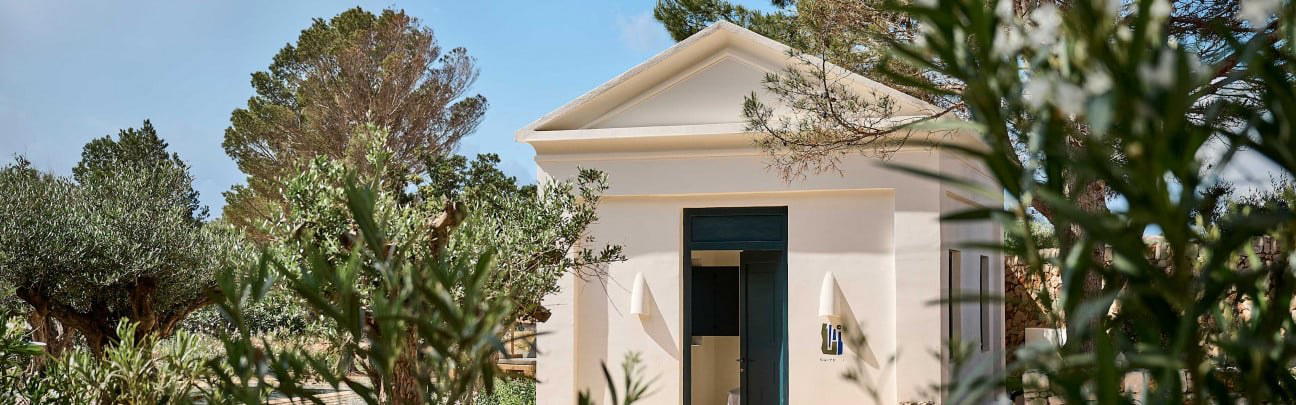
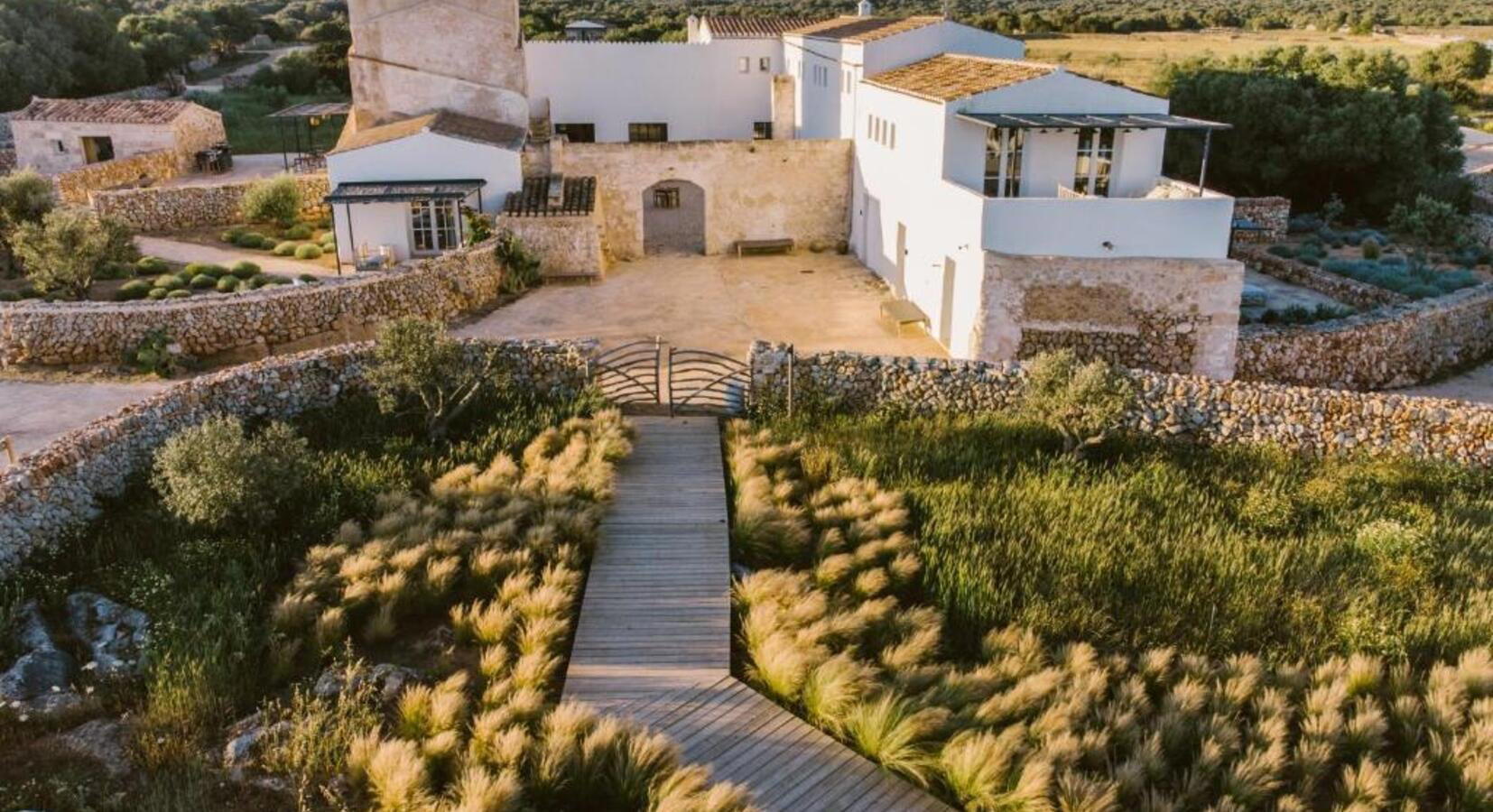
The aesthetic at Cap Menorca draws directly from the vernacular architecture of Menorca's interior villages: whitewashed walls, thick stone, and a deliberate absence of ornament. This is not a minimalism imported from Scandinavia or Japan but something rooted in the island's own building traditions, where whitewash functioned as insulation and stone walls retained heat through Mediterranean winters. That historical logic has been applied here as a design system rather than as pastiche.
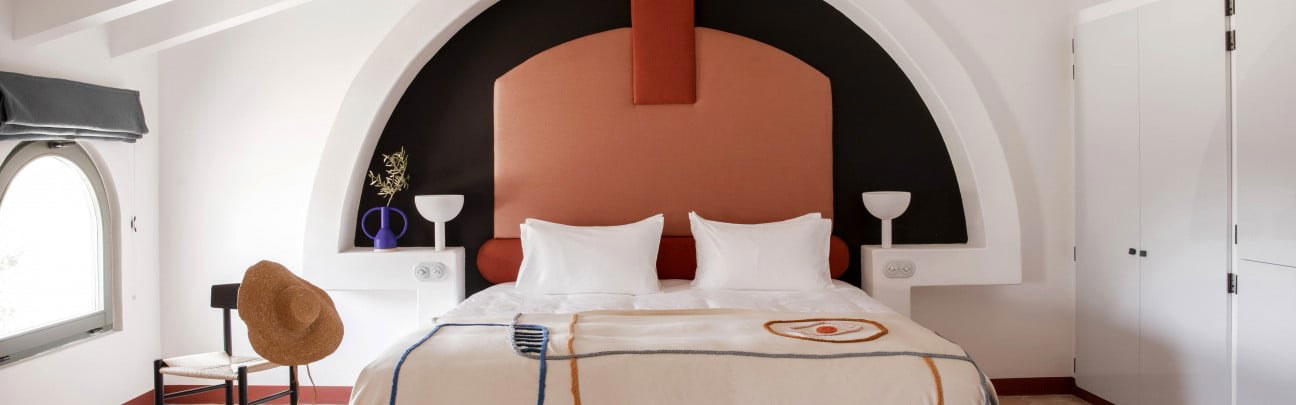
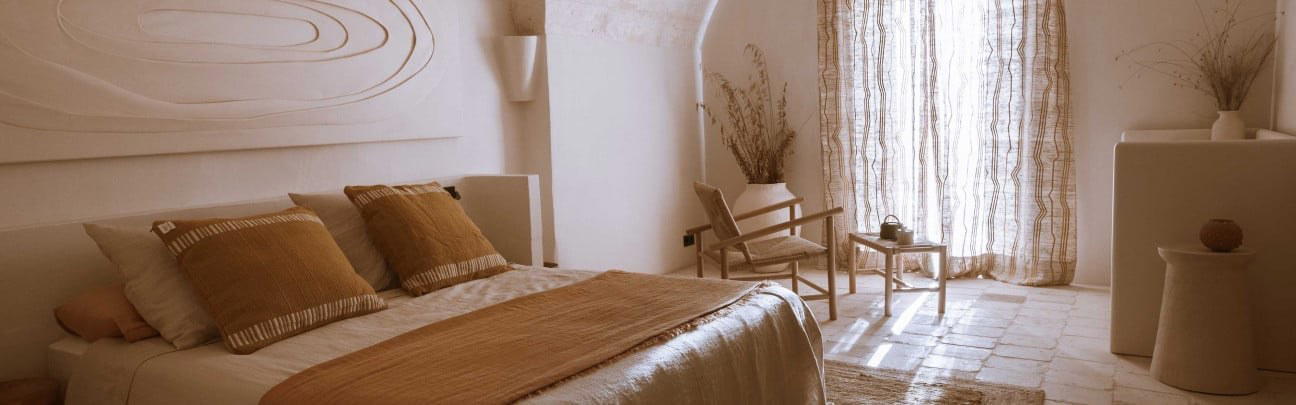
Interiors across the 15 suites use terracotta, marble, teak, and leather — materials sourced or at least selected for their connection to the region rather than for neutral luxury-hotel legibility. Ceilings are high, rooms are airy, and the bathrooms, lined with emerald-green tile, have a saturated quality that contrasts with the bleached-out exteriors. The combination produces something that reads as rustic-chic without tipping into themed rusticity, which is a narrower line to walk than it appears.
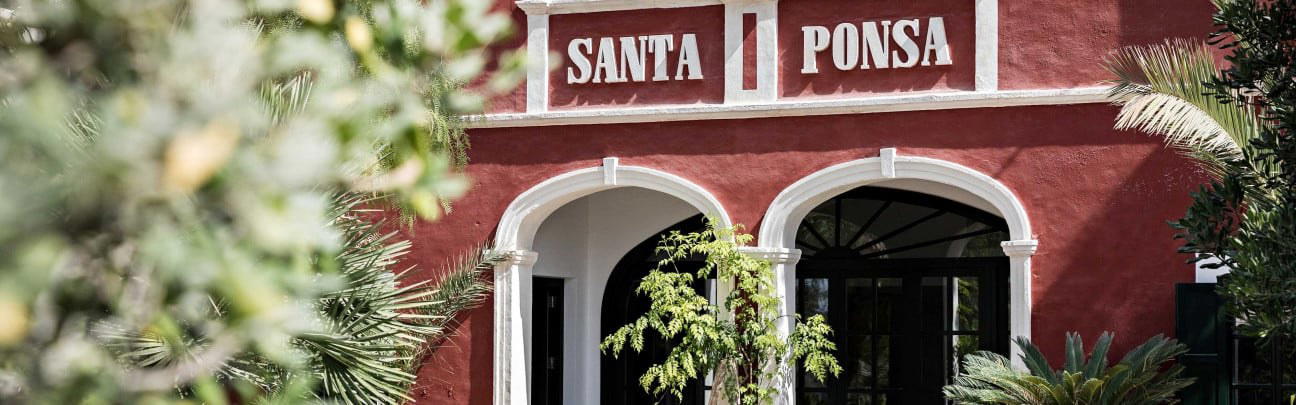
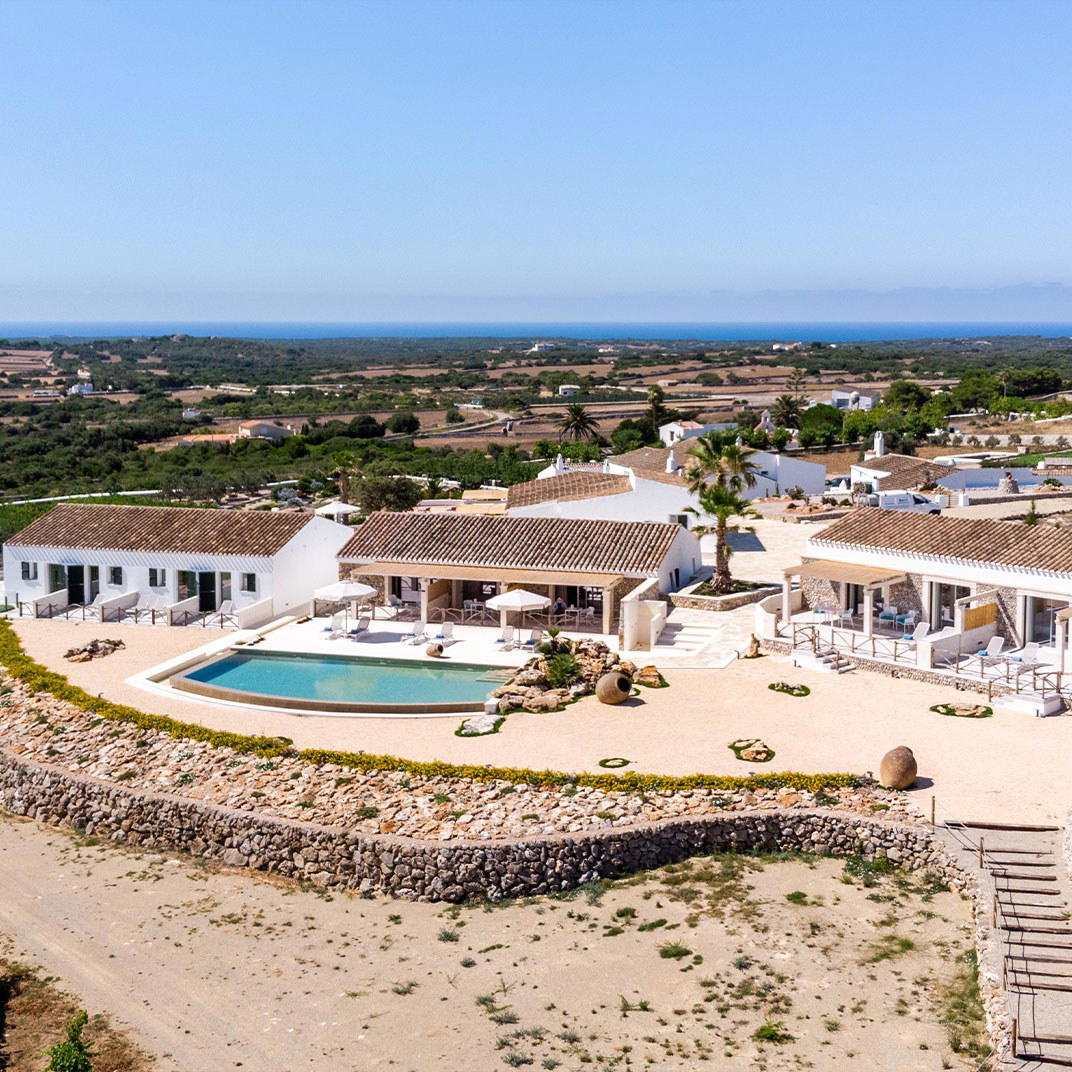
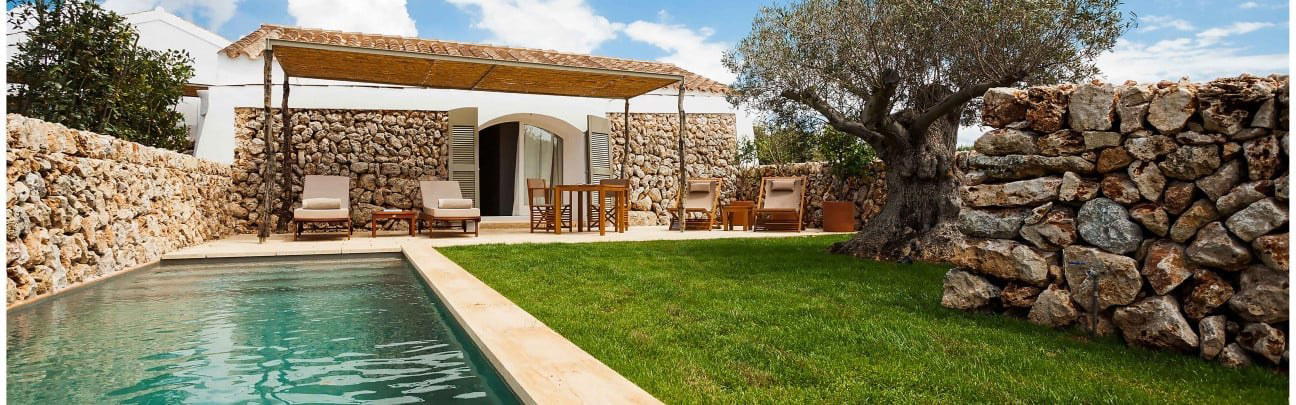
Each suite opens onto a private, stone-walled garden with a full-size saltwater pool, large enough for actual swimming rather than the plunge-pool gesture that many smaller boutique hotels substitute. The pools are bordered by olive trees and native planting, which connects them visually to the surrounding pine forest rather than to any manufactured hotel garden aesthetic. This integration of indoor and outdoor space, where the garden functions as an extension of the suite rather than as a shared amenity, places Cap Menorca in the same tier as properties like Torralbenc and Fontenille Menorca Santa Ponsa, both of which operate in Alaior with a comparable emphasis on landscape-integrated privacy.
Scale, Remoteness, and What 70 Acres Actually Means
The 70-acre footprint is worth pausing on. At that scale, a 15-room property is operating at a density more comparable to a private estate than to a hotel, which changes how the grounds function. The pine forest is not decorative backdrop but actual terrain, and the southern coastline it leads to is described as wild rather than managed beach. This is a meaningful distinction on an island where the most photogenic coves attract significant seasonal traffic.
The hotel's positioning on the southern coast, away from the main tourist circuits that connect Ciutadella to Maó along the north, is part of what makes the property coherent as a concept. Remoteness here is not a marketing claim but a function of where the military base was originally sited. The access road reflects that heritage. Guests arriving via Menorca Airport, near Maó, should account for road time to Alaior and the Camí de Llucalari address, which is the kind of approach that rewards self-drive over taxi transfers for anyone planning to move around the island.
For those who prefer to explore from the property rather than by car, Cap Menorca offers horseback riding along the cliff trails and yacht cruising along the southern coastline. Both activities use the wild coastal setting as the point rather than as scenery passed through on the way to something else, which is consistent with how the property positions itself overall.
Relais & Châteaux Context and the Spanish Comparison Set
Relais & Châteaux membership functions as a trust signal in a category where standards vary considerably. The network's Spanish portfolio includes properties across multiple autonomous regions and price tiers, from Abadía Retuerta LeDomaine in Teruel to Terra Dominicata in Escaladei and Mas de Torrent Hotel & Spa in Torrent. Within that set, Cap Menorca's 15-suite count and military-base conversion history place it in a smaller, more site-specific cohort, closer in character to Akelarre in San Sebastián or Pepe Vieira Restaurant & Hotel in Poio than to larger resort-format members.
Rates start from US$844 per night, which positions the property at the upper end of the Menorca market. That bracket is shared with Menorca Experimental and a small number of other design-led properties, but the combination of private pools per suite, the Relais & Châteaux affiliation, and the 70-acre coastal estate justifies a different conversation than hotels at similar price points that offer smaller outdoor spaces or shared facilities.
For Balearic comparisons beyond Menorca, the Spanish island hotel tier includes Hotel Can Ferrereta in Santanyí, La Residencia, A Belmond Hotel, Mallorca, and Hotel Can Cera in Palma, each operating with a different design logic and scale, which makes the comparison useful for anyone calibrating what the island-hotel premium actually buys.
Dining and Daily Rhythm
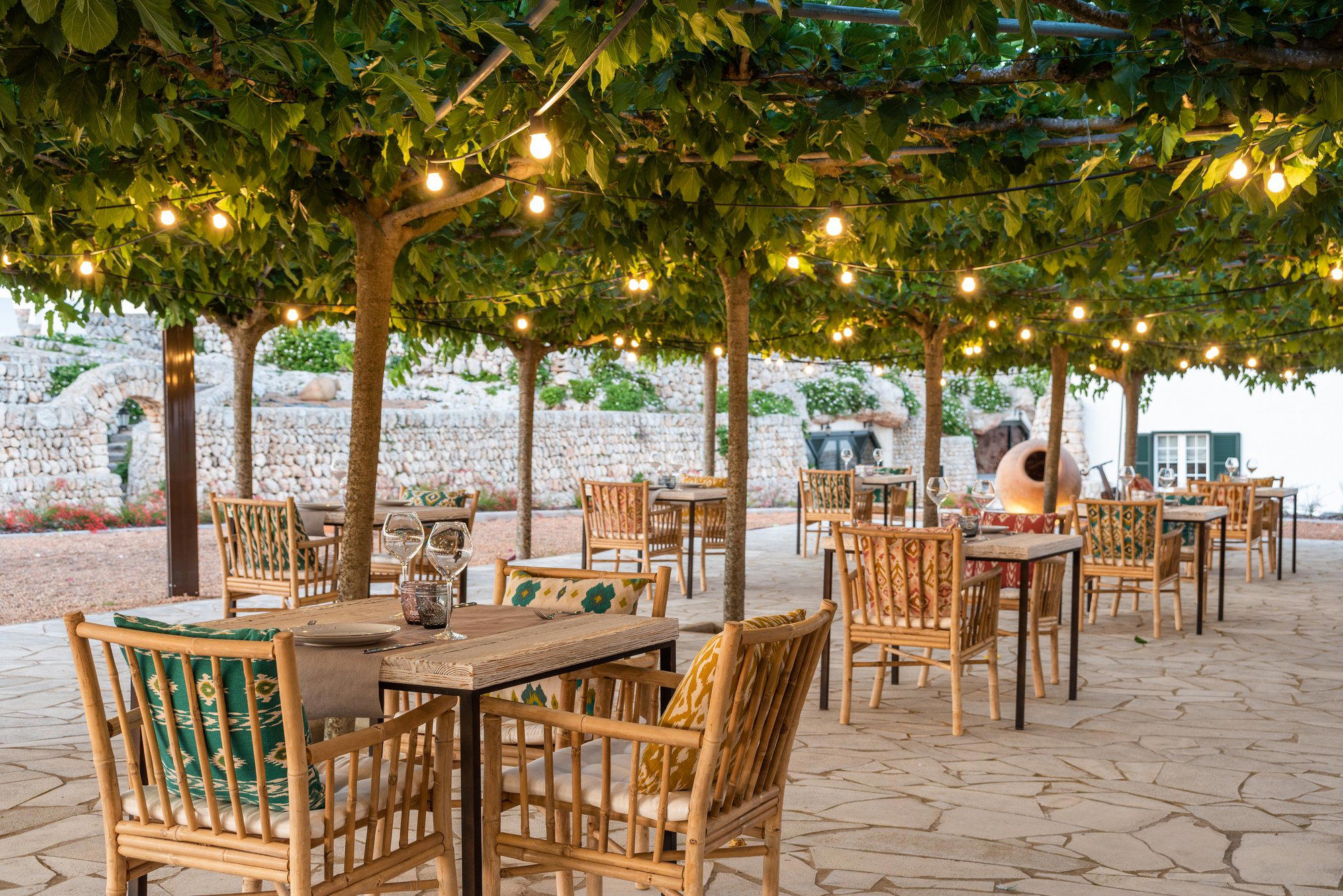
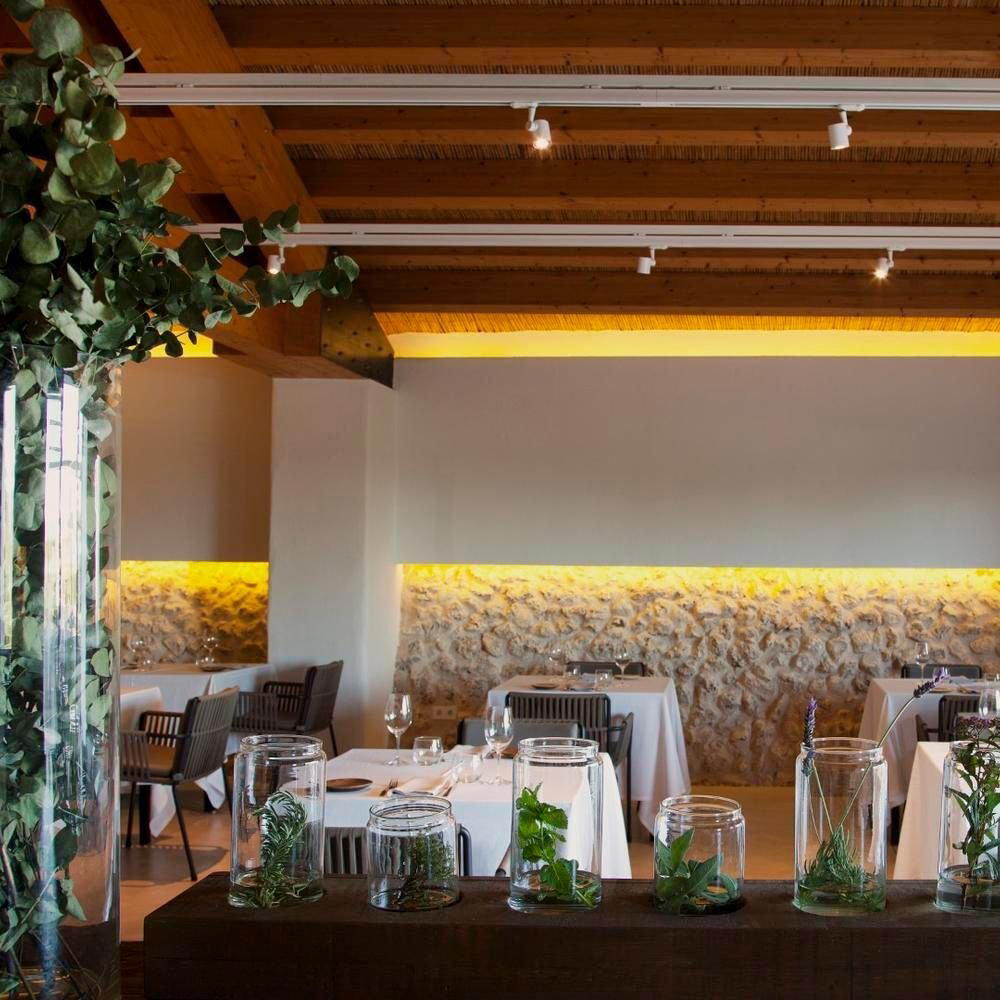
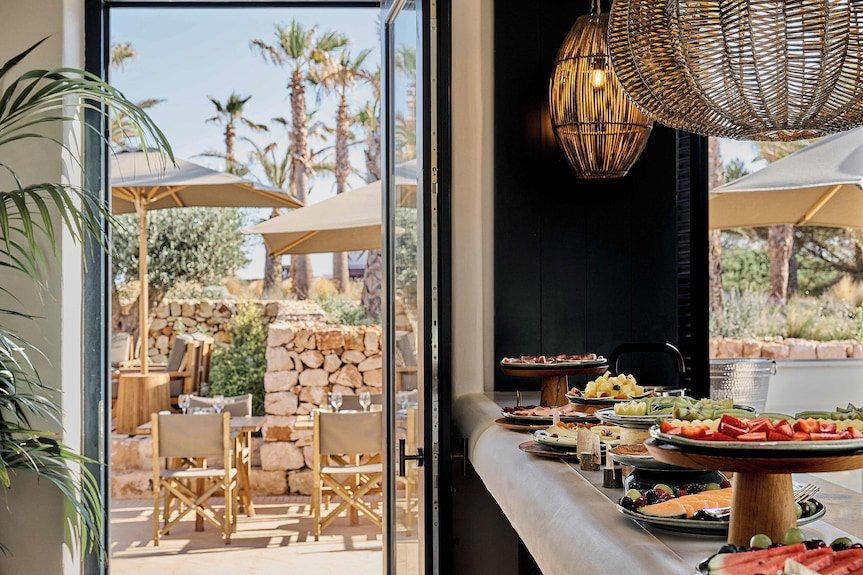
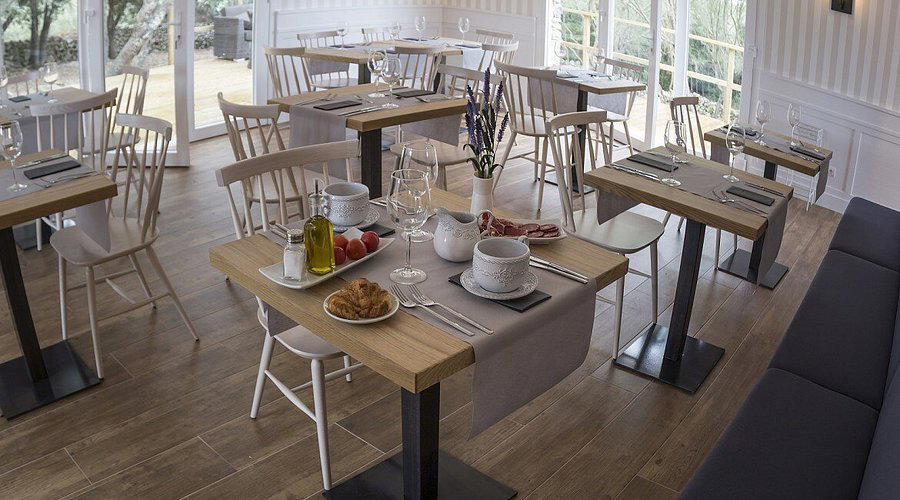
Breakfast, dinner, and poolside service are all available at the property, with food served either at the on-site restaurant or directly to guests' private gardens. This flexibility matters at a remote address, where the alternative to eating in is a car journey rather than a short walk to a neighbouring street. The option to spend an entire day on property without that feeling like a constraint is partly a function of how the outdoor spaces are designed: the pools and gardens are sized for sustained use, not for an hour of sun before seeking the next distraction.
The restaurant draws on the same local-materials philosophy as the suites, and the Menorca coastline provides the obvious frame of reference for seasonal ingredients, though specific menus are not published in advance. For a broader sense of what the Alaior area offers at the table, see our full Alaior restaurants guide.
Planning Your Stay
Cap Menorca is reachable via Menorca Airport, near Maó, and from there by road to the Camí de Llucalari address in Alaior. Given the remote location, a hire car is the most practical approach for guests who want the option of reaching other parts of the island. Reservations and current rate availability are handled through the Relais & Châteaux booking system and the property's own website at capmenorca.com, with direct contact via the email and phone number listed through the Relais & Châteaux directory. The 15-suite count means the property fills quickly in peak Menorca season, which runs roughly from late May through September, with August representing the tightest availability window across the island.
For broader context on how Cap Menorca sits within the European coastal luxury tier, comparable design-driven cliff properties include Aman Venice in Venice and, for a different kind of urban counterpoint, Mandarin Oriental Barcelona in Barcelona. The Alaior destination guide covers the wider area for those combining Cap Menorca with other stops across the island.
Quick Comparison
Comparable venues nearby, for context on price, style, and recognition.
| Venue | Cuisine | Price | Awards | Notes |
|---|---|---|---|---|
| Cap MenorcaThis venue — the venue you are viewing | Menorcan finca-style botanical retreat | Not listed | 1 Michelin Key · Relais Chateaux Award | Not listed |
| Torralbenc | Restored traditional Menorcan finca with rustic charm and modern luxury. | $300–500 | 1 Michelin Key · Mr & Mrs Smith Seal of Approval | Alaior |
| Cap Menorca | Barefoot luxury agritourism on a restored historic military estate with contemporary design integrated into Mediterranean landscape. | Not listed | 1 Michelin Key · Relais Chateaux Award | Son Bou |
| Menorca Experimental | Reimagined 19th-century agroturismo finca with artist's holiday cottage spirit. | $300–500 | Michelin Selected · La Liste Top Hotels | Alaior |
| Fontenille Menorca Santa Ponsa | Hotel | $200–300 | La Liste Top Hotels · Mr & Mrs Smith Seal of Approval | Alaior |
Recognition history
Dated appearances from independent guides and award organizations, with the underlying list record or original source where available.
Michelin 1 Key
Michelin
Mr & Mrs Smith Seal of Approval
Mr & Mrs Smith
Relais Chateaux Award
Relais Chateaux
Full recognition history (5 entries)
Michelin 1 Key
Michelin
Relais Chateaux Award
Relais Chateaux
Details
- Quiet
- Elegant
- Scenic
- Intimate
- Sophisticated
- Romantic Getaway
- Honeymoon
- Wellness Retreat
- Anniversary
- Panoramic View
- Terrace
- Pool
- Wi Fi
- Spa
- Fitness Center
- Room Service
- Concierge
- Restaurant
- Bar
- Garden
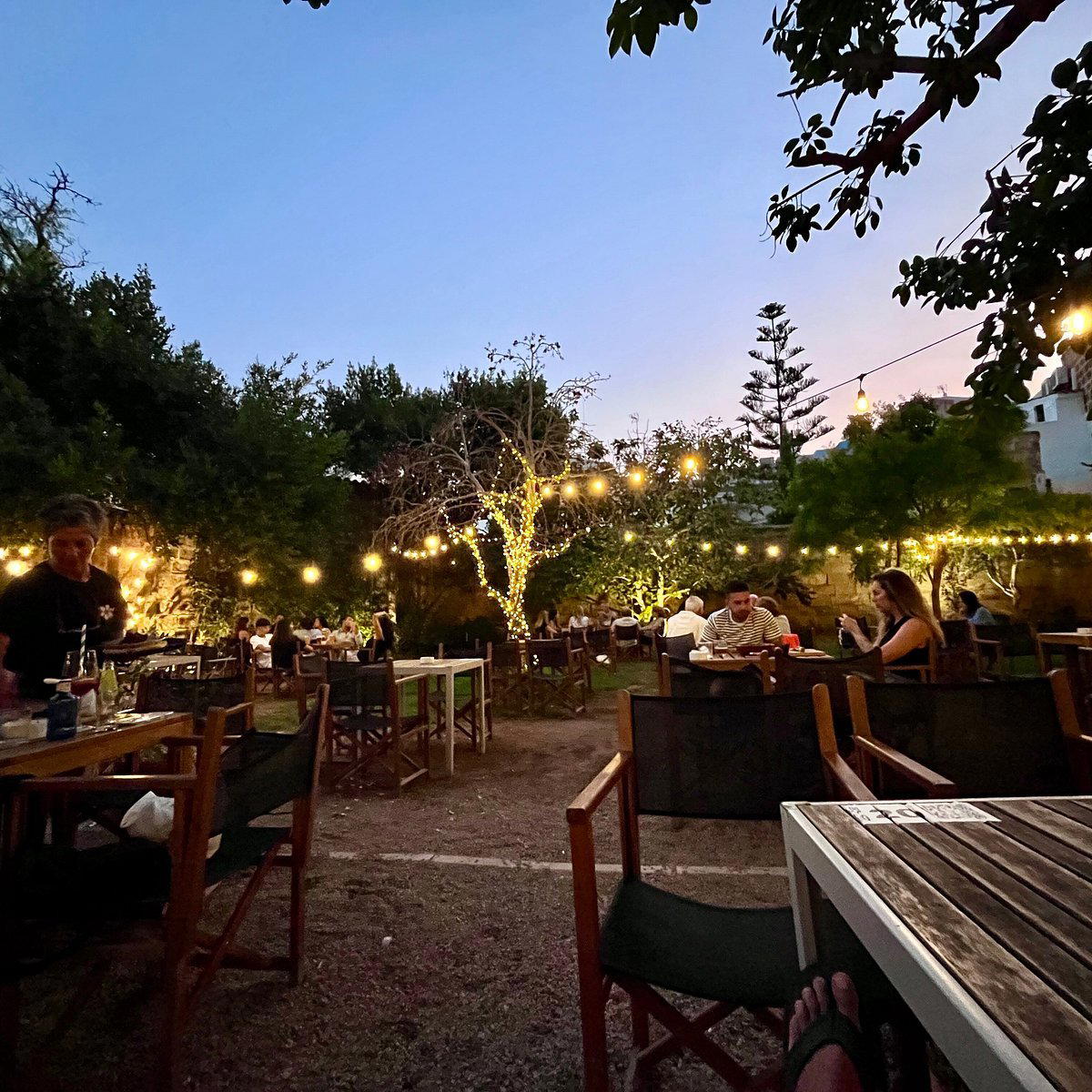
Serene and luxurious with tranquil gardens, soft natural lighting, and a peaceful atmosphere ideal for relaxation.