



1 Michelin Key · Design Hotels Member · Tatler Listed in Best Hotels Asia-Pacific
On Sumba's southwestern shore, Cap Karoso occupies a different tier from Indonesia's resort mainstream — modernist architecture set against a traditional village framework, French-led cooking sourced partly from its own farm, and a rotating chef residency program at Julang that brings serious culinary credentials to one of the region's least-developed coastlines. Named to the Tatler Best Hotels Asia-Pacific 2025 list, with 67 rooms from around $464 per night.

Pearl is the En Primeur Club membership app — saves, bookings, and concierge access live there. Same editors, same standards.
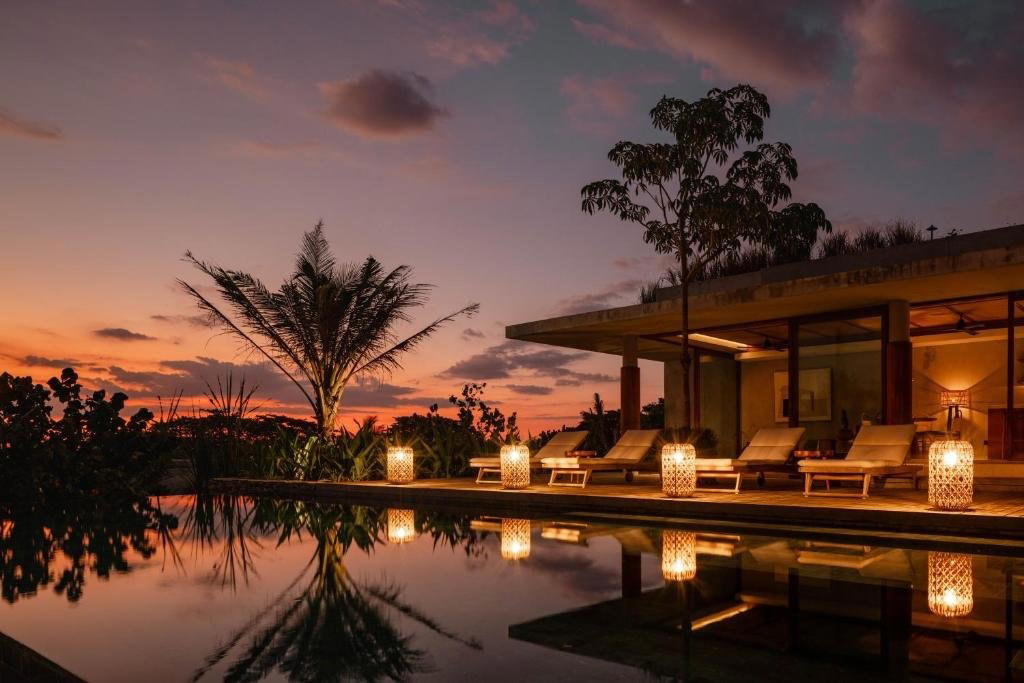
Where the Architecture Arrives Before the Road Does
Sumba's southwestern coast offers little warning before Cap Karoso appears. The island itself remains among Indonesia's least-developed major landmasses — no arterial tourist infrastructure, no established resort corridor, no equivalent of Bali's Seminyak strip or Ubud's gallery-lined lanes. That relative absence is precisely what makes the architecture here legible as a statement rather than a backdrop. Where properties like Mandapa, a Ritz-Carlton Reserve in Ubud or Alila Villas Uluwatu in Uluwatu operate within Bali's densely competitive luxury tier, Cap Karoso sits in an almost unpopulated category: design-serious, French-conceived, rooted in Sumbanese material culture, and positioned against a turquoise lagoon with no comparable neighbor in view.
The design logic here works in two registers simultaneously. Modernist structures — clean geometry, considered sightlines, materials that read as deliberate rather than decorative, sit alongside and are actively interrupted by indigenous Sumbanese construction methods and craft traditions. This is not the familiar resort move of placing a traditional artifact in a Western-designed lobby. The two design languages are allowed to be in genuine tension, which gives the property a spatial coherence that purely stylized resorts rarely achieve. That approach earned Cap Karoso inclusion in the Tatler Leading Hotels Asia-Pacific 2025 list, placing it alongside a cohort of properties where design integrity is treated as a primary credential rather than a marketing category.
The Physical Logic of 67 Rooms
At 67 keys, Cap Karoso occupies the middle tier of boutique resort scale, large enough to sustain serious food and cultural programming, small enough to avoid the anonymity that affects properties above 100 rooms. The room typology runs from studios and suites through to villas, with the villas offering private pools and a level of spatial generosity that places them in the palatial bracket by any reasonable regional measure. Rates from approximately $464 per night position the property in Indonesia's upper-mid luxury tier, above the design-led guesthouses that have proliferated across Bali but below the ultra-premium per-night figures of properties like Nihi Sumba, which operates on the island's opposite coast with a more exclusively priced model.
The organizational concept borrows from traditional village planning, structures arranged around a communal logic rather than a hotel corridor, which has the practical effect of making the 67-room count feel smaller than it is. Guests navigating between their accommodation and the restaurants or beach encounter spatial transitions that read as movement through a place rather than through a building. That distinction matters more than it might sound: it is the difference between a resort that delivers access to a destination and one that constitutes one.
French Cooking, Local Ingredients, and a Residency That Changes the Conversation
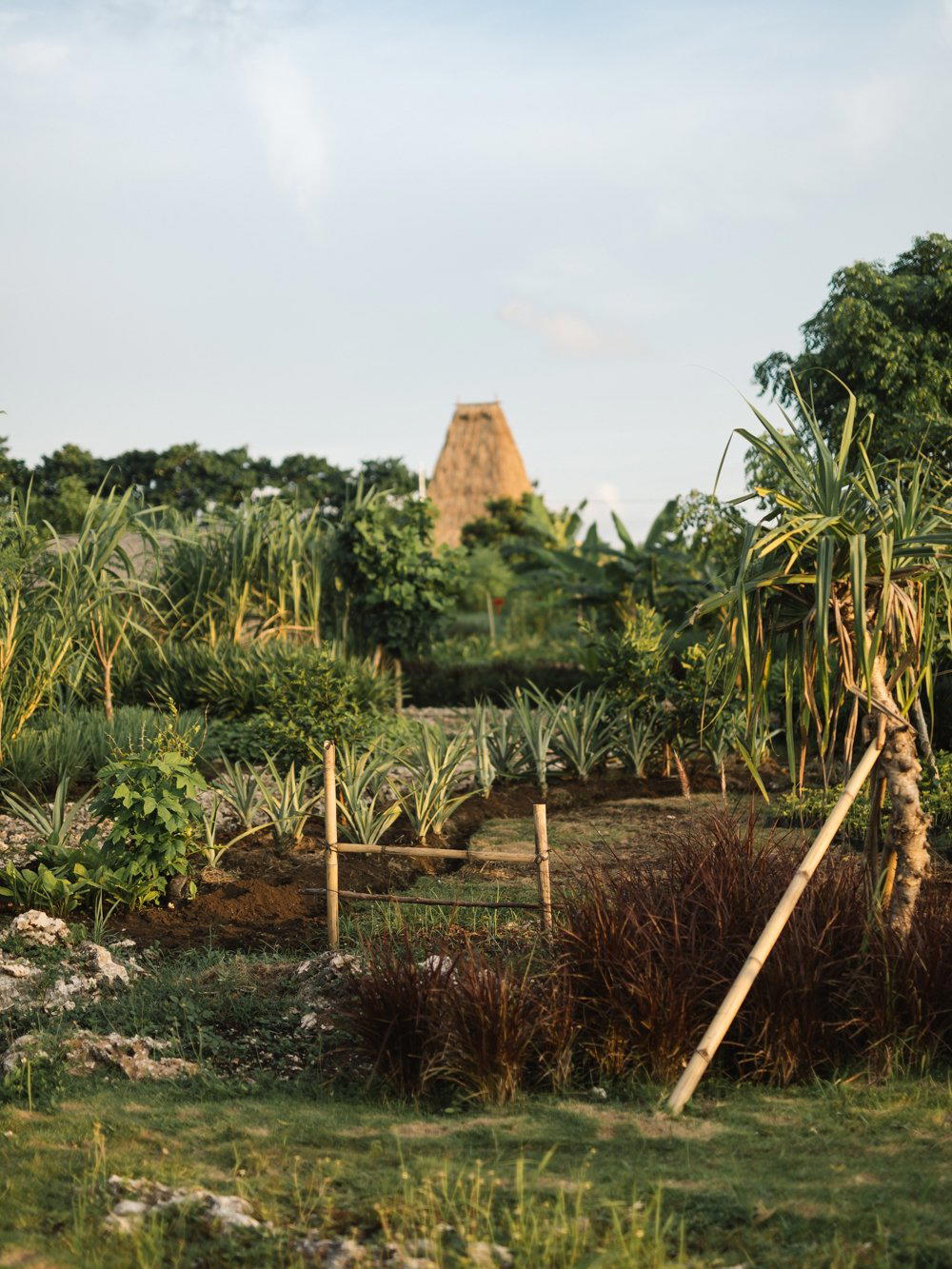
The culinary program at Cap Karoso sits at the intersection of two frameworks that rarely appear together in eastern Indonesia. The main kitchen operates under French culinary direction, technique-forward, product-focused, while sourcing substantially from the hotel's own farm. That farm-to-table provenance is common enough as a claim across the Indonesian luxury sector, but the French technical frame applied to Sumbanese-grown ingredients produces a kitchen identity that has no direct local precedent.
More consequential for the property's culinary standing is Julang, the smaller restaurant, which runs a rotating chef residency model. French chefs arrive for defined periods and present chef's table-format dinners, a format that imports serious culinary credentials to an island that previously had none. In the broader Indonesian context, this kind of programming is almost exclusively a Bali phenomenon: Desa Potato Head in Denpasar and Potato Head Suites & Studios in Seminyak have built cultural programming into their hospitality model, but against a densely populated urban backdrop. Cap Karoso runs an equivalent program at the edge of a coastline that has no other dining reference points for many kilometers in either direction.
The residency model also has a structural advantage that fixed menus do not: it ensures that repeat visitors encounter a meaningfully different culinary experience. For a property on an island where the journey time from Bali runs to roughly an hour by air, that matters. It gives the food program a reason to anchor return visits rather than function as a backdrop to beach access.
Sumba as Context, Not Just Location
Understanding what Cap Karoso is requires understanding what Sumba is not. Unlike Bali, which absorbed international tourism infrastructure over decades and now sustains a full range of hospitality categories from budget guesthouses to Aman-tier properties, see Amankila in Manggis or Amanwana in Moyo Island for the archipelago's most rarefied expression, Sumba remains outside that development arc. The island's relative isolation is not a problem Cap Karoso is solving; it is a condition the property is built around.
That has design and programming consequences. Art and music programming, cited in the property's editorial recognition, functions differently here than in a city hotel like Ayana Midplaza Jakarta in Jakarta, where guests arrive with a full city itinerary and cultural programming is supplementary. At Cap Karoso, the on-property program is the primary cultural offering available. The property effectively replaces the city. That responsibility shapes how the programming is conceived and why its depth matters.
For Indonesian luxury hotels more broadly, the split between large-footprint international brands and smaller design-led independents has sharpened over the past decade. Cap Karoso sits firmly in the independent, design-serious cohort, alongside properties like Bambu Indah in Banjar Badung and Desa Seni Baturiti in Tabanan in terms of design philosophy, though on a more ambitious scale and in a far more remote setting.
Planning a Stay
Access to Cap Karoso requires a flight to Tambolaka Airport (TMC) in West Sumba, served by connections through Bali's Ngurah Rai International Airport. The journey from Bali, including connection time, typically runs between two and three hours depending on scheduling. The property's address on Pantai Karoso in the Kodi subdistrict places it on Sumba's southwestern shoreline, approximately 20 kilometers from the airport. Given the residency-driven nature of Julang's dining program, advance research on the current chef schedule is worth doing before booking specific travel dates. For the broader Sumba dining context, see our full Sumba restaurants guide. The 67-room scale means availability is finite, particularly for the villa category, so lead time of several weeks to months is advisable for peak travel periods.
A Quick Peer Check
Comparable venues nearby, for context on price, style, and recognition.
| Venue | Cuisine | Price | Awards | Notes |
|---|---|---|---|---|
| Cap KarosoThis venue (the venue you are viewing) | Modernist beach resort blending international design with Sumbanese craft | Not listed | 1 Michelin Key · Design Hotels Member | Not listed |
| Nihi Sumba | Luxury barefoot resort blending contemporary comfort with traditional Indonesian architecture and natural landscape integration. | $1,000–1,500 | 3 Michelin Keys · World's 50 Best #35 | Wanokaka |
| Plataran Komodo Resort & Spa | Beachfront luxury villas blending Indonesian heritage with modern serenity | Not listed | 1 Michelin Key | Waecicu Beach |
| Bisma Eight Ubud | Luxury boutique hotel blending contemporary Balinese craftsmanship with natural surroundings. | $200–300 | 1 Michelin Key · La Liste Top Hotels | Ubud |
| The Legian Seminyak | Tropical luxury boutique resort with Indonesian-inspired architecture and contemporary amenities, positioned as an exclusive all-suite beachfront destination. | $300–500 | 1 Michelin Key · Virtuoso Luxury Hotel Partner | Seminyak |
| Hotel Tugu Lombok | Traditional Indonesian beach resort with private villas | $100–200 | 1 Michelin Key | Tanjung |
Recognition history
Dated appearances from independent guides and award organizations, with the underlying list record or original source where available.
Michelin 1 Key
Michelin
Design Hotels Member
Design Hotels
Travel + Leisure 100 Favorite Hotels in the World #53 · No. 53
Travel + Leisure · 2026 Travel + Leisure 100 Favorite Hotels in the World
Tatler Listed in Best Hotels Asia-Pacific
Tatler
Full recognition history (5 entries)
Michelin 1 Key
Michelin
Continue exploring
More in Sumba
Hotels in Sumba
All hotels in Sumba →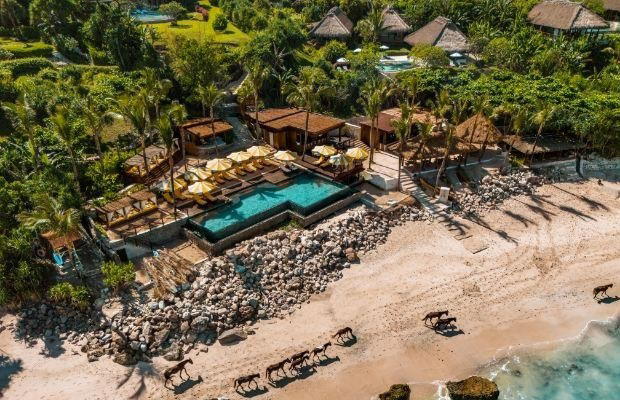
Restaurants in Sumba
All restaurants in Sumba →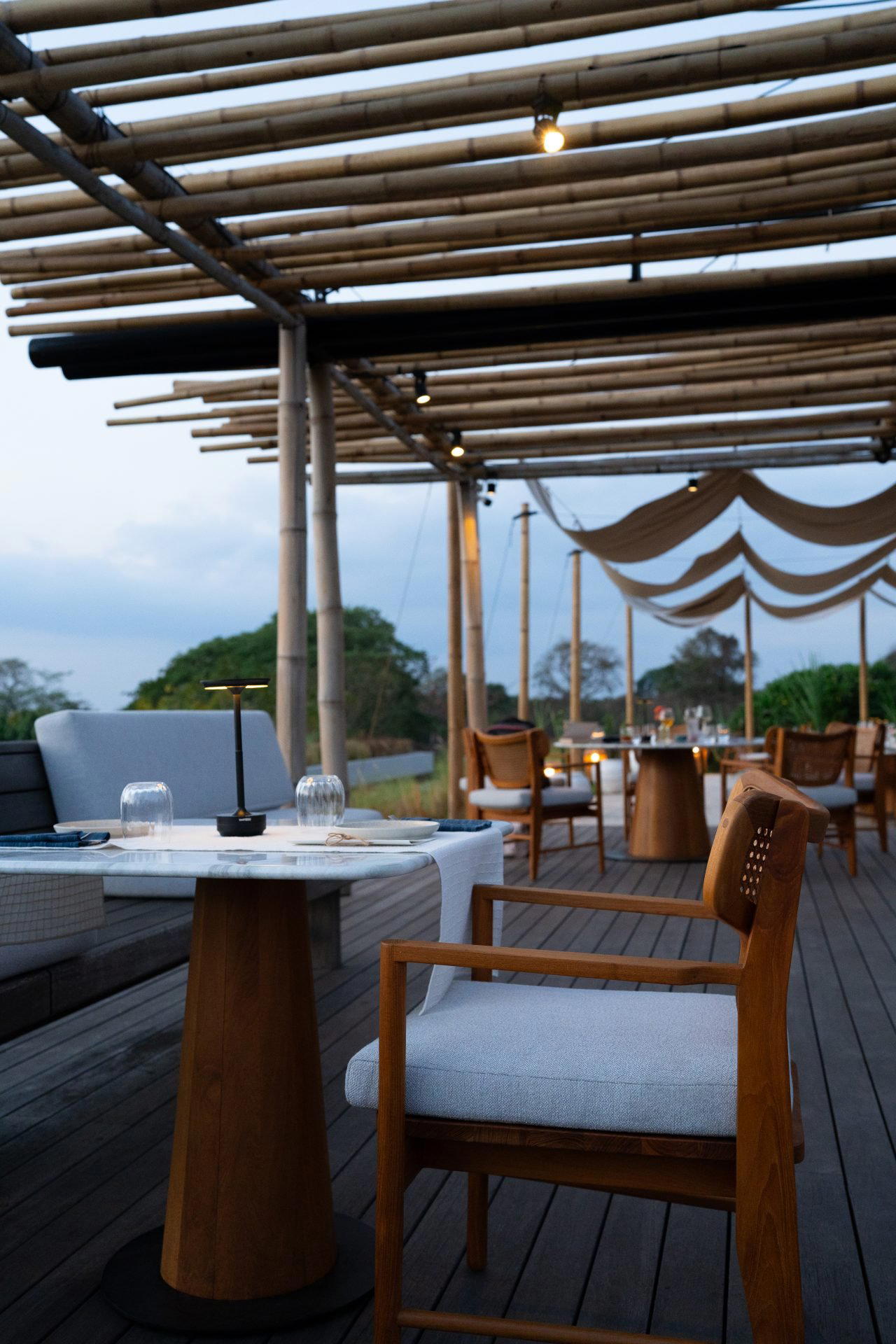
Details
- Scenic
- Elegant
- Rustic
- Sophisticated
- Minimalist
- Honeymoon
- Romantic Getaway
- Wellness Retreat
- Weekend Escape
- Beachfront
- Private Villa
- Infinity Pool
- Panoramic View
- Pool
- Spa
- Wi Fi
- Room Service
- Concierge
- Beach Access
- Waterfront
- Garden
Serene and elegant with natural light, indoor-outdoor spaces, and a peaceful beachfront atmosphere inspired by local culture.