Berawa Village sits along Jalan Tegal Sari in Canggu's Berawa corridor, one of the more considered addresses in Badung's fast-moving short-stay market. The property occupies a village-style format that mirrors the broader shift toward compound living in this part of Bali, where garden pathways and open pavilions matter as much as room count. Booking details and pricing are best confirmed directly through the property.

Pearl is the En Primeur Club membership app, where members save venues, book tables and use the concierge.
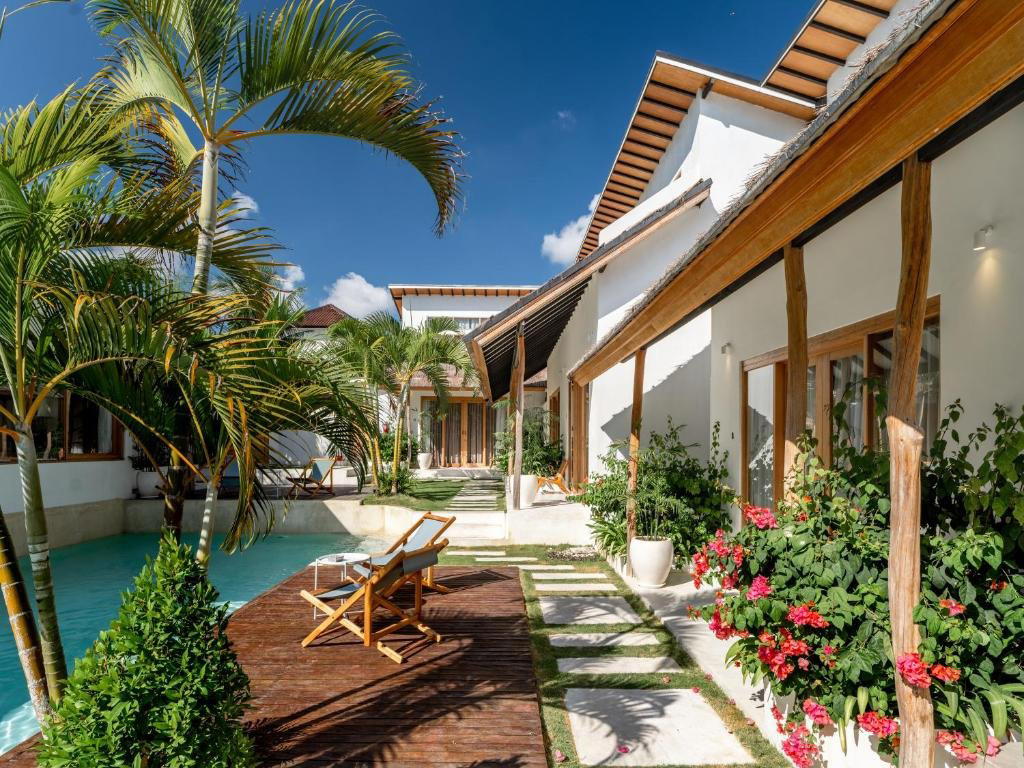
Canggu's Compound Format and Where Berawa Village Sits Within It
The stretch of Bali's Kuta Utara district running through Canggu and into the Berawa corridor has undergone a sustained repositioning over the past decade. What began as a surfbreak neighbourhood of warung stalls and low-cost homestays has split into two distinct tiers: the high-volume villa-rental market targeting short-stay leisure, and a smaller cohort of compound-style properties that operate closer to the boutique hotel format without fully committing to the flags and star-count signalling of the Nusa Dua or Seminyak strip. Berawa Village, addressed on Jalan Tegal Sari, occupies this second category. Its compound structure and village-style site planning reflect a format that has become common in the Canggu-Berawa zone, where the expectation is rice-paddy adjacency, open-air common spaces, and a slower pace that the southern resort belt rarely delivers.
This neighbourhood format carries specific advantages for a particular kind of traveller: those who want Bali's physical environment as the primary experience rather than a backdrop to poolside service. The trade-off is that the density of immediate amenities found at integrated resorts in Nusa Dua, for instance at REVĪVŌ Wellness Resort Nusa Dua Bali, or the managed luxury of larger Seminyak operations like the Seminyak Bali Resort, is generally absent here. In the Berawa corridor, guests exchange that convenience for proximity to a café and surf culture that has attracted a long-stay international population, giving the neighbourhood a lived-in texture that polished resort zones rarely replicate.
The Dining Context: Eating in Berawa and Canggu
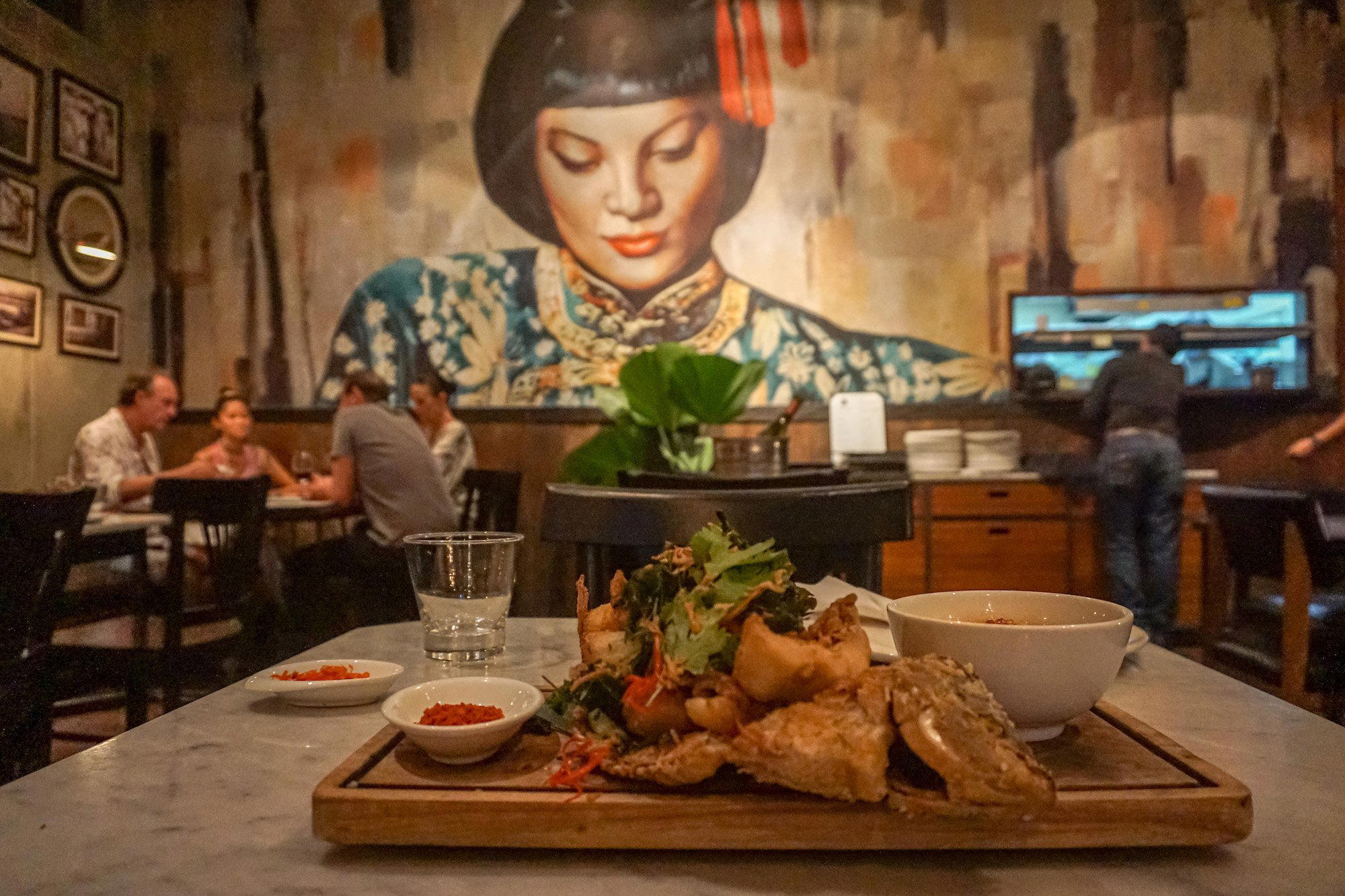
The Berawa-Canggu dining scene operates on a different logic than Bali's established fine-dining corridors. Seminyak built its reputation on destination restaurants with international chef pedigrees and controlled tasting environments. Ubud developed a parallel track centred on organic sourcing and farm-to-table credentials, with properties like Mandapa, a Ritz-Carlton Reserve in Ubud anchoring that positioning at the upper end. Canggu and Berawa took a third path: casual-to-mid-range all-day dining, heavy on plant-forward menus, cold-press juice bars, acai bowls, and wood-fired formats drawn from Australian café culture. The demographic driving that shift, long-stay digital workers and surf-oriented travellers, shaped the food offer around flexibility and frequency rather than occasion dining.
For guests staying at a compound-format property on Jalan Tegal Sari, this means strong neighbourhood dining options within walking or short-ride distance, skewed toward cafés, healthy bowls, and casual international plates. The absence of a headline in-house restaurant or a celebrity chef programme, which distinguishes larger integrated Bali properties, is less a gap than a design feature of this part of the island. Compare this with the integrated food-and-culture model at Desa Potato Head in Denpasar, which treats its dining programme as a structural pillar of the overall stay, and the contrast clarifies what each format is selling. Berawa Village sits at the neighbourhood-immersion end of that spectrum.
Guests seeking more formal dining architecture within Bali can reference the broader Badung options, from the beachclub-anchored approach of Potato Head Suites and Studios in Seminyak to the clifftop setting of Alila Villas Uluwatu. Our full Badung restaurants guide maps those options across the regency's distinct zones.
Positioning Among Canggu's Compound-Style Properties
The Berawa-Canggu corridor has accumulated a range of compound and village-format properties over recent years, and the category is not homogeneous. At the other end are larger multi-villa compounds operating essentially as serviced rental clusters, closer to the short-term letting market than the hotel market. Berawa Village's village naming and site on Jalan Tegal Sari place it in this compound category, though specific details on room count, pricing tiers, or service model are best confirmed directly with the property, as they are not publicly verified at this time.
What the address itself signals is meaningful: Canggu's Berawa zone remains one of the more sought-after pockets for travellers who want proximity to Batu Bolong beach, access to the area's café culture, and a residential-scale environment rather than resort-scale infrastructure. Properties at this address benefit from that neighbourhood equity even without the formal recognition signals, Michelin stars, Forbes Travel ratings, or 50 Best adjacency, that define premium positioning elsewhere on the island.
How Berawa Compares to Bali's Other Stay Formats
Bali's accommodation market segments more sharply than most Indonesian destinations. The spectrum runs from Aman's ultra-controlled sanctuary model, represented locally by Amankila in Manggis, through large international luxury resorts concentrated in Nusa Dua, to design-independent boutique hotels in Seminyak and Ubud, and finally to the compound and villa format that defines Canggu. The comparison is internal to Canggu and Berawa: other compound-style properties on or near Jalan Tegal Sari, short-term villa rentals in the same zone, and the handful of small design hotels that have taken firmer shape in this neighbourhood over recent years.
For travellers considering longer stays in Bali across multiple zones, it is worth knowing that the island's most considered small properties tend to cluster outside Badung entirely: Bambu Indah in Banjar Badung, Desa Seni Baturiti in Tabanan, and Hotel Komune and Beach Club Bali in Gianyar each represent distinct approaches to the compound or retreat format in different regencies. Comparing those against a Canggu base is a useful exercise for anyone building a multi-stop Bali itinerary.
Planning Your Stay
Berawa Village is located at Jalan Tegal Sari No. 53 in Canggu, within Kuta Utara district of Kabupaten Badung, Bali 80361. The Berawa corridor is approximately 30 to 40 minutes from Ngurah Rai International Airport by car, depending on traffic conditions, which in this part of Badung can be unpredictable during late afternoon hours. The high season in Bali runs broadly from July through August and again over December and the Christmas-New Year window; securing accommodation in Canggu during those periods, even at compound-format properties, requires advance planning given the neighbourhood's popularity with long-stay and repeat visitors. For current pricing, room configuration, and availability, direct contact with the property is the recommended route, as third-party booking data is not verified at the time of publication.
A Pricing-First Comparison
| Venue | Price | Awards |
|---|---|---|
| Berawa VillageThis venue (the venue you are viewing) | $100–200 | Not listed |
| Blue Karma Village | Not listed | 1 Michelin Key |
| REVĪVŌ Wellness Resort Nusa Dua Bali | $300–500 | 1 Michelin Key · Small Luxury Hotels of the World Member |
| Seminyak Bali Resort | $300–500 | World Luxury Hotel Awards WLHA Country Winner |
Continue exploring
More in Badung
Hotels in Badung
All hotels in Badung →
Bars in Badung
All bars in Badung →
Details
- Modern
- Cozy
- Weekend Escape
- Wi Fi
- Pool
Serene and modern atmosphere with elegantly designed rooms featuring air-conditioned comfort and thoughtful amenities.