AMAALA
AMAALA's Four Seasons property arrives as part of Saudi Arabia's most ambitious coastal development on the Red Sea's northwest shore, positioning itself at the narrow intersection of destination resort and architectural statement. The property operates within a master-planned zone designed to rival the Gulf's leading ultra-luxury enclaves, with design ambitions calibrated against a global comparable set rather than regional competition alone. Advance planning is essential; this is not a walk-in destination.

Pearl is the En Primeur Club membership app — saves, bookings, and concierge access live there. Same editors, same standards.
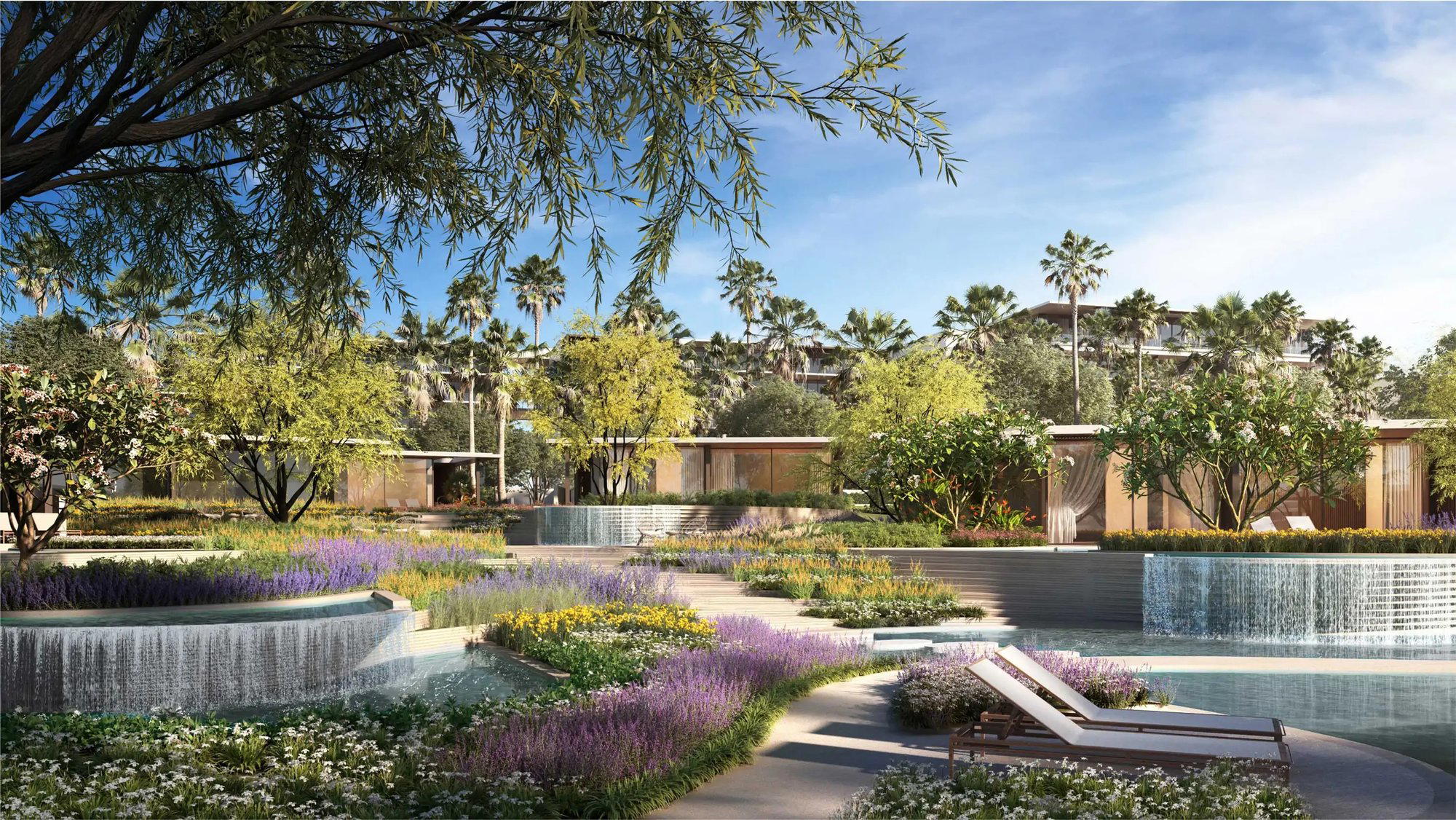
Where Saudi Arabia's Red Sea Ambitions Take Physical Form
The northwestern Red Sea coastline has spent most of modern history as one of the least-visited stretches of the Arabian Peninsula. That is changing rapidly. AMAALA, the master-planned development occupying a remote peninsula between Al Wajh and the Jordanian border, represents Saudi Arabia's most concentrated effort to create a luxury destination that competes on architecture, exclusivity, and environmental positioning rather than urban convenience. The Four Seasons property within AMAALA sits at the apex of that ambition, a 5-star hotel designed to be assessed not against other Saudi hotels, but against the global tier of low-density coastal properties in the Maldives, Oman, and the Aegean.
For context on how the wider Red Sea giga-project ecosystem is shaping Saudi hospitality, see our full Amaala restaurants guide. The Red Sea Shura Island (Four Seasons property) in Shura Island offers a useful parallel: another Four Seasons entry into Saudi's giga-project pipeline, benchmarked similarly against international coastal luxury rather than regional competitors.
The Architecture as the Argument
At AMAALA, the physical environment is the primary point. Saudi Arabia's giga-projects have consistently prioritised architectural spectacle over incremental development, and AMAALA's design brief follows that logic. The peninsula's terrain, a combination of coral-adjacent coastline, arid escarpment, and open Red Sea exposure, creates conditions that demand site-specific architecture rather than imported resort templates. Properties in this zone are expected to respond to the landscape through material choices, orientation, and scale in ways that distinguish them from the generic beachfront resort model common across the Gulf.
The Four Seasons brand brings to AMAALA a design discipline that it has applied across comparable destination properties globally. At Amangiri in Canyon Point, the approach involves geology-responsive architecture that treats the site as non-negotiable. At Aman Venice in Venice, it means working within historic fabric. AMAALA presents a different challenge: building from scratch on a coastline with no existing architectural vernacular, which places maximum pressure on the design process to generate something site-authentic rather than exportable. AMAALA's Four Seasons is one of the first international flagships in the zone, which gives it a first-mover position in setting the architectural register for what follows.
Comparable international properties at the design-led end of the ultra-luxury spectrum, among them Bvlgari Hotel Tokyo in Tokyo and Badrutt's Palace Hotel in St. Moritz, carry architectural identities that precede and outlast any single season's programming. AMAALA's Four Seasons is in the process of establishing that kind of physical identity from a blank site, which is both the challenge and the opportunity it represents.
The AMAALA Positioning: Ultra-Luxury, Low-Density, Remote
Saudi Arabia's hospitality pipeline currently spans a wide range of market positions. At one end, properties like Braira Abha in Abha and Movenpick Hotel Qassim in Buraidah serve domestic leisure and business travel. At the other, AMAALA and its peer developments are structured to attract international high-net-worth visitors for whom the destination itself, its remoteness, its exclusivity, its environmental credentials, is the primary draw. The Four Seasons entry at AMAALA is calibrated for this second group.
This positioning has direct implications for what the property is and is not. It is not a city hotel with cultural programming attached. It is a destination resort where arrival requires deliberate planning, the pace is set by the site rather than a surrounding urban environment, and the value proposition rests on access to an underdeveloped coastline rather than proximity to existing attractions. In that sense, it belongs to the same category as Miraval The Red Sea and InterContinental The Red Sea Resort in Umluj, properties that depend on the Red Sea's environmental distinctiveness as the foundation of their offer.
For travellers already familiar with Banyan Tree AlUla in AlUla, the logic is similar: Saudi Arabia is building destination-led luxury in locations that would have been considered inaccessible a decade ago, and the accommodation is engineered to make the remoteness feel deliberate rather than inconvenient.
Planning a Visit: What the Remoteness Requires
AMAALA is not accessible by existing commercial infrastructure in the way that Assila, A Luxury Collection Hotel, Jeddah or Grand Hyatt Al Khobar are. Travel to the site requires coordination through the resort or development authority rather than independent booking through standard channels. This is a deliberate feature of the AMAALA model: the exclusivity of access reinforces the positioning of the property itself.
Travellers considering AMAALA should begin by contacting Four Seasons directly through the brand's global reservations system. Advance planning is advisable, particularly for those seeking specific room categories.
Those combining Saudi itineraries with broader regional travel might also consider Al Manakha Rotana Madinah in Madinah, Conrad Makkah Jabal Omar in Makkah, or InterContinental Taif in Taif as routing options through the western corridor, depending on religious tourism eligibility and itinerary structure. For those approaching from the capital, Edge Riyadh Al Rabie in Riyadh and Nofa Riyadh, A Radisson Collection Resort offer staging points before the westward journey. The Nammos Resort AMAALA nearby provides a useful reference point for what the broader AMAALA zone is building toward.
What AMAALA Is Telling the Region
Saudi Arabia's giga-projects are not simply hotel pipelines, they are arguments about what the country wants its international identity to be. AMAALA, specifically, positions itself around wellness, arts, and environmental sensitivity in a way that differentiates it from NEOM's technological futurism or Diriyah's heritage positioning. The Four Seasons presence in this zone signals that international luxury operators see the model as viable, which is itself a form of editorial endorsement at the brand level.
The broader competitive set includes properties operating at similar price points and positioning internationally. Aman New York and The Fifth Avenue Hotel in New York City represent the urban end of ultra-luxury; AMAALA's Four Seasons represents the destination-wilderness end. For the Saudi market specifically, the Ayara-managed hotel portfolio in Dammam and properties like Braira Al Rass and Braira Al-Ahsa occupy a different tier entirely, evidence of how wide Saudi hospitality now stretches between the domestic-facing and the internationally-competitive ends of the market. The Mövenpick Hotel Wa'ad Al Shamal in Turaif similarly illustrates how the country is extending infrastructure into previously remote territories, though the positioning and price tier differ substantially from AMAALA.
AMAALA's Four Seasons will be properly assessable once it reaches full operational maturity. What is already clear is that it occupies a specific and deliberate position: a design-led destination resort in one of the world's last underdeveloped premium coastlines, carrying a brand credential that places it in a comparable set defined by geography and ambition rather than proximity to existing demand.
Quick Comparison
Comparable venues nearby, for context on price, style, and recognition.
| Venue | Cuisine | Price | Awards | Notes |
|---|---|---|---|---|
| AMAALAThis venue — the venue you are viewing | Palatial luxury blending Arabian tradition with modern sophistication in harmony with rugged coastal terrain. | $$$$ | 5-Star | Not listed |
| JW Marriott Hotel Riyadh | Modern Najdi architecture with serene landscaped exteriors | $$$$ | 5-Star | Al Sahafah |
| Kempinski Hotel & Resort Sariya Yanbu Red Sea | Luxury contemporary resort combining European sophistication with Arabesque design elements, positioned as Saudi Arabia's premier Red Sea destination. | $$$$ | 5-Star | Al Mahar Island, Royal Commission |
| Caravan by Habitas AlUla | Contemporary luxury glamping blending Bedouin nomadic traditions with modern design in vintage Airstreams. | $$$$ | 5-Star | Ashar Valley |
| Red Sea Shura Island | Inspired by desert caravans in low-density clusters amid sand dunes and sea. | $$$$ | 5-Star | Shura Island |
| voco Al Khobar | contemporary style with warm hospitality | $$$$ | 5-Star | Thuqbah |
At a Glance
- Elegant
- Sophisticated
- Ornate
- Scenic
- Honeymoon
- Wellness Retreat
- Romantic Getaway
- Family Vacation
- Beachfront
- Infinity Pool
- Private Villa
- Destination Spa
- Golf Course
- Panoramic View
- Pool
- Spa
- Fitness Center
- Room Service
- Concierge
- Kids Club
- Beach Access
- Golf Course
- Waterfront
- Pool
- Spa
- Fitness Center
- Room Service
- Concierge
- Kids Club
- Beach Access
- Golf Course
Refined elegance with lush landscapes, cascading water features, serene indoor-outdoor living, and tranquil spa garden atmosphere.