Mövenpick Hotel Wa’ad Al Shamal

Mövenpick Hotel Wa'ad Al Shamal sits at the edge of Saudi Arabia's northern frontier, in Turaif's Wa'ad Al Shamal industrial and urban zone, a setting that makes it the reference address for the region. A Regional Winner in the Luxury Hotel category, it anchors a part of the Kingdom where full-service international hospitality remains scarce, and where the gap between it and the next nearest comparable option is measured in hours, not minutes.
Pearl is the En Primeur Club membership app — saves, bookings, and concierge access live there. Same editors, same standards.
- Address
- Waad Alshamal, 4D City Center Saudi Arabia
- Phone
- +966 14 664 7777
- Website
- all.accor.com
- Directions
- Get directions
 Saves & bookings on Pearl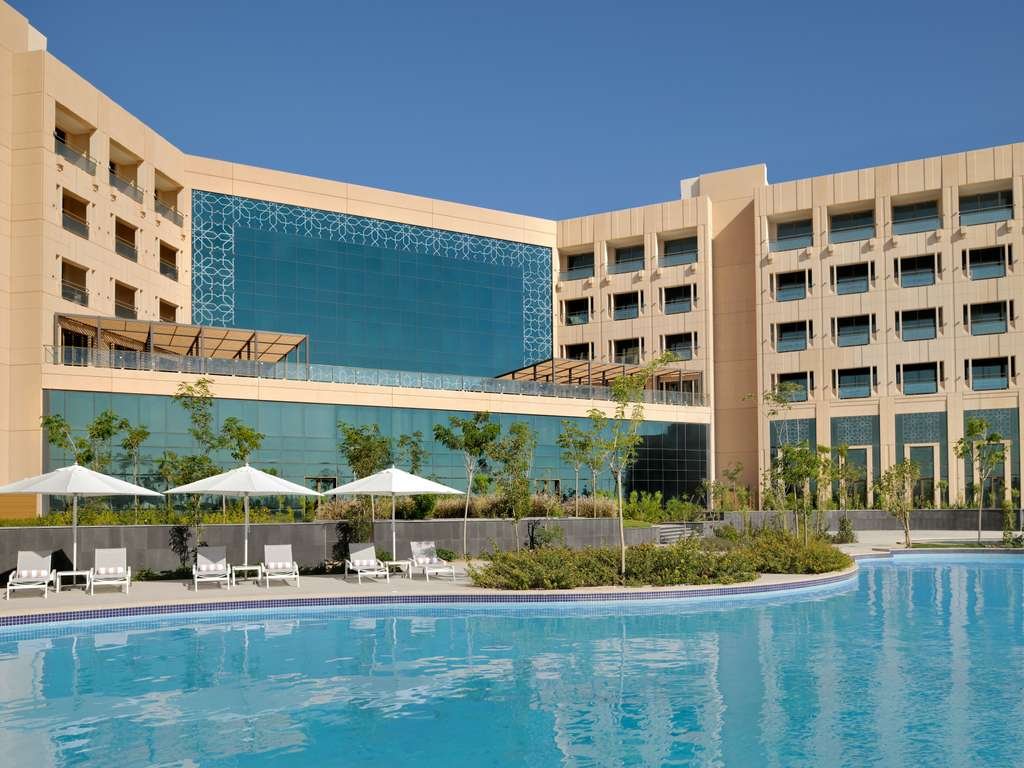
Where the Kingdom's North Meets International Hospitality
Saudi Arabia's hotel geography has long concentrated its premium inventory in Riyadh, Jeddah, and the Red Sea coast. The country's northern reaches, the vast plateau stretching toward the Jordanian and Iraqi borders, have historically been served by local accommodation that functions adequately but operates well outside the framework of international brand standards. Turaif represents a different case. Positioned as the gateway to the Wa'ad Al Shamal industrial corridor, one of the Kingdom's flagship mining and phosphate development zones, the city has drawn a consistent flow of business travellers, engineers, and project teams who require accommodation calibrated to professional expectations rather than tourist comfort. That demand is what makes the Mövenpick Hotel Wa'ad Al Shamal relevant, not as a resort destination in the coastal mould, but as a 5-star hotel in Waad Alshamal, Saudi Arabia, with 245 rooms and a nightly rate around $275.
The Architecture of Presence in a Frontier City
In cities where international hotel brands have established themselves for decades, a property's design competes against a deep field. In Turaif, the calculus is different. The physical presence of the Mövenpick here carries a weight that the same building might not generate in Riyadh's hotel-dense districts. The property sits within the 4D City Center development of Wa'ad Al Shamal, a planned urban zone that has emerged around the industrial project rather than organically from existing settlement. That context shapes what the building means architecturally and socially. Planned-city hotels of this type, across the Gulf and broader Middle East, tend toward a functional monumentalism: scale and finish used to signal permanence and institutional confidence in a location still asserting its own identity. The Mövenpick format, deployed across the brand's Middle East portfolio, typically favours clean contemporary lines with regional material references, an approach that reads as both internationally legible and contextually grounded.
For comparison, properties operating in more established Saudi cities, the Assila, A Luxury Collection Hotel in Jeddah or the Conrad Makkah Jabal Omar, navigate design within a saturated competitive frame where differentiation requires more granular architectural choices. In Turaif, the building itself, at full-service Mövenpick specification, performs a kind of civic anchoring that hotel architecture rarely achieves in major urban centres.
A Regional Award in a Thin Competitive Field
The hotel has a Regional Luxury Hotel Award, a recognition that warrants some contextual framing. Regional awards in areas with limited competitive supply reflect a different achievement than those earned in markets like Riyadh or Jeddah, where properties such as the Grand Hyatt Al Khobar Hotel and Residences or the InterContinental Taif compete in denser comparable venues. What the designation communicates here is operational consistency at a standard that holds against any available regional alternative, which, for a traveller arriving in Turaif for a two-week project rotation, is the only comparison that matters. The gap between this property and unbranded local alternatives in the northern region is substantial, and that gap is precisely what the award reflects.
For those accustomed to the Red Sea's emerging luxury pipeline, properties like the Red Sea Shura Island Four Seasons, the Nammos Resort AMAALA, or the InterContinental The Red Sea Resort, the Wa'ad Al Shamal property operates in a categorically different register. Those coastal projects are built for leisure aspiration. This one is built for operational reliability in a location where reliability is genuinely hard to deliver.
What the Location Requires of the Hotel
Turaif sits at approximately 900 metres above sea level on the Hejaz-Najd plateau, with a climate that divides sharply between cold winters and hot, dry summers. The nearest major city with comparable hospitality infrastructure is several hours' drive south. That isolation places specific demands on a full-service hotel that would be largely invisible to properties in connected urban centres: self-sufficiency in F&B; reliable climate control, and meeting and conference capacity that can absorb the professional gatherings that would otherwise have no local venue. The Movenpick Hotel Qassim in Buraidah offers a useful point of reference, another Mövenpick deployment in a Saudi city that functions primarily as a business and industrial hub rather than a leisure destination, where the brand's operational consistency is the core value proposition.
Placing This Property in the Saudi Luxury Sequence
Saudi Arabia's hospitality development in the Vision 2030 era has generated a polarised portfolio: high-profile destination properties clustered at prestige sites (Banyan Tree AlUla, AMAALA Four Seasons, Miraval The Red Sea) on one end, and workhorse business hotels serving provincial cities on the other. The Mövenpick Wa'ad Al Shamal sits firmly in the second category, but within it, it occupies the upper tier. That positioning matters to a reader trying to calibrate expectations: this is not an experiential resort, and it is not trying to be. It is a professionally operated full-service hotel in a location where that level of operation requires genuine logistical effort to maintain.
For comparison with international full-service properties that operate with similar self-sufficient discipline in remote or specialist-market locations, properties like Amangiri in Canyon Point or regional Saudi options such as Braira Abha and Braira Al Rass, the operational challenge of delivering consistent standards far from supply-chain centres is the shared thread. The Mövenpick brand's Middle East presence gives it a framework of operational knowledge in full-service city hotels.
Quick Comparison
Comparable venues nearby, for context on price, style, and recognition.
| Venue | Cuisine | Price | Awards | Notes |
|---|---|---|---|---|
| Mövenpick Hotel Wa’ad Al ShamalThis venue — the venue you are viewing | Contemporary luxury resort with Swiss-inspired design and Arabian warmth, positioned as a premium business and leisure destination. | $$$$ | 5-Star | Not listed |
| Edge Riyadh Al Rabie by Rotana | upscale urban retreat | $$$ | 5-Star | Al Rabie |
| Caravan by Habitas AlUla | Contemporary luxury glamping blending Bedouin nomadic traditions with modern design in vintage Airstreams. | $$$$ | 5-Star | Ashar Valley |
| Movenpick Hotel Qassim | Contemporary Swiss luxury hotel with modern architectural structure emphasizing timeless elegance and high-end comfort. | $$$ | 5-Star | Buraydah City Centre |
| Nofa Riyadh, A Radisson Collection Resort | Luxury safari resort with private villas | $$$$ | 5-Star | Ţibrāk |
| Dar Al Tawhid Intercontinental Makkah by IHG | Luxury Islamic-inspired palace hotel designed for pilgrims and luxury travelers, combining modern amenities with spiritual reverence. | $$$$ | 5-Star | Central Mecca |
Recognition history
Dated appearances from independent guides and award organizations, with the underlying list record or original source where available.
World Luxury Hotel Awards WLHA Regional Winner
World Luxury Hotel Awards
At a Glance
- Elegant
- Sophisticated
- Modern
- Scenic
- Business Trip
- Wellness Retreat
- Family Vacation
- Destination Spa
- Panoramic View
- Garden
- Terrace
- Rooftop Pool
- Wi Fi
- Pool
- Spa
- Fitness Center
- Room Service
- Concierge
- Business Center
- Valet Parking
- EV Charging
- Restaurant
- Sauna
- Garden
- Wi Fi
- Pool
- Spa
- Fitness Center
- Room Service
- Concierge
- Business Center
- Valet Parking
- EV Charging
- Restaurant
- Sauna
Refined and contemporary with warm Arabian touches; well-maintained spaces with modern amenities and attentive service creating a welcoming retreat atmosphere.