andBeyond Xaranna Okavango Delta Camp

andBeyond Xaranna Okavango Delta Camp operates at the intimate end of the Delta's private concession spectrum, with just nine rooms set within a seasonally flooded wilderness that shifts character between wet and dry cycles. The camp sits in the tradition of high-ratio, low-footprint safari that defines Botswana's premium tier — where fewer guests per guide and a deliberately unhurried pace shape the entire experience.
 Discover on Pearl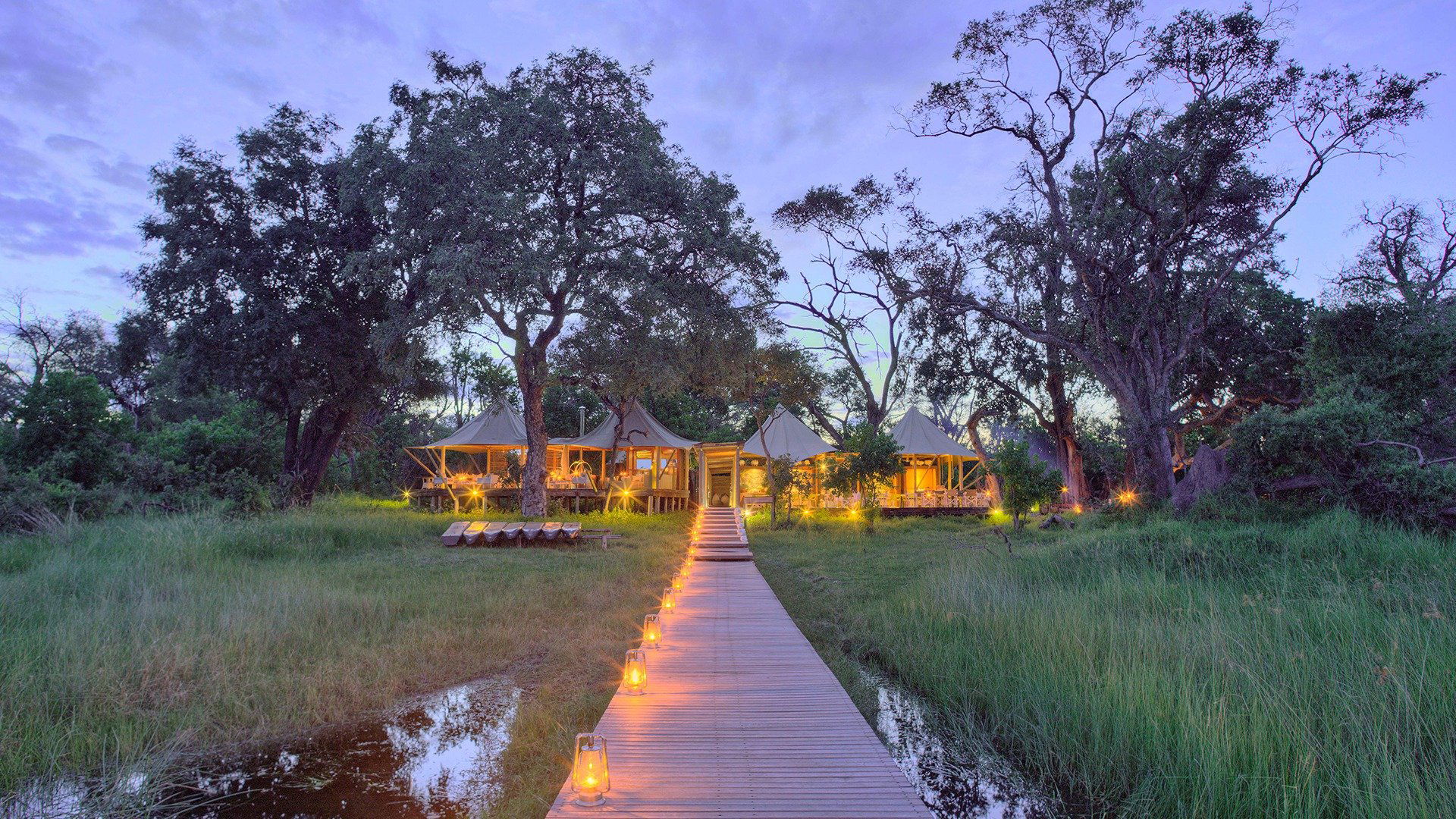
Water, Silence, and the Logic of Nine Rooms
The Okavango Delta operates on its own seasonal calendar, flooding annually from Angolan rains that travel hundreds of kilometres before fanning into the Kalahari basin sometime between June and August. The result is a moving mosaic of channels, islands, and floodplains that reconfigures itself year on year — which means no two visits to a Delta camp occupy quite the same geography. It is this impermanence that the leading camps in the region are built around, and andBeyond Xaranna Okavango Delta Camp, with its nine-room configuration, is sized specifically to sit inside that logic rather than fight it.
Nine rooms is a deliberate number in premium Delta safari. It keeps the guest-to-guide ratio low enough that game drives and mokoro excursions feel genuinely bespoke rather than coordinated at scale. Camps in this size bracket — and Xaranna shares that positioning with properties like Little Mombo Camp and the more intimate configurations at Sitatunga Private Island , operate with a fundamentally different hospitality logic than larger lodges. The timetable bends around the guests rather than the other way around.
The Service Architecture of a Small Camp
In Botswana's high-end concession camps, anticipatory service is not a differentiator , it is the baseline expectation. What separates camps at this tier is how that anticipation is executed across activities, meals, and downtime, and whether the team can sustain it across a camp that runs, by definition, with very few people on the ground at any moment. Xaranna's nine-room footprint means the staff-to-guest ratio stays favourable throughout the year, which matters most during the shoulder periods when occupancy fluctuates and operations at larger properties tend to thin out.
The broader andBeyond group has positioned itself around what it describes as a care-of-the-land, care-of-the-wildlife, care-of-the-people operating model. In practice, at the camp level, this translates into guides who are expected to carry natural history depth beyond game identification , reading the Delta's hydrology, tracking seasonal bird movements, explaining the mechanics of the annual flood. For guests arriving at Xaranna, the wilderness itself becomes the main subject, and the service philosophy is built to keep it that way: present when needed, background when not.
Compared to the more architecturally ambitious andBeyond Sandibe Okavango Safari Lodge , which leans into dramatic design as part of its identity , Xaranna occupies a quieter register. The experience centres on direct wilderness access rather than lodge aesthetics, which places it in the company of tented camps like andBeyond Nxabega Okavango Tented Camp in terms of character and intent.
Botswana's High-Value, Low-Volume Safari Model
Botswana built its post-independence conservation economy on a high-cost, low-impact formula that directly limits the number of visitors permitted in sensitive ecosystems. The result is a premium tier that is structurally expensive , not because of brand inflation, but because concession fees, fly-in logistics, and conservation levies are factored into every booking before a single vehicle leaves camp. This is the context in which Xaranna operates, and it explains why the Delta's nine-room properties price the way they do relative to safari camps in higher-volume markets like Kenya's Masai Mara.
Access to the Delta itself requires light aircraft from Maun, the main gateway town, with charter flights from Maun's small airport handling the final leg to private airstrips near the concessions. The Moremi Game Reserve, which anchors the eastern Delta and remains one of Botswana's landmark protected areas, sets the wildlife density expectations for the broader region. Properties near or adjacent to Moremi Game Reserve benefit from that proximity, and the Delta's concession system means each camp maintains exclusive or semi-exclusive use of its surrounding area.
For comparison, camps in the Linyanti system to the north , such as Wilderness DumaTau in Linyanti , operate with a similar access and conservation structure but track different wildlife patterns, particularly elephant concentrations around the Linyanti waterway in the dry season. The Delta's flood cycle gives Xaranna a seasonal character that few other ecosystems in southern Africa replicate.
Who Books Xaranna, and When
The nine-room cap means availability is genuinely constrained during peak season, which runs roughly from June through October when the flood is at or near its height and game moves onto the islands. Travellers combining Botswana itineraries typically pair a Delta camp with a drier-bush experience elsewhere in the country , the Duba Concession, known for lion-and-buffalo dynamics, offers that contrast within the Delta system itself, while Jack's Camp in Makgadikgadi Salt Pans provides a radically different landscape altogether.
Xaranna draws the segment of safari traveller for whom the absence of other guests is itself a priority , not social anxiety, but a considered preference for encounters that feel unscripted. That preference aligns with what camps like Great Plains Selinda in Selinda Reserve and Selinda Camp in Maun also pursue: a version of safari where the itinerary is genuinely responsive to what the bush presents that day.
For international travellers building a broader Botswana circuit, regional entry typically routes through Maun or Kasane, with andBeyond Chobe Under Canvas in Chobe National Park near Kasane sitting at the northern end of a logical circuit that ends in the Delta. Sanctuary Chief's Camp in Moremi Game Reserve represents the higher-volume, more amenity-dense alternative within the same region for travellers who want more structured facilities alongside their game viewing.
For planning purposes, the full range of Delta options , from tented camps to private islands , is covered in our full Okavango Delta hotels guide. Broader trip context, including dining and activity options, is available through our full Okavango Delta restaurants guide, our full Okavango Delta bars guide, our full Okavango Delta wineries guide, and our full Okavango Delta experiences guide.
Frequently Asked Questions
- What's the general vibe of andBeyond Xaranna Okavango Delta Camp?
- Xaranna sits at the quieter, more immersive end of the Delta's camp spectrum. Nine rooms means guest numbers stay low throughout the season, and the experience is oriented toward the wilderness rather than lodge amenities. The pace is unhurried by design, and the service model follows the lead of the bush , flexible and responsive rather than programmatic. It suits travellers who want their guide's attention undivided and their evenings genuinely quiet.
- What's the leading suite at andBeyond Xaranna Okavango Delta Camp?
- With nine rooms in total, Xaranna operates at a scale where the distinction between standard accommodation and a lead suite is narrower than at larger lodge properties. The camp's room count places it in a peer group , alongside properties like Little Mombo Camp and Sitatunga Private Island , where exclusivity is delivered through access and ratio rather than through tiered room categories. Specific suite configurations and current pricing should be confirmed directly through andBeyond's reservations, as availability and room type allocation shift between seasons.
Category Peers
A quick peer reference to anchor this venue in its category.
Preferential Rates?
Our members enjoy concierge-led booking support and priority upgrades at the world's finest hotels.
Get Exclusive Access