
Preferred Hotels Member
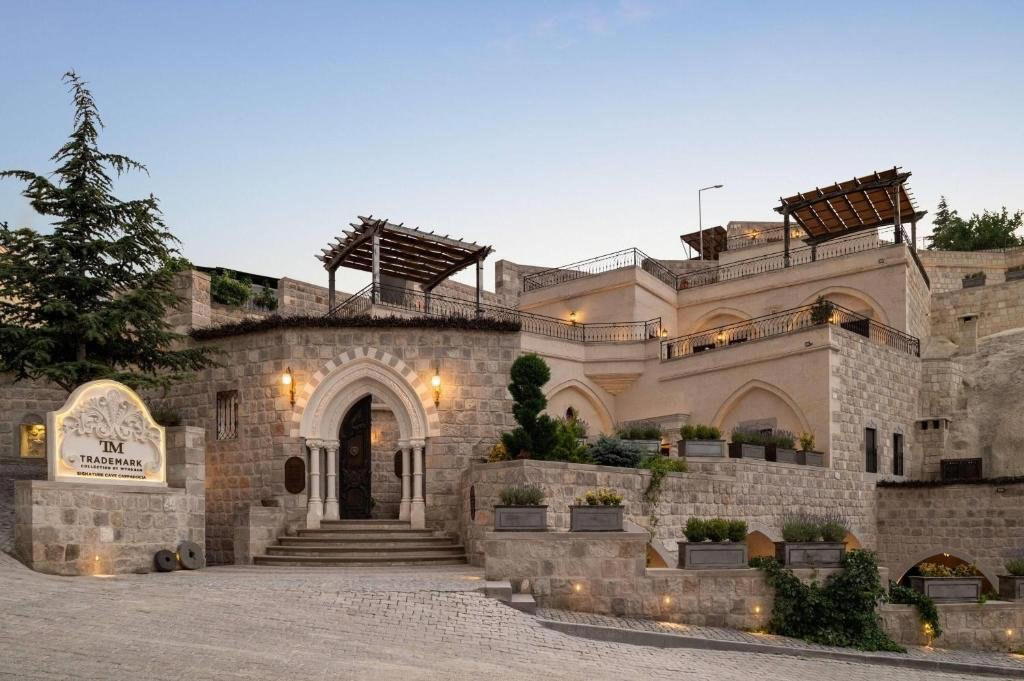
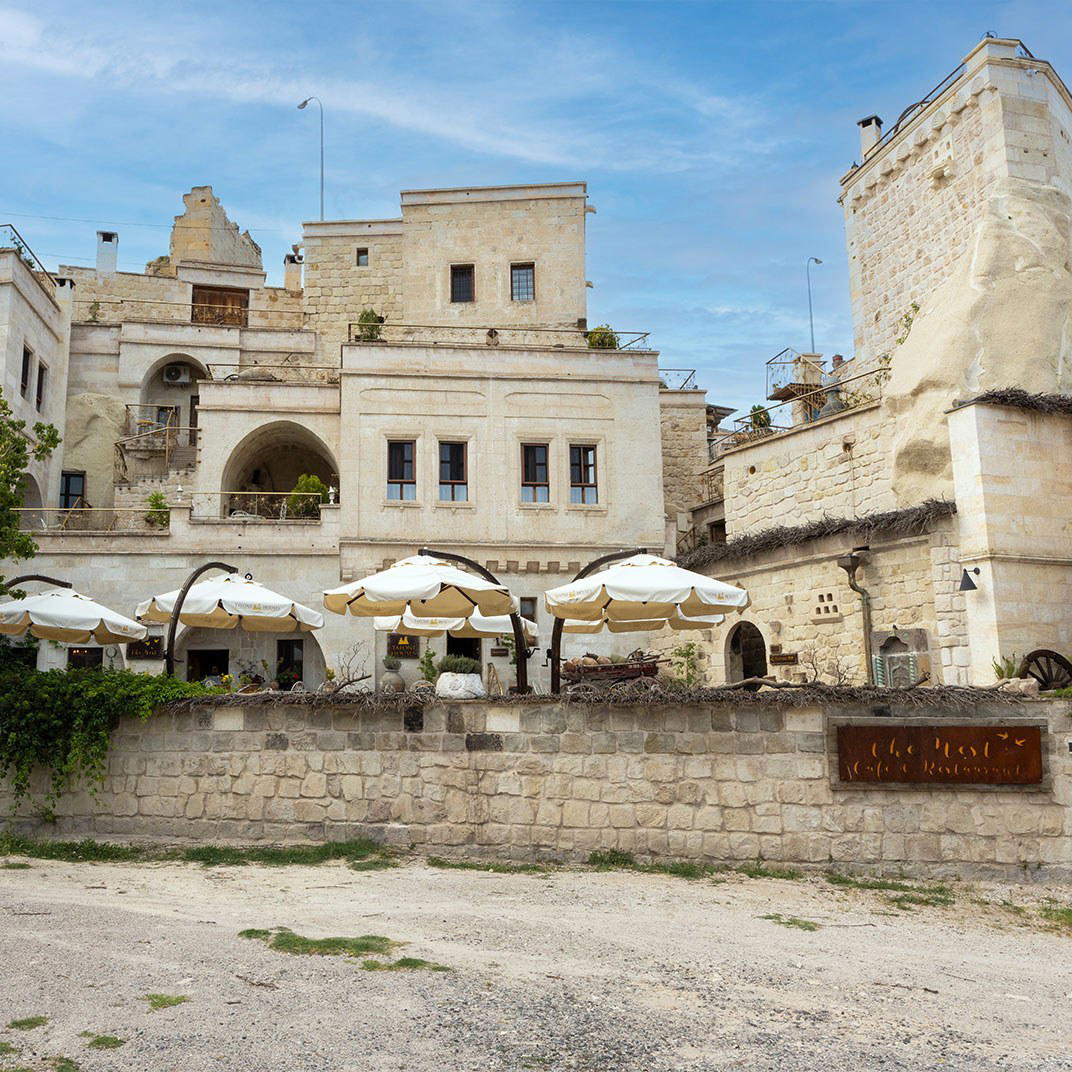
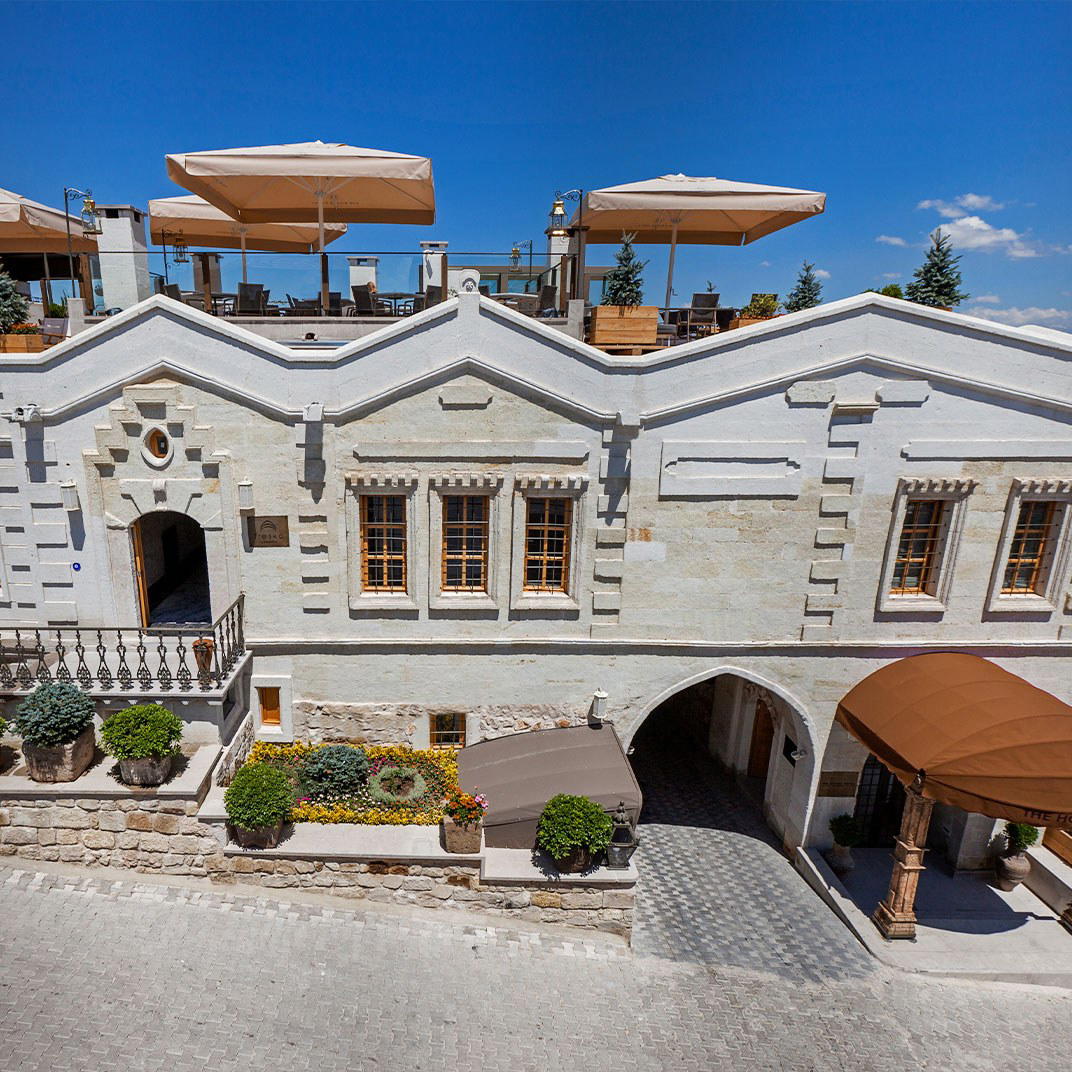
Ajwa Cappadocia occupies a stone-cut address in Mustafapaşa, on the Ürgüp road that links the valley's cave hotels to the region's broader volcanic plateau. With 62 rooms distributed across a property designed to engage directly with the tufa architecture of the surrounding landscape, it belongs to the smaller, design-committed tier of Cappadocian accommodation that prizes material integrity over resort scale.

Pearl is the En Primeur Club membership app, where members save venues, book tables and use the concierge.
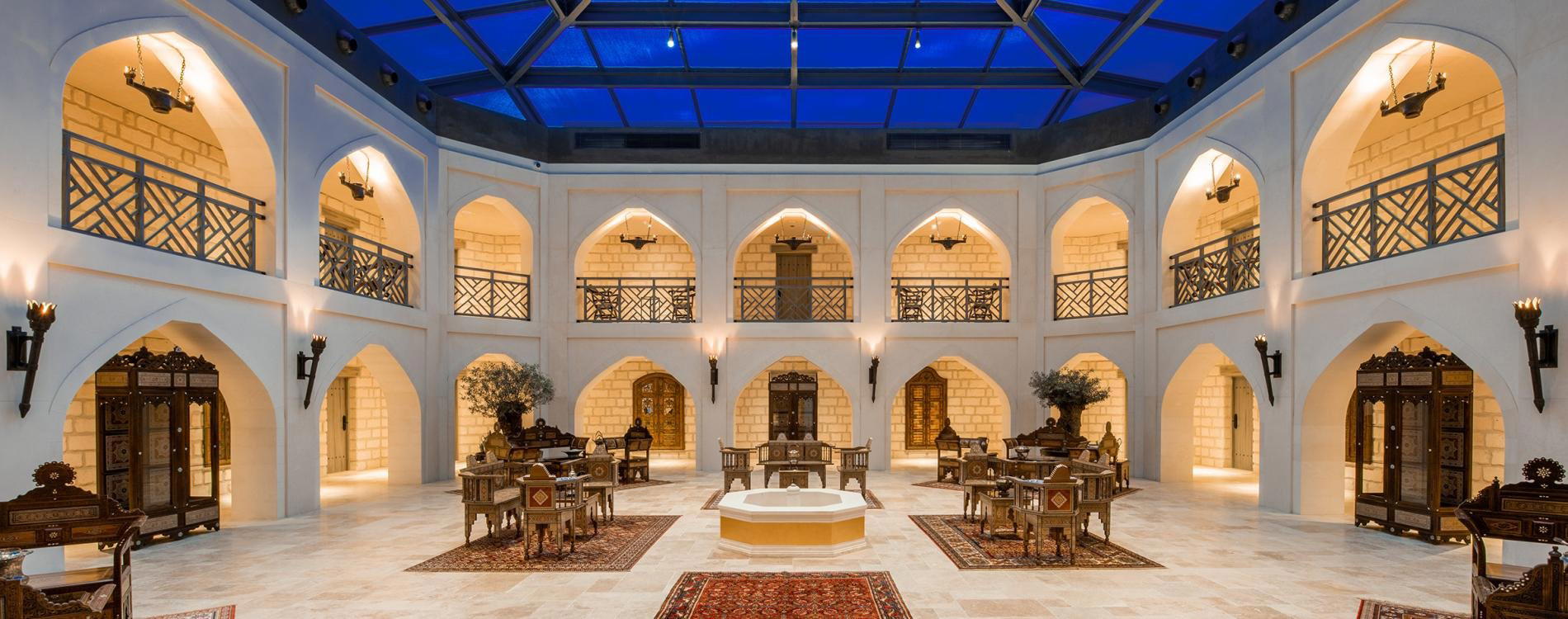
Stone, Light, and the Logic of the Tufa Valley
Cappadocia's hotels occupy an unusual position in the Turkish hospitality market: the geology does most of the architectural work, and the question every property must answer is how honestly it engages with that geology. The valley's volcanic tufa is soft enough to carve, dense enough to insulate, and visually distinctive enough that any hotel ignoring it in favour of imported materials reads as a missed opportunity. Ajwa Cappadocia, located on the Ürgüp road in Mustafapaşa at Yeni, Ürgüp Cd. No:13, commits to the cave-integrated model that defines the more considered end of the region's accommodation spectrum. The property's 62 rooms place it in a mid-sized tier, larger than the intimate cave guesthouses that dot the valley between Hezen Cave Hotel and the Uçhisar ridge, smaller than the resort complexes that serve package tourism out of Nevşehir.
That size matters architecturally. Properties in the 60-to-80-room range in Cappadocia tend to have enough budget for cohesive design intervention without the pressure to standardise rooms into interchangeable boxes. At Ajwa, the cave-integrated logic means rooms work with existing rock formations rather than around them, a spatial grammar that rewards guests willing to accept irregular geometry in exchange for genuine material texture. Guests approaching the property from Ürgüp pass through the transition from the town's main commercial strip into a quieter village character, Mustafapaşa retains a slower rhythm than Göreme or the high-traffic viewing platforms near Uçhisar, where Hu of Cappadocia competes for balloon-view bookings.
Where Ajwa Sits in the Cappadocian Property Spectrum
Cappadocia's premium accommodation has split into two recognisable cohorts. The first, anchored by properties like Argos in Cappadocia, competes on wine cellars, vineyard programmes, and curated cultural access, a distinctly local-heritage proposition. The second cohort leans on design integrity and physical immersion in the cave environment, positioning cave architecture itself as the principal amenity. Ajwa operates closer to the second model, where the design and material choices carry the narrative rather than F&B; programming or branded lifestyle features. This is a meaningful distinction for travellers choosing between properties: if your priority is a wine-led cultural programme, Argos has built its identity there over years. If the architectural experience of sleeping inside carved stone is the primary draw, the logic points elsewhere, and Ajwa's cave-integration approach belongs in that conversation.
For comparative context outside Cappadocia, the design-led boutique model Ajwa follows is visible in properties like Alavya in Alacatı, where local materiality and intimate scale define the identity, or Ahãma in Göcek, which takes a similarly contained, materials-conscious approach on Turkey's Aegean coast. The broader Turkish hospitality market spans from this design-boutique tier all the way to full-scale resort formats like Allium Bodrum Resort & Spa or MACAKIZI BODRUM, where scale, beach infrastructure, and social atmosphere are the product. Ajwa's proposition is fundamentally different from either of those.
The Architecture of the Cave Environment
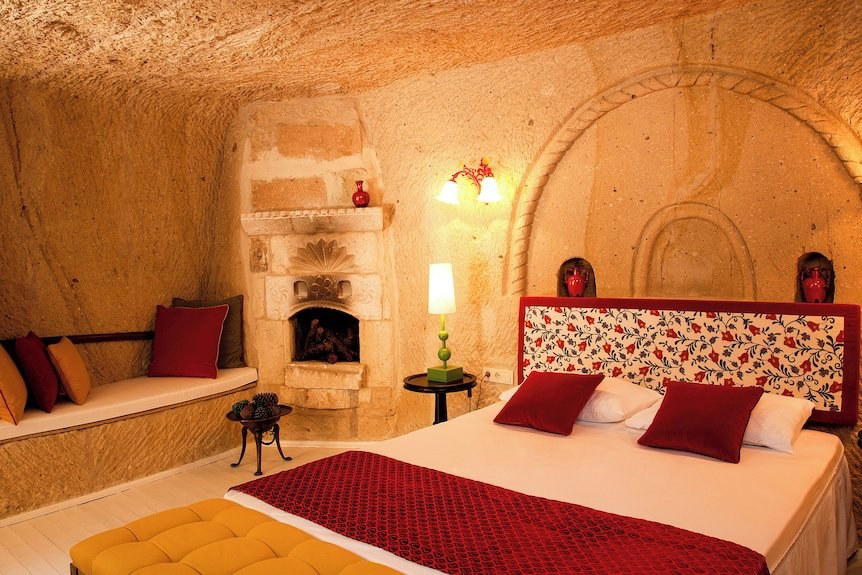
The tufa formations of the Ürgüp-Göreme corridor were shaped by volcanic eruption and centuries of erosion, then carved by successive civilisations who understood the stone's insulating properties before modern HVAC existed. Cave rooms maintain relatively stable temperatures year-round, which is not an incidental benefit but an architectural feature encoded in the material itself. Hotels that build rooms into these formations inherit that thermal logic, and guests notice it most acutely in summer, when the external plateau temperature climbs into the mid-thirties Celsius while cave interiors remain several degrees cooler without mechanical intervention.
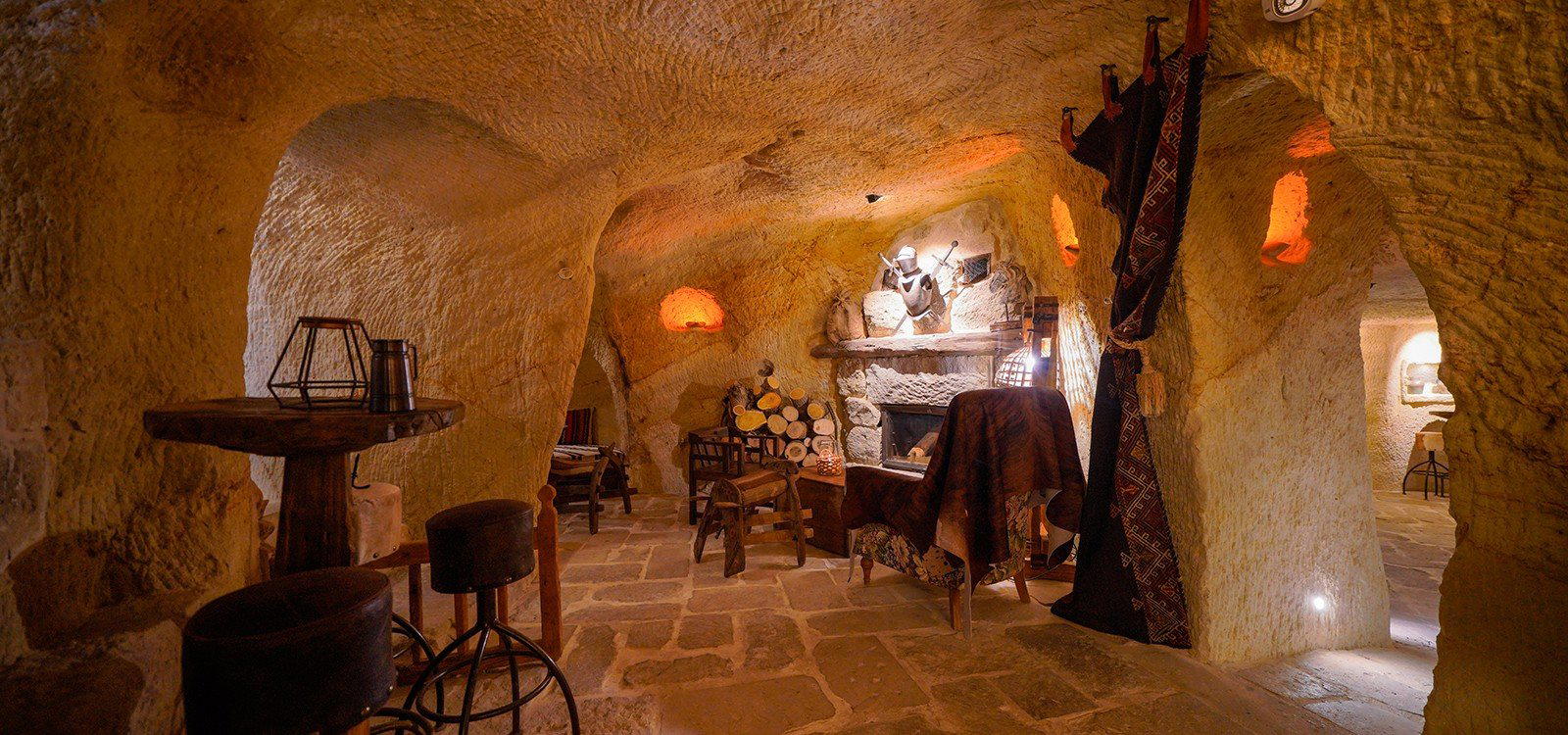
The visual register inside a tufa cave is unlike anything in conventional hotel design: curved ceilings, walls that retain tool marks or natural striations, openings that frame the landscape in ways no rectangular window can replicate. The challenge for any Cappadocian property is how to furnish and finish these spaces without overwhelming the geological character with decorative noise. The better properties treat the stone as the primary element and subordinate everything else to it. Lighting choices, in particular, define whether a cave room reads as atmospheric or merely dim. For a broader sense of how Ürgüp's properties approach this question, our full Ürgüp restaurants and hotels guide maps the area's accommodation character against the surrounding villages.
Timing, Location, and Getting Oriented
Mustafapaşa sits southeast of central Ürgüp, roughly a kilometre from the town's main square, and functions as a quieter residential extension of the more commercially active centre. The positioning gives guests walking access to Ürgüp's restaurants and wine bars while removing them from the immediate hotel concentration around the town's main tourist drag. Cappadocia's high season runs from April through October, with the balloon-launch windows of April-May and September-October drawing the largest concentrations of visitors. July and August bring the most intense heat and the fullest properties; travelling in shoulder season, particularly October, when the valley light is sharper and the tourist volume drops, gives a materially different experience of the landscape.
Getting to Ürgüp means flying into either Kayseri (Erkilet) Airport, roughly 75 kilometres northeast, or Nevşehir Kapadokya Airport, approximately 40 kilometres to the west. Shuttle transfers are the standard arrival method; private transfers can be arranged but add to cost. The distinction between the two airports matters: Kayseri is served by more frequent domestic connections from Istanbul and Ankara, while Nevşehir handles a more limited schedule. For travellers coming from Istanbul hotels like Akbıyık Cd., the Turkish Airlines connections to Kayseri are the most reliable gateway into the valley.
Planning Notes
With 62 rooms, Ajwa Cappadocia is large enough to absorb small groups without feeling overrun, but not so large that the cave environment loses its sense of intimacy. Properties of this size in Cappadocia tend to book out in peak season several months in advance, particularly for rooms with direct terrace or landscape views. Booking windows of two to three months ahead are prudent for April and September stays. The Mustafapaşa address means guests should orient themselves to Ürgüp's geography before arrival: the town centre, the valley viewpoints, and the road connections to Göreme and Avanos are all within 20 minutes by car, which makes Ajwa viable as a base for exploring the wider region without requiring guests to stay in the higher-traffic Göreme corridor. For comparable Turkish properties at different points on the coast and city spectrum, the EP Club index covers everything from Hillside Beach Club in Fethiye to D Maris Bay in Hisarönü and Renaissance Izmir Hotel.
At-a-Glance Comparison
Comparable venues nearby, for context on price, style, and recognition.
| Venue | Cuisine | Price | Awards | Notes |
|---|---|---|---|---|
| Ajwa CappadociaThis venue (the venue you are viewing) | Luxury cave hotel with traditional caravanserai and artistic bazaar buildings | $200–300 | Preferred Hotels Member | Not listed |
| Sacred House | Historic boutique mansion with neo-classical and Gothic restoration | $200–300 | Michelin Selected | Dutlu Cami |
| Hezen Cave Hotel | Cave hotel renovated from ancient rock homes blending authenticity with modern comforts | $100–200 | Not listed | Ortahisar |
| Tafoni Houses Cave Hotel | Luxury boutique cave hotel blending authentic Cappadocian heritage with contemporary comfort and curated art collection. | $100–200 | Michelin Selected · Virtuoso Luxury Hotel Partner | Ortahisar |
| Aza Cave Hotel | luxury cave boutique hotel blending historic caves with modern amenities | $200–300 | Michelin Selected | Aydinli Mahallesi |
| Maxx Royal Kemer | ultra-modern hillside villas harmoniously integrated with nature | Not listed | Michelin Guide New Hotels New Hotel · Michelin Selected | Kemer |
Recognition history
Dated appearances from independent guides and award organizations, with the underlying list record or original source where available.
Preferred Hotels Member
Preferred Hotels
Details
- Romantic
- Elegant
- Scenic
- Sophisticated
- Cozy
- Honeymoon
- Romantic Getaway
- Family Vacation
- Wellness Retreat
- Panoramic View
- Historic Building
- Garden
- Terrace
- Spa
- Pool
- Fitness Center
- Room Service
- Concierge
- Kids Club
- Garden
- Mountain
- Wheelchair Accessible
- Elevator
- Step Free Entrance
- Accessible Parking
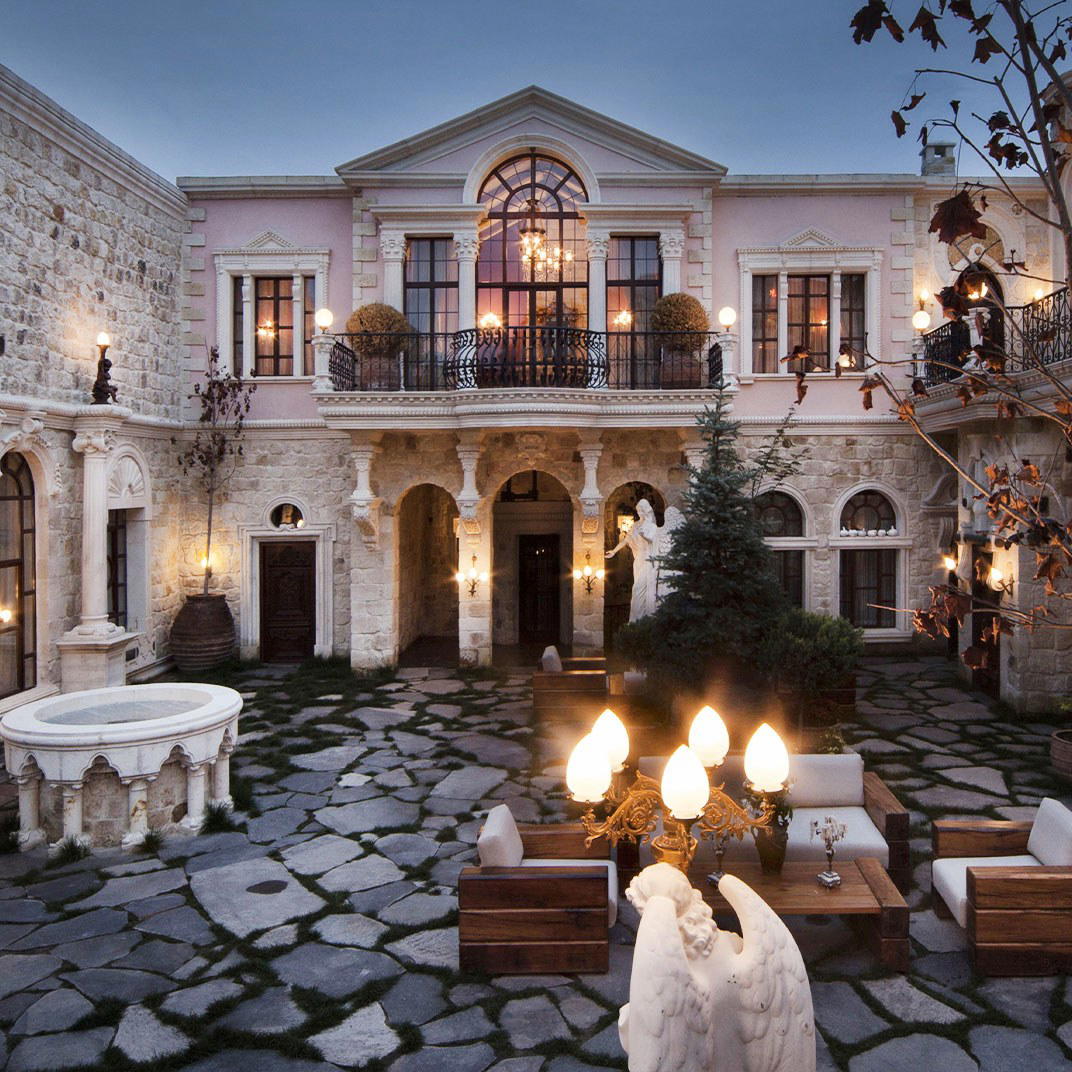
Tranquil and peaceful with artistic, meticulously detailed design blending traditional and contemporary elements, enhanced by serene spa lighting and restorative garden atmosphere.