← Guides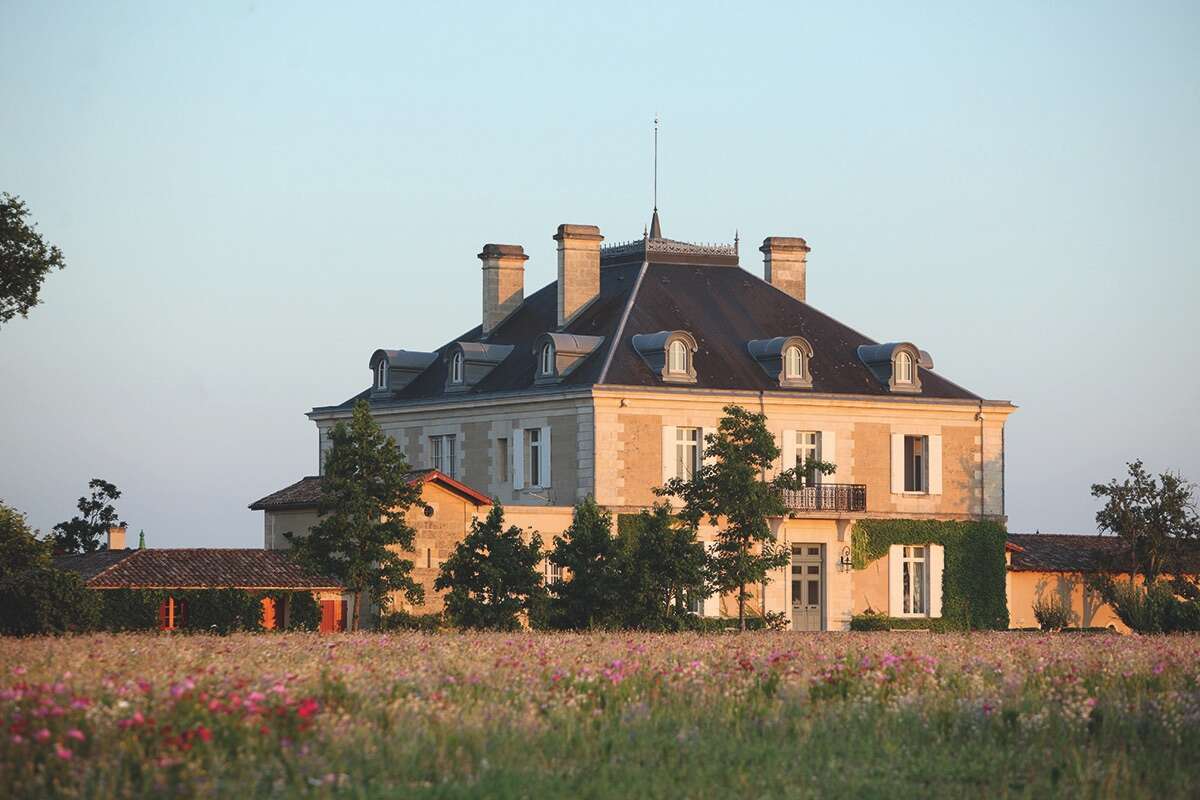
One in four Bordeaux estates is in debt restructuring. Here's what the vine-pull program and collapsing demand mean for the region's future.
One in four Bordeaux estates is in debt restructuring. Here's what the vine-pull program and collapsing demand mean for the region's future.
Last November, 800 hectoliters of organic Blaye wine, 90,000 cases from a bankrupt estate, sold at auction for €25 per hectoliter, according to Wine Spectator. The normal floor is €80. That same night, vigilantes opened the spigots on tanks holding 110,000 cases of comparable wine and let it run into the gutters rather than watch it sell and drag prices lower still. That scene in Blaye, a quiet appellation across the Gironde from the Médoc, is the clearest image yet of the Bordeaux small growers crisis, a collapse that has been building for a decade and is now accelerating faster than the region can absorb. France's Minister of Agriculture Annie Genevard has since announced a €130 million vine-uprooting fund, the government's formal acknowledgment that Bordeaux's supply-demand imbalance will not self-correct.
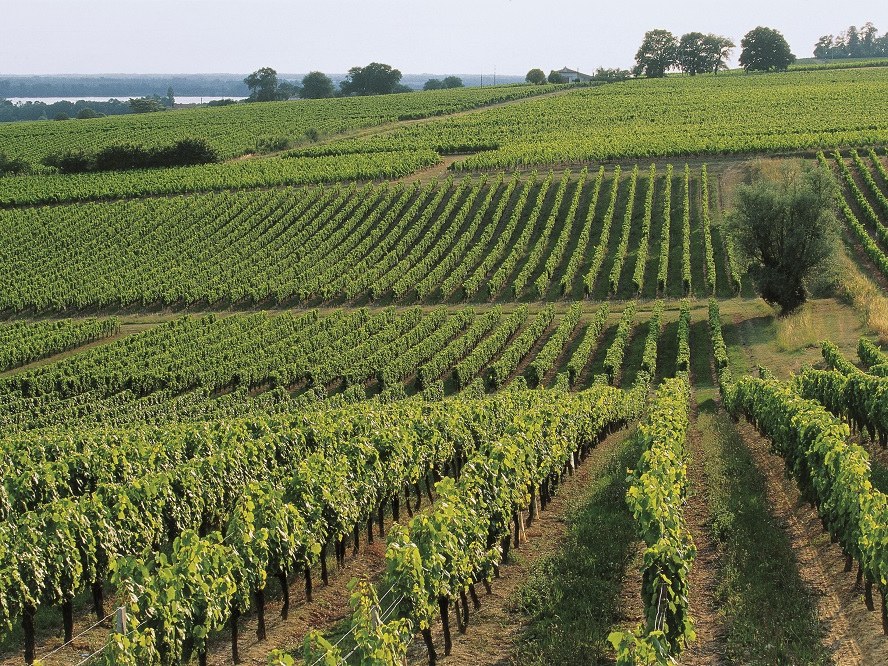
Bordeaux is France's largest fine wine region, with thousands of vignerons farming more than 250,000 acres of vines. For most of the twentieth century, that scale was a strength. In 2015, the region produced 555 million cases and sold 610 million, drawing on stockpiles to meet demand. The CIVB, the Conseil Interprofessionnel du Vin de Bordeaux, responded by encouraging expansion. "Everybody was so happy, that in the strategic plan for 2018-2025, the CIVB and all the professionals were saying we need to plant more vines," said Jean-Pierre Durand, négociant at AdVini and a board member representing Bordeaux merchants on the CIVB.1
Then two demand pillars collapsed simultaneously. China had become Bordeaux's most important export market, and Xi Jinping's anti-corruption and anti-alcohol campaigns gutted it. Exports to China plummeted from 72 million cases to under 22 million in just a few years, according to Wine Spectator. At the same time, French domestic consumption, the bedrock on which modern Bordeaux was built, kept eroding. French households now drink between 220 and 270 million cases per year, down from over 333 million a few decades ago. Per-capita consumption dropped from roughly 100 liters per person annually to somewhere between 3 and 5.5 cases per person today. That is not a cyclical dip. It is a generational shift in how France drinks.
The financial consequences are now visible in the balance sheets of small estates across the region. Bulk red Bordeaux has lost one-third of its value since 2018.
Crédit Agricole, the leading French agricultural bank, reports that approximately 1,200 properties, nearly 25 percent of Bordeaux's 4,000 remaining estates, are in serious debt restructuring negotiations. Many growers are sitting on four unsold vintages, representing €10 million in invested capital with no revenue stream.
Jacques Chardat of Corlianges, a négociant distributing wines from 20 châteaux in Blaye and Bourg, put it plainly: for a vigneron to see their property sold at auction is the end of a life's work, sometimes the result of several generations' effort on the same land.
The arrachage définitif program is especially concrete measure yet, and its terms reveal exactly how distressed the situation has become. France's plan combines €130 million in French money with €120 million in EU funds to remove between 72,000 and 81,600 acres of vineyard nationwide. Applications for 67,857 acres were approved in December, with Bordeaux accounting for roughly half. Vines must be permanently removed by June 2026. No replanting is permitted for at least six years. For growers who take the subsidy, this is a one-way door.
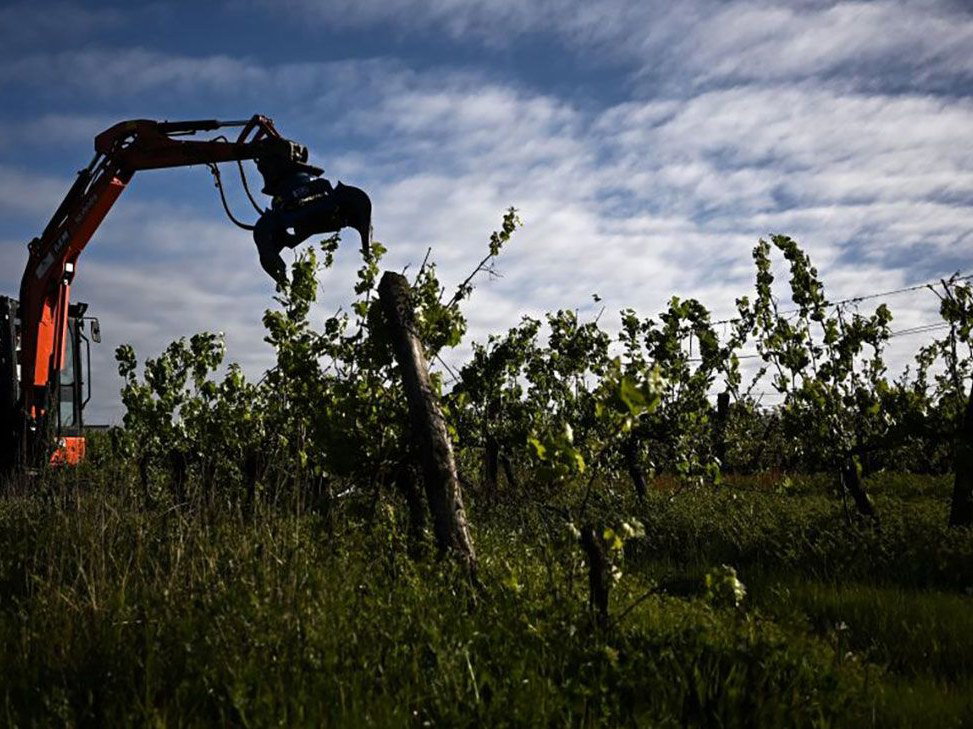
The subsidy pays €4,000 per hectare at the base rate, potentially rising to €10,000 in particularly financially distressed zones, including parts of Bordeaux's Right Bank. To understand why even €10,000 per hectare may feel inadequate, consider the operating math Durand lays out: running a 50-hectare estate costs €1.2 to €1.5 million per year in cash, tractors, inputs, bottling, and many of these growers have had nothing coming in for multiple vintages. Four years of carrying costs on a 50-hectare property, with no sales, can easily exceed what the subsidy pays out. The program offers an exit. It does not offer restitution.
Durand is direct about the program's structural limits. Partial vine removal raises per-bottle production costs without resolving overproduction, growers end up farming less land per estate while fixed costs remain.
He believes the more effective intervention would be to encourage older farmers to retire entirely, uprooting whole estates rather than trimming at the margins. And critically, removing vines addresses future supply but does nothing about the existing backlog pressing down on prices right now.
Without aggressive distillation programs converting surplus wine to industrial alcohol, the market stays saturated regardless of how many vines come out of the ground.
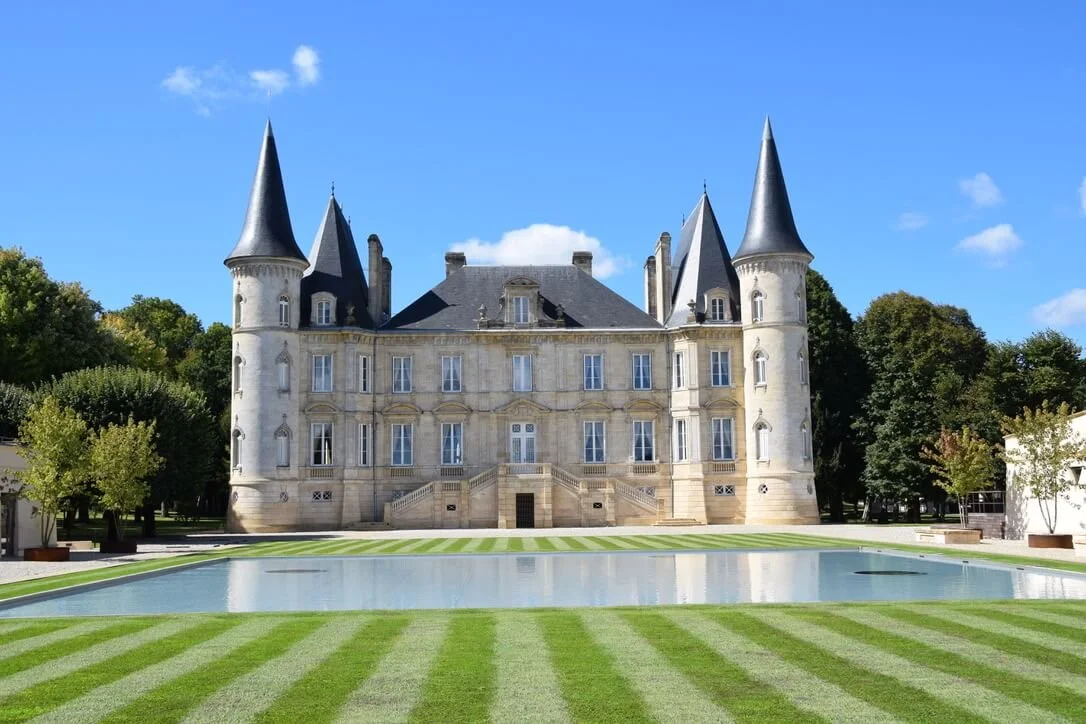
The Bordeaux small growers crisis is not distributed evenly across the appellation hierarchy. The fault lines run along brand recognition, distribution access, and classified-growth status. A Pauillac first growth with a global mailing list and a négociant allocation through the Place de Bordeaux operates in a different economic universe from a family domaine in Blaye or Entre-Deux-Mers selling generic AOC Bordeaux into French supermarkets at prices that no longer cover production costs.
Small Growers vs. Classified Growths: A Snapshot
| Estate | Appellation | Scale | Avg. Bottle Price (approx.) | Distribution | Crisis Exposure |
|---|---|---|---|---|---|
| Small Growers | |||||
| Château Nodoz | Côtes de Bourg | 38 ha | ~€11 | Retail / négociant | Critical |
| Château Peybonhomme Les Tours | Blaye Côtes de Bordeaux | 64 ha | ~€23 | Retail / négociant | High |
| Château Roc de Cambes | Côtes de Bourg | 12 ha | ~€65 | Limited / direct | Moderate |
| Generic Bordeaux AOC (avg. small estate) | Bordeaux AOC | ~18 ha | ~€8 | Supermarket / bulk | Critical |
| Classified Growths | |||||
| Château Lynch-Bages | Pauillac (5th Growth) | 90 ha | ~€84 | Place de Bordeaux | Low |
| Château Pichon Baron | Pauillac (2nd Growth) | 73 ha | ~€173 | Place de Bordeaux | Low |
| Château Cos d'Estournel | Saint-Estèphe (2nd Growth) | 91 ha | ~€119 | Place de Bordeaux | Low |
| Château Haut-Bailly | Pessac-Léognan (Grand Cru Classé) | 39 ha | ~€81 | Place de Bordeaux | Low |
Avg. bottle prices are approximate Wine-Searcher market averages. Scale refers to planted vineyard hectares. Crisis exposure reflects current debt restructuring and sales pressure, not wine quality.
The generic and sub-regional appellations, Bordeaux AOC, Bordeaux Supérieur, Blaye Côtes de Bordeaux, Bourg, are where the attrition is concentrated. These are the wines that built Bordeaux's volume business, the bottles that filled French supermarket shelves for generations. That market has contracted structurally, not cyclically. Younger French consumers are drinking less wine overall, and when they do drink, they are less likely to reach for a generic Bordeaux rouge than their parents were. The appellation name alone no longer sells the bottle.
Estates with direct-to-consumer channels, agritourism infrastructure, or strong relationships with sommeliers and importers in growth markets have more options. But for a family farming 30 or 40 hectares of generic AOC vines with four vintages sitting in tank and a Crédit Agricole loan coming due, the calculus is brutal. The vine-pull subsidy, even at the lower €4,000 per hectare rate, may be the only transaction that makes financial sense, and once those vines are gone, with a six-year replanting ban in place, the decision is permanent.
For collectors, the Bordeaux small growers crisis cuts in two directions at once. The near-term picture is one of oversupply at the generic and mid-tier level, bulk red Bordeaux prices have been falling since 2018, and the auction in Blaye last November shows how far distressed inventory can travel below any rational floor. If you have been curious about lesser-known appellations, the price-to-quality ratio across Blaye, Bourg, and Bordeaux Supérieur has rarely been more favorable for buyers willing to do the sourcing work.
The medium-term picture is more complex. With applications for roughly 34,000 acres of Bordeaux vineyard already approved for permanent removal, and no replanting permitted for at least six years, the volume of generic and mid-tier Bordeaux available on the market will contract over the next decade.
Appellations that lose a critical mass of producers may struggle to maintain commercial visibility, or may quietly consolidate into fewer, larger estates with the resources to market effectively. Either outcome reduces the depth of selection that has historically made Bordeaux such a rich hunting ground for value across price points.
The window for buying well from small Blaye and Bourg producers may be shorter than it looks.
At the classified-growth level, the dynamics are different but not entirely insulated. Slumping en primeur sales and questions about the futures system have put pressure even on well-known châteaux. But the brand equity, the global distribution networks, and the secondary market liquidity that support the top tier are not going away. The crisis is reshaping the base of the pyramid, not the apex, and that reshaping will take years to fully register in allocation sizes and vintage depth.
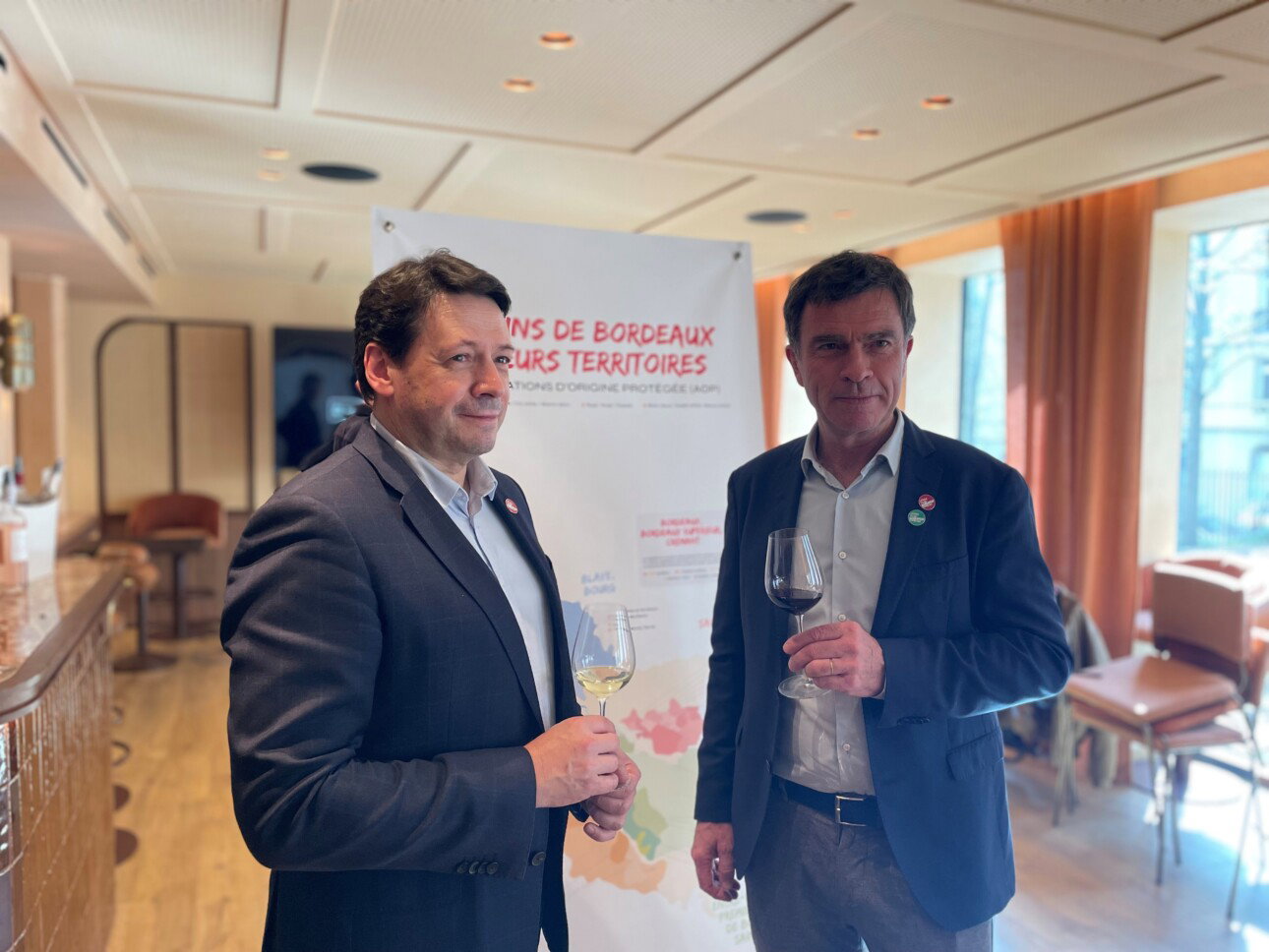
Durand and his colleagues at the CIVB are pushing a strategic pivot for producers who survive the current contraction. The prescription includes lighter, less extracted wine styles with less new oak, a direct response to the consumer drift away from the heavy, tannic reds that defined generic Bordeaux for decades. It also includes direct consumer engagement, bypassing the passive reliance on the Place de Bordeaux's négociant system in favor of relationships built with sommeliers, importers, and individual buyers. "Winemakers priority stop customers and build relationships directly," Durand said.
The raw material for that argument is genuinely strong. A run of recent vintages across Bordeaux has produced wines of real quality, and the price differential between Bordeaux and Burgundy, at every tier, has widened to the point where the value case for Bordeaux is easier to make than it has been in years. The challenge is not the wine. It is the infrastructure of relationships and the marketing investment required to reach buyers who have drifted away from the appellation entirely.
Proposals for appellation restructuring, investment in wine tourism, and a harder pivot toward organic and lower-alcohol production are all in circulation. Bordeaux has navigated structural crises before, phylloxera in the nineteenth century, overproduction in the 1970s, and emerged with its identity intact, if altered. But those resets took decades, and they were not accompanied by the permanent removal of tens of thousands of acres of vineyard under a government subsidy program with a six-year replanting ban.
Durand's own read is measured: "We're close to the bottom, not yet there." For the vignerons of Blaye and Bourg, for the family estates carrying four unsold vintages and a mounting bank debt, that assessment may feel optimistic. The vine-pull program will remove supply. Distillation programs, if funded adequately, will clear some of the backlog.
And a generation of growers who choose to stay will face a Bordeaux that is smaller, more consolidated, and, if the strategic pivot works, more deliberately positioned than the one their grandparents planted. Whether that Bordeaux is better is a question the next decade will answer.
If this is the kind of insider detail you look for in a glass, join the club, we'll keep pouring.
Get the App
Take the shortlist into the En Primeur Club app for concierge access, saved places, and the next step after discovery.
Get Exclusive AccessMore from the editors