The Esquire Tavern
One of the oldest bars on the San Antonio River Walk, The Esquire Tavern at 155 E Commerce St has anchored the city's drinking culture since the 1930s. The long wooden bar and low-lit interior place it in a tier of historically rooted American saloons that predate the cocktail-revival era, making it a reference point for anyone mapping San Antonio's bar scene.

Pearl is the En Primeur Club membership app — saves, bookings, and concierge access live there. Same editors, same standards.
A River Walk Address With Roots in Repeal
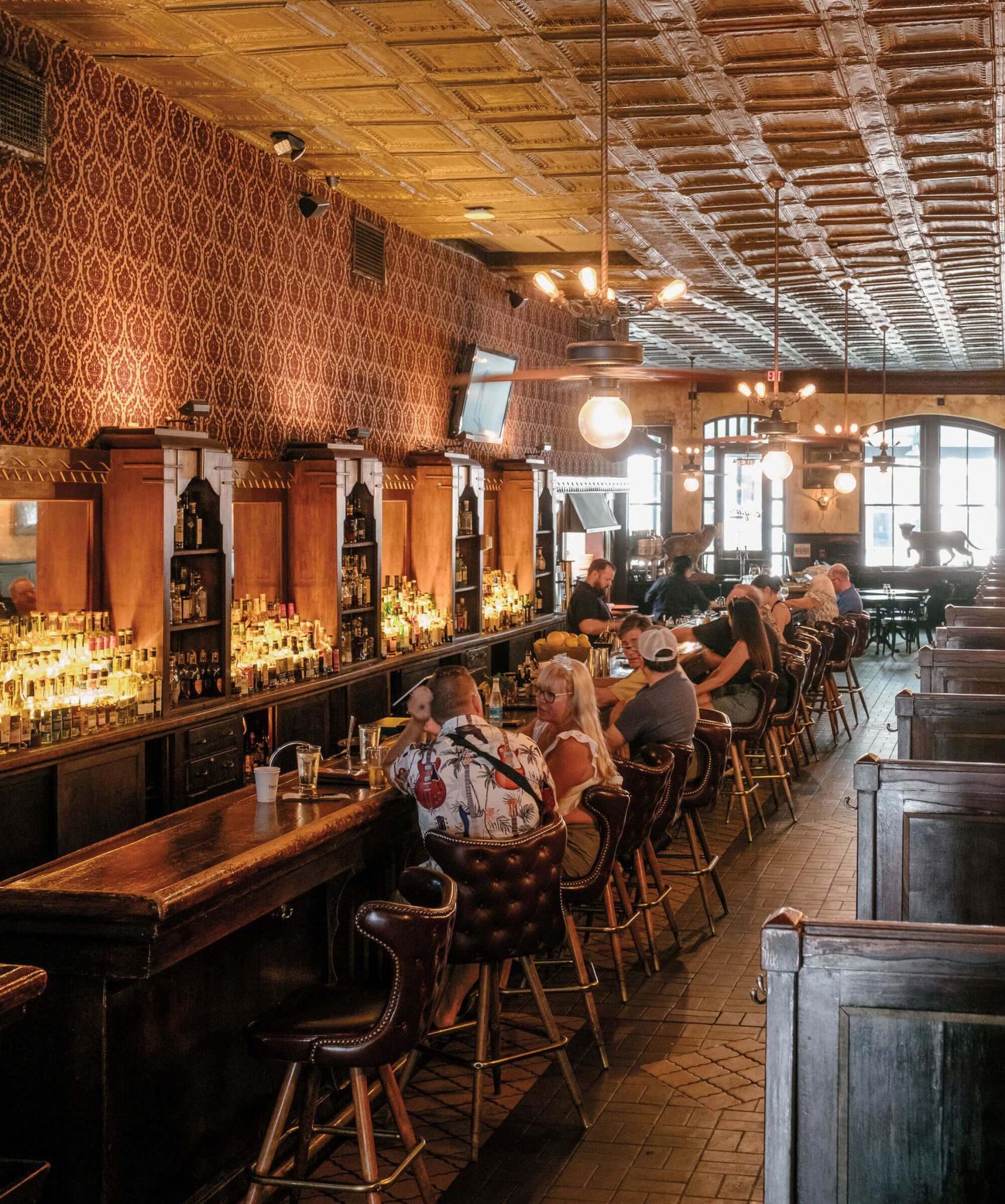
Step onto the River Walk at Commerce Street and the Esquire Tavern reads differently from the modern hospitality that surrounds it. Where newer arrivals have opted for rooftop formats and design-forward interiors, this address operates from a different premise: a long wooden bar, overhead fans, and a structure that dates to the post-Prohibition period. San Antonio's drinking scene has accumulated considerable depth over the decades, and the Esquire sits at one end of a historical spectrum that the city's current bar generation is still working to match.
The bar's address, 155 E Commerce St, places it at one of the River Walk's most trafficked corners, which means it functions simultaneously as a neighborhood institution for locals and as an obvious stop for visitors oriented around the river corridor. That dual audience shapes the experience in ways both useful and worth flagging: the crowd here is more mixed than at, say, the more curated rooms of Bar 1919, and the pace is livelier, particularly on weekend evenings when the River Walk operates at full volume.
The Architecture of an Evening Here
The editorial angle that makes the most sense for a place like the Esquire is not the individual cocktail or the rotating seasonal menu, but the progression of the visit itself. American saloons of this vintage were designed around duration rather than occasion: the bar was meant to be occupied, not glanced at. That logic holds here. The long bar counter is a structural invitation to sit, order, reassess, and order again, moving through the drink list at a pace that reflects how the room was originally conceived.
Early in an evening, when the River Walk is still catching its late-afternoon light and the crowd is arriving rather than leaving, the Esquire operates as a transitional space. It is neither a destination-first cocktail room requiring advance booking nor a casual patio bar. Its history and physical scale place it in a middle tier that Texas bar culture does particularly well: the serious but accessible saloon where the drinks are competent and the room has genuine character behind it.
As the evening deepens and the River Walk crowd thickens, the bar's historical bones become more legible. The long counter fills from end to end, the overhead lighting holds the amber register that mid-century American bar architecture was built around, and the experience shifts from casual stop to proper session. In that later register, the Esquire is most itself. Bars in comparable positions in other American cities — Jewel of the South in New Orleans or Julep in Houston — operate with more explicit cocktail-program ambition, but the Esquire trades on something different: density of history per square foot.
Where the Esquire Sits in San Antonio's Bar Tier
San Antonio's bar scene has expanded considerably in recent years, particularly in the cocktail-forward category. 1Watson occupies the hotel bar tier with a more polished format, while Aleteo, the Yucatán-inspired rooftop bar, represents the experiential-design end of the market. The Alamo Beer Company anchors the local craft-brewing corner. Each of these addresses solves a different problem for the visitor building an evening in the city.
The Esquire solves the problem of historical anchoring. In the same way that technically ambitious bars like Kumiko in Chicago or ABV in San Francisco represent a city's commitment to contemporary craft, legacy bars represent a city's commitment to memory. The Esquire's longevity on the River Walk is a data point about San Antonio's relationship with its own drinking history, not just a biographical fact about a single address. That framing matters when deciding where to spend an evening: if the goal is to understand the city's bar culture in sequence, the Esquire belongs early in the itinerary, as a baseline against which the newer formats read more clearly.
For a broader map of where the Esquire sits relative to San Antonio's full hospitality offering, the EP Club San Antonio guide covers the city's dining and drinking scene with neighbourhood-level detail. Internationally, the structural analogue to a room like this, a historically grounded bar that operates as a civic reference point rather than a cocktail showcase, appears in rooms like Bar Leather Apron in Honolulu and The Parlour in Frankfurt, both of which balance heritage positioning with current execution in ways worth comparing.
Planning the Visit
The Esquire Tavern is at 155 E Commerce Street, accessible directly from the River Walk level as well as from street level above. For anyone routing an evening through downtown San Antonio, the address is sufficiently central that it folds naturally into a longer itinerary: the River Walk corridor puts multiple bars and restaurants within walking distance, making a stop here logistically simple rather than requiring a dedicated trip. The room's capacity and River Walk exposure mean that Friday and Saturday evenings draw significant volume; arriving before 8pm gives a cleaner read of the bar at its own pace before the corridor crowd arrives in full. There is no booking requirement for bar seating, which is consistent with the saloon format the address has maintained since its original opening. For hours and current programming, the venue's own channels are the reliable source, as seasonal events and private bookings can affect availability on the main bar floor. Superbueno in New York operates a similarly walk-in-friendly format at the cocktail-bar tier, and comparing the two illustrates how differently American cities have resolved the tension between accessibility and curation.
Cuisine and Recognition
| Venue | Price |
|---|---|
| The Esquire TavernThis venue — the venue you are viewing | $20–30 |
| Little Death | $20–30 |
| Volare Restaurant | $30–50 |
Continue exploring
More in San Antonio
Bars in San Antonio
All bars in San Antonio →
Restaurants in San Antonio
All restaurants in San Antonio →
Hotels in San Antonio
All hotels in San Antonio →
Wineries in San Antonio
All wineries in San Antonio →
The Esquire Tavern
The wine
- Wine program
- Curated wine list
- Craft cocktails
- Classic cocktails
- Mezcal
Signature drinks: French 75, Sea of Confusion.
Details
- Classic
- Historic
- Well Known
- Intimate
- After Work
- Late Night
- Casual Hangout
- Historic Building
- Seated Bar
- Booth Seating
- Classic Cocktails
- Craft Cocktails
- Mezcal
- Street Scene
Current opening hours
- Monday
- 11:30 AM–12 AM
- Tuesday
- 11:30 AM–12 AM
- Wednesday
- 11:30 AM–12 AM
- Thursday
- 11:30 AM–12 AM
- Friday
- 11:30 AM–2 AM
- Saturday
- 11:30 AM–2 AM
- Sunday
- 11:30 AM–12 AM
Hours can change for holidays and private events. Last verified .
Dark, cool interior with high ceilings covered in pressed copper tiles, rococo mustard-colored wallpaper, and historic booths creating a redolent, ornate atmosphere.