Pete's Candy Store
Pete's Candy Store on Lorimer Street in Williamsburg has occupied its converted railroad car since the late 1990s, evolving into one of Brooklyn's more reliably intimate live music and bar spaces. The narrow room, mismatched furniture, and back-room stage define a format that resists the polish of Manhattan bar programming. No cover charge on most nights keeps the threshold low and the crowd genuinely local.
Pearl is the En Primeur Club membership app — saves, bookings, and concierge access live there. Same editors, same standards.
- Address
- 709 Lorimer St, Brooklyn, NY 11211
- Phone
- +1 718 302 3770
- Website
- petescandystore.com
- Directions
- Get directions
 Saves & bookings on Pearl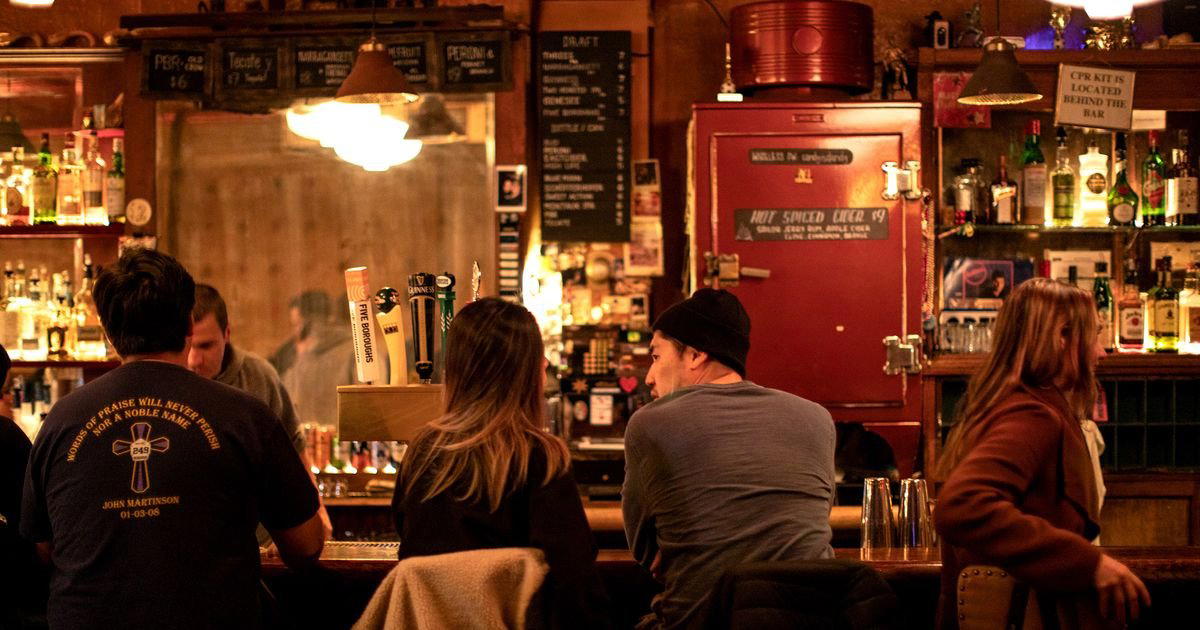
The Architecture of Intimacy: How a Railroad Car Became a Williamsburg Institution
Brooklyn's bar scene has fractured into distinct tiers over the past two decades: the design-forward cocktail room chasing national recognition, the rooftop venue optimized for Instagram reach, and a smaller, older cohort of spaces whose value lies precisely in what they have refused to become. Pete's Candy Store, operating from a converted railroad car at 709 Lorimer Street in Williamsburg since the late 1990s, belongs firmly to that third category. Its longevity is less a function of reinvention than of consistency — the physical container has barely changed, and that restraint is the point.
The railroad car format imposes a discipline that no interior designer could manufacture. The room is genuinely narrow: perhaps a dozen feet across at its widest. Seating runs along wooden benches and mismatched chairs, the bar occupies one side, and the back room — a separate, low-ceilinged alcove, functions as the live music stage. The spatial logic is sequential rather than open-plan, which means different parts of the bar operate at different volumes simultaneously. You can hold a conversation near the front while a full set plays forty feet behind you. That layered acoustic experience is structural, not programmed.
A Physical Container That Predates Williamsburg's Second Act
When Pete's Candy Store opened in the late 1990s, Lorimer Street was well outside the radius of Manhattan's bar culture. The neighborhood's transformation into one of New York's most recognizable dining and drinking corridors came later, pulling upward on rents and format expectations across the area. The bar's survival through multiple cycles of neighborhood change, the mid-2000s boom, the post-2008 consolidation, the gentrification debate of the 2010s, reflects a formula that scales downward rather than up. No reservations, no dress expectations, no cover charge on most nights. The accessibility of the format has kept the room functioning as a neighborhood bar rather than a destination bar, even as the neighborhood itself became a destination.
That distinction matters when comparing Pete's to the broader New York cocktail scene. Bars like Superbueno and Amor y Amargo have built identities around program specificity, spirit focus, technique, and curated menus that signal a particular kind of seriousness. Angel's Share and Attaboy NYC operate on the other side of the ledger: low-key formats, but with cocktail credentials that anchor a national reputation. Pete's operates in a different register entirely. The drinks are not the editorial hook. The space is.
The Back Room as a Format Argument
In most cities, the live music bar and the serious drinking bar have diverged into separate institutions. The back room at Pete's complicates that separation. The stage is small enough that the distance between performer and audience collapses to a few rows of folding chairs. Acts range from singer-songwriters to Bingo nights, quiz events, and occasional readings, a programming breadth that keeps the calendar unpredictable in a way that larger venues cannot afford to be. There is no ticketing infrastructure for most events. You arrive, find a seat if one is available, and the show begins.
This format places Pete's in a lineage of American small-room venues where the absence of production polish is itself the draw. Comparable spaces in other cities have often been absorbed into larger hospitality groups or repositioned as premium small-plates venues as neighborhood economics shifted. The fact that the Lorimer Street location has maintained its format without significant commercialization is a data point worth registering, even if the mechanism behind that stability is not publicly documented.
For context on how other cities handle the small-room, low-threshold bar format: Jewel of the South in New Orleans and Julep in Houston occupy the Southern end of the American bar spectrum, where hospitality traditions shape the format differently. Kumiko in Chicago and ABV in San Francisco represent the West Coast and Midwest's version of drinks-first intimacy. Allegory in Washington, D.C. leans into theatrical design. Bar Leather Apron in Honolulu and The Parlour in Frankfurt on the Main demonstrate how the intimate bar format translates across both Pacific and European contexts. Pete's sits apart from all of them: its identity is not built around a drinks program or a design concept, but around the physical fact of the room itself.
Lorimer Street in Context
The L train stop at Lorimer Street / Metropolitan Avenue positions the bar within walking distance of the denser commercial blocks of Williamsburg to the west and the quieter residential streets of Greenpoint to the north. That geographic position has kept Pete's from becoming purely a destination stop on the standard Williamsburg bar crawl, it requires a small navigation away from the main drag, which filters the crowd toward people who know where they are going. The surrounding blocks have seen significant turnover in food and drink tenants over the past decade, which makes the bar's continuity at this specific address more legible as a signal of local rootedness. For broader context on New York's bar and restaurant patterns, our full New York City restaurants guide maps the city's drinking neighborhoods in more detail.
Planning Your Visit
Reservations: Not required and generally not available for standard evenings; the bar operates on a walk-in basis. Dress: No stated code; the room skews casual by the nature of its format. Budget: Pricing sits at the lower end of Brooklyn bar ranges, with no cover on most nights, check the event calendar for specific programming that may carry a charge. Timing: Weekday evenings tend to be quieter near the front bar; weekend nights fill the back room earlier than you might expect given the neighborhood's foot-traffic patterns. Getting there: The L train to Lorimer Street / Metropolitan Avenue is the most direct route from Manhattan.
Continue exploring
More in New York City
Bars in New York City
Browse all →
Restaurants in New York City
Browse all →
Hotels in New York City
Browse all →




At a Glance
- Intimate
- Cozy
- Well Known
- Lively
- Casual Hangout
- Late Night
- Live Music
- Historic Building
- Seated Bar
- Standing Room
- Classic Cocktails
Current opening hours
- Monday
- 5 PM–2 AM
- Tuesday
- 5 PM–2 AM
- Wednesday
- 5 PM–2 AM
- Thursday
- 5 PM–2 AM
- Friday
- 4 PM–2 AM
- Saturday
- 3 PM–2 AM
- Sunday
- 3 PM–2 AM
Hours can change for holidays and private events. Last verified .
Intimate neighborhood tavern with a cozy, historic storefront atmosphere featuring free live music in a small back room.
Know Before You Go
- Getting there
- 709 Lorimer St, Brooklyn, NY 11211