Orphanage Cocktail Emporium
On Bree Street, Cape Town's most competitive bar corridor, Orphanage occupies the kind of dimly lit, character-heavy space that the strip built its reputation on. The cocktail program leans toward the theatrical without sacrificing technique, and the atmosphere draws a crowd that takes its drinking seriously. It sits comfortably alongside the city's better-known craft bars without deferring to any of them.

Pearl is the En Primeur Club membership app — saves, bookings, and concierge access live there. Same editors, same standards.
- Address
- 227 Bree St, Vredehoek, Cape Town, 8000, South Africa
- Directions
- Get directions
What Bree Street Does to a Bar
Cape Town's Bree Street has gone through several identities in the past fifteen years: a light-industrial corridor, a restaurant strip, and now one of the more concentrated bar destinations on the continent. The blocks between Wale and Buitensingel have accumulated enough serious drinking establishments that the street functions less like a nightlife district and more like a self-contained scene with its own internal standards. Walk it on a Thursday evening and the comparison becomes immediate: every operator here is competing for a narrow, opinionated audience that knows the difference between a well-built Negroni and a shaken one.
Orphanage, at 227 Bree Street, sits inside that competitive field rather than apart from it. The address places it in the Vredehoek-adjacent end of the strip, where the energy tends to be slightly more considered than the louder, more tourist-facing sections further down. That positioning matters: the crowd it draws and the tone it sets are shaped as much by geography as by programming.
The Room Itself
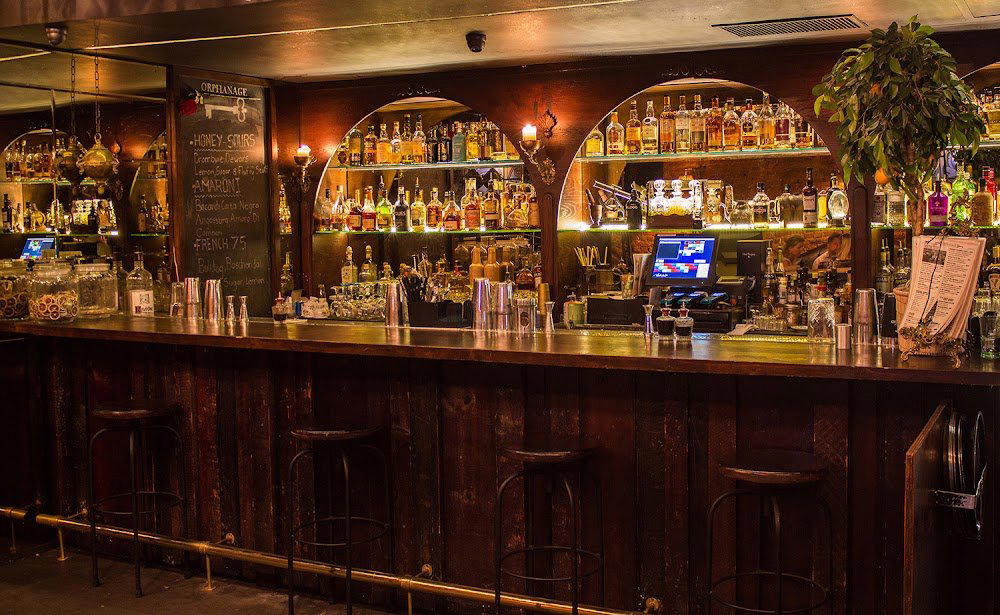
Cape Town's cocktail bars have largely moved away from the raw-brick-and-Edison-bulb aesthetic that dominated the mid-2010s. The better rooms now make deliberate choices about darkness, material, and volume. Orphanage belongs to the category that treats low light not as a design shorthand but as a functional decision: it changes how long people stay, how close conversations get, and how seriously the room takes itself.
The name carries a particular visual logic. There is something institutional and slightly austere in the reference, which the interior picks up without becoming a theme park. Worn surfaces, deliberate restraint in decoration, and a bar counter that functions as the room's actual focal point rather than a backdrop for bottle displays: these are the signals that distinguish a bar designed for drinking from one designed for photography. On Bree Street, where the competition includes Asoka and Cassette, that distinction counts.
Seating is arranged to encourage groups without forcing them into configurations that feel like a restaurant. The bar stools see use from solo drinkers and pairs; the back of the room accommodates larger gatherings. Music runs at a level that allows conversation across a table, which is less common than it should be in this price bracket.
The Cocktail Program in Context
South Africa's cocktail culture has followed an arc familiar from London and Melbourne: a first wave of speakeasy-influenced theatrics, a correction toward technical discipline, and a current moment where the better bars are trying to do both without compromising either. The bars that have held their position through that arc tend to anchor their programs in classical technique while allowing room for local ingredient work and occasional spectacle.
Orphanage operates in that middle register. The program has a reputation for drinks that arrive with a visual element without making the visual element the point. That approach reflects something real about how Cape Town drinks: the audience is sophisticated enough to notice when technique is being substituted by presentation, and the Bree Street regulars are particularly unforgiving of it. For broader context on how the city's bar scene is structured, the full Cape Town guide maps the tiers in detail.
Within South Africa, the cocktail conversation extends beyond Cape Town. Sin + Tax in Johannesburg and San Deck in Sandton represent the Gauteng approach, which tends toward higher volume and more overt glamour. Vee & Forti in Pretoria works a quieter, more neighborhood-facing format. Cape Town, and Bree Street specifically, sits in a different register: more compressed, more technically self-conscious, more aware of international peer comparisons. Van Buuren Rd & Hawley Rd in Hillbrow offers yet another angle on how South African bar culture diversifies by city and context.
Bree Street's Competitive Tier
Any honest assessment of Orphanage requires placing it against its immediate neighbours. Planet Bar operates from within the Mount Nelson and draws a different demographic: hotel guests, visiting executives, and occasion drinkers. Cafe Caprice in Camps Bay serves a beach-facing, higher-volume crowd. Neither is a direct competitor. The closer comparisons are the craft-focused rooms on Bree itself, where the audience overlaps and the programming decisions invite direct comparison.
What separates the better bars in that tier is consistency across the week. Weekend performance is the baseline; the question is whether a Tuesday at 9pm delivers the same level of drink and service. Bree Street regulars make that judgment quickly, and reputation on the strip is built across ordinary nights rather than peak ones.
Internationally, the bars that Orphanage's format invites comparison with include technically serious, mid-size rooms in cities where cocktail culture has matured past its first wave. Bar Leather Apron in Honolulu and Jewel of the South in New Orleans both operate in that space: rooms where the drink is the argument and the atmosphere supports rather than replaces it.
For wine drinkers who want to anchor a Cape Town visit in the winelands rather than the city, Dornier Wine Estate in Stellenbosch offers a different kind of sensory register entirely, roughly forty minutes from Bree Street.
Planning a Visit
Orphanage is at 227 Bree Street in Vredehoek. Bree Street runs parallel to the V&A Waterfront corridor but sits firmly in the city bowl, which means it operates on a different clock: later starts, longer midweek service, and a crowd that tends to arrive after dinner rather than before it. The bar is most easily reached by rideshare from the central hotel districts; street parking on Bree is available but competitive on weekend evenings. Arriving before 9pm on a weekend will secure a seat without difficulty; later arrivals should expect to stand.
Style and Standing
A quick peer reference to anchor this venue in its category.
| Venue | Price | Awards |
|---|---|---|
| OrphanageThis venue — the venue you are viewing | $10–20 | Not listed |
| Asoka | Not listed | World's 50 Best #50 |
| Cafe Caprice | Not listed | World's 50 Best #27 |
| Planet Bar | Not listed | World's 50 Best #29 |
| Cassette | $1–10 | Star Wine List |
| Cause Effect Cocktail Kitchen | $20–30 | Top 500 Bars Best Bars #455 |
Continue exploring
More in Cape Town
Bars in Cape Town
Browse all →
Restaurants in Cape Town
Browse all →
Hotels in Cape Town
Browse all →
Details
- Sophisticated
- Whimsical
- Classic
- Intimate
- After Work
- Late Night
- Group Outing
- Date Night
- Special Occasion
- Speakeasy
- Historic Building
- Design Destination
- Standalone
- Seated Bar
- Lounge Seating
- Craft Cocktails
- Classic Cocktails
- Zero Proof
- Street Scene
Dim, Victorian-era speakeasy atmosphere with oil-lamp-style lighting, steampunk design touches, and a moody, character-heavy interior.