Skip to Main Content
← Collection
LocationCape Town, South Africa
Star Wine List

<h2>Sea Point's Wine Bar Frequency</h2><p>Main Road in Sea Point hums at a particular register after dark: coffee shops give way to the smell of wood-fired kitchens, neighbourhood bars fill with regulars who walked rather than drove, and somewhere around the 200-block mark, a sliver of warm light spills onto the pavement from Cassette. The space is small by design. That compression is the point. Inside, the visual vocabulary is analogue: record covers, warm tungsten, the soft crackle of a needle finding its groove. The vibe belongs to a format that Cape Town has been slow to develop, the genuinely local wine bar, focused in scope, personal in curation, indifferent to scale.</p><h2>The Wine Programme: Small Producers, Deliberate Choices</h2><p>Cape Town's bar scene has historically split between high-end hotel cocktail programmes and casual beach-facing bars, with relatively little in between for the wine-focused drinker who wants depth without ceremony. Cassette occupies that middle distance with an ever-changing wine list built around small-batch boutique producers alongside a selective run of established references. The approach mirrors what has become a credible curatorial stance in European wine bars: favour the grower over the label, rotate frequently, and trust the room to follow.</p><p>The list at Cassette changes, which matters more than it might sound. In a city where many wine lists are set seasonally and left to drift, a live programme forces regular engagement with what South Africa's independent producers are actually doing right now. The Western Cape's smaller appellations, including Swartland, Elgin, and the Hemel-en-Aarde Valley, have produced a wave of small-run, low-intervention bottlings over the past decade, and a bar with the editorial discipline to cycle through them becomes something closer to a field guide than a drinks list.</p><p>Erica Taylor runs Cassette, and her curatorial fingerprint is clear in the balance the list strikes between discovery and familiarity. The timeless classics that anchor the rotating selection provide a reference point, the equivalent of a known frequency against which newer producers can be tuned. It is a format that rewards return visits: the list you find in one month will not be the list you find in three.</p><h2>Where Cassette Sits in the Cape Town Bar Picture</h2><p>Understanding Cassette means placing it against Cape Town's wider bar geography. At the leading end, hotel bars like <a href="https://www.enprimeurclub.com/bars/planet-bar-cape-town">Planet Bar</a> deliver polished cocktail programmes with full production value. Technically driven venues such as <a href="https://www.enprimeurclub.com/bars/cause-effect-cocktail-kitchen-cape-town-bar">Cause Effect Cocktail Kitchen</a> have established Cape Town's credibility in the craft cocktail space. On the atmospheric end, <a href="https://www.enprimeurclub.com/bars/asoka-cape-town">Asoka</a> and <a href="https://www.enprimeurclub.com/bars/cafe-caprice-cape-town">Cafe Caprice</a> serve the city's more social, scene-driven crowd. Cassette does not compete in any of those registers. It is the neighbourhood wine bar, a format more common in Lisbon or Lyon than in Cape Town, where the conversation tends to be more important than the spectacle.</p><p>That positioning has an international corollary worth noting. Wine bars built around rotating small-producer lists and a music-led atmosphere have become a serious format in cities where natural wine culture took hold early. Think of what <a href="https://www.enprimeurclub.com/bars/jewel-of-the-south-new-orleans">Jewel of the South in New Orleans</a> does for spirits and hospitality culture, or the way <a href="https://www.enprimeurclub.com/bars/bar-leather-apron-honolulu">Bar Leather Apron in Honolulu</a> has made quiet precision its entire identity. Cassette operates in a comparable specialist register, just with South African wine as its medium. For comparison on the African continent, <a href="https://www.enprimeurclub.com/bars/sin-tax-johannesburg">Sin + Tax in Johannesburg</a> shows what happens when a bar commits hard to a specific programmatic identity; Cassette's commitment is to the glass and the record, and it holds that line.</p><h2>The Music Is Not Decoration</h2><p>The name Cassette is not incidental. The bar's sonic identity, built around throwback tunes and the physical format of analogue music, creates a specific generational and aesthetic register that shapes how wine is consumed there. This is not background music in the hotel-lobby sense. The record-led soundtrack sets pace and mood in a way that slows the room down, which is precisely what wine bars require. Speed-drinking and list-cycling do not thrive in a room tuned to vinyl tempo.</p><p>This combination of wine curation and music curation is rarer than it appears. Most bars that lean into one let the other run on autopilot. At Cassette, the two programmes seem to operate with equivalent intentionality, which is what gives the space its coherence.</p><h2>Planning Your Visit</h2><p>Cassette sits at 206 Main Road in Sea Point, walkable from most of the neighbourhood's accommodation and close enough to the Atlantic Seaboard's broader hospitality strip to work as a pre- or post-dinner stop. Sea Point has matured into one of Cape Town's most food-dense urban corridors, and Cassette fits naturally into an evening that might involve a meal elsewhere on the same stretch. Given the small footprint, capacity is limited, and arriving early or on quieter midweek evenings gives a better chance of securing a spot without waiting. The bar suits solo drinkers, pairs, and small groups; large tables are a structural mismatch with the format. For broader planning across the city, our <a href="https://www.enprimeurclub.com/bars/cape-town">full Cape Town bars guide</a> maps the complete drinking picture, and our <a href="https://www.enprimeurclub.com/restaurants/cape-town">Cape Town restaurants guide</a> handles the food side. If you are building a full itinerary, the <a href="https://www.enprimeurclub.com/hotels/cape-town">Cape Town hotels guide</a>, <a href="https://www.enprimeurclub.com/wineries/cape-town">Cape Town wineries guide</a>, and <a href="https://www.enprimeurclub.com/experiences/cape-town">Cape Town experiences guide</a> cover the rest of the city's premium circuit.</p><h2>Frequently Asked Questions</h2><dl><dt><strong>What drink is Cassette famous for?</strong></dt><dd>Cassette is primarily a wine bar rather than a cocktail venue. The draw is an ever-changing list weighted toward small-batch South African producers from appellations including Swartland and Hemel-en-Aarde, rotated regularly and curated by Erica Taylor. There is no single signature pour; the list itself is the programme.</dd><dt><strong>What is the main draw of Cassette?</strong></dt><dd>The combination of a rotating boutique wine list and a music-led atmosphere anchored to analogue sound. Cape Town has strong hotel cocktail bars and beach-facing venues, but the small-producer wine bar format that Cassette occupies is less common in the city. The Sea Point location, on one of Cape Town's most walkable dining corridors, adds practical appeal for visitors staying in the Atlantic Seaboard area.</dd><dt><strong>How hard is it to get into Cassette?</strong></dt><dd>No booking data is publicly available, but the small size of the space means walk-in capacity is limited on busy evenings, particularly weekends. Arriving early in the evening or visiting midweek is the most reliable approach. Cassette does not appear to operate a formal reservation system in the conventional sense, so timing your arrival is the main variable to manage.</dd></dl>

Cassette bar in Cape Town, South Africa
About

Sea Point's Wine Bar Frequency

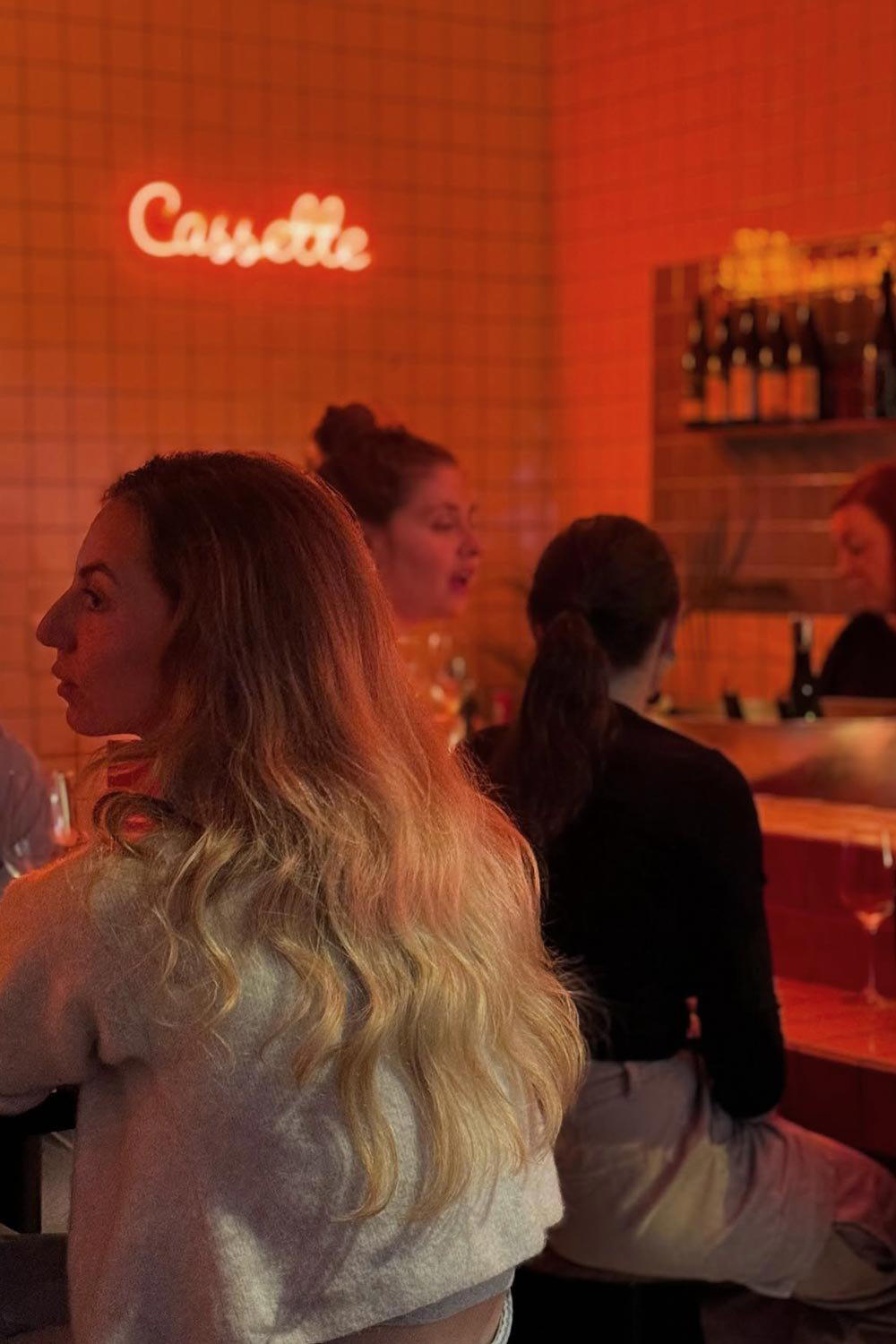
Main Road in Sea Point hums at a particular register after dark: coffee shops give way to the smell of wood-fired kitchens, neighbourhood bars fill with regulars who walked rather than drove, and somewhere around the 200-block mark, a sliver of warm light spills onto the pavement from Cassette. The space is small by design. That compression is the point. Inside, the visual vocabulary is analogue: record covers, warm tungsten, the soft crackle of a needle finding its groove. The vibe belongs to a format that Cape Town has been slow to develop, the genuinely local wine bar, focused in scope, personal in curation, indifferent to scale.

The Wine Programme: Small Producers, Deliberate Choices

Cape Town's bar scene has historically split between high-end hotel cocktail programmes and casual beach-facing bars, with relatively little in between for the wine-focused drinker who wants depth without ceremony. Cassette occupies that middle distance with an ever-changing wine list built around small-batch boutique producers alongside a selective run of established references. The approach mirrors what has become a credible curatorial stance in European wine bars: favour the grower over the label, rotate frequently, and trust the room to follow.

Members Only

The shortlist, unlocked.

Hard-to-book tables, cellar releases, and concierge-planned trips.

Get Exclusive Access →

The list at Cassette changes, which matters more than it might sound. In a city where many wine lists are set seasonally and left to drift, a live programme forces regular engagement with what South Africa's independent producers are actually doing right now. The Western Cape's smaller appellations, including Swartland, Elgin, and the Hemel-en-Aarde Valley, have produced a wave of small-run, low-intervention bottlings over the past decade, and a bar with the editorial discipline to cycle through them becomes something closer to a field guide than a drinks list.

Erica Taylor runs Cassette, and her curatorial fingerprint is clear in the balance the list strikes between discovery and familiarity. The timeless classics that anchor the rotating selection provide a reference point, the equivalent of a known frequency against which newer producers can be tuned. It is a format that rewards return visits: the list you find in one month will not be the list you find in three.

Where Cassette Sits in the Cape Town Bar Picture

Understanding Cassette means placing it against Cape Town's wider bar geography. At the leading end, hotel bars like Planet Bar deliver polished cocktail programmes with full production value. Technically driven venues such as Cause Effect Cocktail Kitchen have established Cape Town's credibility in the craft cocktail space. On the atmospheric end, Asoka and Cafe Caprice serve the city's more social, scene-driven crowd. Cassette does not compete in any of those registers. It is the neighbourhood wine bar, a format more common in Lisbon or Lyon than in Cape Town, where the conversation tends to be more important than the spectacle.

That positioning has an international corollary worth noting. Wine bars built around rotating small-producer lists and a music-led atmosphere have become a serious format in cities where natural wine culture took hold early. Think of what Jewel of the South in New Orleans does for spirits and hospitality culture, or the way Bar Leather Apron in Honolulu has made quiet precision its entire identity. Cassette operates in a comparable specialist register, just with South African wine as its medium. For comparison on the African continent, Sin + Tax in Johannesburg shows what happens when a bar commits hard to a specific programmatic identity; Cassette's commitment is to the glass and the record, and it holds that line.

The Music Is Not Decoration

The name Cassette is not incidental. The bar's sonic identity, built around throwback tunes and the physical format of analogue music, creates a specific generational and aesthetic register that shapes how wine is consumed there. This is not background music in the hotel-lobby sense. The record-led soundtrack sets pace and mood in a way that slows the room down, which is precisely what wine bars require. Speed-drinking and list-cycling do not thrive in a room tuned to vinyl tempo.

This combination of wine curation and music curation is rarer than it appears. Most bars that lean into one let the other run on autopilot. At Cassette, the two programmes seem to operate with equivalent intentionality, which is what gives the space its coherence.

Planning Your Visit

Cassette sits at 206 Main Road in Sea Point, walkable from most of the neighbourhood's accommodation and close enough to the Atlantic Seaboard's broader hospitality strip to work as a pre- or post-dinner stop. Sea Point has matured into one of Cape Town's most food-dense urban corridors, and Cassette fits naturally into an evening that might involve a meal elsewhere on the same stretch. Given the small footprint, capacity is limited, and arriving early or on quieter midweek evenings gives a better chance of securing a spot without waiting. The bar suits solo drinkers, pairs, and small groups; large tables are a structural mismatch with the format. For broader planning across the city, our full Cape Town bars guide maps the complete drinking picture, and our Cape Town restaurants guide handles the food side. If you are building a full itinerary, the Cape Town hotels guide, Cape Town wineries guide, and Cape Town experiences guide cover the rest of the city's premium circuit.

Frequently Asked Questions

What drink is Cassette famous for?
Cassette is primarily a wine bar rather than a cocktail venue. The draw is an ever-changing list weighted toward small-batch South African producers from appellations including Swartland and Hemel-en-Aarde, rotated regularly and curated by Erica Taylor. There is no single signature pour; the list itself is the programme.
What is the main draw of Cassette?
The combination of a rotating boutique wine list and a music-led atmosphere anchored to analogue sound. Cape Town has strong hotel cocktail bars and beach-facing venues, but the small-producer wine bar format that Cassette occupies is less common in the city. The Sea Point location, on one of Cape Town's most walkable dining corridors, adds practical appeal for visitors staying in the Atlantic Seaboard area.
How hard is it to get into Cassette?
No booking data is publicly available, but the small size of the space means walk-in capacity is limited on busy evenings, particularly weekends. Arriving early in the evening or visiting midweek is the most reliable approach. Cassette does not appear to operate a formal reservation system in the conventional sense, so timing your arrival is the main variable to manage.

A Quick Peer Check

A compact peer snapshot based on similar venues we track.

Collector Access

Need a Table?

Our members enjoy priority alerts and concierge-led booking support for the world's most difficult bars and lounges.

Get Exclusive Access
Members Only

The shortlist, unlocked.

Hard-to-book tables, cellar releases, and concierge-planned trips.

Get Exclusive Access →