Julia's
Located on Woodward Avenue in Ridgewood, Queens, Julia's sits at the edge of one of New York City's most quietly evolving bar neighborhoods. The venue draws on the intersection of classical technique and locally sourced ingredients that has come to define the borough's more considered drinking culture. Ridgewood regulars and Manhattan crossers alike make the journey for what the neighborhood increasingly does well: deliberate, ingredient-led hospitality without the premium-zip-code markup.
Pearl is the En Primeur Club membership app — saves, bookings, and concierge access live there. Same editors, same standards.
- Address
- 8-18 Woodward Ave, Ridgewood, NY 11385
- Phone
- +1 917 909 1314
- Website
- juliasridgewood.com
- Directions
- Get directions
 Saves & bookings on Pearl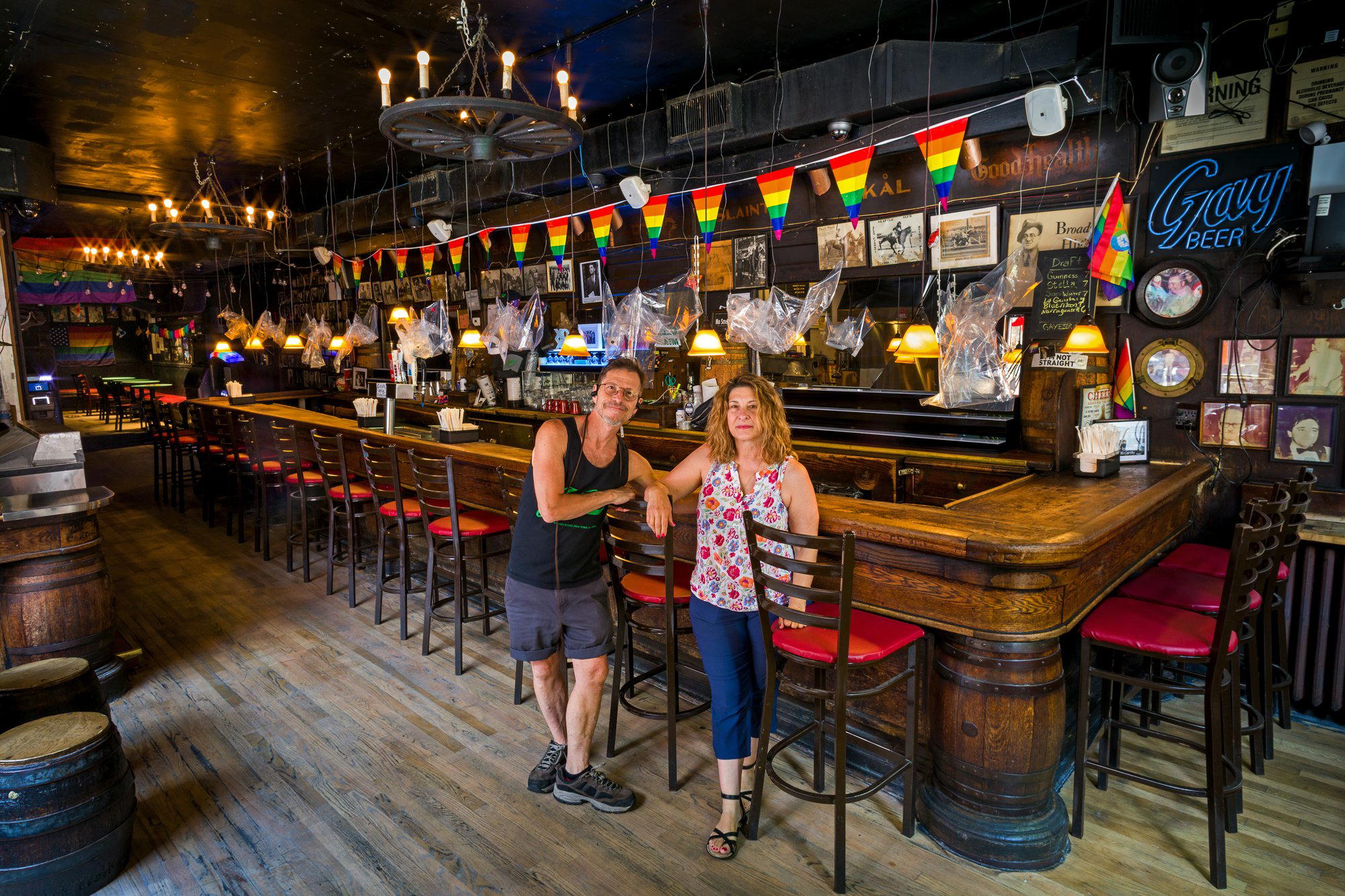
Ridgewood and the Quiet Shift in Queens Drinking Culture
For most of the twentieth century, the stretch of Queens bordering Bushwick was defined by its working-class immigrant communities, corner bars, and the kind of neighborhood drinking that had no aspirations beyond a cold beer and a familiar face. That began to change as Brooklyn's bar scene priced itself upward and operators, drinkers, and hospitality workers followed the L train northeast into Ridgewood. By the early 2010s, the neighborhood around Woodward Avenue had started attracting a different kind of venue: places with actual beverage programs, an eye on sourcing, and cooking that acknowledged the borough's culinary diversity without flattening it into trend.
Julia's, at 8-18 Woodward Avenue, sits inside that transition. The address alone tells you something about the current state of New York's drinking geography. This is not the cocktail bar at the base of a hotel tower in Midtown, nor the deliberately obscure speakeasy door that defined downtown Manhattan's bar culture through the 2000s. It is something the city's outer boroughs have been producing with increasing confidence: a neighborhood venue with genuine program depth, operating in a part of the city where rents permit a different kind of ambition.
The Technique-and-Terroir Question in New York Bars
The most interesting tension in New York's bar scene over the past decade has been between imported technique and locally available ingredients. Manhattan's leading programs, places like Amor y Amargo with its bitter-forward philosophy or Attaboy NYC with its guest-led improvisation format, built their reputations on discipline and method. The question for a venue in Ridgewood is whether it can apply that same level of craft while connecting to what the surrounding neighborhood and borough actually produce and consume.
This is not a trivial question. New York's outer boroughs carry decades of food and drink culture that metropolitan cocktail bars have historically ignored: the fermentation traditions of immigrant communities, the produce of regional farms accessible to Queens distributors, the flavors that define everyday eating in neighborhoods like Ridgewood rather than the flavor profiles that read well in cocktail press. When a bar in this ZIP code chooses to work at the intersection of classical technique and indigenous product, it is making an editorial choice about what its program should represent and who it is serving.
This same question gets asked in bar cultures across the country, from Julep in Houston, where Southern ingredient traditions meet precise bartending, to Kumiko in Chicago, which draws on Japanese craft without abandoning Midwestern context, to Bar Leather Apron in Honolulu, where Pacific botanical sourcing underpins a technically rigorous program. The through-line in each case is the same: technique imported from Europe or Japan or the American cocktail revival, applied to a product identity that is specific to place.
What the Woodward Avenue Address Signals
Ridgewood occupies a specific position in the current New York hospitality map. It is far enough from the L train's most trafficked Manhattan-adjacent stops that it does not carry the same visitor saturation as Williamsburg or the Lower East Side, yet close enough to a substantial local population of hospitality workers, artists, and long-term residents that a venue here has a real community to serve. That community is more demographically mixed than most of Brooklyn's trendier corridors, and the bar and restaurant culture that has taken root along Woodward Avenue and its adjacent streets reflects that.
For comparison, consider the trajectory of venues in Manhattan's more established bar zones. Angel's Share in the East Village built its reputation in part by being genuinely difficult to find; the hidden-door format was the point. Superbueno made agave its anchor and let the spirit category do the marketing. In Ridgewood, the neighborhood itself is part of the proposition. The outer-borough address is not a liability to be overcome; it is increasingly the reason to go.
That dynamic is not unique to New York. Allegory in Washington, D.C. occupies a hotel bar format where the address carries institutional weight. Jewel of the South in New Orleans draws authority from its city's cocktail history. ABV in San Francisco built a program around the Mission District's specific food culture. Each of these venues uses location as an argument, not just a coordinate. Julia's, on Woodward Avenue, is in the same conversation.
Program Depth in a Neighborhood Context
The broader pattern in outer-borough New York is that venues which survive more than two or three years in neighborhoods like Ridgewood do so by building genuine regulars rather than relying on destination traffic. That requires a level of program consistency and hospitality that downtown venues sometimes treat as optional, assuming the flow of visitors will compensate. A bar on Woodward Avenue cannot make that assumption. The repeat customer is the business model, which tends to produce better hospitality over time.
Internationally, this pattern holds. The Parlour in Frankfurt on the Main has built a sustained reputation precisely because it serves a local professional community with consistent craft, rather than chasing placement on global bar lists. The discipline required to serve the same guests well, season after season, is different from the discipline required to dazzle a first-time visitor, and it tends to produce more technically considered programs over time.
Planning Your Visit
Reaching Julia's from Manhattan means taking the M train to Seneca Avenue or the L to Jefferson Street and walking north; the journey from Midtown runs approximately forty minutes by subway. For those exploring New York's broader bar and restaurant scene, our full New York City guide covers the range of neighborhoods and venue types across the five boroughs. Given Ridgewood's position as a still-developing destination rather than an established tourist corridor, weeknight visits tend to involve less competition for seats than Friday or Saturday evenings, when local foot traffic from the surrounding residential blocks peaks. Dress code expectations in this part of Queens run toward the casual; the outer-borough bar culture that has developed here does not carry the door formality of some Manhattan programs.
Booking and Cost Snapshot
A short peer table to compare basics side-by-side.
| Venue | Awards |
|---|---|
| Julia'sThis venue — the venue you are viewing | Not listed |
| The Long Island Bar | World's 50 Best |
| Superbueno | World's 50 Best |
| Amor y Amargo | World's 50 Best |
| Angel's Share | World's 50 Best |
Continue exploring
More in New York City
Bars in New York City
Browse all →
Restaurants in New York City
Browse all →
Hotels in New York City
Browse all →




At a Glance
- Classic
- Well Known
- Casual Hangout
- After Work
- Historic Building
- Seated Bar
- Booth Seating
- Classic Cocktails
Current opening hours
- Monday
- 11 AM–6 PM
- Tuesday
- 11 AM–6 PM
- Wednesday
- 11 AM–6 PM
- Thursday
- 11 AM–10 PM
- Friday
- 11 AM–10 PM
- Saturday
- 10 AM–10 PM
- Sunday
- 10 AM–8 PM
Hours can change for holidays and private events. Last verified .
Historic landmark bar with classic neighborhood pub atmosphere featuring good drinks and lively crowds.
Know Before You Go
- Getting there
- 8-18 Woodward Ave, Ridgewood, NY 11385