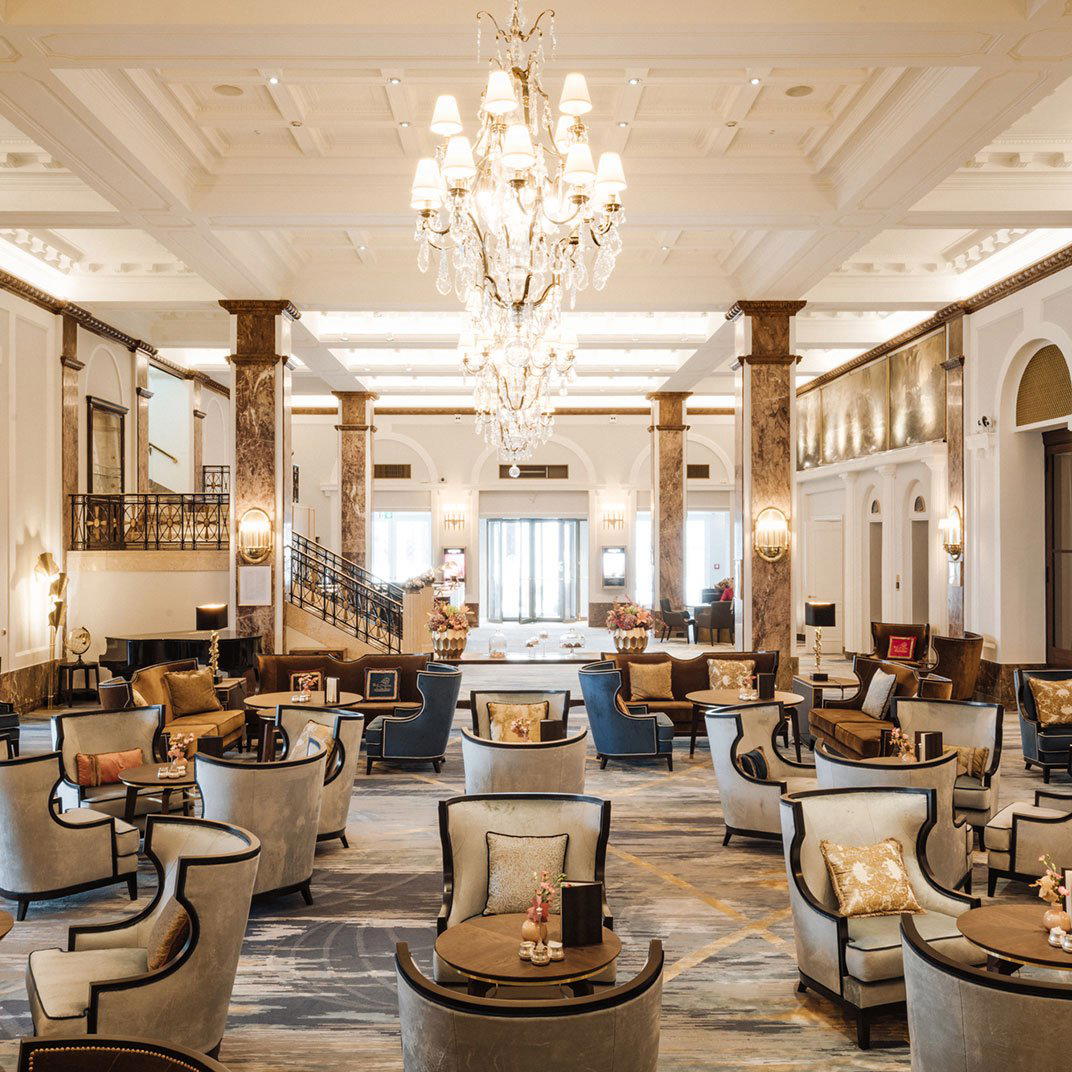
Die Bank occupies a converted bank hall on Hohe Bleichen in Hamburg's city centre, where the original architecture sets the tone for an evening that leans into the drama of the space. The high ceilings, period detailing, and deliberate lighting make it one of Hamburg's more arresting bar and dining addresses, drawing a crowd that comes as much for the room as for what's on the table.
- Address
- Hohe Bleichen 17, 20354 Hamburg, Germany
- Phone
- +49 40 2380030
- Website
- diebank-brasserie.de
- Directions
- Get directions
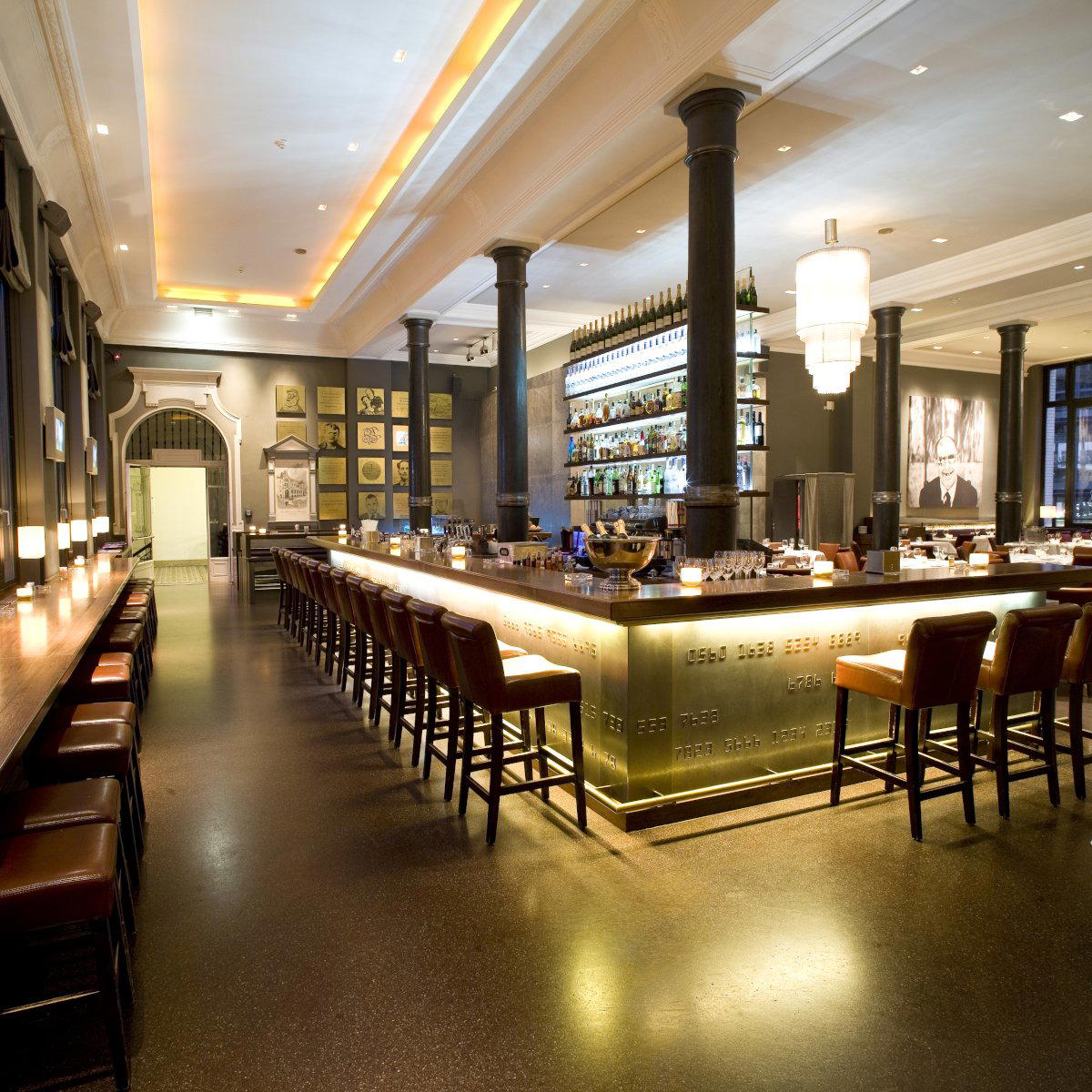
The Room Makes the Argument First
There is a category of bar and restaurant that earns its reputation before a single drink is poured, and Die Bank at Hohe Bleichen 17 belongs firmly in it. The building is a former bank, and the conversion has not tried to hide that fact. The original hall structure remains the dominant architectural statement: high ceilings, the proportions of a room built to project institutional authority, and the kind of bones that contemporary hospitality designers spend considerable budgets trying to approximate from scratch. In Hamburg's city-centre circuit, where the competition for evening atmosphere runs from polished hotel lobby bars to stripped-back neighbourhood wine rooms, Die Bank occupies a position defined entirely by the physical space it inhabits.
Hamburg has a particular relationship with its pre-war and early twentieth-century commercial architecture. The Kontorhausviertel district nearby holds some of the most significant expressionist office buildings in northern Europe, and the city's long mercantile history left behind a stock of grand civic and commercial interiors that have, over the decades, been repurposed into everything from concert halls to restaurants. Die Bank fits that pattern: a space that carries genuine historical weight and has been adapted for contemporary use without losing the visual authority that makes the original structure worth preserving in the first place.
Atmosphere as the Operating Principle
What distinguishes the better examples of this format from the worse ones is how the room is managed in the evening. A large-volume space with high ceilings and hard surfaces can easily become acoustically unpleasant, and the challenge for any operator in a converted bank hall is controlling the energy of the room without deadening it. The approach at Die Bank leans into the scale rather than working against it. The lighting is managed to create zones of warmth within the broader volume, and the result is a room that reads as animated rather than overwhelming on a busy night.
This matters more than it might seem. Hamburg's bar and dining culture has shifted considerably over the past decade toward formats that prioritise deliberate atmosphere: the controlled theatrics of cocktail bars like Le Lion Bar de Paris, which has built an international reputation on its spirits selection and intimate format, sit at one end of the spectrum. Die Bank operates at a different scale and with a different logic, but the underlying principle, that the physical environment shapes the experience as much as the menu does, is the same across both formats.
Where Die Bank Sits in Hamburg's Evening Circuit
Hamburg's city centre evening economy is denser and more varied than visitors sometimes expect. The area around the Alster lakes and the Neustadt pulls a mixed crowd of after-work professionals, hotel guests, and a local contingent that treats the neighbourhood as a genuine evening destination rather than a transit point to somewhere else. Die Bank's location on Hohe Bleichen places it within easy reach of the main retail and business districts, which shapes its clientele: this is not a destination that depends on destination-seeker traffic alone.
The Hamburg bar scene more broadly has been moving toward greater technical ambition in its cocktail programming, with several addresses now holding sustained recognition in European bar rankings. At the neighbourhood-pub end of the spectrum, addresses like Gröninger Privatbrauerei Hamburg and Buddels serve a different function entirely, rooted in Hamburg's brewing traditions rather than cocktail culture. Karo Fisch adds another dimension, with a format built around the city's fishing heritage. Die Bank sits in a separate tier from all of these, defined less by a specific product category and more by the experience of being in a room with genuine architectural presence.
Within the broader German bar circuit, the comparison set is instructive. Buck & Breck in Berlin operates on a reservation-only, high-intensity cocktail model that is almost the opposite of Die Bank's approach. Goldene Bar in Munich shares the heritage-interior logic more closely, occupying a significant institutional space and drawing from Munich's art-adjacent crowd. The Parlour in Frankfurt on the Main and Bar Trattoria Celentano in Cologne each operate in cities with distinct after-work drinking cultures, and the comparison underlines how much local context shapes what an address like this means in practice. Further afield, Uerige in Dusseldorf and Kieler Brauerei am Alten Markt in Kiel represent the tradition-rooted end of northern German drinking culture, a useful reference point for understanding what Die Bank is not trying to be.
Planning a Visit
Die Bank is located at Hohe Bleichen 17, centrally placed in Hamburg's city centre and accessible from multiple S-Bahn and U-Bahn stations. The location makes it a practical choice as either a starting point for an evening or a standalone destination. Given the architectural draw, the room is worth experiencing at a pace that allows you to settle into it: arriving early in the evening gives the space before the full crowd arrives, while later in the week the volume picks up in ways that use the room's capacity effectively. For visitors building a broader Hamburg itinerary, our full Hamburg restaurants guide covers the city's dining and drinking addresses across neighbourhoods and price tiers. For those extending the trip internationally, the converted-heritage bar format has an interesting parallel in Bar Leather Apron in Honolulu, which similarly uses its physical environment as a primary editorial statement.
Cuisine Lens
Comparable options at a glance, pulled from our tracked venues.
| Venue | Awards |
|---|---|
| Die BankThis venue — the venue you are viewing | Not listed |
| Le Lion Bar de Paris | World's 50 Best |
Continue exploring
More in Hamburg
Bars in Hamburg
Browse all →

Restaurants in Hamburg
Browse all →
Hotels in Hamburg
Browse all →
Wineries in Hamburg
Browse all →
At a Glance
- Elegant
- Sophisticated
- Modern
- Date Night
- After Work
- Celebration
- Design Destination
- Seated Bar
- Lounge Seating
- Outdoor Terrace
- Craft Cocktails
Chic and elegant decor in a former bank with attractive bar atmosphere.
Know Before You Go
- Getting there
- Hohe Bleichen 17, 20354 Hamburg, Germany