esp
On Santa Fe Drive, Denver's arts corridor, esp occupies a spot in a neighborhood where independent operators have consistently outpaced the chains. The bar sits within a creative district that rewards exploration, drawing a crowd that treats the evening as an event rather than a stopover. Consider it a reference point for what Denver's independent bar scene looks like when it takes itself seriously.
Pearl is the En Primeur Club membership app — saves, bookings, and concierge access live there. Same editors, same standards.
- Address
- 1029 Santa Fe Dr, Denver, CO 80204
- Phone
- +1 720 751 8163
- Website
- esphifi.co
- Directions
- Get directions
 Saves & bookings on Pearl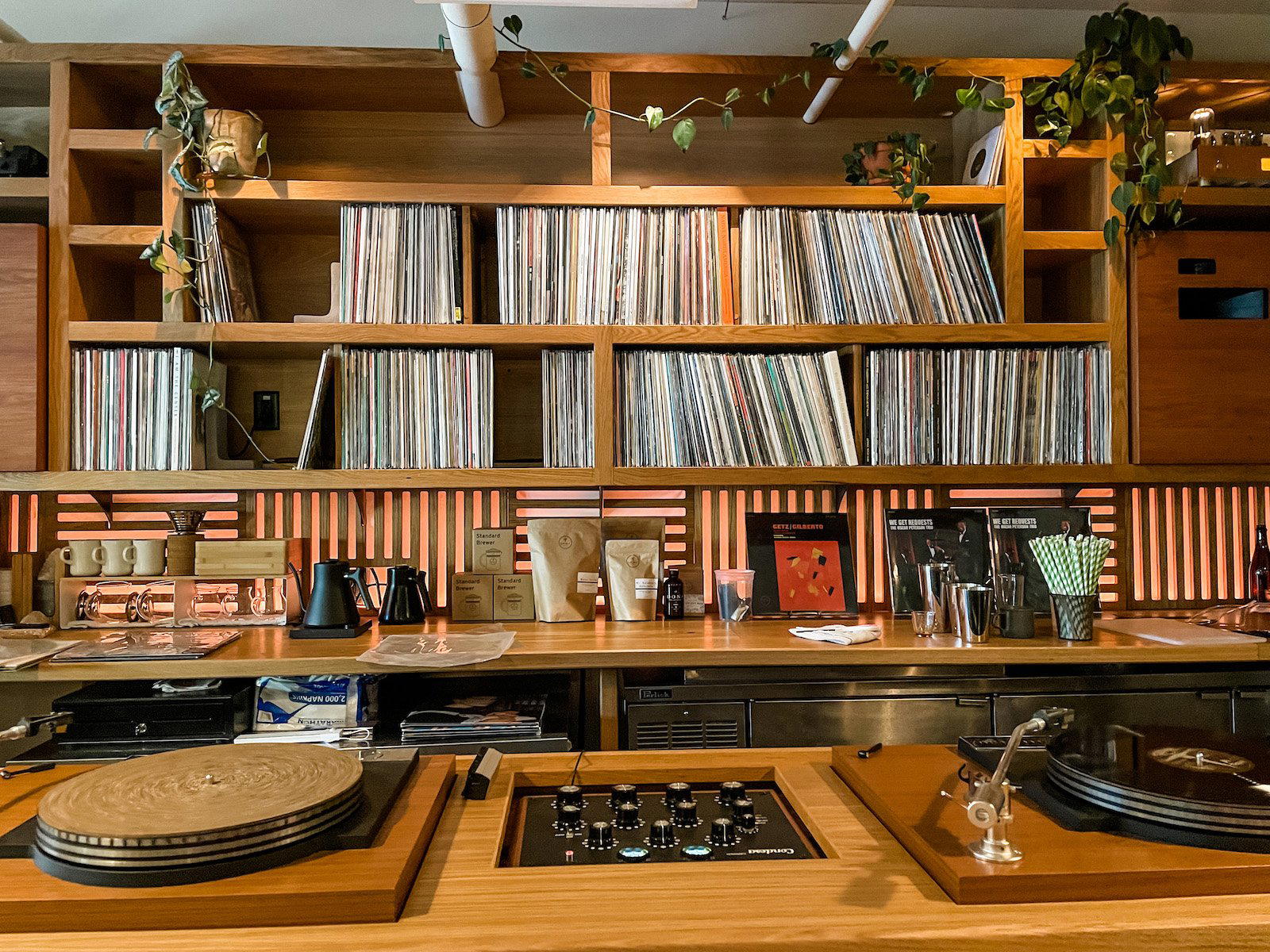
Santa Fe Drive and the Case for Denver's Arts Corridor
Santa Fe Drive is one of those streets that resists easy categorization. It runs south from downtown Denver through a corridor that has accumulated galleries, muralists, independent restaurants, and bars over the past two decades, resisting the uniform redevelopment that has absorbed other parts of the city. The density of creative businesses along this stretch isn't incidental. Zoning, lower commercial rents relative to RiNo or LoDo, and a long-standing First Friday gallery walk have combined to make Santa Fe one of the more reliable places in Denver to find operators who are building something particular rather than chasing a format. esp, at 1029 Santa Fe Dr, sits inside that logic.
Denver's independent bar scene has split in roughly the same direction as peer cities over the last decade: a tier of technically ambitious, nationally recognized programs on one side, and a broader mid-market of neighborhood operators on the other. The nationally recognized tier is well-documented. Death & Co (Denver) brought its New York pedigree to the city and operates as a reference point for high-volume, technically precise cocktail work. Williams & Graham has held its position as a bookshop-concealed bar in LoHi with a program built on spirit depth and a format that prioritizes the guest experience from entry to last call. These are bars with national profiles and the booking patterns to match. esp's address on Santa Fe places it in a different conversation, one more tied to neighborhood character than to citywide prestige.
What the Santa Fe Address Signals
Location on Santa Fe Drive carries specific implications for what kind of bar experience a visitor should expect. The corridor draws foot traffic that is more local and arts-adjacent than the tourist-heavy zones around Union Station or Larimer Square. A bar here isn't insulated by hotel proximity or convention center overflow. It earns its regulars through the quality of what's in the glass and the character of the room itself. That dynamic tends to produce venues with a clearer point of view, because the operator can't rely on captive audiences.
The neighborhood also sits close to the stretch of South Broadway that has become one of Denver's more credible bar corridors, so guests who build an evening around Santa Fe and Broadway have access to a range of formats within walking distance. Yacht Club and Ace Eat Serve both operate in this broader zone, each with distinct formats that reward combining into a longer evening rather than treating any single venue as the destination.
Denver's Bar Scene in a Broader Frame
To understand where a bar on Santa Fe sits, it helps to map Denver's cocktail scene against comparable cities. Denver has produced programs that hold up against national benchmarks. The reference bars here — Death & Co and Williams & Graham — measure against the kind of work being done at Kumiko in Chicago, Jewel of the South in New Orleans, or Bar Leather Apron in Honolulu. These are bars where the program is the draw and the room is built to support it.
Below that tier, and in some ways more interesting because of it, are the bars that operate with neighborhood loyalty as their foundation. ABV in San Francisco built exactly this kind of model, as has Julep in Houston, which layered a specific curatorial angle onto a community-facing format. Superbueno in New York City and The Parlour in Frankfurt on the Main represent different geographic expressions of the same pattern: bars that earn their standing through consistent craft and a defined sense of place rather than through media attention cycles. The Santa Fe corridor positions esp in that frame rather than in the prestige-destination tier.
Planning a Visit
Getting to 1029 Santa Fe Dr is direct from most of central Denver. The Santa Fe Arts District is accessible by car with street parking typically available along the corridor, and the 10 bus line connects the stretch to downtown. First Fridays, when the district's galleries hold coordinated openings, bring notably higher foot traffic to the area; if a quieter experience is the goal, other evenings in the week will serve better. For a fuller picture of what Denver's bar and restaurant scene offers across neighborhoods, the full Denver restaurants guide covers the city district by district.
Denver's arts corridor rewards the kind of evening where the plan is loose and the destination is secondary to the neighborhood itself. A bar on Santa Fe Drive fits that rhythm in a way that a more structured destination experience in LoDo or Cherry Creek does not. The surrounding galleries, the walkable proximity to South Broadway, and the lower-key character of the street all point toward an evening that moves at its own pace.
Style and Standing
| Venue | Cuisine | Awards |
|---|---|---|
| espThis venue — the venue you are viewing | This venue | Not listed |
| Death & Co (Denver) | World's 50 Best | Not listed |
| Williams & Graham | World's 50 Best | Not listed |
| Yacht Club | World's 50 Best | Not listed |
| Vaultaire | French-inspired small plates | French-inspired small plates |
| Keepers Cocktail Lounge | Cocktail lounge, small plates | Cocktail lounge, small plates |
Continue exploring
More in Denver
Bars in Denver
Browse all →
Restaurants in Denver
Browse all →
Hotels in Denver
Browse all →
At a Glance
- Quiet
- Cozy
- Minimalist
- Intimate
- Elegant
- Solo
- Casual Hangout
- Date Night
- Standalone
- Historic Building
- Design Destination
- Seated Bar
- Lounge Seating
- Conventional Wine
- Whiskey
Current opening hours
- Monday
- 10:30 AM–2:30 PM, 4–11 PM
- Tuesday
- 4–11 PM
- Wednesday
- 4 PM–12 AM
- Thursday
- 4 PM–12 AM
- Friday
- 10:30 AM–2:30 PM, 4 PM–12 AM
- Saturday
- 10:30 AM–12 AM
- Sunday
- 10:30 AM–2:30 PM, 4–11 PM
Hours can change for holidays and private events. Last verified .
Cozy and intimate with vintage rugs, cafe tables, untouched patina walls, and low-wattage tube amplifiers creating a serene, zen-like atmosphere designed for focused listening.
Know Before You Go
- Getting there
- 1029 Santa Fe Dr, Denver, CO 80204