Elsewhere

Elsewhere occupies a converted industrial space at 599 Johnson Avenue in Bushwick, Brooklyn, placing it firmly in New York's warehouse-venue tier rather than its cocktail-bar scene. The format skews large-scale and multi-room, drawing a crowd that treats the night as an event rather than a destination drink. Compared to the precision craft programs at lower-capacity Manhattan bars, Elsewhere operates in a different register entirely.
Pearl is the En Primeur Club membership app — saves, bookings, and concierge access live there. Same editors, same standards.
- Address
- 599 Johnson Ave #1, Brooklyn, NY 11237
- Website
- elsewhere.club
- Directions
- Get directions
 Saves & bookings on Pearl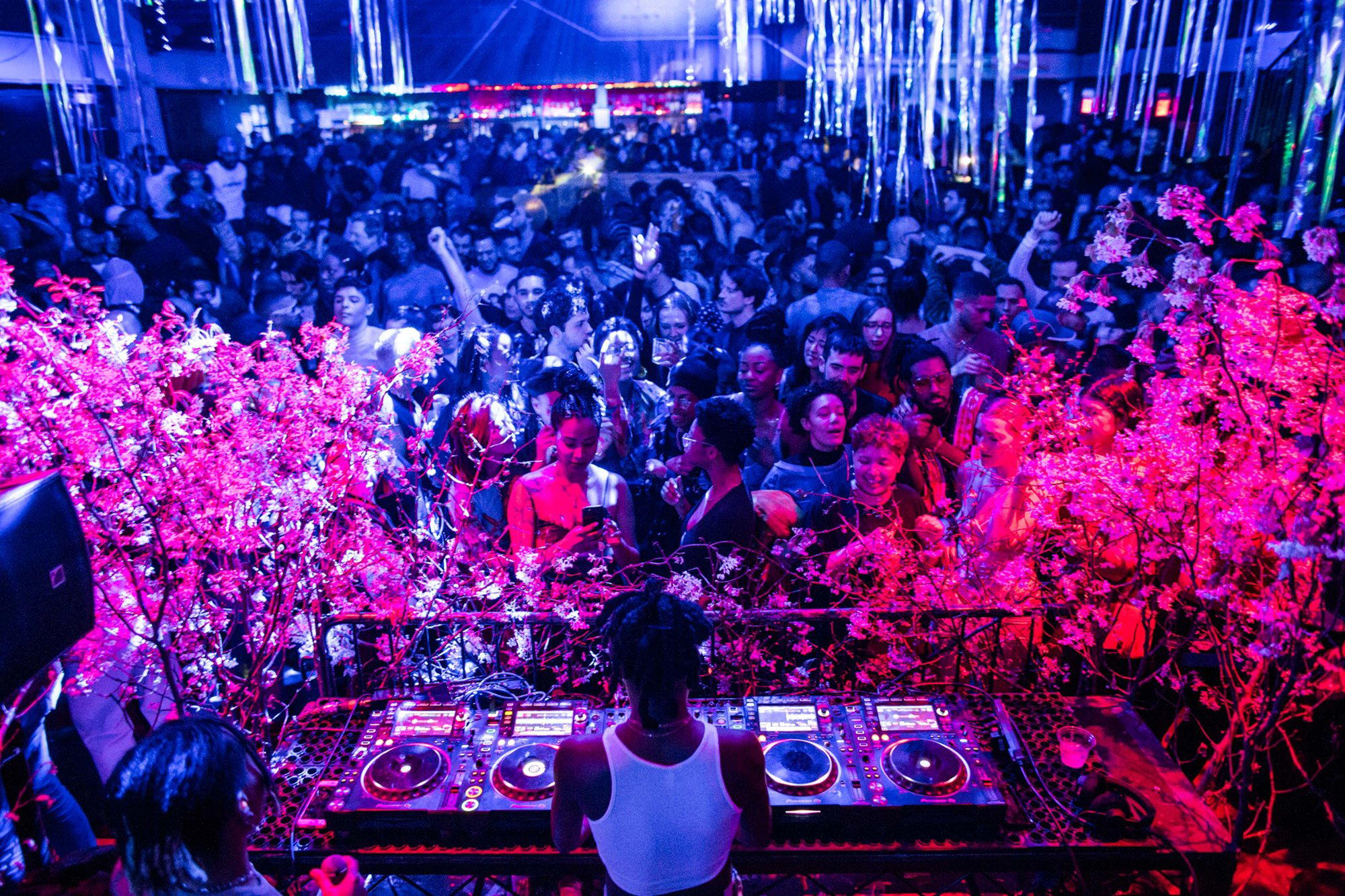
Bushwick's Warehouse Circuit, and Where Elsewhere Sits Within It
Brooklyn's Bushwick neighbourhood has spent the better part of a decade consolidating a specific kind of nightlife infrastructure: large, repurposed industrial buildings that function as multi-room venues, capable of hosting live music, club nights, and rooftop programming simultaneously. Elsewhere, at 599 Johnson Avenue, is one of the more established addresses in that circuit. The building itself signals the format before you arrive — a former factory block on a street that still reads as working industrial, the kind of address that requires you to orient yourself rather than follow a lit sign.
This matters for framing expectations. Elsewhere is not a craft cocktail destination in the way that Attaboy NYC or Amor y Amargo operate, where the bar program is the primary reason to show up and the room serves the drink. Here, the drink serves the evening, and the evening is organised around music programming and the movement of a crowd through multiple spaces. That is neither a criticism nor a compromise — it is simply a different discipline, and Elsewhere executes it within the logic of its format.
The Room Before the Drink
Approaching the venue from Johnson Avenue, the scale becomes apparent early. What greets you is not a door attendant and a dimly lit staircase but a loading-dock proportioned entry, the kind of threshold that was designed to move goods rather than guests. Inside, the spatial logic follows warehouse conversion conventions: exposed ceiling infrastructure, large floor areas that absorb sound and crowd movement, and a rooftop element that operates as a distinct zone with its own atmosphere and programming calendar.
New York has produced a recognisable template for this type of venue, think of the broader lineage running from early Williamsburg loft parties through to the more formalised multi-room clubs of the current era. Elsewhere sits within that lineage as a venue that has professionalised the format without stripping its industrial character. The bar service across its several floors is calibrated to volume rather than complexity, which is the correct call for a room that may hold several hundred people on a given night.
The Bartender's Role in a High-Volume Format
The craft bartending conversation in New York tends to centre on the kind of programs that operate at Angel's Share or Superbueno, relatively low-capacity rooms where the bartender's technical range and hospitality instinct are the product. In a venue operating at Elsewhere's scale, the bartender's craft shifts register. Speed, consistency under pressure, and the ability to read a crowd that is moving between rooms and stages become the relevant competencies. These are not lesser skills; they are simply different ones, and the bars that succeed in high-volume music venues are those that have trained for them specifically rather than imported a cocktail-bar philosophy into an incompatible room.
Across the wider spectrum of serious American bar programs, from Kumiko in Chicago to Bar Leather Apron in Honolulu to Jewel of the South in New Orleans, the defining characteristic of bartender craft is intentionality: every element of the guest experience has been considered and designed. The question worth asking of any venue is whether that intentionality is present, even if the expression of it looks different from a twelve-seat counter. At Elsewhere, the intentionality is in the programming, the spatial arrangement, and the way bar service has been structured to match the room's actual purpose.
Positioning Against the New York Bar Scene
New York's bar scene in the current period has fragmented into distinct tiers with limited overlap. At one end, precision craft programs at small-capacity rooms command full attention and deliberate visits. At the other, large venues absorb nightlife energy with formats where the bar is infrastructure rather than destination. Elsewhere occupies the latter category without apology, and that clarity of position is actually one of its functional strengths.
For context, the venues that operate in Elsewhere's competitive set are not Allegory in Washington, D.C. or ABV in San Francisco, rooms where the bar program generates the editorial conversation.
That said, the venue draws a consistent audience precisely because Bushwick's nightlife infrastructure is not fully replicated anywhere else in New York. The industrial scale, the proximity to a neighbourhood that still feels operationally distinct from Manhattan's more polished bar districts, and the music-first programming calendar give Elsewhere a reason to exist that does not depend on cocktail credentials.
Planning a Visit
Elsewhere operates primarily as an event-driven venue, which means the relevant planning question is the programming calendar rather than a standard hours check. Tickets for specific events are typically available through the venue's own channels and third-party ticketing platforms, and lead times vary significantly depending on the act or night in question. High-demand shows sell out; the rooftop element is subject to seasonal availability, with the warmer months from late spring through early autumn representing the period when that component of the venue functions as designed.
Getting to 599 Johnson Avenue from central Brooklyn or Manhattan is direct by subway, with the L train serving the Bushwick corridor and placing the venue within walking distance of the relevant stops. The surrounding blocks are industrial rather than neighbourhood-commercial, so arriving with a pre-planned itinerary, particularly for dining beforehand, is a better approach than relying on the immediate vicinity. For a broader view of where Elsewhere sits within New York's full bar and dining options, the EP Club New York City guide maps the scene across boroughs and price tiers.
Venues at this scale and format operate differently in different seasons and under different booking conditions. Julep in Houston and The Parlour in Frankfurt on the Main represent what deliberate bar programming looks like at smaller scales; Elsewhere represents what deliberate venue programming looks like when the room is the priority. Both approaches require intention to work. The distinction is worth understanding before you go.
Recognition history
Dated appearances from independent guides and award organizations, with the underlying list record or original source where available.
International Nightlife Association World's 100 Best Clubs #77
International Nightlife Association
Continue exploring
More in New York City
Bars in New York City
Browse all →
Restaurants in New York City
Browse all →
Hotels in New York City
Browse all →






At a Glance
- Lively
- Trendy
- Energetic
- Industrial
- Late Night
- Group Outing
- Live Music
- Rooftop
- Standing Room
- Lounge Seating
- Outdoor Terrace
- Craft Cocktails
- Frozen
- Skyline
Lively, creative atmosphere in a converted warehouse with lush rooftop views and immersive art experiences.
Know Before You Go
- Getting there
- 599 Johnson Ave #1, Brooklyn, NY 11237