Kellogg’s Diner
A fixture on the Metropolitan Avenue strip in Williamsburg, Kellogg's Diner occupies that specific New York niche where late-night eggs and diner-counter culture intersect with a neighbourhood that has changed dramatically around it. The address at 518 Metropolitan Ave places it squarely in the corridor connecting Williamsburg and Bushwick, making it a reference point for the area's round-the-clock eating habits.
Pearl is the En Primeur Club membership app — saves, bookings, and concierge access live there. Same editors, same standards.
- Address
- 518 Metropolitan Ave, Brooklyn, NY 11211
- Phone
- +1 718 782 4505
- Website
- kelloggsdinernyc.com
- Directions
- Get directions
 Saves & bookings on Pearl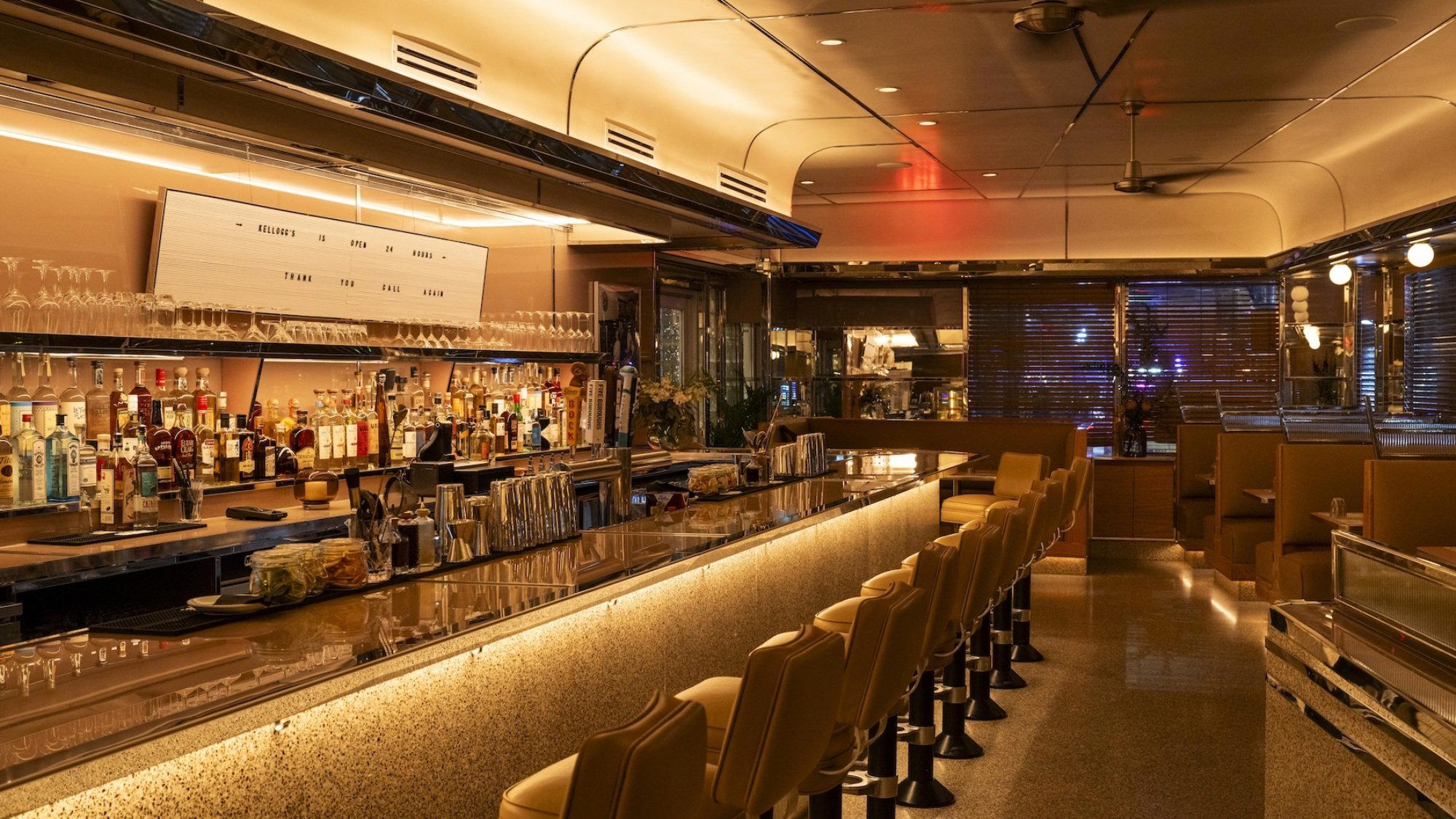
Metropolitan Avenue and the Diner That Stayed
Kellogg’s Diner is a casual bar and diner at 518 Metropolitan Ave, Brooklyn, NY 11211, where the neighbourhood revolves around the room. Metropolitan Avenue in Williamsburg has cycled through waves of change over the past two decades, from a residential strip to a corridor with natural wine bars, ramen counters, and weekend brunch queues that stretch past the kerb. Through those cycles, the diner format at 518 Metropolitan Ave has held its position as a counter where the hours run long and the expectations are calibrated to the room, not the moment.
Brooklyn has long balanced destination restaurants with neighbourhood anchors that locals use for the other hundred meals a year. Diners in that second category absorb the city at 2am, at 7am, and at every hour between.
Where Williamsburg Meets Bushwick: Reading the Address
The stretch of Metropolitan Avenue that runs past Kellogg's sits at a geographic seam. Williamsburg's more polished dining blocks lie to the west, concentrated around Bedford Avenue and the streets closer to the L train. The blocks east toward Bushwick carry a different register, less curated and more variable in what a given storefront might become. 518 Metropolitan occupies that transition zone, which historically has given it a clientele broader than either neighbourhood's core demographic would suggest on its own.
The G train and the L train both serve the area, with the G running along the western edge of Williamsburg and connecting to points south through Brooklyn. That accessibility has made Metropolitan Avenue a legitimate destination rather than an incidental stop, and it explains why the diner format here draws from a catchment wider than the immediate blocks.
Brooklyn's diner tradition stretches back well before the borough's current restaurant reputation. The format, counter seating, extended hours, and emphasis on eggs and griddle work arrived in New York through the mid-twentieth century as a response to shift workers and late-night transit patterns. That lineage is worth holding in mind when considering what a diner on Metropolitan Avenue represents against the neighbourhood's newer arrivals.
The Diner Counter as a Cultural Format
American diner culture has undergone a specific kind of reassessment over the past decade. In cities where the restaurant economy became dominated by tasting menus and small-plates formats, the diner re-emerged as a counter-argument: a space where the transaction is legible, the hours are honest, and the format has not been repackaged for social media. New York has a handful of establishments that held that position through the decade of maximum hype, and their value to the city's eating ecosystem is proportional to their consistency.
A Williamsburg diner belongs closer to long-running neighbourhood establishments that define what a block feels like at different hours. In that company, longevity and address stability carry a weight that awards and press coverage do not measure. The comparison venues along Williamsburg's dining strip, including polished cocktail programs like Superbueno and the bitters-forward approach at Amor y Amargo, represent one end of the borough's hospitality register. The diner sits at the other end, and both ends are necessary for a neighbourhood to function as a neighbourhood rather than a dining destination with residential streets attached.
That same split between polished cocktail culture and functional neighbourhood anchors plays out in cities across the country. Kumiko in Chicago, Julep in Houston, and Jewel of the South in New Orleans each represent the technically ambitious end of their local bar and hospitality scenes. The diner format occupies a different position in that ecosystem, one defined by accessibility and hours rather than craft credentials.
What the Format Delivers
The American diner, at its functional core, is a format built around egg cookery, griddle work, and a menu architecture that allows a table to order across breakfast, lunch, and dinner categories simultaneously. The appeal is structural: no course logic, no booking requirement in most cases, no dress expectation. The transaction is fast and the flexibility is total. That format has proved durable in New York precisely because the city's schedule does not resolve into conventional meal times for a significant portion of its population.
For the traveller whose itinerary is built around the higher end of New York's eating and drinking options, venues like Angel's Share and Attaboy NYC represent the evening's primary stops. The diner fills the hours those venues cannot. A late return to Williamsburg, a morning before the flight, or a Sunday when other establishments are closed or at capacity are the moments the format was built for.
For international visitors, the comparison is useful. The neighbourhood diner occupies a similar cultural position to the brasserie in Paris or the kissaten in Tokyo: a format whose value is inseparable from its ubiquity and its refusal to specialise. Cities that lose these formats in favour of destination-only eating tend to lose something in their texture that is difficult to name but immediately noticeable. Establishments like Bar Leather Apron in Honolulu and Allegory in Washington, D.C. demonstrate how cities maintain distinctive hospitality registers at the polished end; the diner holds the other register in place.
Planning a Visit: Context and Logistics
For visitors building a Brooklyn itinerary, Metropolitan Avenue functions as a corridor rather than a single destination. The blocks between the L and G train catchment areas reward walking, with the neighbourhood's eating and drinking options shifting in character every few blocks. Kellogg's Diner at 518 Metropolitan Ave sits in the section of that corridor most usefully approached on foot from the Lorimer Street or Metropolitan Avenue subway stops.
| Venue | Format | Neighbourhood | Booking Required |
|---|---|---|---|
| Kellogg's Diner | American diner | Williamsburg/Bushwick border | No (walk-in) |
| The Long Island Bar | Bar and American | Cobble Hill | Recommended |
| Dirty French | French brasserie | Lower East Side | Required |
| Superbueno | Cocktail bar | Williamsburg | Recommended |
Specific hours and pricing are available in the venue details before visiting. For a broader view of where Kellogg's Diner fits within New York's eating and drinking options, the full New York City restaurants guide covers the range from late-night diners through to the city's most formally ambitious tables. For those travelling from further afield and comparing bar and hospitality formats internationally, The Parlour in Frankfurt on the Main offers a useful European reference point for how neighbourhood-anchored hospitality translates across contexts. For the full range of ABV in San Francisco, the bar program there demonstrates a Pacific Coast variation on technically serious drinking that contrasts usefully with New York's more varied scene.
Pricing, Compared
Comparable venues nearby, for context on price, style, and recognition.
| Venue | Cuisine | Price | Notes |
|---|---|---|---|
| Kellogg’s DinerThis venue — the venue you are viewing | Williamsburg, lounge | $$ | Not listed |
| Twins Lounge | Greenpoint, lounge | $$ | Not listed |
| Mekelburg's | Not listed | $$ | Williamsburg, beer_bar |
| The Grafton | Not listed | $$ | East Village, sports_bar |
| The Whiskey Ward | Lower East Side, Bar | $$ | Not listed |
| Mayamezcal | East Village, mezcaleria | $$ | Not listed |
Continue exploring
More in New York City
Bars in New York City
Browse all →
Restaurants in New York City
Browse all →
Hotels in New York City
Browse all →
Wineries in New York City
Browse all →


At a Glance
- Classic
- Well Known
- Lively
- Modern
- Casual Hangout
- After Work
- Late Night
- Group Outing
- Historic Building
- Design Destination
- Standalone
- Counter Only
- Booth Seating
- Seated Bar
- Craft Cocktails
- Frozen
- Tequila
- Low Abv
- Street Scene
Current opening hours
- Monday
- Open 24 hours
- Tuesday
- Open 24 hours
- Wednesday
- Open 24 hours
- Thursday
- Open 24 hours
- Friday
- Open 24 hours
- Saturday
- Open 24 hours
- Sunday
- Open 24 hours
Hours can change for holidays and private events. Last verified .
Bright, modern interior with curved white ceiling and pale pink walls reminiscent of a sleek airstream trailer, featuring glossy pink counter seating and glass/steel elements.