The Grafton
A First Avenue fixture in the East Village, The Grafton at 126 1st Ave occupies the kind of neighborhood bar position that Manhattan's rapidly shifting bar scene keeps trying to retire. What draws regulars back has less to do with any single program and more to do with the accumulated familiarity that only a genuinely rooted local bar can offer.
Pearl is the En Primeur Club membership app — saves, bookings, and concierge access live there. Same editors, same standards.
- Address
- 126 1st Ave, New York, NY 10009
- Phone
- +1 212 228 8580
- Website
- thegraftonnyc.com
- Directions
- Get directions
 Saves & bookings on Pearl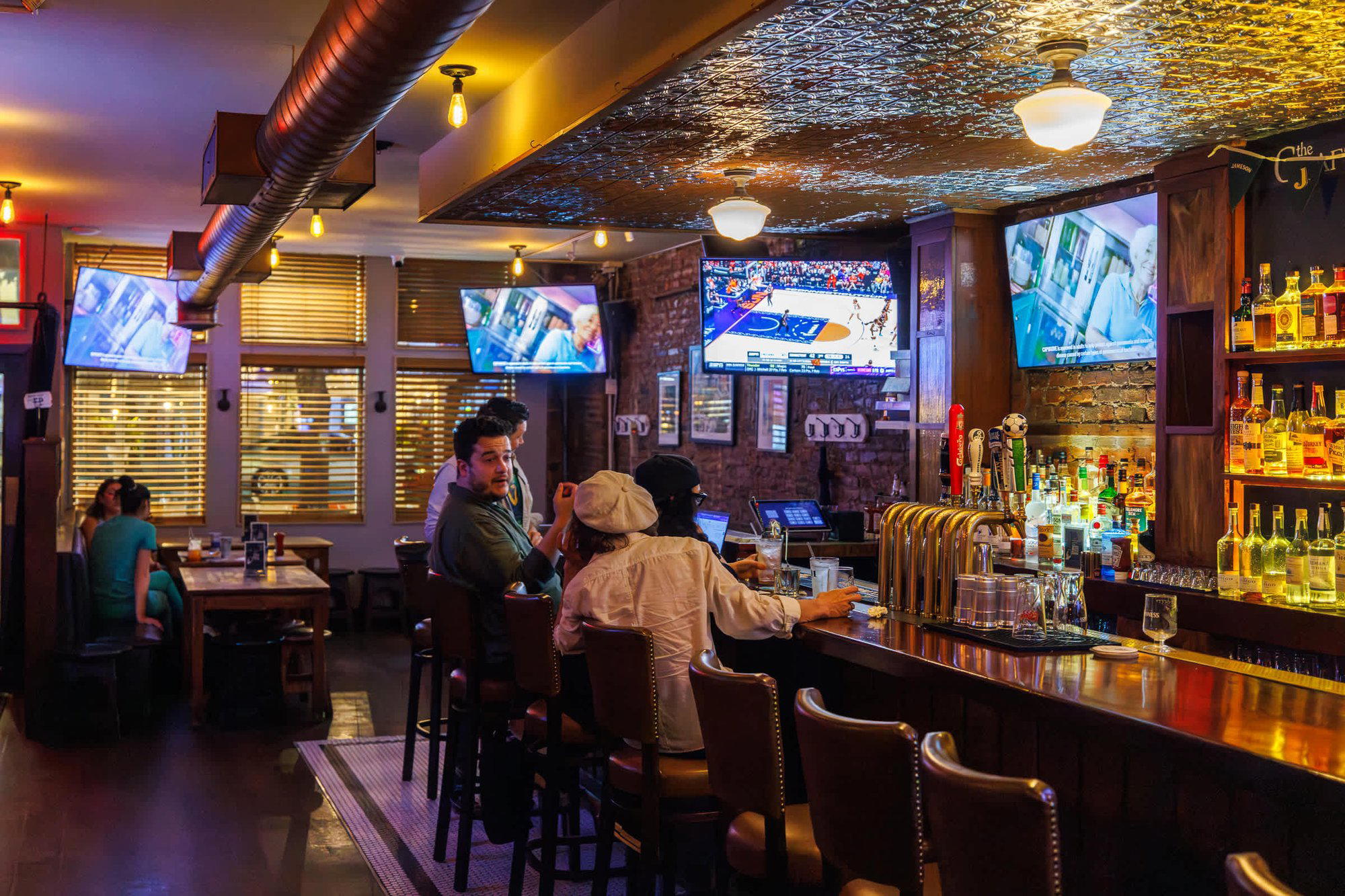
The East Village Bar That Regulars Treat as a Second Address
The East Village has been losing its lived-in bars to cocktail programs with press kits and wellness menus with QR codes for long enough that the ones remaining carry extra weight. The Grafton, at 126 1st Ave, sits in that surviving category: a neighborhood bar on a stretch of First Avenue that still functions as an actual neighborhood street rather than a curated dining corridor. That positioning matters more than any single menu decision. The bars that regulars return to on a Tuesday without a reservation or a reason are increasingly rare in Manhattan, and The Grafton holds that ground.
What Keeps Regulars Coming Back
The regulars' perspective on a place like this is more instructive than any critic's first visit. Bars that attract and retain a loyal local clientele do so through accumulated small consistencies: the same faces behind the bar, a room that feels the same at 7pm as it does at midnight, drinks that don't require a menu explanation to order confidently. The East Village has historically produced exactly this kind of venue, from the low-key dive to the quietly serious cocktail bar, and The Grafton inherits that tradition.
Repeat visitors to First Avenue bars in this part of the East Village tend to come for the accessibility of the experience rather than its complexity. The neighborhood's bar culture has always balanced the serious and the approachable, a tension that venues further uptown rarely manage as naturally. When you compare The Grafton's position on First Avenue to the more programmatic cocktail operations that have defined the borough's press coverage in recent years, the distinction is in what the bar doesn't do: it doesn't ask you to engage with a concept before you order a drink.
The East Village Bar Tradition
New York's cocktail bar scene has split into roughly two tiers over the past decade. On one side sit the technically ambitious programs that have drawn international attention: venues like Amor y Amargo, which built its identity around bitters and amaro with a depth of focus that few bars anywhere match, and Angel's Share, the East Village's own long-running Japanese-influenced cocktail bar that helped define what serious bar craft looked like in New York before the current wave. On the other side are the neighborhood bars that function as infrastructure for the people who live nearby, the bars you go to because they're yours, not because they appeared on a list.
The Grafton sits closer to that second category, which in a city increasingly dominated by the first category is its own form of resistance. Bars in this tier across American cities, from ABV in San Francisco to Julep in Houston, share a common characteristic: they read as destinations within their own neighborhoods first, and as destinations for visitors second. That local-first orientation shapes everything from how the room is designed to how the staff treats someone who walks in without knowing exactly what they want.
For context, more technically structured New York programs like Attaboy NYC, which operates on a no-menu, guest-led ordering format, or Superbueno, with its Latin-rooted cocktail identity, represent the intentionally specialist end of the spectrum. The Grafton doesn't compete in that register, and that's the point. The bars that serve the broadest cross-section of a neighborhood's actual residents are filling a different and arguably harder brief.
First Avenue in Context
The address at 126 1st Ave places The Grafton in the lower stretch of the East Village, a part of Manhattan where the bar and restaurant density is high enough that longevity itself signals something. Venues that survive on First Avenue do so because they develop a constituency, not because they refresh their concept every two years. The street's history includes both serious cocktail venues and unpretentious local bars that have outlasted trendier neighbors by knowing exactly who they're for.
This is a different kind of staying power than what awards recognize. Venues like Kumiko in Chicago, Jewel of the South in New Orleans, or Allegory in Washington, D.C. have built recognition through program depth and critical attention. The Grafton's staying power, if it has it, comes from the neighborhood rather than the industry, which in a city that produces as much bar industry as New York, is not a minor distinction.
International bar travelers who have done the rounds of technically ambitious programs, from Bar Leather Apron in Honolulu to The Parlour in Frankfurt, often find the contrast of a genuinely local New York bar clarifying. The East Village, specifically, is one of the few Manhattan neighborhoods where that contrast is still available within a few blocks in any direction.
Planning Your Visit
The Grafton is located at 126 1st Ave in the East Village, reachable by subway via the L train at First Avenue or the 6 train at Astor Place, both within comfortable walking distance. For a fuller map of where The Grafton fits within New York's wider bar and restaurant offering, the EP Club New York City guide covers the full range from neighborhood standbys to the city's most formally recognized programs. Given the venue's neighborhood-bar positioning, walk-ins are the natural mode of arrival; this is not a place that requires advance planning, which is part of what makes it useful.
Comparable Spots, Quickly
A small set of peers for context, based on recorded venue fields.
| Venue | Awards |
|---|---|
| The GraftonThis venue — the venue you are viewing | Not listed |
| The Long Island Bar | World's 50 Best |
| Superbueno | World's 50 Best |
| Amor y Amargo | World's 50 Best |
| Angel's Share | World's 50 Best |
Continue exploring
More in New York City
Bars in New York City
Browse all →
Restaurants in New York City
Browse all →
Hotels in New York City
Browse all →





At a Glance
- Lively
- Classic
- After Work
- Group Outing
- Late Night
- Seated Bar
- Craft Beer
- Craft Cocktails
Current opening hours
- Monday
- 2 PM–12 AM
- Tuesday
- Open 24 hours
- Wednesday
- 2 PM–2 AM
- Thursday
- 2 PM–2 AM
- Friday
- 2 PM–3:30 AM
- Saturday
- 9 AM–3:30 AM
- Sunday
- 9 AM–2 AM
Hours can change for holidays and private events. Last verified .
Welcoming neighborhood pub atmosphere with terrific feelgood tunes at a conversational volume, easy to talk without loud music or TV blasting.
Know Before You Go
- Getting there
- 126 1st Ave, New York, NY 10009